Tree · Cupressaceae
Emerald Green Arborvitae
Thuja occidentalis
Settle it into full sun with steady moisture, look after it through deer season and snow, and it will reward you with a dense green screen for decades.
Full sun
Every 5–10 days
USDA 3–7
12–14 ft · 3.7–4.3 m
Overview
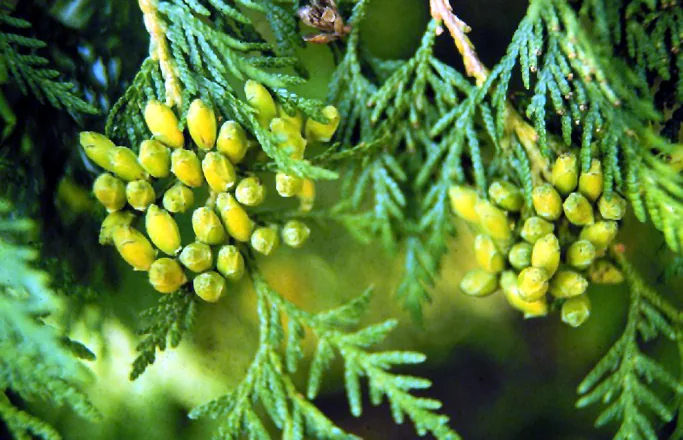
If you have ever admired those neat rows of evergreens marking a property line across the cold north, you have likely been looking at Emerald Green Arborvitae. It is a 'Smaragd' form of the eastern white cedar, Thuja occidentalis, and it holds a slim pyramid of bright green foliage every month of the year. A mature plant reaches only about 12 to 14 feet (3.7 to 4.3 m) tall while staying a tidy 3 to 4 feet (91 to 122 cm) wide, so it tucks neatly along a fence without crowding you.
Take heart if you are new to evergreens, because this one is forgiving. It grows at a slow, gentle pace and asks for very little once its roots take hold. Cold rarely bothers it, even down to -40°F (-40°C), and it copes with many soils including heavy clay, provided the ground drains. The two things it truly dislikes are going dry and sitting in soggy soil, and both are easy to avoid.
The part that trips people up is winter and wildlife, so it helps to know it in advance. Deer love to browse it, a heavy snow can splay a multi-stem plant, and a dry, windy spot can brown the foliage. None of that is a disaster, and a little planning prevents all of it. Place it thoughtfully, prep it for winter, and you will find the rest is easy hedging for years.
Care
The short version: full sun to light shade, soil kept evenly moist but never waterlogged, and one good deep drink in fall before the ground freezes. Shield it from deer and biting winter wind, and gently tie up multi-stem plants ahead of the snow.
Light
Give it full sun and it rewards you with the fullest, healthiest growth, though it happily accepts partial shade if that is what your garden offers. Where light grows too thin the foliage opens up, leaving gaps in what you want to be a solid green wall.
Water
Aim to keep the soil consistently moist and well drained, watering deeply every 5 to 10 days whenever a dry spell sets in. It really cannot stand drought or dry, windy exposure, so do give it one thorough soak in fall before the ground freezes, which spares it from drying out over winter.
Soil
It will grow in moist, fertile, well-drained loam and even forgives clay, as long as water does not pool around the roots. The pH range it accepts is generously wide, from 6.0 to 8.0, so most ordinary garden soil from slightly acidic to alkaline will suit it just fine.
Temperature
Cold simply is not a problem here, which is a relief in a harsh climate. The plant comes through anything from -40°F to 100°F (-40°C to 38°C), and that toughness is exactly why it serves so well as a hedge in the far north.
Humidity
Ordinary outdoor humidity is all it wants, so there is no figure for you to fuss over. What truly matters is good airflow and steady soil moisture, far more than the dampness in the air.
Feeding
A single feeding in spring with a balanced, slow-release evergreen fertilizer is all you need to offer. Because this plant grows so slowly, that one seasonal meal is plenty to keep it content.
Pruning
Keep your shears light, trimming in late spring or early summer to shape a hedge, and there is no need to be heavy-handed. Just avoid cutting back into bare old wood, which will not regrow, and gently tie up or wrap multi-stem plants before winter so snow and ice cannot splay them apart.
Repotting
As a long-term landscape plant, it is rarely repotted at all. If you do grow one in a container, watch for roots circling the edge of the root ball, stunted new growth, or water running straight through, since any of these gently signals it has outgrown its pot.
Size & spacing
Picture a grown plant at 12 to 14 feet (3.7 to 4.3 m) tall and a slim 3 to 4 feet (91 to 122 cm) wide. For a screen with no gaps, set your plants close enough that those narrow crowns can knit together comfortably as they fill in.
When to plant
This is a plant-it-and-relax evergreen, with no seeds to sow and nothing to harvest. Settle new plants out in spring or early fall, while the soil is still warm enough for roots to establish in comfort, and simply avoid the heat of midsummer or the deep of winter.
Northern hemisphere
Southern hemisphere
Typical months for a temperate climate: start earlier in warm zones, later where spring frosts linger.
- Plant: spring or early fall
- Harvest: Non-flowering; grown for evergreen foliage
Hardiness
USDA hardiness zones: 3–7
Temperature: down to -40°C
Troubleshooting
Almost every arborvitae worry comes down to winter or a handful of familiar pests, and the good news is that each one leaves clear clues. Browning needles, bare branches, and splayed stems all point to different causes, so take a calm look before you reach for a cure. Find your symptom below, act early, and you will likely set things right.
Lower branches left bare through winter
Bare lower branches in winter usually mean deer browsing, and Emerald Green is sadly among their favorite cold-season meals. You will see a ragged line chewed up to about deer height, often with tracks and droppings close by, and rabbits may nibble the very lowest foliage too. Try not to worry, since fencing or netting young plants before the snow arrives keeps hungry deer from hollowing out your hedge once their other food disappears.
Fix:
- Install fencing or netting around plants
- Apply deer repellents and reapply after rain
- Wrap plants with burlap over winter
Little brown bags hanging from thinning branches
Those small spindle-shaped sacks are bagworms, the most damaging defoliator your arborvitae will meet. Each bag runs about 1 to 2 inches long and dresses itself in scraps of foliage for camouflage, and you may catch them twitching as the larvae feed in early summer. Pick the bags off through fall and winter to clear away next year's eggs, and treat young larvae with Bt in late spring before a big outbreak can strip and weaken the plant.
Fix:
- Handpick and destroy bags in fall and winter to remove overwintering eggs
- Apply Bacillus thuringiensis (Bt) to young larvae in late spring or early summer
- Use labeled insecticide for larger infestations
Fading plant standing in wet, heavy ground
When soil stays waterlogged, root rot can take hold and the foliage browns as the plant slowly fails. Ease a little soil away from the root ball and you may find dark, soft, mushy roots where firm white ones should be. Improve the drainage, water less, and move badly affected plants somewhere the ground drains freely, since the surest way to avoid this is to keep the tree out of low spots that collect water.
Fix:
- Improve drainage around the root zone
- Avoid overwatering
- Replace severely affected plants in well-drained sites
Bronzed, dried needles on the windy side after winter
Brown, crisp foliage on the exposed side is winter burn, which happens when dry needles lose water faster than frozen roots can resupply on a windy, sunny site. It tends to show up from late winter into early spring, and while 'Smaragd' keeps its color better than the plain species, a harsh spot can still scorch it. Water deeply in fall before the ground freezes, screen it with burlap where wind is fierce, and trim out the dead brown once new growth returns, knowing a little plain winter bronzing is normal and greens up on its own.
Fix:
- Water deeply in fall before ground freezes
- Wrap or screen with burlap on exposed sites
- Prune out dead brown areas in spring once new growth resumes
Stems splayed open or snapped after heavy snow
A weight of snow and ice can pry a multi-stem plant apart, bending the leaders outward or even cracking them, so it is no surprise that unwrapped trees with several trunks suffer most. Brush snow off gently after a storm, tie the stems together with something soft, and wrap multi-stem plants before winter sets in. If you live where snow piles up, a single-leader plant holds its shape far more reliably.
Fix:
- Gently brush snow off branches after storms
- Tie stems together with soft material
- Stake or cable weakened leaders
Speckled, yellowing foliage with fine webbing in summer
Fine speckling and a faint webbing across the foliage in hot, dry weather usually means spider mites have moved in. To be sure, tap a branch over a sheet of white paper and watch for tiny crawling specks. A strong jet of water knocks them back, horticultural oil or a miticide helps if they persist, and keeping the soil moist matters too, since a stressed, thirsty plant invites them in.
Fix:
- Spray foliage with strong water jet to dislodge mites
- Apply horticultural oil or miticide
- Maintain adequate soil moisture to reduce stress
Toxicity
Take comfort, because Emerald Green is a low-risk plant to keep around animals. Its foliage holds thujone oils that can mildly upset a pet's stomach if a fair amount is eaten, but most animals turn their noses up at the bitter leaves. The one thing worth tucking safely away is any concentrated thuja essential oil, which is far more potent than the plant itself.
Toxic to
Cats · Dogs · Horses · Rabbits · Livestock · People
Safe for
Birds
Cats Mild
A small nibble of foliage usually passes with little fuss, but a cat that eats much may drool, vomit, or go off its food. Cats are the most sensitive of the household pets here, and concentrated thuja essential oil is far more dangerous than the plant, so do keep any oil products well out of reach.
Dogs Mild
A curious dog that chews the foliage might drool or have an unsettled stomach for a while, though small tastes rarely cause more than that. The real hazard is the essential oil, never the odd mouthful of clippings.
Horses Mild
The thujone oils in the foliage can irritate a horse's stomach if it grazes the branches, bringing on mild colic or a dull appetite. Most horses leave the bitter foliage well alone, so trouble tends to appear only when little else is on offer.
Rabbits Mild
It is best not to feed rabbits arborvitae, since the aromatic oils can unsettle a small digestive system. A stray nibble is unlikely to do harm, but it really has no place in their diet.
Livestock Mild
Cattle, goats, and sheep usually pass over the bitter foliage and come to no harm at all. Eaten in quantity, though, the thujone can mildly upset the gut, so it is wise to keep prunings out of the pasture.
People Caution
No part of this tree is meant to be eaten, and the thujone in the foliage can irritate the stomach and skin. Keep children from chewing the leaves, and slip on gloves if the sap leaves your skin itchy while you shear a hedge.
Birds Safe
Backyard and wild birds shelter and nest in the dense foliage quite happily, and the plant poses no real risk to them.
Keep clippings and any thuja essential oil products away from pets; the concentrated oil is the main concern.
Helpline numbers

United States
ASPCA Animal Poison Control: (888) 426-4435 (fee applies)
Poison Control: (800) 222-1222



Canada
Poison Centres: 1-844-764-7669
Varieties
Arborvitae comes in a lovely range of shapes, from tall living screens to small, neat globes. Here are the cultivars worth getting to know as you pick the right one for your spot.
'Green Giant'
A far larger, faster hybrid that reaches 40 to 60 feet while putting on 3 to 4 feet a year, and it brushes off the deer and disease that so trouble the deer-favored 'Emerald Green'.
'Techny' (Mission)
A broad, dense pyramid in deep green that keeps its winter color beautifully and takes hard cold in its stride.
'North Pole'
A very slim, columnar pick bred for tight vertical screens where you simply do not have much room.
'Holmstrup'
A slow, compact, narrowly pyramidal cultivar that holds its rich green right through the winter months.
'Hetz's Midget'
A sweet dwarf globe of only about 3 to 4 feet tall and wide, rounded in shape rather than conical.
'Danica'
A compact dwarf globe often grown as a small, rounded accent beside a foundation.
How to propagate
Named cultivars like this one are raised from cuttings rather than seed, which is what keeps each young plant a faithful match to its parent. If you only need one or two, gentle layering makes an easy backup.
Stem cuttingsModerate
Late summer to fall (semi-hardwood) or late winter (hardwood) · 6 to 12 weeks to root
Cuttings are how you keep a named cultivar true to its parent, since seed simply will not. Take semi-hardwood cuttings in late summer or fall, or hardwood ones in late winter, dip them in rooting hormone to improve your odds, and look for roots in about 6 to 12 weeks.
LayeringModerate
Spring · One growing season
You can pin a low branch to the soil in spring and let it root right where it sits over a single growing season. It works nicely, though cuttings stay the usual way to bulk up cultivars.
Myths
Every arborvitae, Emerald Green included, is deer-proof.
Sadly not. Emerald Green is actually one of the plants deer browse most often and most heavily, and they go after it hardest in winter once their other food runs out. Only the hybrid 'Green Giant' is truly deer-resistant, so where deer pressure is high, you will be much happier planting that one instead.