Tree · Cupressaceae
Eastern Red Cedar
Juniperus virginiana
A forgiving native evergreen that handles drought, hard soil, and brutal cold while you learn the ropes.
Full sun
Every 10–21 days
USDA 2–9
30–39 ft · 9–12 m
Overview
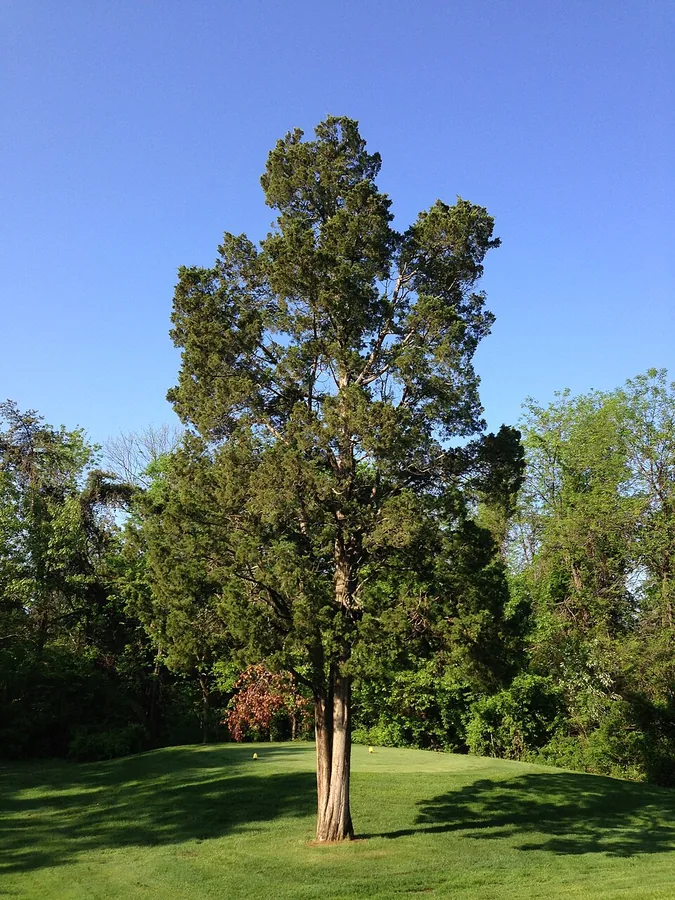
Eastern red cedar is about as forgiving an evergreen as you'll find, which makes it a kind first tree to grow. It's really a juniper rather than a true cedar, and it has thrived in the wild across much of the eastern United States on ground where pickier trees give up. Hand it some sun and it will settle happily into clay, sand, rock, or dry alkaline soil without any fuss from you.
It quietly pays you back as a screen, windbreak, or wildlife tree. Female plants hang on to frosty blue berry-like cones that carry waxwings, robins, and other birds through the winter, and the thick foliage offers shelter and a place to nest. That reddish, sweet-smelling wood is the same cedar you know from lined closets and old fence posts.
This is a calm, slow-and-steady plant that can live for centuries, so there's no rush. Just keep two habits in mind. It can spread into open grassland once fire no longer keeps it in check, and it serves as the alternate host for cedar-apple rust, which is why it should never go near apples or hawthorns.
Care
The short version: give it full sun and any soil that drains, water it only while it settles in, and you can mostly relax after that. It asks for no feeding on most ground and little pruning, and the one rule to remember is to keep it away from apple and hawthorn trees.
Light
Give it full sun and it rewards you with the fullest, healthiest growth. A little light shade is fine if that's what you have, but a shaded tree tends to grow thin and open and loses the tight shape that makes such a good screen.
Water
Once it has rooted in, this is one of the most drought-tolerant conifers of the eastern U.S., so you really can stop worrying about the hose. Keep new plantings watered through that first season, then let the soil dry out between drinks and let the tree take over from there.
Soil
Few trees are easier to please here. It does beautifully in average, dry to medium, well-drained ground and takes clay, sand, shallow rock, and poor or dry alkaline sites in stride, happy at a pH anywhere from 4.7 to 8.0. The only thing that will trouble it is soil that stays soggy.
Temperature
This is a genuinely tough tree, at home from -40°F to 104°F (-40°C to 40°C), so cold weather simply isn't something to lose sleep over. It copes with heat and exposed, windy spots just as gracefully.
Humidity
Once it's established, outdoor humidity won't worry you at all. Good airflow matters far more than moisture in the air, because crowded, damp foliage is what gives the tip blights a foothold, so a little breathing room goes a long way.
Feeding
Here's a relief: on most ground it needs no feeding whatsoever. Should growth look genuinely weak, a balanced slow-release fertilizer in spring is all it takes, but a settled tree on ordinary soil truly gets along fine without your help.
Pruning
Pruning stays light, and the tree takes shearing well if you want a tidy screen or hedge. Work in late winter to early spring, and while you're there, snip off any brown galls and dying tips to keep cedar-apple rust in check. It really is that simple.
Repotting
Not applicable; grown as a landscape tree, not a houseplant
Size & spacing
A grown tree reaches around 30 to 40 feet (9 to 12 m) tall and spreads 10 to 20 feet (3 to 6 m) wide, so give it space to fill out. Remember it grows at a steady, moderate pace, which means there's no need to rush it.
When to plant
There's no fussy sowing window to stress about with a tree this hardy. Just set new plants out in spring or fall so the roots can settle before the heat of summer or the chill of winter, and on female trees you get the bonus of blue cones ripening from fall into winter.
Northern hemisphere
Southern hemisphere
Typical months for a temperate climate: start earlier in warm zones, later where spring frosts linger.
- Plant: Spring or fall
- Harvest: Non-flowering; female trees bear frosty blue-green berry-like cones that ripen fall to winter (Sep-Feb)
Hardiness
USDA hardiness zones: 2–9
Temperature: down to -46°C
Troubleshooting
Take heart: a settled eastern red cedar gives you very little to fuss over. A handful of pests and fungi may turn up on the foliage and twigs, but the trouble almost always looks scarier than it is. Find what matches below, deal with it calmly, and the tree shrugs it off.
Woody galls oozing orange jelly tendrils in wet spring weather
Don't panic if you spot this: it's cedar-apple rust and its relatives, fungi that ride between the cedar and nearby apples, crabapples, or hawthorns. On the cedar itself the harm is light, just some galls and a little twig dieback. Trim out the brown galls in late winter before the horns form, and keep the tree well away from any rose-family plants, and you'll have it handled.
Fix:
- Prune out and destroy galls and infected branch tips in late winter to early spring before horns form
- Do not plant near apples, crabapples, hawthorns, quince, or serviceberry
- Apply a myclobutanil fungicide in early spring on high-value plants before infection (copper and sulfur are less effective)
Foliage-covered silk bags swinging from the twigs
Those camouflaged little bags are the work of bagworm caterpillars, which nibble needles and thin the crown as they feed. Each bag is stitched from the tree's own foliage, so they hide in plain sight, which is why it pays to look. Pluck the bags off by hand from fall through early spring to clear out the overwintering eggs, then spray Bt while the larvae are still small in late spring.
Fix:
- Handpick and destroy bags in fall through early spring to remove overwintering eggs
- Apply Bacillus thuringiensis or an approved insecticide while larvae are small in late spring to early summer
Yellowing, stippled needles dotted with crusty scale on the branches
Those fixed little specks are juniper scale, and fine stippling can also mean spider mites have moved in. Both drain the foliage and leave it dull and discolored, sometimes with sticky honeydew or sooty mold. Smother overwintering scale with horticultural oil, treat the crawlers as they appear in late spring, and simply cut out any branch that's badly hit.
Fix:
- Apply horticultural oil to smother overwintering scale
- Treat crawlers with horticultural oil or an approved insecticide at the crawler stage
- Prune out and destroy heavily infested branches
Dying branch tips carrying tiny black specks on the dead wood
Dead tips dotted with tiny black specks point to Phomopsis or Kabatina tip blight, fungi that slip in after wet weather. On a healthy tree the damage is mostly cosmetic, so there's no need to worry. Prune the dead twigs during a dry spell, skip overhead watering, and give the branches room so the air can dry the foliage.
Fix:
- Prune out dead and dying twigs during dry weather
- Avoid overhead watering and improve air circulation
- Apply an approved fungicide to new growth on high-value plants if needed
Toxicity
You can breathe easy here. Eastern red cedar is not a poisoning danger and isn't on the ASPCA toxic lists, so people, pets, and grazing animals all get along with it. The only small things to keep in mind are a mild upset stomach if an animal eats a lot of the oily foliage or berries, and skin that the prickly young growth and aromatic sap can irritate a bit.
Safe for
People · Cats · Dogs · Horses · Rabbits · Livestock · Birds
Cats Mild
Cats aren't on the ASPCA poison lists, so a nibble is no real danger to them. One that chews a lot of the foliage or berries might end up with a loose stomach for a day, and the aromatic oils tend to put many cats off it anyway.
Dogs Mild
Dogs are safe around it in passing, though one that wolfs down a pile of the blue berries or foliage may get mild diarrhea. Nothing to be alarmed about, but keep a gentle eye out if a large amount goes down.
Horses Mild
Horses graze near it without any trouble. Eating a real quantity of the oily foliage or cones can bring on a passing stomach upset, so it isn't a feed to count on, but it poses no poisoning risk.
Rabbits Safe
Rabbits browse juniper foliage out in the wild and take it in stride. There's no toxin here to worry over.
Livestock Safe
Cattle, sheep, and goats browse eastern red cedar with no poisoning risk at all. Heavy grazing of the foliage is more likely to unsettle the rumen than to harm the animal.
Birds Safe
The berry-like cones are a winter mainstay for cedar waxwings, robins, and many other birds, which carry the seed along as they feed.
People Safe
For people there's no poisoning hazard to speak of. The prickly young foliage and aromatic sap can irritate skin, so slip on gloves when you prune, and don't treat the berries as food.
Not a poisoning hazard, but foliage and the blue berry-like cones can cause mild gastrointestinal upset (such as diarrhea) if eaten in quantity, and the aromatic volatile oils are mildly irritating. Sap and prickly young foliage may irritate skin; wear gloves when pruning.
Varieties
Part of the fun is that eastern red cedar comes in many shapes, from a slim upright column to a low spreading shrub. A few well-loved selections keep showing up in gardens, and any of them is a friendly place to start.
'Canaertii'
A much-loved ornamental pick that holds a dense, narrow pyramid of rich dark green foliage dotted with frosty blue cones.
'Brodie'
An upright columnar tree whose soft blue-green foliage makes a clean, narrow screen or accent you'll be happy with.
'Taylor'
A tightly fastigiate column that climbs to about 20 to 25 feet tall yet stays just 3 to 4 feet wide, ideal where you want a slim upright accent.
'Grey Owl'
A low, spreading shrub clothed in silvery gray foliage instead of the usual upright tree form.
How to propagate
If you'd like to make more, you have three routes: seed, cuttings, or grafts. None is instant, so be patient with yourself. Seed is the slow and stubborn one, while cuttings and grafting are the gentler way to keep a named variety looking just like its parent.
SeedDemanding
Sow stratified seed in fall or spring · Months to over a year; seed has dormancy requiring cold stratification and can be slow and erratic to germinate
In the wild the tree self-seeds with ease, but starting it on purpose really does test your patience, so go gently on yourself. Gather cones from a female tree in fall or winter, clean the flesh away, and give the seed a long cold stratification to break its dormancy. Even then germination comes slow and uneven, often anywhere from a few months to more than a year.
Stem cuttingsModerate
Take semi-hardwood cuttings in late summer to fall · Several months to root
Cuttings are the usual and kinder way to copy a named cultivar and keep its form and foliage color. Take semi-hardwood cuttings in late summer to fall and let them have the several months they need to root. It's slower than rooting a houseplant, sure, but it's far more reliable than seed for getting exactly the plant you want.
GraftingDemanding
Dormant season · One season
Grafting is mostly a nursery trick, used to set a chosen cultivar onto seedling rootstock. The work happens in the dormant season, and a good union settles over a single growing season. It takes real skill, so it's perfectly fine to leave this one to the growers.
Myths
Eastern red cedar is a true cedar.
It's an easy mix-up, but despite the name this is a juniper in the cypress family, not a cedar at all. True cedars belong to the genus Cedrus in the pine family. The everyday name is just a long-standing misnomer that has stuck around.
Cedar-apple rust does serious harm to the cedar itself.
On the cedar the rust does little more than raise a few galls and kill back the odd twig, so the tree itself comes through fine. The serious harm lands on nearby apples, crabapples, and hawthorns, with the cedar simply playing the alternate host that lets the fungus complete its life cycle.