Houseplant · Euphorbiaceae
Croton
Codiaeum variegatum
Offer it bright light and steady, humid warmth, and your croton will reward you with leaves glowing in red, orange, and gold.
Bright indirect
50–85°F · 10–29°C
USDA 11–12
2–8 ft · 0.6–2.4 m
Overview
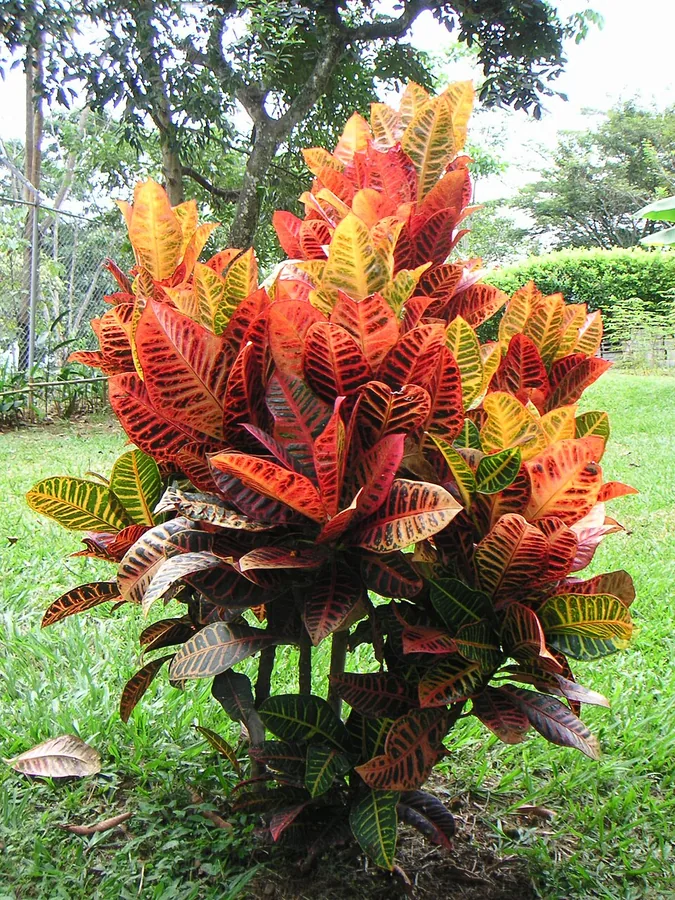
There is so much to love in a croton, and almost all of it lives in the foliage, which arrives splashed with red, orange, yellow, and green in patterns that change from plant to plant. The one sold under this name is Codiaeum variegatum, a woody evergreen in the spurge family that grows wild from Malesia into the southwest Pacific. Settled indoors, it turns into a bold, leathery-leaved shrub that, given time, can rise past head height.
If your colors look muted, the answer is almost always light, so take heart. Set it in a bright spot with a touch of direct sun and the shades deepen beautifully, while a dim corner simply lets new leaves slip back toward green. It longs for the warmth and moisture of its tropical home, and it would rather not be shuffled about, sometimes shedding a flush of leaves after a move or a brush with a cold draft.
This one does ask for a little attention, but please do not let that worry you, because it grows easy-going once it knows where it lives. Keep it cozy, water as the top of the soil dries, and keep the milky sap off your skin and away from pets, since every part of the plant can irritate.
Care
The short version: give it bright light with some direct sun for the richest color, warmth above 50°F (10°C), plenty of humidity, and a drink only when the top half-inch to inch of soil has dried.
Light
Light is what feeds a croton's color, and the more it receives the brighter those leaves grow. Try for bright indirect light with some direct sun, because a shadowy corner quietly washes the color back to green. Harsh, all-day sun can scorch the leaves to gray, so think filtered or shifting sun and you will both be happy.
Water
Wait until the top half-inch to one inch of soil dries, then water well and let the surplus drain away. As winter slows things down, you can ease right off. Croton frets at both extremes and may drop leaves if the soil stays soggy or dries out hard for too long, so steady is the kindest path.
Soil
Settle it into a well-drained, humus-rich mix with lots of organic matter folded in. Good drainage is the part that truly matters, since water lingering at the roots is what brings on rot in a plant that otherwise loves to stay evenly moist.
Temperature
Aim to keep it between 50°F and 85°F (10°C to 29°C), and try never to let it dip below 50°F. Cold drafts, chilly windowpanes, and abrupt swings can all coax it into dropping leaves, so a warm, settled spot will suit it best of all.
Humidity
Coming from the tropics, croton really does want high humidity, and dry indoor air tends to leave the tips brown and crisp. Cluster it with other plants, rest the pot on a pebble tray, or run a humidifier through the heating months, and it will thank you.
Feeding
Offer a general-purpose fertilizer across the growing season, spring into autumn, while the plant is busy unfurling new leaves. Once winter arrives and growth nearly stops, scale right back to a gentle touch.
Pruning
Croton handles a hard cut in early spring, before fresh growth begins, and that is the moment to coax a leggy plant back into shape. Trimming it this way encourages new branching lower down. Do slip on gloves, since pruning opens up the irritant sap.
Repotting
Move it into a fresh home every 1 to 2 years, or a little sooner once it turns rootbound, stepping up to a slightly larger pot in spring. Roots spiraling out the drainage holes, water rushing straight through, and growth that has stalled are all gentle hints it is ready.
Size & spacing
Indoors a croton often grows to 2 to 8 feet (61 to 244 cm) tall and fills out 2 to 6 feet (61 to 183 cm) across, though in the tropics it may reach higher still. Leave it a little breathing room so air drifts around the foliage and the leaves are not left crowding one another.
Troubleshooting
Almost everything a croton wants to tell you shows up in its leaves, and the message is usually about light, water, humidity, or some change it found unsettling. Take a calm look at the signs below, and you can step in early, long before a small wobble becomes a bare stem.
Drooping stems and soil that smells off
A plant that droops while the soil stays wet has likely caught root rot from overwatering or a pot that will not drain. The roots go brown and mushy where they should feel firm and pale. Stop watering, move it into fresh, well-drained mix in a pot with drainage holes, trim away the rotted roots, and water again only once the top of the soil dries.
Fix:
- Stop watering and allow the soil to dry to the appropriate level
- Repot into fresh, well-drained, humus-rich mix in a pot with drainage, trimming rotted roots
- Resume watering only when the top half-inch to inch of soil dries
Leaves falling fast after a recent move or chill
If a croton lets go of its leaves all at once, do not panic, because a fresh spot, a cold draft, or a swing in temperature is the usual reason. Chill below 50°F (10°C) and soil that lurches between soggy and bone dry can prompt it too. Tuck it into one warm, steady place, water it evenly, and it will grow those leaves right back.
Fix:
- Settle the plant in one stable, warm, draft-free spot and avoid further moves
- Keep temperatures above 50°F / 10°C and away from cold windows, doors, and vents
- Maintain consistent moisture, watering only when the top half-inch to inch of soil dries
Faint webbing and a speckled dusting on the foliage
Hot, dry air can tempt in spider mites, which leave fine webbing and a speckled, dusty cast across the undersides of the leaves. Rinse the foliage and lift the humidity to slow them, then treat with insecticidal soap or horticultural oil and repeat as directed. Keep the plant on its own until it is clean again.
Fix:
- Rinse foliage and increase humidity
- Treat with insecticidal soap or horticultural oil, repeating as directed
- Isolate the plant to limit spread
White fluff, small bumps, and a sticky coating
White cottony clumps tucked into the leaf joints usually mean mealybugs, while still, brown bumps along the stems are scale, and both leave behind a sticky honeydew. Dab the visible pests away with an alcohol-soaked swab, then treat with insecticidal soap or horticultural oil and stay with it. Keep the plant set apart from the others until the bugs are gone.
Fix:
- Wipe off or dab visible pests with an alcohol-moistened swab
- Treat with insecticidal soap or horticultural oil, repeating as directed
- Isolate the plant until the infestation is cleared
Vivid leaves turning quietly back to green
When a croton is parked in too little light, its new leaves come in greener and flatter and the lively color quietly slips away. Shift it somewhere brighter, ideally with a little direct sun, and the markings return on fresh growth. If a sunny window is hard to come by, a cultivar like 'Petra' holds its color better in indoor light.
Fix:
- Move to a brighter spot with bright indirect light, ideally with some direct sun
- For best color give the brightest light the plant can tolerate without scorching
Pale, scorched patches where the sun hits hardest
Push a croton straight into harsh, all-day sun and the most exposed leaves can turn gray, dull, or scorched, which is the plant simply asking for a softer light. Give it bright but filtered light, or sun that travels across the day rather than blazing for hours. Build up the light slowly so it can settle in instead of burning.
Fix:
- Provide bright but filtered/indirect light or shifting sun rather than intense all-day direct sun
- Acclimate gradually when increasing light
Lower leaves yellowing and dropping off
When the loss is gathered low on the plant, in the shaded part, the spot is most likely just too dim. Brighten things up and turn the plant now and then so light reaches it more evenly. Once a fully spent leaf lets go on its own, you can lift it away.
Fix:
- Increase light levels
- Remove fully spent leaves and reposition for more even light exposure
Brown, crispy tips and leaf edges
Dry indoor air is usually behind those crisp brown tips, since croton longs for high humidity. Soil that dries out too far between drinks only adds to it. Group your plants together, set the pot on a pebble tray or run a humidifier, and keep the soil evenly moist by watering once the top half-inch to inch has dried.
Fix:
- Raise humidity with a pebble tray, grouping plants, or a humidifier
- Keep soil evenly moist (not wet), watering when the top half-inch to inch dries
Toxicity
A croton deserves a little caution, and that is easy to give. Its milky sap holds irritant diterpene esters that can upset the mouth and stomach of pets and bring on a skin rash in people, and no part of it is safe to eat. Slip on gloves before you cut it, and tuck the leaves and trimmings somewhere animals and children cannot reach.
Toxic to
Cats · Dogs · Horses · Rabbits · Livestock · Birds · People
Cats Mild
A cat that nibbles a leaf will usually drool and may bring up its food or get loose stools, and the milky sap can leave its mouth and skin feeling irritated.
Dogs Mild
After a dog gnaws the plant you can expect drooling, a queasy stomach, and sometimes diarrhea, while sap on the muzzle or paws may redden the skin a little.
Horses Caution
That same irritant sap can sting a horse's mouth and gut, so it is best to keep one from grazing or mouthing the foliage and any cut stems.
Rabbits Caution
A small grazer is far better off leaving this one alone, since the diterpene esters in the sap can inflame the mouth and digestive tract, so keep it well out of reach.
Livestock Caution
Goats, sheep, and cattle are happiest kept away from the plant and its prunings, as the caustic sap irritates the mouth and stomach if any is eaten.
Birds Caution
A curious bird can come to harm from the irritant sap, so keep it clear of the foliage and any chewed or fallen leaves.
People Caution
No part of the croton is good to eat. The milky sap is a caustic irritant to skin and eyes that can bring on contact dermatitis, so wear gloves when you cut it and keep the leaves away from children.
Wear gloves when cutting or propagating; the milky sap can irritate skin and mucous membranes and may stain. Keep cut surfaces and fallen leaves away from pets and children
Helpline numbers

United States
ASPCA Animal Poison Control: (888) 426-4435 (fee applies)
Poison Control: (800) 222-1222



Canada
Poison Centres: 1-844-764-7669
Varieties
Crotons arrive in a wonderfully long roster of named cultivars, grouped mostly by leaf shape and the blend of colors they carry. The ones below are the friendly faces you are most likely to bring home.
'Petra'
The most common cultivar you will meet, showing dark green leaves veined in yellow, pink, and orange-red, and the one UF/IFAS picks out for holding its color so well in indoor light.
'Gold Dust'
It carries rounded, oval bright green leaves freckled all over with cheerful golden yellow.
'Mammy'
It stands out for narrow, twisting leaves caught up in a bright jumble of colors.
'Eleanor Roosevelt'
It offers medium green leaves dotted with golden yellow that warms into a deep dark red.
'Andreanum'
It has broad oval yellow leaves trimmed and veined in gold.
'Spirale'
It curls its red and green leaves into a loose, easy spiral.
'Majesticum'
It grows long leaves, around nine inches, banded in yellow and red.
How to propagate
Making more crotons is very doable, whether you root cuttings or try air-layering, and both keep a named cultivar faithful to its parent. Whichever you choose, pop on gloves first so the sap stays off your skin.
Stem cuttingsModerate
Summer · Several weeks to root
In summer you can take softwood or tip cuttings and root them in a moist medium, where they need several weeks to settle in. Do wear gloves, since the milky sap is an irritant. Cuttings keep a cultivar true to type, while seedlings tend to come out looking nothing like their parent.
Air layeringModerate
Spring · Several weeks
Croton air-layers easily in spring, rooting along the stem over several weeks before you sever and pot it up. Wear gloves here as well, since the sap can irritate your skin.
Myths
The croton on your windowsill really sits in the genus Croton.
It is an easy mix-up, but the plant on your shelf is Codiaeum variegatum, not a species of the genus Croton at all. They do share the Euphorbiaceae family, yet Kew's Plants of the World Online records Codiaeum variegatum as the accepted name in its very own genus. The common name is simply a long-standing leftover.
A croton shedding a pile of leaves must be on its way out.
Take a breath, because heavy leaf drop is the plant reacting to change, not giving up on you. A move, a draft, cold below 50°F, or uneven watering can each set it off. Once you steady its surroundings it nearly always bounces back and grows the foliage in again.
A croton holds its bright colors no matter the light.
Color rests entirely on light. Tucked in a dim spot the leaves drift back toward plain green and lose their markings, while bright light, often with a little direct sun, is what draws the color out. Too much harsh sun tips the other way and bleaches the leaves to gray, so a happy middle is what you are after.