Ornamental · Asteraceae
Coreopsis
Coreopsis grandiflora
Give it full sun and lean, dry soil and tickseed will reward you with gold daisies from late spring right up to frost.
Full sun
Every 7–14 days
USDA 4–9
1–3 ft · 0.3–0.9 m
Overview
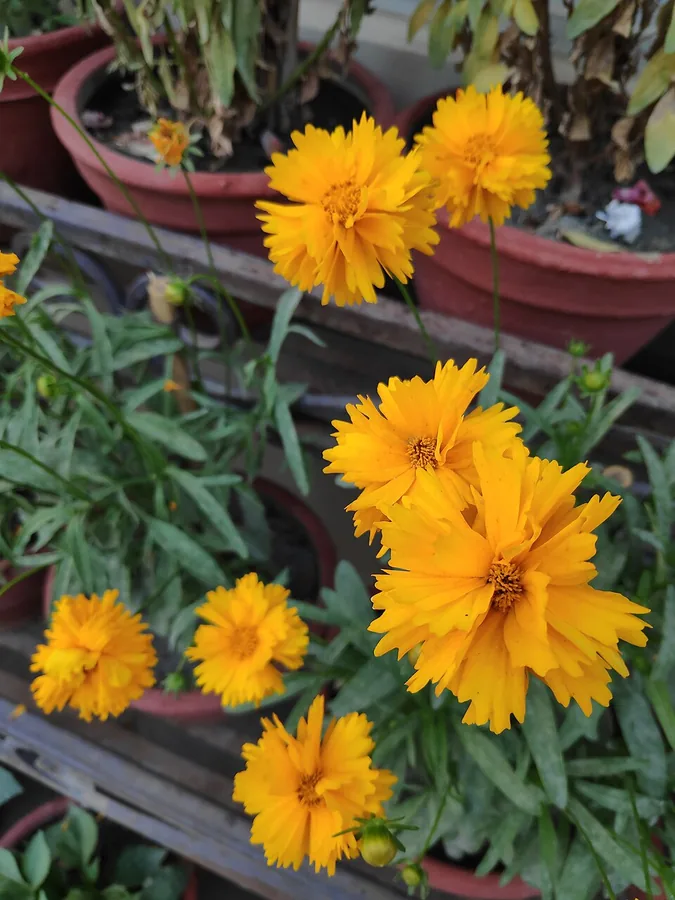
If you are new to perennials, coreopsis, often called tickseed, is a wonderful place to begin. It is part of the daisy family, and it takes a poor, dry, rocky corner and turns it into a long show of golden-yellow flowers that pollinators and butterflies visit all season. Do not let the odd name worry you; it has nothing to do with the bug and everything to do with the small dry seeds, which look like ticks up close.
The lovely thing about coreopsis is how forgiving it is. It handles drought once it has settled in, takes lean, infertile ground without complaint, and keeps flowering from late spring deep into summer, often right up to the first frost. The one mistake to avoid is kindness in the wrong form: rich soil and heavy watering hold it back, so resist the urge to pamper and you will both be happier.
There are two groups worth knowing, and either is easy to grow. The large-flowered tickseeds carry big, bold daisies and bloom quickly from seed, while the threadleaf types such as Moonbeam and Zagreb offer a soft cloud of fine foliage with smaller flowers held over a longer stretch. Both ask for the same simple things: sun, sharp drainage, and a light, gentle hand.
Care
The short version: give it full sun and lean, well-drained soil, and water only when the top half has dried out. Go easy on feeding, snip off faded flowers as the season goes, and shear the clump back in midsummer for a happy second flush.
Light
Coreopsis loves full sun and blooms best when it gets it. A little afternoon shade is fine and nothing to fret about, but go much past that and you will end up with floppy, leggy stems and far fewer flowers.
Water
Once it has settled in this is a drought-tolerant plant, so let the top half of the soil dry out between drinks, roughly every 7 to 14 days. Sharp drainage matters far more than any strict schedule, and the surest way to lose coreopsis is to keep it wet, so when in doubt, wait.
Soil
Lean is what you are after, and that makes life easy. It is happy in well-drained sandy, rocky, or clay ground and even shrugs off poor, infertile spots, holding a slightly acidic to neutral pH of 5.5 to 7.0. Rich soil only tempts it to flop.
Humidity
Ordinary outdoor air suits it just fine, so there is no number for you to chase. What really matters is drainage and airflow, since damp, crowded conditions are what open the door to rot.
Feeding
Feed it rarely, if you feed it at all, and do not feel guilty about that. A light touch during the growing season is plenty, because rich soil pushes soft, floppy growth and steals energy from the flowers.
Pruning
Snip off spent blooms through the season to keep more on the way. Then shear the whole clump back in mid to late summer to spark a fresh fall flush and gently tidy any sprawling foliage.
Size & spacing
Plants reach 1 to 3 feet (30 to 91 cm) tall and spread roughly as wide. Give each one 1 to 3 feet (30 to 91 cm) of elbow room so air can move freely through the clump and keep it healthy.
When to plant
Coreopsis is a tough, dependable perennial for zones 4 through 9, so you have room to relax. Start seed indoors a few weeks before the last frost or sow it straight in the ground, set your plants out once spring has truly settled, and the flowers will follow from late spring into summer.
Northern hemisphere
Southern hemisphere
Typical months for a temperate climate: start earlier in warm zones, later where spring frosts linger.
- Sow: 6 to 8 weeks before last spring frost
- Plant: After last spring frost in spring
- Harvest: Late spring to late summer, sometimes to first frost
Hardiness
USDA hardiness zones: 4–9
Temperature: down to -34°C
Troubleshooting
Take heart, because nearly every coreopsis problem comes back to the same thing: too much water. Get the drainage right and most of the trouble below never gets a foothold. When something does crop up, find what matches below and act early, and you will usually catch it in time.
Soft stems at the base and a plant that leans over
If the base of the stems has gone soft and the plant is leaning, this is crown rot, and it points to soil that has stayed wet rather than any insect. Once that tissue turns dark and mushy a plant seldom bounces back, so lift it and throw it away without guilt. You can start over kindly: water less, help the bed drain, and tuck healthy divisions into ground that lets water pass through.
Fix:
- Remove and destroy affected plants
- Improve drainage and reduce watering
- Replant healthy divisions in well-drained soil
Pale webbing at the base with a quick decline
Southern blight shows up in warm, muggy spells and can take a plant down quickly, so try not to panic if you spot it. Look for a mat of white threads at the soil line scattered with tan specks the size of mustard seeds. Lift the plant out together with the soil around it, keep mulch pulled back from the stems, and open up the planting so air can move through.
Fix:
- Remove and destroy infected plants and surrounding soil
- Avoid mulching directly against stems
- Improve air circulation and drainage
Torn holes in the leaves left with shiny trails
Those torn holes are the work of slugs and snails, which feed mostly after dark when the ground is damp, and the good news is the damage looks worse than it is. The silvery trails near the leaves are a clear sign of who came by. Step out with a light after dark and gather them, ease off the water and mulch to dry things out, and circle any plants they favor with traps or a simple barrier.
Fix:
- Hand-pick at night
- Reduce excess moisture and mulch
- Use traps or barriers
Plenty of soft growth but only a few flowers
When your coreopsis grows tall and leafy yet gives you few flowers, the trouble is almost always soil that is too rich or too damp, and leaving old blooms in place only adds to it. Nothing here is hard to fix. Move the plant into full sun and lean, free-draining ground, go easy on the feeding, snip off faded flowers as they come, and shear the whole clump back in mid to late summer to coax out a fresh round.
Fix:
- Deadhead regularly
- Shear back in mid to late summer
- Reduce fertilizer and grow in full sun and leaner soil
Toxicity
Here is some reassuring news if you share your home with animals. Coreopsis is non-toxic to cats, dogs, and horses on the ASPCA's list, and it poses no known threat to other animals or to people. A nibbled leaf or flower is truly nothing to worry about.
Safe for
People · Cats · Dogs · Horses · Rabbits · Livestock · Birds
Cats None
You can relax around cats. The ASPCA puts coreopsis on its non-toxic list, so a curious taste from your cat is nothing to lose sleep over.
Dogs None
Dogs are in the clear here too. The plant holds no known toxins, though if a dog gulps down a big mouthful of any greenery it may get a brief, harmless tummy ache.
Horses None
Horses are safe as well, with coreopsis listed as non-toxic, so there is no poisoning worry where they graze.
Rabbits Safe
Rabbits have nothing to fear from it. Should one nibble the leaves or flowers, they carry nothing that could do harm.
Livestock Safe
Cattle, goats, and sheep can browse close by without any concern about toxicity.
Birds Safe
Birds are perfectly safe, and many will happily seek out the dried seed heads to eat.
People Safe
There is no toxicity to people. It is grown as a garden flower rather than a food crop, so simply enjoy the blooms; there is no part meant for the plate.
Varieties
Coreopsis comes in dozens of named selections, and that can feel like a lot, so a handful of dependable favorites turn up again and again for good reason. These are the ones to get to know first.
Coreopsis verticillata 'Moonbeam'
A threadleaf kind you will love for its lacy, finely cut leaves and soft pale yellow flowers that keep coming over a long season.
Coreopsis verticillata 'Zagreb'
A neat, compact threadleaf choice that keeps a tidy mounded shape beneath cheerful golden-yellow flowers.
Coreopsis verticillata 'Grandiflora'
A more compact threadleaf form that grows to about 2.5 feet and crowns itself with bright golden-yellow daisies.
Coreopsis grandiflora 'Early Sunrise'
A large-flowered tickseed with semi-double golden blooms that rewards you fast, flowering from seed in its very first year.
How to propagate
Making more coreopsis is easier than you might expect, whether you split an existing clump or grow it from seed, and quite often the plant reseeds itself before you even reach for the trowel.
DivisionEasy
Early spring; divide clumps every 2 to 3 years to maintain vigor · One growing season
Dividing is the gentlest, most reliable way to keep your coreopsis full of life. In early spring, ease an established clump out of the ground, separate it into healthy pieces, and replant them to refresh a tired plant and keep its spread tidy. Give the divisions a single growing season and they settle in nicely.
SeedEasy
Start indoors 6 to 8 weeks before last frost or direct sow; self-seeds readily · Blooms first year for many large-flowered types
Growing coreopsis from seed could not be much simpler, whether you start it indoors 6 to 8 weeks before the last frost or scatter it right into the bed. Many of the large-flowered kinds reward you with flowers in their first year. Large-flowered tickseed can be short-lived, but it reseeds itself so freely that your patch tends to carry on quite happily on its own.
Myths
Tickseed is called that because it draws ticks or gives them a home.
Rest easy, the name is about the seeds and not the pests. Each little dry seed simply happens to look like a tick, and that resemblance is all there is to it. What the plant actually brings in is pollinators and butterflies, never ticks.
Coreopsis is poisonous and ought to be kept well away from cats and dogs.
You can keep it right where your pets roam. The ASPCA lists coreopsis as non-toxic to dogs, cats, and horses. A pet that samples a leaf or flower will be just fine.