Bulb · Colchicaceae
Autumn Crocus
Colchicum autumnale
It sends up bare lilac-pink blooms in fall, yet every part hides deadly colchicine.
Full sun
Every 7–14 days
USDA 4–9
6–10 in · 15–25 cm
Overview
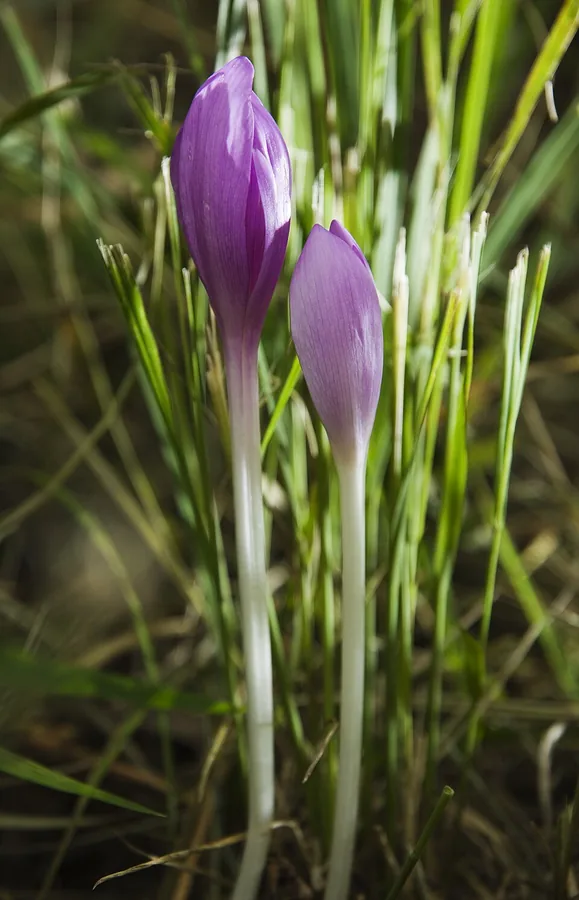
Autumn crocus has a way of surprising people, in the best sense. Its lilac-pink, goblet-shaped flowers come up straight from bare ground in late summer and fall with not a leaf to be seen, which is how it earned the affectionate name naked ladies. The broad strappy leaves arrive the following spring, feed the corm, and fade by summer before the next round of flowers.
Do not let the name fool you, because this is no kin to the spring crocus you may already grow. It sits in the family Colchicaceae and rises from a corm rather than a true bulb, and it naturalizes happily along a woodland edge or scattered through a lawn in zones 4 to 9. Plant it once and it widens into bigger clumps for you season after season.
There is one serious catch worth knowing up front. Every part of this plant carries colchicine, one of the most dangerous compounds you could have in a garden, and there is no antidote if it is eaten. It stays lovely and genuinely easy to grow, yet it asks for a clear boundary between the flower bed and anything that might take a bite.
Care
The short version: set the corms in full sun to light shade in well-drained soil, water them moderately only while the spring leaves are up, and let those leaves yellow on their own before you tidy them away. It really is that forgiving.
Light
Offer autumn crocus full sun and you get the strongest flowering, though it accepts partial shade with little fuss. A woodland edge suits it nicely, giving open light in spring while the leaves are busy working and gentler shade as the year goes on.
Water
Keep the soil at medium moisture while the foliage is up in spring, then ease off almost completely once the corms slip into summer dormancy. Sharp drainage is the one thing to get right, because waterlogged ground will rot the corm faster than anything else can.
Soil
Loam, clay, or sand all work as long as the soil is organically rich and well drained. A pH from 6.0 to 7.5 has you covered, and the detail that matters most is simply that water never lingers around the corm.
Temperature
This is a tough, cold-hardy plant, happy across zones 4 to 9 and tolerant from roughly -4°F to 75°F (-20°C to 24°C). It actually needs a winter chill to do its best and brushes off hard frost with no protection at all.
Humidity
Plain outdoor humidity is everything it needs, so there is nothing for you to measure or fuss over. What matters far more is keeping the spring leaves dry and uncrowded, since damp, packed foliage is what invites smut.
Feeding
Mix a balanced bulb fertilizer or compost into the soil at fall planting and you are mostly done. The corm builds its own reserves from the spring leaves, so piling on extra food does little good.
Pruning
There is hardly any pruning to think about. Let the spring foliage die back on its own so the corm can stock up for next year, and clear those leaves only once they have turned yellow. Resist any urge to cut the leaves while they are still green.
Repotting
In the ground this plant wants dividing rather than repotting, every 3 years or so once clumps grow crowded. Watch for fewer or smaller flowers, packed clumps, and corms nudging their way up to the surface.
Size & spacing
These plants stay nicely low, reaching about 6 to 10 inches (15 to 25 cm) tall with a similar spread. Place the corms 6 inches (15 cm) apart and 3 to 6 inches deep so each one has room to fill out into a clump over the years.
When to plant
Autumn crocus keeps its own quirky calendar, and once you know it the plant feels easy. Set the dormant corms out in late summer, around August, and the flowers arrive within weeks that same fall. The leaves wait until the following spring, do their feeding work, and fade by midsummer ahead of the next bloom.
Northern hemisphere
Southern hemisphere
Typical months for a temperate climate: start earlier in warm zones, later where spring frosts linger.
- Sow: Not recommended; seed is slow and usually sown outdoors
- Plant: Plant dormant corms 3-6 inches deep and about 6 inches apart in mid- to late summer (August)
- Harvest: Leafless flower stems bloom August to September (late summer to early fall); broad leaves appear the following spring and die back by summer
Hardiness
USDA hardiness zones: 4–9
Temperature: down to -34°C
Troubleshooting
Autumn crocus is hardy and asks for very little, so most hiccups trace back to wet soil, hungry slugs, or those naturally floppy bare stems. Find what matches below and step in early, and rest assured that sharp drainage alone heads off the one problem that can truly kill the plant.
Soft, rotting corms that just never come up
Corm rot creeps in when the ground stays wet and waterlogged for too long. If you lift a corm and find mushy, discolored, foul-smelling tissue where firm flesh should be, that is the sign. Toss anything that has gone soft and replant your healthy corms in sharply drained ground or a raised bed. The good news is that dry feet alone will keep the rest safe.
Fix:
- Discard rotted corms
- Replant healthy corms in sharply drained soil or a raised bed
Nibbled corms and ragged gaps in fresh shoots
Take a breath, this is slug and snail damage and it is easy to handle. The trouble shows up in damp, shaded ground, so check for slime trails and soft, gouged spots on corms sitting near the surface. Pick the offenders off by hand at dusk or lay out a little bait, and giving the corms better drainage with less mulch piled against them removes the shelter they crave.
Fix:
- Hand-pick slugs and snails at dusk
- Set bait or traps around plantings
- Improve drainage and reduce mulch contact on corms
Dark blisters and sooty streaking on the spring leaves
Those puffy blisters that split open into dark, powdery spores are fungal smut living on the foliage, and catching it early keeps it in check. As soon as you notice an affected leaf, pull it and get rid of it. Smut likes leaves that sit damp and packed together, so a little more space between corms and keeping water off the leaves will see you right.
Fix:
- Remove and destroy infected leaves
- Avoid overhead watering and crowding to improve air flow
Bare flower stems leaning and tipping over
Relax, this one is simply how the plant grows and not a fault on your part. The fall flowers open on naked, leafless stems with no foliage of their own to lean on, so they sway and topple in wind or rain. Tuck them through a low groundcover or among short perennials and the neighboring growth will gently hold the blooms upright for you.
Fix:
- Underplant with a low groundcover to support stems
- Site among low perennials that hold flowers upright
Toxicity
Please think of this plant as a poison rather than anything edible. Every part carries colchicine, with the corms and seeds holding the most, and even a small taste can be fatal to pets, livestock, and people, sometimes with no warning for hours. There is no antidote, so the surest safety is keeping it out of reach and washing your hands once you have handled it.
Toxic to
Cats · Dogs · Horses · Rabbits · Livestock · Birds · People
Cats Severe
If a cat bites any piece of this plant, treat it as a true emergency. Heavy drooling and bloody vomiting tend to come first, then diarrhea, shock, and harm to the liver and kidneys, with the bone marrow affected later on. Signs can lag for hours, so a trip to the vet on suspicion alone beats waiting for symptoms to show.
Dogs Severe
Dogs love to dig up and chew the corms, which hold the most concentrated dose of all. Keep an eye out for drooling, bloody vomiting and diarrhea, collapse, and organ failure that can hold off until long after the meal. This poisoning is often fatal, so please treat even a small nibble as an emergency.
Horses Severe
A horse that grazes on autumn crocus suffers violent colic and bloody diarrhea, then shock and failing organs. The colchicine does its harm at horse scale just the same, and the outcome is too often deadly. Call the vet the instant you suspect a mouthful, rather than waiting to be sure.
Rabbits Severe
There is no safe taste for a rabbit anywhere on this plant. The colchicine in the leaves, flowers, and corms causes severe gut damage and a fast decline, and a small body has very little room to spare. Keep this plant well out of any space a rabbit can reach and you take the worry away entirely.
Livestock Severe
Cattle, sheep, and goats are poisoned by autumn crocus both in pasture and in hay, since the toxin stays active even once the plant is dried. Bloody scouring, weakness, and organ failure follow, and animals can die. The bitter taste puts some grazers off, but hungry stock and contaminated hay are where the real danger lies.
Birds Severe
Colchicine harms birds just as it harms mammals, and a pecking hen or a curious parrot can take a fatal dose from a corm or seed. Look for crop and gut distress, weakness, and a quick downhill slide. Keep birds away from the plant and any seed it drops and they stay safe.
People Caution
No part of autumn crocus is food, and people have died after mistaking the corms for wild garlic or the plant for true saffron. Eating any part can bring on severe vomiting, bloody diarrhea, multi-organ failure, and bone-marrow suppression, with no antidote to fall back on. Even handling it can irritate the skin, so slip on gloves and keep it well away from children.
Keep corms, seeds, leaves, and flowers out of reach of pets and children. Store corms securely, wear gloves when handling as the plant can cause contact dermatitis, and wash hands afterward. Never confuse with culinary saffron.
Helpline numbers

United States
ASPCA Animal Poison Control: (888) 426-4435 (fee applies)
Poison Control: (800) 222-1222



Canada
Poison Centres: 1-844-764-7669
Varieties
The wild species is far and away the form you will meet most often, though one named selection does turn up in gardens.
Pleniflorum
Its flowers are double and rose-pink, a fuller look than the single, star-shaped lilac-pink blooms you see on the species.
Companions
Autumn crocus pairs best with plants that prop up its bare flower stems and share its taste for sun in spring and lighter shade later.
Plant near
Low groundcovers: Help support the weak leafless flower stems and keep blooms from flopping
Deciduous shrubs and woodland-edge perennials: Provide a naturalizing setting with full sun in spring when foliage is present and light shade later
How to propagate
Autumn crocus multiplies happily once it settles in, and the quickest routes all work straight from the corm instead of waiting on seed.
Offsets & pupsEasy
Lift in summer after leaves die back · Blooms the following fall once established
Every corm produces little offsets around its base, which makes this an easy win. Lift the clump in summer once the leaves have died back, gently snap the offsets free, and set them back 3 to 6 inches deep and about 6 inches apart. They settle in quickly and reward you with flowers the next fall.
DivisionEasy
Summer after foliage dies back but before flowers emerge; divide every 3 years when crowded · Establishes and blooms the same fall or the next
Once a clump grows tight and flowers thin out, simply dig it up and split it apart. Aim for summer after the foliage has died back but before the flower stems rise, roughly every 3 years. Divided corms will often bloom that same fall, and if not, the one after.
Bulbs & cormsEasy
Plant dormant corms in mid- to late summer (August) · Flowers the same fall after late-summer planting
Pop dormant corms into the ground in mid- to late summer, around August, and they will flower that very fall. Plant them as soon as you get them, since these corms do not keep well in storage and lose their vigor quickly.
SeedModerate
Sow outdoors when ripe · Slow; seed-grown plants take several years to reach flowering size
Seed is the patient path. Sow it outdoors the moment it ripens, then settle in for the wait, as seed-grown plants need several years to reach flowering size. If you want blooms much sooner, dividing corms or lifting offsets is the friendlier route.
Myths
Autumn crocus is just a fall-blooming spring crocus and is equally harmless.
They are two entirely separate plants. Autumn crocus is Colchicum autumnale in the family Colchicaceae, while the true spring crocus sits in the genus Crocus, family Iridaceae. Colchicum is loaded with colchicine in every part and is far more dangerous, and one easy tell is its six stamens against the three on a true crocus.
Autumn crocus can be used like saffron in cooking.
Keep every part of this plant far from food. Eating Colchicum autumnale can kill you thanks to its colchicine, while the saffron in your kitchen comes from the completely unrelated Crocus sativus. A loose resemblance is all the two of them share.