Bulb · Cannaceae
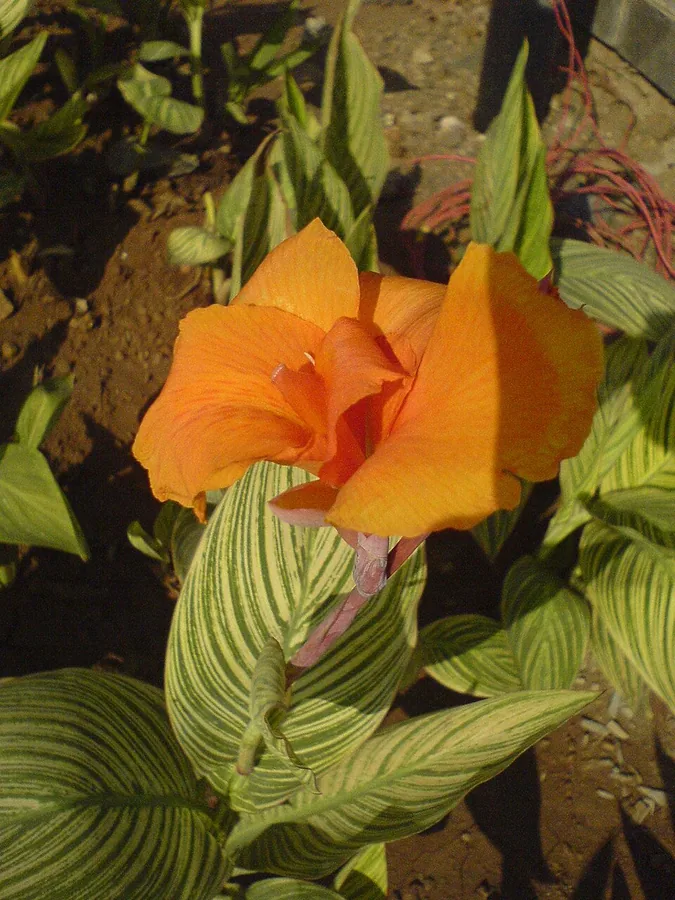
Canna Lily
Canna × generalis
Give it full sun, rich moist soil, and summer heat, and the canna repays you with bold leaves and flame-bright flowers right up to frost.
Full sun
Every 2–5 days
50–95°F · 10–35°C
70–120 days
Overview
The canna lily lends a tropical feel to a temperate garden, with broad paddle-shaped leaves and tall spikes of bold bloom. In spite of the name it is not a true lily, but a rhizome-rooted perennial in the family Cannaceae, a closer relative of gingers and bananas. It grows quickly and gets large, from a knee-high bedding type all the way up to a near 8 feet (240 cm) giant, so there is a canna for almost any spot.
Warmth and water are exactly what it craves, which makes it kind to a beginner. Set it in full sun and rich, moist soil, keep it watered through the hot months, and it answers with flowers from midsummer right up to the first frost. It happily takes conditions that would wilt fussier plants, so it is a forgiving choice for anchoring a bed or filling a big pot.
The one limit to keep in mind is cold. In zones 7 to 10 the rhizomes overwinter happily in the ground, while anywhere colder you simply lift and store them once frost cuts the plant back. Dividing those rhizomes every couple of years keeps the clump strong and gives you free new plants to share.
Care
The short version: give it full sun, rich soil kept evenly moist, and plenty of warmth. Feed monthly through the season, divide the clump every few years, and lift the rhizomes for winter wherever the ground freezes. None of it is hard, and small slips are easy to put right.
Light
Canna loves full sun, at least six hours a day, to flower at its fullest. It will happily put up with partial shade or partial sun, though the blooms thin out and the stems tend to stretch and lean toward the light.
Water
Keep the soil evenly moist, especially while it is growing hard and through hot spells. Canna is one of the rare garden plants that takes some standing water in stride, yet an established clump can also weather a short dry patch, so a missed day won't undo you. Water every 2 to 5 days in the heat of summer.
Soil
Give it rich, moist, well-drained ground worked with plenty of organic matter. It isn't picky about pH and is content anywhere from 6.0 to 8.0, but drainage is the part that truly counts, since soggy soil is what rots the rhizomes.
Temperature
Canna is right at home in heat, growing contentedly from 50°F to 95°F (10°C to 35°C). It carries no cold tolerance at all, so the first frost cuts it down and the rhizomes need lifting wherever winters freeze.
Humidity
Average outdoor humidity suits it just fine, with no figure to fuss over. Thanks to its tropical roots, it never minds muggy summer air one bit.
Feeding
Feed once a month with a balanced all-purpose fertilizer through spring and summer while the plant is growing strong. For a clump in the ground, a quick soil test is your best guide to how much it really wants.
Pruning
Snip off the spent flower stalks to keep fresh blooms coming and the plant looking neat. After the first fall frost in cold zones, cut the foliage back to 2 to 3 inches (5 to 8 cm) before you dig the rhizomes up for storage.
Repotting
Canna asks for no routine repotting, but a crowded clump does appreciate dividing every 2 to 3 years. Watch for dense growth, fewer flowers, or rhizomes pushing up out of the soil, all gentle hints that it has outgrown its space.
Size & spacing
Plants run from 18 inches to 1.5 to 8 feet (46 to 239 cm) tall depending on the type, so check the variety before you place it. Set the rhizomes 1.5 to 3 feet (45 to 90 cm) apart to give those big leaves room to open out.
When to plant
Canna lives for warmth and simply won't take frost, so timing is the one thing worth getting right. In cold zones, start the rhizomes indoors about a month before the last frost, move them outside once the soil has warmed, and the flowers will arrive from midsummer through the first fall frost.
Northern hemisphere
Southern hemisphere
Typical months for a temperate climate: start earlier in warm zones, later where spring frosts linger.
- Sow: Start rhizomes indoors in pots 3-4 inches deep about 4-6 weeks before the last frost in cold zones.
- Plant: After the last frost when soil has warmed, planting rhizomes 3-4 inches deep and 18-36 inches apart.
- Harvest: Blooms mid-summer through the first fall frost (about July to September).
Hardiness
USDA hardiness zones: 7–10
Temperature: down to -18°C
Troubleshooting
Most canna troubles come back to soggy soil or a few familiar pests, and they show up on either the leaves or the rhizomes. The good news is that catching them early usually saves the plant or the rest of the clump. Match what you see below, then act before it spreads, and you'll likely come out fine.
Mushy rhizomes and plants that stall or keel over
If your plant is faltering and the rhizomes feel soft, take heart: this is rhizome rot, and it nearly always comes from soil that stays too wet. Gently lift one and you may find brown, soft tissue with an off smell, sometimes with bud rot or bacterial blight along for the ride. Toss the spoiled pieces, replant only the firm ones in soil that drains well, water a little less, and the clump can carry on.
Fix:
- Lift and discard rotted rhizomes
- Replant healthy firm sections in well-drained, organically rich soil
- Reduce watering and improve drainage
New leaves coming in streaked, mottled, or twisted
When leaves emerge streaked and warped and neither water nor feeding sets them right, the cause is usually canna mosaic virus or aster yellows. Sadly there is no cure once a plant has it, but you can protect the rest of your garden. Pull and destroy the affected plant, keep sap-feeding insects under control, and never start new plants from rhizomes you think might be carrying it.
Fix:
- Remove and destroy infected plants to limit spread
- Control insect vectors
- Do not propagate from infected rhizomes
Leaves that look chewed, holed, or curled tight
Curled or webbed leaf edges are usually hiding the canna leaf roller, the most likely visitor. Japanese beetles, slugs, and snails leave the bigger holes and trails of slime as their calling card. The fix is easy and forgiving: pick the pests off by hand, trim away the worst leaves, and tidy up fallen debris so fewer return next season.
Fix:
- Hand-pick caterpillars, beetles, slugs, and snails
- Remove and destroy rolled or damaged leaves
- Apply an appropriate labeled control if infestation is heavy
Toxicity
Here is some welcome news for pet owners and parents: the canna lily is safe. The name throws people off, but it is not a true lily and carries none of the poison those plants do. The ASPCA lists it as non-toxic to cats, dogs, and horses, and the starchy rhizome is even eaten as food in some countries.
Safe for
People · Cats · Dogs · Horses · Rabbits · Livestock · Birds
Cats None
You can relax with a cat in the house, since the ASPCA lists canna as non-toxic and a curious nibble won't poison them.
Dogs None
Dogs are in the clear too. A pup that chews a leaf or unearths a rhizome might get a mild tummy upset from the roughage at worst.
Horses None
Horses can browse near canna with nothing to fear, as the ASPCA counts it non-toxic to them.
Rabbits Safe
There is no known toxin in the foliage, so rabbits wandering the garden are perfectly fine.
Livestock Safe
Cattle, goats, and sheep come to no harm from canna, since it holds nothing that troubles grazing animals.
Birds Safe
Birds are quite safe around canna, and the hard seeds simply pass through without any trouble.
People Safe
Children and adults have nothing to worry about. In some parts of the world the rhizome is even cooked as a starchy food.
No special handling required for toxicity; wear gloves if sensitive when dividing rhizomes.
Varieties
Cannas come in every size from squat bedding plants to towering giants, in colors from soft cream to fiery red. A handful of names keep coming up, and getting to know them makes choosing one a little easier.
Tropical Series
A neat, seed-grown line bred to stay small enough for pots and bedding, perfect if space is tight.
South Pacific Scarlet
An award-winning, seed-grown pick that opens to bright scarlet blooms.
Canna indica (Indian Shot)
The wild form, with flame-red flowers and hard round seeds that earned it the name Indian Shot.
How to propagate
Canna multiplies most dependably by division, which keeps a variety true to itself, though if you enjoy a slower project you can also raise it from its hard, shot-like seeds.
DivisionEasy
Spring at planting time, or in fall when lifting rhizomes for storage; divide crowded clumps every 2-3 years. · 2 to 6 weeks
Division is wonderfully forgiving and the surest way to keep a favorite variety true. In spring, or while you lift the rhizomes in fall, simply split them so each piece keeps at least one eye, then let the cuts dry for a few days before planting. Refresh a crowded clump every 2 to 3 years and the new pieces settle in within about 2 to 6 weeks.
SeedModerate
Spring, started indoors. · Several weeks to germinate
Seed is the slower, more surprising route, but a patient grower can enjoy it. The hard-coated seeds, the very ones that gave the plant its Indian Shot name, want a quick nick and a soak before they wake up, and germination still takes several weeks. Start them indoors in spring, and know that seed-grown plants may not come true to type.
Myths
Since it's called a lily, the canna must be just as dangerous to pets as the real lilies are.
You can set that worry aside: canna is not a lily at all. It sits in the family Cannaceae rather than Liliaceae, and the ASPCA lists it as non-toxic to cats, dogs, and horses. The only thing it shares with the harmful lilies is part of a name.