Bulb · Asparagaceae
English Bluebell
Hyacinthoides non-scripta
Tuck the bulbs in this fall and watch them carpet the shade in violet-blue come spring.
Partial shade
Every 5–10 days
USDA 5–8
12–18 in · 30–46 cm
Overview
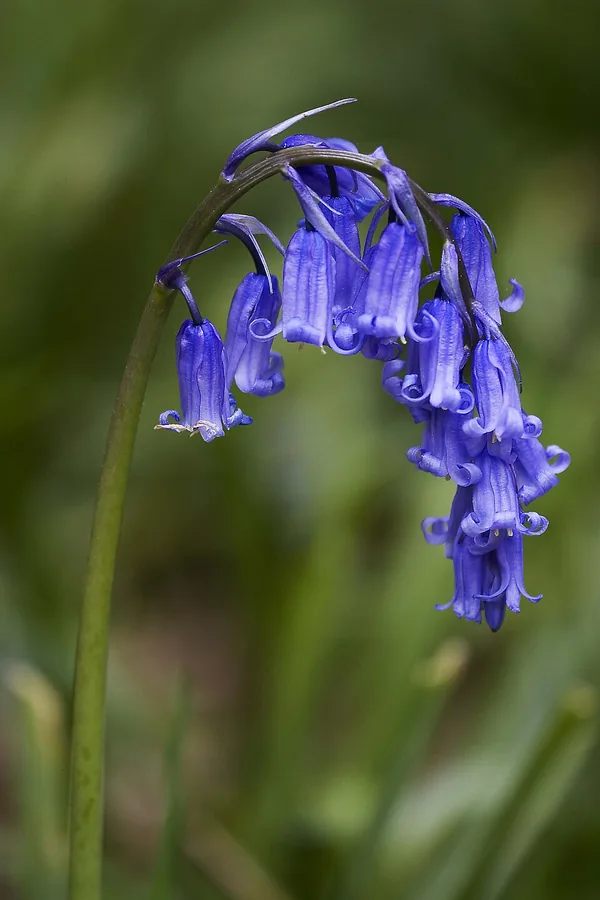
There are few springtime joys to rival a woodland floor washed in English bluebells, and the good news is that growing them is well within anyone's reach. This bulb belongs to the asparagus family, and each spring it raises narrow strap-shaped leaves and a one-sided arching stem of fragrant violet-blue bells from April into May. Hardy across zones 5 to 8, it asks almost nothing of you once the bulbs are settled in the ground.
Bluebells feel most at home in the soft, dappled light beneath trees, the very part shade a woodland gives them, though they will happily make do with full sun or deep shade as well. When the flowers fade, the leaves yellow and the plant eases into summer dormancy, simply resting underground until spring returns. Leave a small planting in good soil and it will spread a little wider each year, with no fuss asked of you.
The one thing to hold in mind is that every part of this plant is toxic. Bulbs, leaves, flowers, and sap all carry cardiac glycosides, and the bulb is the most poisonous part of all. Think of it as a plant for the eyes, set safely clear of pets, grazing animals, and small children, and you will enjoy it for years.
Care
The short version: bluebells love dappled part shade and moist, well-drained, humus-rich soil; plant the bulbs deep in fall and let the leaves fade away on their own, since that quiet dieback is what feeds next spring's bloom.
Light
Bluebells are at their happiest in the dappled part shade under deciduous trees, the same gentle light a woodland floor offers. They will get by in full sun or full shade too, but the soft light beneath a high canopy rewards you with the best flowering and the most natural look.
Water
Through the spring growing season, keep the soil evenly moist but well drained, watering every 5 to 10 days whenever rain comes up short. Once the leaves yellow and the bulb settles into summer dormancy, the plant wants almost nothing, and it can rot if left sitting in soggy ground.
Soil
Give them sandy, humus-rich, well-drained soil and keep them out of heavy, unimproved clay. Any pH from 5.5 to 7.5 suits them just fine, so most garden ground will do once you work in a little compost or leaf mold.
Temperature
These are tough plants, hardy from roughly -20°F to 75°F (-29°C to 24°C). They actually need the winter cold to flower well and brush off hard frosts with ease, which is exactly why they belong outdoors rather than on a windowsill.
Humidity
Plain outdoor humidity is all they ever ask, so there is no figure to fret over. The woodland setting they love tends to keep things a touch damp at ground level all by itself.
Feeding
Feed with a light hand in fall and again in early spring, using a balanced bulb fertilizer or compost worked into the soil. A yearly top-dressing of organic matter is usually all a naturalized planting needs to keep going.
Pruning
There is truly no pruning to do, only a little patience. Let the foliage die back on its own after the flowers fade so the bulb can recharge, then clear away the spent leaves only once they have gone fully yellow.
Repotting
Bulbs left in the ground only need lifting every 3 to 4 years, and only once clumps grow crowded and the blooms start to thin. Lift and divide them after flowering, then replant the offsets with plenty of room to spread.
Size & spacing
Plants stand about 12 to 18 inches (30 to 46 cm) tall with a slim spread of 3 to 6 inches (8 to 15 cm). Set the bulbs 4 to 6 inches apart and you give them the room they need to multiply into a drift over the years.
When to plant
Bluebells keep to the gentle rhythm of the woods. Plant the dormant bulbs in fall so they can root over winter, look forward to the bells from April into May, then let the leaves yellow and slip away as the plant rests through summer.
Northern hemisphere
Southern hemisphere
Typical months for a temperate climate: start earlier in warm zones, later where spring frosts linger.
- Sow: Not typically started indoors; sow seed or plant bulbs directly outdoors
- Plant: Plant bulbs in fall, 3-4 inches deep and 4-6 inches apart
- Harvest: April to May
Hardiness
USDA hardiness zones: 5–8
Temperature: down to -29°C
Troubleshooting
Bluebells are wonderfully forgiving, and most of what looks like a problem is really just the plant moving through its seasons. The handful of real issues come down to crowding, weak flowering, or spread you did not invite. Find what matches below and act while a small nudge still does the trick.
Few flowers from clumps that have packed in too tightly
When the show feels thin, the gentle truth is usually overcrowding, where year upon year of bulb offsets crowd in together and quietly compete each other out. Deep shade or thin, hungry soil can also hold the blooms back. The fix is easy and forgiving: lift the clump after flowering, ease the offsets apart, and give them fresh room to grow in rich, well-drained ground.
Fix:
- Lift and divide congested clumps after flowering
- Replant offsets at proper spacing in well-drained, humus-rich soil
Seedlings wandering past the patch, a few like neither parent
English bluebells are eager spreaders, sending offsets out below the soil and dropping seed above, so a neat clump can grow into a colony before you notice. The one thing worth watching is a Spanish bluebell close by, since the two cross with ease and their hybrids blur the gentle native form. Snip the faded flower stems before seed forms, and simply keep your bluebells well away from Hyacinthoides hispanica.
Fix:
- Deadhead spent flower stems before seed sets to limit self-seeding
- Avoid planting near Hyacinthoides hispanica to prevent hybridization
Yellowing, drooping leaves once the blooms have passed
Take heart, because in nearly every case this is simply summer dormancy at work and not any kind of sickness. When the flowers are done, the bulb draws its energy back underground, and the leaves are meant to yellow and sag right on cue. You can leave them to fade in their own time, and only pause for concern if the soil dried out badly during spring and pushed the plant to collapse too soon.
Fix:
- Leave foliage in place until fully yellowed so the bulb can recharge
- Remove leaves only after they have completely died down
Toxicity
This plant is as poisonous as it is lovely, and both are worth respecting. Every part holds scillaren-type cardiac glycosides, the bulb most of all, and eating any of it can upset the stomach and disturb the heartbeat. Keep the bulbs, foliage, flowers, and sap well clear of pets, livestock, and children, and you can enjoy the flowers with an easy mind.
Toxic to
Cats · Dogs · Horses · Rabbits · Livestock · Birds · People
Cats Severe
A cat that nibbles any part of a bluebell tends to show vomiting, a sore belly, and diarrhea first. Since the glycosides press on the heart, a larger mouthful can slow or unsettle the heartbeat, so treat any real bite as reason for a vet visit.
Dogs Severe
Dogs are the likeliest to dig up and chew a bulb, and the bulb is the most poisonous part of all. Expect drooling, vomiting, and diarrhea to come first, and know that a heavy dose can drop the heart rate or upset its rhythm.
Horses Toxic
Those same cardiac glycosides reach horses through grazed foliage or bulbs turned up in a paddock. Keep an eye out for colic, weakness, and an uneven pulse, and keep the plant clear of any field they can get into.
Rabbits Toxic
Bluebell never belongs in a rabbit's diet. The leaves and bulbs hold enough glycoside to upset the gut and strain the heart, so fence it off from any rabbit that roams the garden freely.
Livestock Toxic
Cattle, sheep, and goats can be poisoned if they browse the leaves or dig out bulbs, though most pass over the bitter plant when sweeter grazing is around. A genuine feed brings on stomach trouble followed by cardiac effects.
Birds Caution
Solid reports on birds are scarce, so caution is the kind and sensible choice. The cardiac glycosides that harm mammals are reason enough to keep pet birds and poultry clear of the bulbs, sap, and foliage.
People Caution
No part of this plant is food, and swallowing the bulbs or leaves can bring nausea, vomiting, and an unsettled heartbeat. The sap may leave skin red and itchy too, so wash your hands after handling bulbs and keep little ones well away.
Keep bulbs, foliage, and flowers away from pets and children; sap may also cause minor skin irritation. In reported companion-animal cases, signs are most often gastrointestinal, but cardiac glycoside content warrants caution.
Helpline numbers

United States
ASPCA Animal Poison Control: (888) 426-4435 (fee applies)
Poison Control: (800) 222-1222



Canada
Poison Centres: 1-844-764-7669
Varieties
Bluebells turn up in more than one form, and the one distinction truly worth learning is how to tell the genuine English plant from its Spanish cousin.
Hyacinthoides non-scripta (species, English bluebell)
You can spot the true English bluebell by the way its slender stem nods to one side beneath fragrant, deep violet-blue bells with tips that curl back and creamy-white pollen inside, while the Spanish sort stands stiffly upright, opens its flowers all the way around, and gives off barely any scent.
How to propagate
Bluebells spread happily on their own, and you can lend a hand by planting bulbs, easing offsets apart, dividing weary clumps, or sowing seed if you have patience to spare.
Offsets & pupsEasy
Lift after flowering as foliage dies back · 1 to 2 seasons
Bluebells do most of the work for you, ringing the parent with small offset bulbs all on their own. Once the flowers fade and the leaves begin to die back, lift a clump, gently tease the offsets free, and tuck them in wherever you would like more. Each one needs just a season or two to settle and bloom.
Bulbs & cormsEasy
Plant dormant bulbs in fall, 3-4 inches deep and 4-6 inches apart · One growing season to first bloom
The kindest start for a beginner is dormant bulbs planted in fall, 3 to 4 inches deep and 4 to 6 inches apart. They rest in the ground through winter, flower the next spring, and then naturalize and drift wider each year wherever the soil and shade make them happy.
DivisionEasy
Divide congested clumps after flowering · 1 to 2 seasons
Dividing is a lovely two-for-one, refreshing a tired clump while handing you new plants. As soon as a clump grows crowded and the flowers begin to thin, lift it after blooming, break it into smaller pieces, and set them apart. The flowering comes back over the next season or two.
SeedModerate
Self-sows; collect and sow ripe seed in summer · Several years to flowering size
Seed is the route for the patient gardener. Bluebells sow themselves with ease, yet a seedling takes several years to reach flowering size, which is why most folks begin with bulbs. If you would like to raise your own, gather and sow ripe seed in summer, and deadhead the rest so that free sowing does not turn into spread you never asked for.
Myths
Bluebells must be harmless because animals and people leave them alone.
An animal steering clear of a plant tells you nothing about whether it is safe, and the bluebell proves the point. Every part carries scillaren-type cardiac glycosides, the bulb most of all, and the whole genus is rated highly toxic and potentially fatal if eaten.