Bulb · Asparagaceae
Tuberose
Polianthes tuberosa
Set it in full sun with soil that drains freely, and tuberose will thank you by perfuming late-summer evenings.
Full sun
Every 5–10 days
55–84°F · 13–29°C
90–120 days
Overview
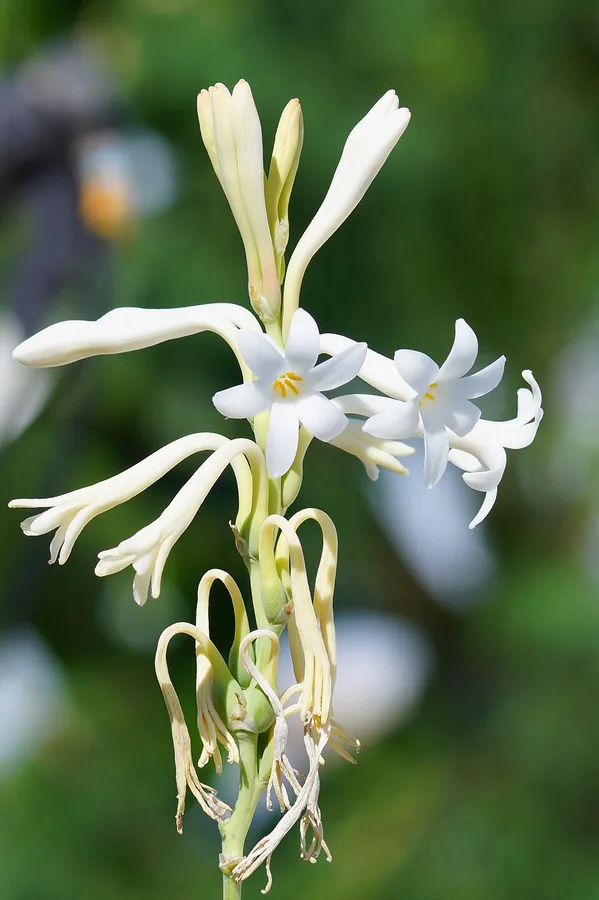
If you have ever caught the scent of tuberose on a warm evening, you already know why gardeners keep coming back to it. The tall spikes open creamy white flowers in late summer, and the perfume drifts long after sunset, which is how the plant earned its place in cut bouquets and evening gardens generations ago. Do not let the name mislead you, because this is no relative of the rose. It is a tuberous-rooted cousin of the agaves, born in Mexico and cherished there for centuries.
Give it room and tuberose reaches 2 to 3 feet (61 to 91 cm) tall, first sending up slim, grassy leaves and then a spike that keeps unfurling blooms for weeks on end. It is a tender perennial, happiest where summers turn warm and winters stay gentle. Do not worry if your winters bite, though, because like dahlias the tubers can be lifted in fall and tucked away safe until spring.
The needs here are wonderfully simple: warmth, sunshine, and soil that lets water run straight through. Plant the tubers in spring, keep them watered through the summer heat, and ease off once the leaves begin to yellow in fall. The one thing tuberose truly cannot abide is soggy ground, so as long as you steer clear of wet, heavy soil, you and this plant will get along beautifully.
Care
The short version: give tuberose full sun and rich soil that drains quickly, then keep it steadily moist all through the summer growing season. Feed it once a month, slowly cut back on water as the leaves yellow in fall, and lift and divide the clumps every few years so the flowers keep coming. None of it is fussy, and small slips are easy to put right.
Light
Tuberose blooms its heart out in full sun, so aim for a spot that soaks up light for most of the day. A little afternoon shade is fine and nothing to fret about, but too much shade nudges the plant toward soft, leafy growth with far fewer flowers to show for it.
Water
Keep the soil evenly moist right through the summer growing season, letting the top half dry out between drinks so the tubers are never left sitting in water. For most gardens a watering every 5 to 10 days does the trick. Once the leaves start to yellow in fall, gently taper off and let the plant drift into its winter rest.
Soil
More than anything else, tuberose wants rich, free-draining loamy or sandy soil. Happily, it is easygoing about acidity and takes a broad span from 6.0 to 8.0, so most ordinary garden beds will suit it just fine, as long as water drains away and never sits in a puddle.
Temperature
This is a plant that loves to be warm, thriving somewhere around 55°F to 84°F (13°C to 29°C). It is tender and cannot ride out a frost, so where winters turn cold, simply lift the tubers and keep them safe in storage before the first freeze arrives.
Humidity
Everyday outdoor humidity is all tuberose asks for, with no target number to chase. It pays far more attention to warmth and good drainage than to how damp the air happens to be, so this is one thing you can happily forget about.
Feeding
Offer a little food once a month through spring and summer while the plant is growing, using a balanced general-purpose garden fertilizer. That gentle, regular feeding gives the tall spikes what they need and keeps fresh blooms opening.
Pruning
Here is some welcome news: there is no routine pruning to worry about. Snip off the flower spikes once they have faded, then leave the foliage in peace to die back on its own in fall, which lets the tuber quietly store up energy for next year's flowers.
Repotting
Rather than repotting, what tuberose really appreciates is the occasional dividing, which keeps it fresh and vigorous. When you notice lots of offsets, blooms tailing off, or tubers nudging up out of the soil, gently split the crowded clumps every 2 to 3 years.
Size & spacing
24–36 in (61–91 cm) tall
When to plant
Tuberose keeps a warm-season rhythm and has no patience for frost, so timing is really about staying a step ahead of the cold. Start the tubers indoors in early spring, move them outside once the last chill has passed, and by August the spikes begin to open, carrying that wonderful scent right through September.
Northern hemisphere
Southern hemisphere
Typical months for a temperate climate: start earlier in warm zones, later where spring frosts linger.
- Sow: Early spring, started in containers before last frost
- Plant: Spring after the last frost date, planted 2 inches deep and 6-8 inches apart
- Harvest: August to September (late summer to early fall)
Hardiness
USDA hardiness zones: 7–10
Temperature: down to -18°C
Troubleshooting
Nearly all tuberose troubles begin down at the tubers or show up as a summer full of leaves with hardly a flower. The good news is that spotting them early usually means an easy fix. Find the picture below that matches yours, then step in gently before the tuber takes any real harm.
Tubers turning soft while the foliage yellows and topples
Do not panic, but this is tuber rot, and it nearly always comes back to soil that has stayed too wet. Tubers set deep in heavy ground end up sitting in trapped water and slowly go soft from within. Lift the plant, trim away every mushy, foul-smelling piece, and settle only the firm, healthy tubers back into sandy or loamy soil that drains in a hurry.
Fix:
- Stop watering and improve drainage
- Lift affected tubers and discard rotted ones
- Replant healthy firm tubers in well-drained sandy or loamy soil
Loads of leaves but very few blooms once the first year is behind you
When tuberose sulks on flowers, it is almost always because crowded clumps are jostling for the same patch of soil, or the leaves were tidied away before the tuber could bank its energy. Divide the clump every 2 to 3 years and let the foliage fade on its own each fall. Save just the largest tubers, since the little offsets need a season or more before they are ready to bloom.
Fix:
- Divide clumps every 2-3 years
- Allow foliage to die down naturally before lifting
- Replant only the largest tubers for reliable bloom
New shoots twisting under a crowd of tiny insects
Those culprits are usually aphids, clustering on the tender new shoots and drinking the sap until the growth puckers and turns sticky with honeydew. Thrips, spider mites, and scale sometimes join the party too. Start kindly with a firm jet of water to knock them loose, and only bring out insecticidal soap if they insist on returning.
Fix:
- Spray off with a strong jet of water
- Apply insecticidal soap if needed
Toxicity
You can relax with tuberose growing near pets, farm animals, and little ones. It holds no known toxins and never turns up on the ASPCA's lists of toxic plants, so a curious nibble is nothing to lose sleep over. The one small thing to keep in mind is the sap, which can mildly irritate sensitive skin, so give your hands a quick rinse after you cut a few stems.
Safe for
People · Cats · Dogs · Horses · Rabbits · Livestock · Birds
Cats None
Tuberose is safe to have around cats and does not appear on the ASPCA's toxic list. A curious nibble on a leaf might bring on a little mild tummy upset, the way any unfamiliar plant can, but there is nothing serious to worry about.
Dogs None
Dogs are welcome to share a garden with tuberose with nothing to fear. There is no toxin lurking here, so a chewed leaf or flower will do them no harm at all.
Horses Safe
Horses are perfectly safe near tuberose. It holds no known toxic compounds and is not flagged as any trouble for grazing animals.
Rabbits Safe
Rabbits can nibble tuberose foliage with no worries at all, since the plant carries nothing that could hurt them.
Livestock Safe
Cattle, goats, and sheep are all in the clear around tuberose, which has no toxicity on record for farm animals.
Birds Safe
Birds are safe around tuberose too, whether they take a peck at it or simply share the space.
People Safe
People are quite safe with tuberose, and the flowers are treasured for their scent. The only small catch is the sap, which can gently irritate sensitive skin, so rinse your hands after handling cut stems.
The flowers are intensely fragrant; the strong scent may be overwhelming to some people in enclosed spaces.
Varieties
Only a few tuberose forms show up again and again, and they sort out mostly by their flowers and their scent. These are the friendly faces worth learning first.
The Pearl
A much-loved double-flowered form whose fully petaled, waxy white blooms look for all the world like a little gardenia.
Mexican Single
A single-flowered form that many gardeners consider the most powerfully scented tuberose of all.
Sensation
A fragrant selection that stands out for its gentle pink-tinted flowers.
Marginata
A miniature form grown just as much for its variegated leaves as for its flowers.
How to propagate
The kindest way to make more tuberose is simply to lift the tubers and split them apart, which happens to be the very same task that keeps a tired old clump blooming happily.
Offsets & pupsEasy
Spring, when lifting and dividing dormant tubers · Largest offsets may bloom the next season; small offsets often take a year or more to reach blooming size
Tuberose kindly multiplies itself, sending up offsets all around the parent tuber. Lift and gently separate them in spring while the tubers are resting. The largest offsets will often bloom the very next season, while the smaller ones want a year or more to grow on before they are big enough to flower, so hold onto them and give them time.
DivisionEasy
Spring, every 2-3 years · One or more growing seasons before reliable flowering
Splitting a crowded clump every 2 to 3 years in spring keeps the whole planting lively and full of flowers. Ease the tubers apart and replant only the biggest for the finest display. Be patient, since it usually takes a growing season or more before the divisions settle in and flower dependably.
SeedModerate
Spring · Several years to reach flowering size
You can raise tuberose from seed sown in spring, but be warned that it is the slow path. Seedlings need several years to reach blooming size, far more than offsets do, which is why most gardeners simply divide the tubers instead.
Myths
Tuberose must be some kind of rose.
The name catches nearly everyone out, yet tuberose shares no family ties with roses whatsoever. It is a tuberous-rooted member of the Asparagaceae family, known as Polianthes tuberosa and also placed under the name Agave amica. The name simply points to its swollen tuber, taken from the Latin tuberosa, and has nothing to do with any bloom.