Bulb · Asparagaceae
Siberian Squill
Scilla siberica
Tuck the bulbs in once and a soft blue carpet returns each spring, entirely on its own.
Full sun
Every 7–14 days
USDA 2–8
3–6 in · 8–15 cm
Overview
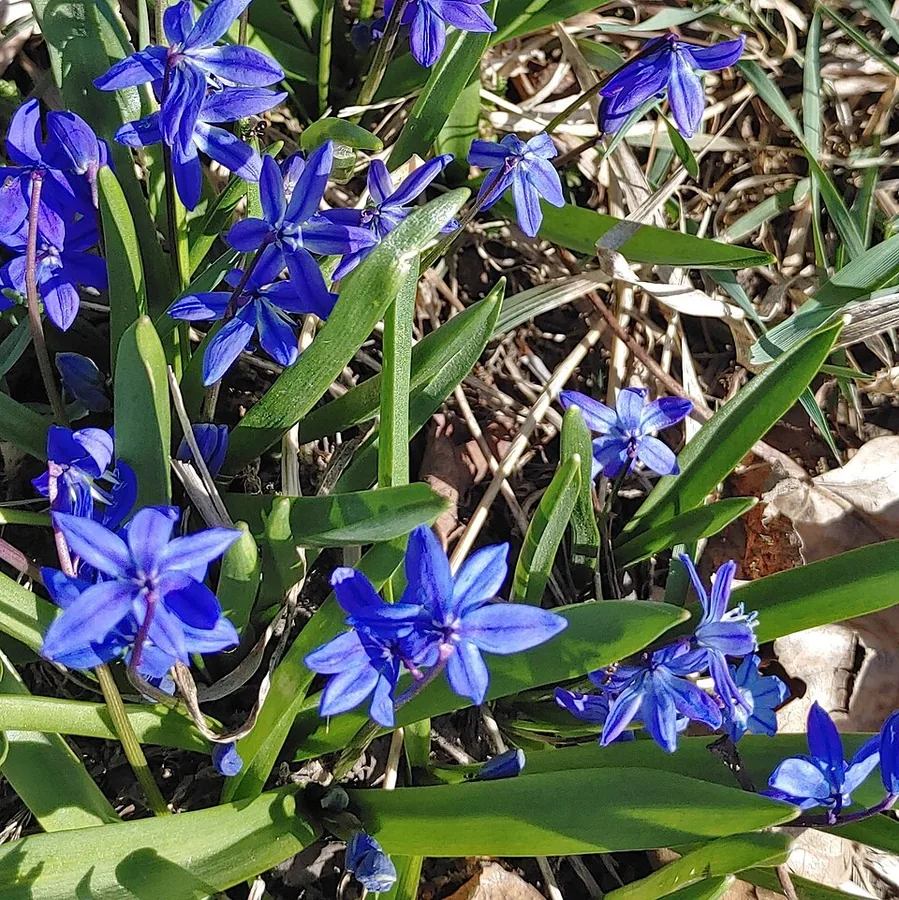
If you are just starting with spring bulbs, Siberian squill is a kind place to begin. It is one of the earliest to wake, lifting deep blue bells into the cool air soon after the snowdrops. The plant keeps close to the ground at only 3 to 6 inches (8 to 15 cm) tall, so it looks its happiest planted in loose drifts beneath trees, beside a path, or scattered across a lawn you can leave unmowed for a while.
Here is the reassuring part and the thing to watch, both at once. These bulbs are remarkably cold hardy, taking winters all the way down to -40°F (-40°C) without any fuss, and once they are in the ground they ask for next to nothing. The other side of that ease is eagerness, since squill seeds itself and forms offset bulbs quickly, so it can wander out of the bed and into lawns or woodland, and in parts of the US it is treated as invasive.
One honest caution matters more than the rest. Every part of squill is poisonous, the bulb most of all, so it is not a good fit where animals browse or toddlers like to dig. Choose its place with that in mind, and this small bulb will thank you with years of easy, dependable color.
Care
The short version: settle the bulbs 2 to 3 inches deep in fall, offer them sun to part shade and soil that drains freely, keep them watered as they grow in spring and then let them go dry through dormancy, and snip the spent blooms if you would rather rein in the spreading.
Light
Squill is happiest in full sun, though it takes partial sun or partial shade in stride. Because it flowers so early, before the trees open their leaves, a place under deciduous trees still bathes it in light exactly when it needs it.
Water
Keep the soil at a gentle, even moisture while the plant is growing and blooming in spring, then relax as the leaves fade. Through summer the bulbs sleep and want almost no extra water, and the only real danger is leaving them to sit in wet ground.
Soil
All squill really wants is average soil that drains well, and it stays relaxed about pH. Good drainage counts for far more than rich ground, and that is truest during the dry summer rest.
Temperature
This is a wonderfully hardy little bulb, comfortable across zones 2 to 8 and shrugging off lows near -40°F (-40°C). It does its growing in the chill of early spring and settles into rest once the weather warms past about 75°F (24°C).
Humidity
You will not need to think about humidity at all, since everyday outdoor air suits squill just fine. The thing that truly counts is letting the soil dry out for the bulb's summer rest.
Feeding
Feeding is barely on the to-do list when the soil is average. A simple yearly topdressing of compost or a balanced bulb fertilizer, laid down in fall or early spring, gives it everything it needs, and more than that just goes to waste.
Pruning
There is really nothing to prune. Let the leaves yellow and fade on their own after the flowers finish so the bulb can build its reserves, and only trim the old flower heads if you would like to calm its generous self-seeding.
Repotting
Settled bulbs seldom need to be lifted. Your cue to step in is when the blooms thin out in a packed clump or the bulbs begin crowding up to the surface, and then you simply dig them up and divide.
Size & spacing
These plants stay charmingly small, around 3 to 6 inches (8 to 15 cm) tall and roughly as wide, which is just why drifts suit them. Tuck the bulbs 2 to 3 inches deep in fall and leave a little space between them so they can knit into a sheet of blue.
When to plant
Squill keeps an easy early-spring rhythm you can trust. Get the bulbs in during fall while the soil still turns easily, let the winter pass, and the blue flowers greet you around April, just as the snowdrops are bowing out.
Northern hemisphere
Southern hemisphere
Typical months for a temperate climate: start earlier in warm zones, later where spring frosts linger.
- Plant: Plant bulbs in fall, 2-3 inches deep
- Harvest: Blooms in early spring (around April), shortly after snowdrops
Hardiness
USDA hardiness zones: 2–8
Temperature: down to -46°C
Troubleshooting
Few bulbs are this forgiving, so squill rarely gives you trouble, and what little it does trace back to soggy soil, a single bulb pest, and its own enthusiasm for spreading. Find your symptom below and step in early, while the fix is still simple.
Soft bulbs and a crown that gives way
Do not blame a disease you can spray for here, because this is crown and bulb rot and it comes from soil that simply stays too wet. Squill bulbs dislike sitting in water, most of all during their summer sleep. Ease your worry by lifting a few to check for soft, brown, bad-smelling tissue, toss anything spongy, and move the planting to a spot that drains more sharply.
Fix:
- Remove and discard affected bulbs
- Improve drainage or move planting to a better-drained site
- Reduce watering, especially during dormancy
Hollow bulbs and shoots that stall or fail to appear
If a bulb pushes up twisted or never really gets going, the likely culprit is the narcissus bulb fly. Its larva tunnels inside and eats away the heart of the bulb, leaving a hollow shell filled with frass. Slice a suspect bulb open and look for one plump cream-colored maggot, then dig up and destroy anything infested and turn the soil over to bring the pupae into the open.
Fix:
- Dig and destroy infested bulbs
- Cultivate soil to expose pupae
Squill showing up well beyond where you set it
Siberian squill is a keen self-seeder that also multiplies through bulb offshoots, so its colonies drift into lawns, beds, and the woods next door. Parts of the US list it as invasive. Stay ahead of it by mowing or deadheading the flowers before seed forms, digging and thinning any crowded clumps, and keeping it away from natural areas.
Fix:
- Mow or deadhead while in bloom to remove seed heads before seed sets
- Dig and thin clumps before seeds mature
- Compost removed material at temperatures above 130 degrees F
Toxicity
This is the one place to be firm rather than relaxed. Every part carries cardiac glycosides, with the bulb the most potent, and swallowing any of it can bring drooling, vomiting, and cramping, and in larger amounts a dangerously slow or uneven heartbeat. Keep it clear of pets, livestock, and children, and reach a vet or poison control right away if any is eaten.
Toxic to
Cats · Dogs · Horses · Rabbits · Livestock · Birds · People
Cats Severe
A cat that nibbles any part may begin drooling and vomiting before long. The bulb carries the most cardiac glycoside, and a genuine mouthful can unsettle the heart rhythm, so please treat it as an emergency.
Dogs Severe
Dogs tend to dig up and chew the bulb, which is the riskiest part of all. Look first for drooling, vomiting, and diarrhea, followed by a slowed or irregular heartbeat if a large amount is swallowed.
Horses Severe
The same cardiac glycosides act on horses too, bringing on colic and a dull, unsteady animal. A heavy dose can throw off the heartbeat, which is serious in a grazer of that size.
Rabbits Toxic
Squill is not safe grazing for rabbits. Both the bulb and the foliage can upset the stomach and, in any quantity, reach the heart, so keep the plant far out of their reach.
Livestock Toxic
Cattle, sheep, and goats can all be poisoned by browsing the leaves or turning up bulbs. Watch for drooling, an upset gut, and an irregular heartbeat, and fence the patch away from pasture.
Birds Toxic
The cardiac glycosides leave every part unsafe for birds, backyard poultry that scratch up bulbs included. Keep hens and pet birds well clear of the plantings.
People Caution
No part of this plant belongs on a plate. Swallowing it can cause mouth pain, nausea, vomiting, and cramping, and the bulb in quantity may slow or unsettle the heart, so keep curious children away and call poison control if any is eaten.
Keep bulbs and plants away from pets and children; wear gloves when handling, as sap can cause minor skin irritation in susceptible individuals.
Helpline numbers

United States
ASPCA Animal Poison Control: (888) 426-4435 (fee applies)
Poison Control: (800) 222-1222



Canada
Poison Centres: 1-844-764-7669
Varieties
There is not much to memorize here, which is a relief. Apart from the wild species, a single named form shows up most often, and telling the two apart is simple once you look.
Spring Beauty
It resembles the wild species closely but grows a touch larger, holds its bloom longer, and shows a richer, deeper blue.
Scilla siberica (species)
The true species raises 3 to 4 slim scapes, and each one carries 1 to 3 nodding bell-shaped deep blue flowers brightened by blue anthers.
Companions
Squill pairs best with the other earliest bulbs that bloom alongside it and naturalize the same way, building a layered carpet of late-winter and early-spring color.
Plant near
Galanthus (snowdrops): Both are very early spring bulbs that bloom in sequence and naturalize well together in drifts.
Crocus: Similar early-spring bulb that can be naturalized in lawns and beds alongside squill for layered bloom.
How to propagate
Making more squill is honestly the easy part, because the plant handles most of the effort itself. You can give it a nudge by dividing clumps or setting out fresh bulbs, or simply let it scatter its own seed and fill in.
Offsets & pupsEasy
Lift and separate dormant bulbs after foliage dies back · One growing season
The gentlest way to get more squill is to let the plant build up offsets and then divide the reward. Once the leaves have died back and the bulbs have gone dormant, lift a crowded clump and gently tease the offset bulbs apart with your hands. Pop them back in and they will find their feet within a single growing season.
Bulbs & cormsEasy
Plant bulbs 2-3 inches deep in fall · Blooms the following spring
Starting from bought bulbs could hardly be simpler. Place them 2 to 3 inches deep in fall, leave them undisturbed, and they will flower the following spring. The bulbs are tough and extremely cold hardy, so even a hard winter does them no harm.
SeedEasy
Self-sows in spring as seed matures · Several years to flowering size
Squill will sow itself without any help from you, dropping seed in spring as the pods ripen. That easy spread is exactly what fuels its aggressive naturalizing. Seedlings need several years to reach flowering size, so this is the patient route if you truly want it.
Myths
Siberian squill is a harmless little spring bulb that is safe around pets.
In truth every part carries cardiac glycosides and counts as a high-severity poison. Eating it can bring on vomiting, diarrhea, and a slowed heart rate, and a real mouthful can be fatal. Keep the bulbs and plants well away from pets and children.
Because it is such a small ornamental bulb, it will stay right where you plant it.
It naturalizes quickly through self-seeding and bulb offshoots, easing out of the beds and into lawns and woodlands. Parts of the US consider it invasive, so deadhead it and keep it clear of wild ground.