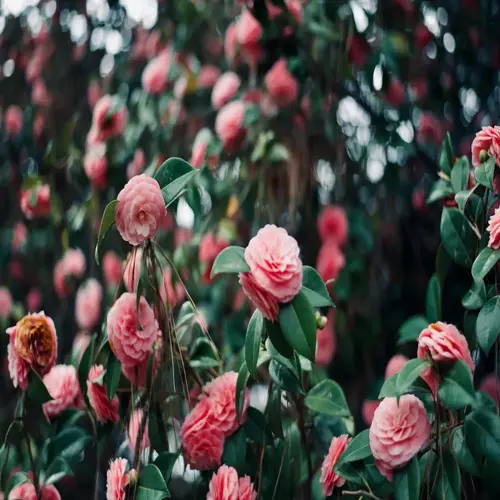

The common problems with camellias come down to four main issues. Clemson Extension lists them as dieback and canker, root rot, camellia flower blight, and tea scale. Most of these trace back to poor planting choices or lack of attention to soil and drainage. Fix those basics and you avoid the majority of camellia headaches.
Good camellia troubleshooting starts with looking at the leaves. I once had a japonica that turned yellow across all its leaves in just a few weeks. My first guess was too much water. I cut back on watering but the plant got worse. A soil test showed my pH had crept up to 7.0 over time. The high pH locked iron out of the root zone and caused chlorosis. Once I added sulfur and brought the pH back to 6.0, the green color came back within a couple months.
Tea scale is one of the sneakiest pests you'll face with camellias. These tiny insects hide on the underside of leaves and feed on the plant sap. You won't see them at first. What you will see is yellow speckling on the top of the leaves. Flip a leaf over and you'll spot white or brown bumps clinging to the surface. UF/IFAS says you can blast them off with a strong hose spray or treat with horticultural oil sprayed on the leaf bottoms.
Sooty mold shows up as a black coating on your camellia's leaves. It grows on the sticky honeydew that aphids and scale insects leave behind. The mold itself doesn't attack the plant but it blocks sunlight from reaching the leaf. Your plant can't make food and growth slows down. Kill the insects first with oil spray and then wash the mold off with soapy water and a soft cloth.
Root rot hits camellias planted in heavy clay or spots where water pools after rain. The Phytophthora fungus attacks the roots and your plant wilts even though the soil is wet. You might think it needs more water but adding more just makes things worse. The best fix is to plant in well-drained soil from the start. If you catch it early, you can dig up the plant, trim the rotten roots, and move it to a raised bed.
Camellia flower blight turns your beautiful blooms into brown mush. A fungus in the soil infects the petals and causes them to rot fast. You can spot it by the brown veins that run through the flower tissue. Pick up and throw away all fallen petals under your plants. Don't compost them because the fungus survives in the pile. A 2-inch layer of fresh mulch in late winter creates a barrier between the soil fungus and your flowers.
Leaf and Pest Check
- What to do: Flip over 5 to 10 leaves on each plant and look for tiny scale insects or white bumps on the bottom surface.
- Why it helps: Catching tea scale early keeps the problem small and saves you from having to use heavy sprays later in the season.
- Action if found: Spray affected leaves with horticultural oil, making sure to coat the bottom of each leaf where the pests hide.
Soil pH Testing
- When to test: Check your soil pH once a year in early spring before you feed your camellias for the season.
- Target range: Keep pH between 5.5 and 6.5 for best nutrient uptake through the roots of your plant.
- Fix high pH: Work sulfur into the soil at the rate on the package and mulch with pine bark or pine straw to lower it over time.
Fallen Petal Cleanup
- Timing: Pick up spent blooms every week during the flowering season to prevent blight fungus from spreading in your garden.
- Disposal: Bag fallen petals and put them in the trash instead of your compost pile to keep the fungus out of your soil.
- Prevention: Add fresh mulch under your plants in late winter to create a barrier between soil spores and new flower buds.
Most camellia plant problems are easy to prevent if you stay on top of a few simple tasks. Check your plants once a month, test your soil once a year, and clean up fallen petals during bloom season. These habits take just a few minutes but save you from big problems down the road. Your camellias will stay healthy and keep blooming for years when you give them this small amount of care.
Read the full article: Camellia Plant Care and Growing Guide