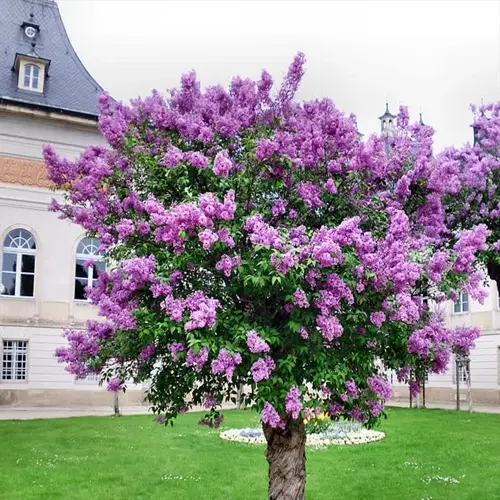

The difference between lilac bush and lilac tree comes down to growth form, not species. A bush grows with multiple stems from the ground while a tree has a single trunk topped with a rounded canopy. Both produce the same fragrant spring flowers. The distinction matters most for how the plant fits into your yard and how much pruning you'll need to do.
The lilac bush vs lilac tree question confused me until I saw both growing side by side at a local garden. The multi-stemmed common lilac spread out wide and low like a dense hedge. Right next to it stood a Japanese tree lilac trained to one trunk with a neat canopy on top. They looked like two different plants even though they share the same genus. I also noticed the bush form had suckers popping up all around its base while the tree form looked clean and tidy. That visit taught me how much growth habit shapes the look of your landscape.
Nurseries create the lilac tree form through years of careful pruning. They pick one strong central stem during the plant's youth and cut away all the others. Over 3 to 5 years, they keep removing side shoots and suckers until the single trunk can stand on its own. The canopy fills in on top and gives you that classic tree shape. This training takes skill and time, which is why tree-form lilacs cost more at the garden center. The multi-stem vs single-trunk lilac choice also affects long-term care. Tree forms need ongoing sucker removal to hold their shape. Skip a season and new shoots will sprout from the base and ruin the clean trunk look.
Your common lilac or Syringa vulgaris is the classic bush form. It grows 8 to 16 feet tall and spreads 6 to 12 feet wide. This shape works great as a privacy screen or border planting in your yard.
The Japanese tree lilac is the true tree form in this family. You may see it sold as Syringa reticulata at garden centers. It reaches 20 to 30 feet tall and makes a strong focal point in your front yard. You'll get creamy white flowers in early summer instead of the purple spring blooms you might expect.
Your yard size should guide your pick. Small yards under a quarter acre do better with compact bush forms or dwarf types that top out around 5 feet. Larger properties can handle the height of a Japanese tree lilac without feeling crowded. If you want lilac blooms but dislike pruning, stick with the bush form. It grows into its natural shape without much fuss. I've found that bush forms fill gaps in a landscape faster and need less hands-on attention through the year.
Tree-form lilacs cost $50 to $150 more than bush forms at most nurseries because of the extra training involved. You also need to budget time for annual sucker removal to keep that clean trunk intact. I planted a tree-form lilac in my front yard two years ago and I spend about 15 minutes each spring cutting back suckers. A bush would give you just as many flowers with far less effort. But if you want a neat focal point with height, the tree form delivers a look no bush can match.
Pick the form that fits your space and your willingness to maintain it. Either way, you'll enjoy those fragrant spring blooms for decades with just a little care.
Read the full article: Lilac Tree: A Complete Growing Guide