
Your onions ready to harvest will show clear signals you can spot from several feet away in the garden. The most reliable sign appears when 50-67% of the tops have fallen over on their own without any help from you. Once you see more than half your onion patch lying flat, you know the bulbs have reached their peak size and need to come out soon.
I learned the pinch test years ago and now use it on every single harvest. Walk through your rows and gently squeeze the neck right where the green top meets the bulb. A ready onion has a soft, flattened neck that gives way under light pressure. If the neck still feels firm and round, that bulb needs another week or two in the ground to finish growing.
Watching for onion harvest signs helps you time your digging just right. Those yellow leaves aren't dying from disease or lack of water. The plant has finished moving its stored carbohydrates from the leaves down into the bulb rings. This transfer takes several weeks to complete. The yellowing foliage tells you the job is done and the bulb is full.
Nebraska Extension research found that 80% foliage dieback gives you the best flavor. Waiting for most tops to yellow lets the bulb pack in all its stored energy. Onions picked at this stage taste stronger. They also store much longer than those pulled while still green.
More onion maturity indicators show up as harvest nears. The outer skin should look papery and dry even while still in the soil. Bulb shoulders often push up above ground level as they reach full size. The whole plant looks tired compared to its earlier vigorous growth.
My first year growing onions taught me patience the hard way. I pulled half my crop too early because I got excited seeing the first few tops fall. Those bulbs were small and didn't last past September. The ones I left another two weeks grew 30% larger and stored until December without a single soft spot.
Fallen Tops
- Percentage check: More than half the foliage in your patch should lay flat on the ground without anyone pushing them over.
- Natural process: Tops bend at the neck as moisture leaves the tissue. Forced bending damages the plant instead of helping.
- Timing window: From first tops falling to harvest usually spans 10-14 days for the whole patch to finish.
Soft Neck Test
- How to check: Pinch gently where green meets white and feel for a flattened, soft texture rather than a firm round stalk.
- What it means: Soft necks show the water channel between leaves and bulb has closed off. This signals complete maturity.
- Multiple samples: Test 5-10 onions across different rows since some mature faster than others.
Papery Outer Skin
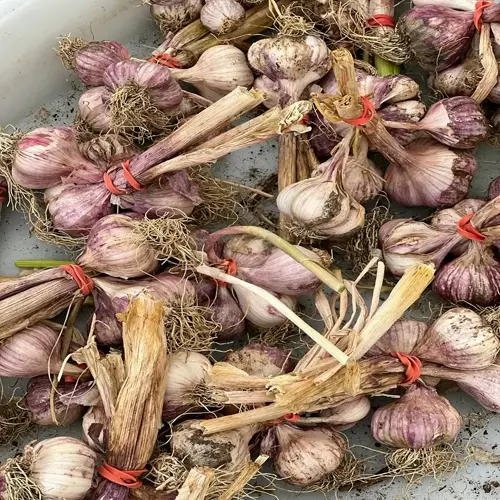
- Visual sign: The outermost layer should feel dry and crinkle when touched, even before you pull the bulb from soil.
- Color matters: Look for tan, brown, or reddish-purple tones depending on variety rather than wet-looking white skin.
- Storage connection: This papery wrapper protects the bulb during curing and months of storage ahead.
Knowing when to pick onions means watching these signs over several days rather than rushing out after one fallen top. Give your patch time to mature together. Most gardeners find their onions ripen within a two-week window once the first tops start dropping.
Check your onions every few days as harvest season approaches. Pull one test bulb and cut it open to inspect the rings inside. Thick, tightly packed layers mean the carbohydrate transfer finished and your crop sits at peak quality. Thin or watery rings suggest waiting another week before the main harvest begins.
Read the full article: 7 Essential Signs for When to Harvest Onions