
Introduction
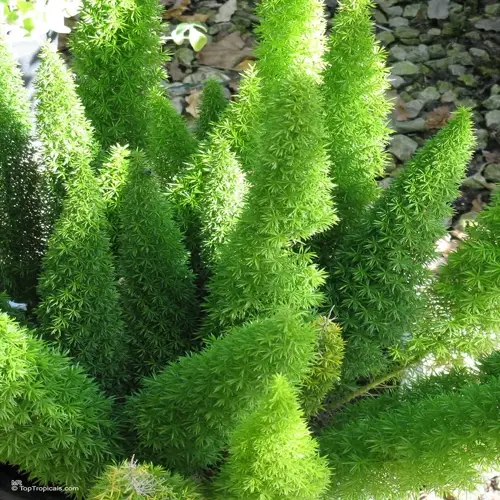
The foxtail fern has soft green plumes that fan out just like a fox's bushy tail. But this plant carries a secret that surprises most new owners. It isn't a fern at all. It belongs to the Asparagaceae family, the same group as the asparagus on your plate.
Its real name is Asparagus densiflorus. Most garden centers sell the Meyersii cultivar under the name Myers fern. Those soft green needles aren't true leaves at all. They're modified branches called cladodes that grow in dense clusters. Southern Africa alone is home to about 69 Asparagus species. The first recorded illustration of one dates all the way back to 1686.
I've grown these plants in containers for over 8 years, and their tough nature still catches me off guard. They store water in thick tuberous roots beneath the soil. That means they forgive you when you skip a watering for a week or two. Foxtail fern care is simpler than most guides make it sound once you grasp how those roots work.
This guide walks you through cultivar choices, soil needs, and responsible growing tips that protect native plants. You'll find out which variety poses the least risk of spreading. You'll also learn how to keep your plant thriving for decades in pots or garden beds.
Foxtail Fern Cultivars
Most garden centers lump every foxtail fern cultivar under one label. The differences between them matter a lot though. The classic Myers fern grows in a tight bottle brush shape. The Sprengeri asparagus fern sends out long arching stems like a green fountain. Picking the wrong one means you end up with a plant that doesn't fit your space.
I made that mistake on my first buy. I grabbed a Sprengeri thinking it was the compact foxtail fern vs asparagus fern type I saw online. Asparagus densiflorus Meyersii stays neat and short. The Sprengeri took over a whole shelf within a few months. Knowing your foxtail fern cultivars before you shop saves you time and trouble.
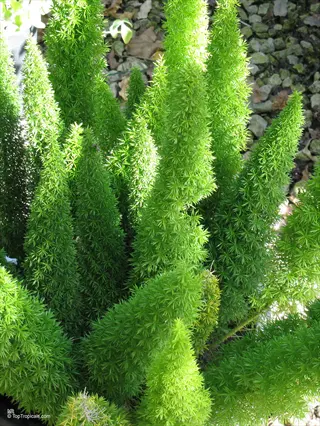
Meyersii Foxtail Fern
- Growth Habit: Compact, upright plume-shaped stems that grow 18 to 24 inches (45 to 60 centimeters) tall with dense needle-like cladodes arranged in a bottle-brush pattern.
- Light Preference: Performs best in partial shade to full sun, with shade-grown plants developing longer stems and sun-grown plants becoming more compact and sturdy.
- Invasive Potential: Produces fewer seeds than other cultivars and has significantly lower invasive risk according to University of Wisconsin-Madison Extension research.
- Best Uses: Excellent choice for containers, hanging baskets, and mixed borders where its upright form provides architectural interest without aggressive spreading.
- Salt Tolerance: Handles coastal salt spray well, making it suitable for beachside gardens and seaside container displays in warm coastal regions.
- Root System: Develops dense tuberous roots that store water, enabling strong drought tolerance but also powerful enough to crack terracotta and plastic pots over time.
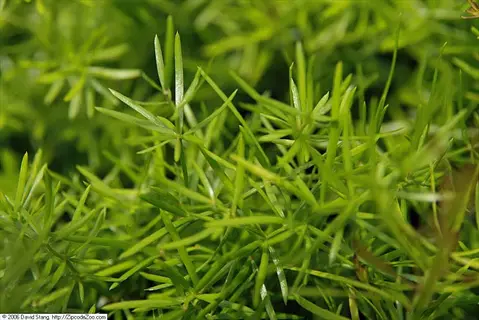
Sprengeri Asparagus Fern
- Growth Habit: Long, arching stems reaching up to 6 feet (1.8 meters) that cascade gracefully, creating a trailing or groundcover effect in garden beds and hanging planters.
- Light Preference: Tolerates more shade than Meyersii and thrives under tree canopies or on shaded patios, though full sun produces denser and more compact growth.
- Invasive Potential: Produces abundant red berries that birds eat and spread readily, classified as a Category 1 invasive species in Florida by the state invasive plant council.
- Best Uses: Popular for hanging baskets and elevated planters where its trailing stems create dramatic visual cascades, and widely used in floral arrangements with vase life up to three weeks.
- Spread Pattern: Spreads aggressively through both bird-dispersed seeds and underground rhizomes, making containment essential in warm climates outside its native range.
- Root System: Produces extensive creeping rhizomes in addition to tuberous storage roots, allowing the plant to colonize large areas rapidly if left unmanaged.
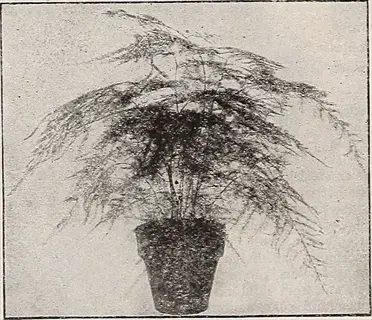
Cwebe Asparagus Fern
- Growth Habit: Distinguished by bronze to copper-colored new growth that matures to deep green, providing unique seasonal color variation unlike any other Asparagus densiflorus cultivar.
- Light Preference: Prefers partial shade to maintain its distinctive bronze coloring on new growth, as intense full sun can cause the delicate young cladodes to scorch.
- Unique Feature: The copper-toned new growth makes this cultivar stand out in mixed plantings and container arrangements where color contrast adds visual depth throughout the year.
- Best Uses: Works beautifully as a specimen plant in shaded garden borders or as a focal point in container groupings where its unusual coloring draws attention.
- Availability: Less commonly sold than Meyersii or Sprengeri, so gardeners may need to seek it from specialty nurseries or online growers who focus on unusual ornamentals.
- Care Notes: Requires similar care to other Asparagus densiflorus cultivars but benefits from slightly more shelter from wind and harsh afternoon sun to protect new bronze growth.
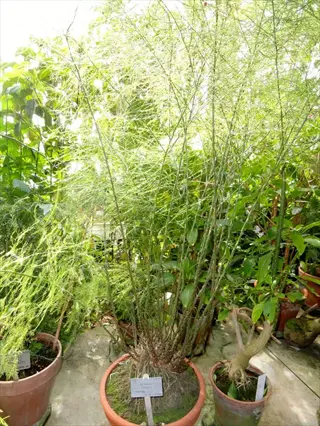
Sprengeri Nanus Dwarf
- Growth Habit: A compact dwarf form of the Sprengeri cultivar that stays smaller and more manageable, reaching about 12 to 18 inches (30 to 45 centimeters) in height.
- Light Preference: Adapts well to both bright indirect light indoors and partial shade outdoors, making it one of the most versatile cultivars for varied growing conditions.
- Best Uses: Ideal for smaller containers, tabletop displays, and terrariums where a full-sized Sprengeri or Meyersii would quickly outgrow the available space.
- Indoor Suitability: One of the best Asparagus densiflorus choices for indoor growing because its compact size fits windowsills and its slower growth means less frequent repotting.
- Spread Pattern: Produces fewer berries than the standard Sprengeri and its compact root system makes it easier to contain in pots without the risk of cracking containers.
- Care Notes: Water slightly less than larger cultivars due to a smaller root mass, and fertilize lightly during the growing season with a balanced liquid fertilizer at half strength.
The Meyersii cultivar is the best pick for most home gardeners. It stays compact, produces fewer seeds, and poses less risk of spreading into wild areas. If you want a trailing look, consider the Nanus dwarf over the full Sprengeri to keep things under control.
Foxtail Fern Care Essentials
Foxtail fern care changes based on where you live and how you grow your plant. A potted fern on a shaded porch in zone 9 needs different treatment than one planted in a sunny zone 11 garden bed. The table below gives you a quick reference for the most common care factors.
Your foxtail fern light requirements depend on your climate. Full sun makes the stems grow compact and dense based on UW Madison research. Shade produces longer stems with a more open shape. In hot zones like 10 and 11, give your plant morning sun with afternoon shade to prevent scorch. In cooler zones 7 and 8, full sun works fine because the heat isn't as intense.
Foxtail fern watering tripped me up more than anything else when I started growing these plants. You'll find guides that say to water when the top inch of foxtail fern soil dries out. Others say to wait until the top 3 inches are dry. The right answer depends on your pot size and climate. Small pots in hot weather dry out fast, so check at 2 inches. Large garden beds hold moisture longer, so waiting for 3 inches makes more sense.
Foxtail fern temperature tolerance runs from USDA zones 9 through 11 for year round outdoor growth. Roots can survive down to zone 7 if you add a thick layer of mulch before winter hits. The plant bounces back from frost damage as long as those tuberous roots stay protected underground.
Propagation and Repotting
In my experience, learning how to propagate foxtail fern gives you free plants from the one you already own. You have 2 main options here. Foxtail fern division through the roots is fast and works well for most growers. Growing foxtail fern from seed takes more patience but lets you raise dozens of new plants from a single batch of berries.
I've done both methods over the years. Foxtail fern propagation through root division gave me strong new plants within weeks. Seeds took closer to 2 years before the seedlings looked like anything worth showing off. If you want results fast, go with division every time.
Root Division Method
- When to Divide: The best time is early spring just before new growth begins, when the plant has stored energy in its tuberous roots over winter.
- How to Divide: Remove the plant from its pot, shake off excess soil, and use a sharp clean knife to cut the root ball into sections with at least three stems each.
- Aftercare: Plant each division in fresh well-draining soil, water thoroughly, and place in bright indirect light for two to three weeks while roots establish.
- Success Rate: Root division has a high success rate because each section already has established tuberous roots that provide stored water and nutrients.
Seed Germination Method
- Seed Preparation: Remove the 1 to 2 black hard seeds from ripe red berries, scarify with sandpaper, and soak in warm water for 24 hours before planting.
- Planting Depth: Press seeds about half an inch (1.3 centimeters) into moist seed-starting mix and cover lightly; maintain consistent moisture without waterlogging.
- Germination Time: University research reports germination in 3 to 6 weeks at room temperature, though some seeds may take up to 8 weeks depending on freshness.
- Growth Timeline: Seedlings grow slowly for the first year and typically need 2 to 3 years before reaching a mature size suitable for landscape or container display.
Repotting Guidelines
- Frequency: Repot every 2 to 3 years or sooner if you notice roots pushing through drainage holes or cracks forming in the container walls.
- Pot Selection: Choose a pot only one size larger than the current container with drainage holes; terracotta breathes well but is more prone to cracking from strong roots.
- Soil Mix: Use a blend of two parts peat moss, one part perlite, and one part compost to provide drainage, aeration, and nutrients in a slightly acidic medium.
- Timing: Repot in early spring before the growing season begins so the plant can recover quickly and fill the new container during its most active growth period.
Container Selection Tips
- Material Choice: Ceramic and thick plastic pots resist cracking better than thin terracotta when tuberous roots expand, which Susan Mahr of UW-Madison notes are strong enough to break pots.
- Drainage Essentials: Every container must have drainage holes at the bottom; add a layer of gravel or broken pottery shards to prevent soil from blocking the openings.
- Size Matters: A pot that is too large holds excess moisture around roots and increases the risk of rot, while a too-small pot restricts growth and dries out quickly.
- Weight Consideration: Use lightweight resin or fiberglass pots for large specimens that need to be moved indoors during winter in USDA zones 7 and 8.
Foxtail fern repotting catches many people off guard because the roots grow with surprising force. I once found a crack running down the side of a thick ceramic pot. The tuberous roots had pushed right through it. Check your pots each spring and move up a size before the roots do the job for you.
Uses and Landscape Design
Your foxtail fern can do much more than sit in a pot on the patio. In my experience, foxtail fern containers grouped near your front door make a big statement. The fine needle texture looks stunning next to bold leafed foxtail fern companion plants like elephant ears and caladiums. UF IFAS research backs this up with design tips that most blogs skip over.
The foxtail fern landscape options go well beyond simple border plantings too. Its salt tolerance makes it one of the few ornamental picks that can handle beachside exposure without browning out. Cut stems also last up to 3 weeks in water, which makes foxtail fern flower arrangements a great bonus from your garden.
Container and Patio Displays
- Placement Ideas: Position containers flanking entryways, along pool decks, or as centerpieces on outdoor dining tables where their upright plume shape creates architectural focal points.
- Companion Containers: Pair with bold-leaved plants like elephant ears, caladiums, or hostas to create contrast between the fine needle texture and broad smooth foliage.
- Seasonal Interest: Foxtail ferns provide year-round green structure in containers while seasonal annuals rotate around them as colorful supporting players.
Garden Bed Plantings
- Spacing Guide: Plant 18 to 24 inches (45 to 60 centimeters) apart in garden beds to allow full spread while creating a dense mass planting effect within two growing seasons.
- Companion Plants: UF IFAS recommends pairing with plants that have large dark green leaves for textural contrast and deep or bright flowers in white, yellow, or blue tones.
- Border Use: The compact Meyersii cultivar works well as a low border along walkways or garden edges where its tidy upright form provides structure without sprawling.
Coastal Garden Applications
- Salt Tolerance: UF IFAS documents good salt tolerance, making foxtail fern one of the better ornamental choices for beachside properties and oceanfront landscapes.
- Wind Resistance: The flexible plume-like stems bend rather than break in coastal winds, and the low growth habit keeps the plant below the most damaging wind zones.
- Sandy Soil Advantage: Native to coastal sandy habitats in South Africa, foxtail fern actually performs well in the fast-draining sandy soils common in seaside gardens.
Floral Arrangement Greenery
- Vase Life: Cut foxtail fern stems last up to three weeks in water, far outlasting most traditional filler greens used in professional and home floral arrangements.
- Cutting Tips: Harvest stems from the outer edges of the plant using clean sharp pruners, which also encourages fresh new growth from the center of the root crown.
- Arrangement Style: The dense plume shape adds volume and texture to bouquets, centerpieces, and wreaths without the drooping or wilting common with delicate cut ferns.
Troubleshooting Problems
Most foxtail fern problems come down to water or light issues rather than foxtail fern pests or foxtail fern diseases. In my experience, overwatering causes more damage than bugs ever will with these plants. The tuberous roots store so much water that soggy soil rots them fast.
Foxtail fern yellow leaves almost always point to too much water or poor drainage. Foxtail fern brown leaves mean the opposite. Your plant needs more moisture or higher humidity around its stems. Spider mites foxtail fern issues show up as fine webbing on the cladodes. UF IFAS notes that mites are the only pest of minor concern for this species.
One issue that confuses growers is when their plant never makes berries. These plants are dioecious, which means male and female flowers grow on separate plants. If yours is male, it will never fruit no matter how well you care for it. That's normal and nothing to worry about.
Growing Foxtail Fern Responsibly
You can enjoy this plant and still be a responsible gardening fan. The foxtail fern invasive issue matters most in warm states. Birds eat the ripe berries and spread seeds into wild areas. Florida lists the asparagus fern invasive species as Category 1 on the state list.
In my experience, growing mine in pots works best for this reason. Container growing keeps the roots contained and makes it easy to clip berries before birds get to them. The foxtail fern invasive Florida problem grew worse when people planted Sprengeri in open beds. They didn't manage the fruit, and birds spread seeds into wild forests. You don't have to make that same mistake.
Know Your Zone and Invasive Status
- Check State Regulations: Foxtail fern is classified as a Category 1 invasive species in Florida and is listed under invasive species laws in Texas and Hawaii, so verify your local rules before planting outdoors.
- Assess Your Climate Risk: In USDA zones 9 through 11 where the plant thrives year-round, the risk of garden escape is highest because berries ripen fully and birds spread seeds into nearby natural areas.
- Contact Your Local Extension Office: University extension services maintain up-to-date invasive species lists for your county and can advise whether foxtail fern is safe to grow in your specific area.
Choose the Meyersii Cultivar
- Lower Seed Production: The Meyersii cultivar produces far fewer seeds than the Sprengeri variety, significantly reducing the chance of unwanted spread through bird-dispersed berries in your garden.
- Compact Growth Habit: Meyersii grows in dense upright plumes reaching about 2 feet (60 centimeters) tall rather than trailing, making it easier to manage and contain within defined garden beds.
- Reduced Invasive Potential: University of Wisconsin-Madison Extension research confirms that Meyersii has lower invasive potential, making it the responsible choice for gardeners in warm climates.
Use Container Growing as Containment
- Physical Root Barrier: Growing foxtail fern in containers prevents tuberous roots and creeping rhizomes from spreading underground into surrounding garden beds and natural areas beyond your property.
- Easier Berry Management: Container plants are simpler to monitor for berry production, allowing you to remove ripening fruit before birds have a chance to eat and spread the seeds.
- Portable Winter Protection: Containers let you move plants indoors during winter in zones 7 and 8, combining cold protection with the containment benefit of keeping the plant out of the landscape.
Remove Berries Before They Ripen
- Timing Matters: Foxtail fern berries turn from green to bright red when ripe, so clip berry clusters as soon as you see them forming or while they are still green to prevent bird dispersal entirely.
- Wear Protective Gloves: The plant has small thorns along its stems and crushed berries can cause mild skin irritation, so wear gardening gloves when handling any part of the plant during berry removal.
- Dispose Properly: Place removed berries in sealed bags and put them in household waste rather than compost piles, where seeds can survive and germinate in the warm conditions of an active compost heap.
Report Escaped Plants to Local Extension
- Identify Garden Escapees: If you spot foxtail fern growing in natural areas, parks, or roadsides near your property, it may have spread from garden plantings through bird-dispersed seeds carried from ripe berries.
- Use EDDMapS Reporting: The Early Detection and Distribution Mapping System allows anyone to report invasive plant sightings online, helping researchers track spread patterns and prioritize removal efforts.
- Support Native Ecosystems: Reporting escaped foxtail fern helps protect native plant communities because the species can smother forest understory and prevent canopy species from regenerating in invaded habitats.
5 Common Myths
Foxtail ferns are true ferns that reproduce by spores like other ferns in the garden.
Foxtail ferns belong to the Asparagaceae family and reproduce by seed, making them closer relatives to asparagus than to any fern.
All foxtail fern varieties are equally invasive and should be avoided in warm climates.
The Meyersii cultivar produces far fewer seeds than the Sprengeri variety and has significantly lower invasive potential according to university research.
Foxtail ferns need constant moisture and should never be allowed to dry out between waterings.
Their tuberous root system stores water efficiently, making them drought tolerant once established and prone to root rot if overwatered.
Foxtail fern berries are highly poisonous and extremely dangerous to pets and children.
While the berries can cause mild stomach upset and minor skin irritation, toxicity is classified as low by botanical sources including SANBI.
Foxtail ferns only grow well outdoors and will always struggle as an indoor houseplant.
Foxtail ferns adapt well to indoor containers near bright windows and benefit from occasional misting to maintain humidity around 40 to 50 percent.
Conclusion
Good foxtail fern care starts with 3 smart choices. Pick the Meyersii cultivar for its lower seed count and compact shape. Let those tuberous roots dry between waterings. Practice responsible gardening by growing in pots or clipping berries. This protects native ecosystems in warm zones.
The Meyersii type makes fewer seeds than its Sprengeri cousin. UW Madison and SANBI data both back this up. That lower seed count is why the Asparagus densiflorus Meyersii works best for most growers. You get the beauty without the risk of spreading in containers or beds.
In my experience, this guide gave you info that most foxtail fern resources leave out. You now know the cultivar differences and which companion plants work best. You also know why invasive awareness matters in warm states. That knowledge puts you ahead of most growers from day one.
This plant has been in gardens for over 340 years and can live for decades in your care. Those tuberous roots make it a tough survivor that rewards patience with green plumes year after year. Responsible gardening and a stunning foxtail fern collection can work together just fine.
External Sources
Frequently Asked Questions
Do foxtail ferns like sun or shade?
Foxtail ferns grow in both sun and shade. Full sun produces compact, dense plants while shade creates longer, more open stems.
Is foxtail fern a good indoor plant?
Foxtail ferns can grow indoors near bright windows but prefer outdoor conditions with better airflow and natural humidity.
How toxic are foxtail ferns?
Foxtail fern berries cause mild gastrointestinal upset if eaten and skin irritation from contact, but toxicity is considered low.
Are foxtail ferns cold hardy?
Foxtail ferns are hardy in USDA zones 9 through 11, with roots surviving to zone 7 if mulched for winter protection.
How often do I water a foxtail fern?
Water foxtail ferns when the top 2 inches of soil feel dry, typically once a week in summer and every two weeks in winter.
How long do foxtail ferns live for?
Foxtail ferns can live for decades with proper care, often outlasting the pots they are planted in.
Are foxtail ferns high maintenance?
Foxtail ferns are low-maintenance plants that tolerate drought, various soil types, and occasional neglect.
Is it bad to touch ferns?
Foxtail ferns have small thorns that can irritate skin, and crushed berries cause minor short-lived dermatitis.
What do foxtail ferns attract?
Foxtail fern berries attract birds including thrushes, bulbuls, weavers, and white-eyes that eat and spread the seeds.
Do foxtail ferns grow fast?
Foxtail ferns grow at a fast rate in moist conditions but slow down considerably in dry locations.