
Introduction
Crab grass arrived in the United States back in 1849 as a forage crop for cattle. Farmers brought it here on purpose because it grew fast and fed livestock well. Today that same plant is the most hated crabgrass lawn weed in yards across the country, and a single plant can drop up to 150,000 seeds each year into your soil.
I spent over a decade working on lawns before I understood why this weed beats everything else in summer heat. Crabgrass runs on C4 photosynthesis, a growth process that lets it thrive while your cool season grass goes dormant. Its roots push down 6.5 feet into the ground to find water your lawn can't reach. Those seeds can sit in soil for at least 3 years waiting for the right moment to sprout.
Crabgrass identification is the first step to getting control of your yard back. This guide gives you the science backed facts about how crabgrass grows, what it looks like, and which methods work best to stop it. You'll learn the exact timing for treatments, the organic options that hold up in real tests, and the myths that waste your time and money.
Whether you want to pull it by hand or use a targeted herbicide, the key is knowing what you're up against. Crabgrass is a survival expert that thrives in the exact conditions that stress your lawn. Once you understand its playbook, you can beat it for good.
Crabgrass Identification Guide
Most people ask what does crabgrass look like when they spot a strange patch of light green grass spreading across their yard. There are two main types of crabgrass in the United States and each one looks a bit different. I've seen homeowners spray the wrong product for years because their crabgrass identification was off from the start.
Large crabgrass, or Digitaria sanguinalis, shows up most in southern and midwestern lawns. This species can grow up to 3.5 feet tall and spread 10 feet across from a single plant. You'll notice visible hairs on its leaves and sheaths, which is why some people call it hairy crabgrass.
Smooth crabgrass, known as Digitaria ischaemum, shows up more often in northeastern yards. It stays shorter at around 2 to 2.5 feet and has fewer or no hairs on its leaves. Both types of crabgrass share the same flat, star shaped growth pattern that spreads outward from a central point close to the ground.
The easiest way to tell which type you have is to grab a leaf and check for hairs. If the leaf feels fuzzy and you see fine hairs on the sheath, you're dealing with large crabgrass. A smooth leaf with no fuzz points to smooth crabgrass. Both species need the same treatment approach, so knowing the exact type helps you predict how far the problem might spread.
Crabgrass Biology and Life Cycle
The crabgrass life cycle runs on a strict annual clock that repeats every single year in your yard. This summer annual weed germinates in spring, grows through summer, drops seeds in late summer, and dies at the first hard frost. Once you understand this cycle, you can target each stage with the right action at the right time.
Crabgrass germination starts when soil hits 55 to 58°F for 4 to 5 days in a row. As a C4 grass, it thrives at high temperatures that shut down your cool season lawn. It can handle up to 63% shade without losing growth and prefers acidic soil with a pH between 4.8 and 5.8. This biology makes it a fierce competitor during the hottest months when your turf struggles the most.
Spring Germination
- Timing: Seeds begin germinating when soil temperature reaches 55-58°F (12.8-14.4°C) at daybreak for 4-5 consecutive days in a row.
- Depth: Most seedlings emerge from the top 0.8 inches (2 centimeters) of soil, though some can push through from depths up to 3 inches (7.6 centimeters).
- Natural Indicator: Forsythia bloom drop serves as a reliable natural timing signal that crabgrass germination is about to begin in your area.
Summer Growth Phase
- Growth Rate: Crabgrass uses C4 photosynthesis to thrive at high temperatures, growing rapidly while cool-season C3 lawn grasses slow down or go dormant.
- Root System: Roots can extend up to 6.5 feet (198 centimeters) deep, giving the plant access to moisture that weaker lawn grasses cannot reach.
- Spread: A single well-spaced plant can reach up to 10 feet (3 meters) in diameter, forming dense mats that shade out surrounding turf.
Late Summer Seed Production
- Seed Output: Each plant can produce up to 150,000 seeds from July through September, with flowers responding to short day length during this period.
- Low Mowing Adaptation: Crabgrass can produce viable seeds even at mowing heights as short as 0.5 inches (1.3 centimeters), making it nearly impossible to prevent seed set by mowing alone.
- Pollination: Plants are primarily self-pollinated, meaning even a single isolated plant can produce a full seed crop without nearby crabgrass.
Fall Die-Off and Seed Banking
- First Frost: All crabgrass plants die completely at the first hard frost, leaving behind brown dead patches that reveal the extent of the infestation.
- Seed Viability: Seeds remain viable in soil for at least 3 years, with an annual mortality rate of about 54% according to Cornell research.
- Surface Seeds: More than 95% of seeds sitting on the soil surface for 9 months will either germinate or die, while buried seeds persist much longer.
The crabgrass seed production numbers explain why one bad summer can haunt your lawn for years. Even after you kill every visible plant, the buried seed bank keeps sending up new sprouts each spring. Smart timing and consistent effort over 2 to 3 seasons will drain that seed bank and give your lawn the upper hand.
6 Crabgrass Lookalikes
Many weeds that look like crabgrass trick people into buying the wrong products year after year. I've walked into yards where folks spent months fighting what they thought was crabgrass. It turned out to be quackgrass or goosegrass. Each of these crabgrass lookalikes needs its own treatment plan.
The quickest way to rule out the imposters is to check three things on the plant. Look at the stem shape, the growth pattern, and whether the grass comes back after winter. Crabgrass has round stems, grows flat in a star shape, and dies at first frost. If any of those details don't match, you're dealing with something else. Here are the 6 most common plants confused with crabgrass in the nutsedge vs crabgrass and crabgrass vs quackgrass searches.
Quackgrass
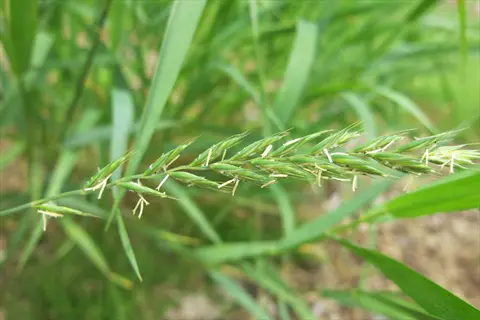
- Key Difference: Quackgrass is a cool-season perennial that stays green through winter, while crabgrass is a warm-season annual that dies at first frost and leaves brown patches behind.
- Root Check: Pull the plant and look for thick white rhizomes (underground stems) spreading sideways through the soil, which crabgrass never produces.
- Leaf Clue: Quackgrass leaves have distinctive clasping auricles (finger-like projections) that wrap around the stem at the base of each leaf blade.
- Growth Habit: Unlike crabgrass that grows low and spreads outward in a star shape, quackgrass grows upright and spreads underground through its rhizome network.
- Treatment Impact: Applying a crabgrass-specific pre-emergent herbicide will have zero effect on quackgrass because it is already established from perennial roots.
- Season Clue: If the suspicious grass appears in early spring before soil reaches 55°F (12.8°C), it is not crabgrass.
Nutsedge
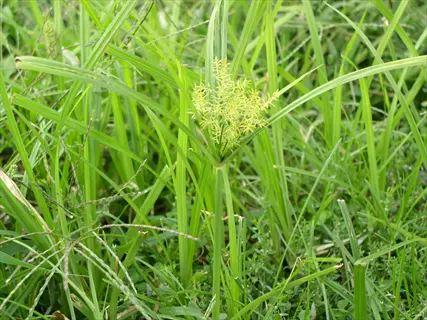
- Key Difference: Nutsedge has a triangular stem you can feel by rolling it between your fingers, while crabgrass stems are flat or round in cross-section.
- Growth Speed: Nutsedge grows faster than surrounding lawn grass and sticks up above the turf within days of mowing, creating visible bright green patches.
- Leaf Texture: Nutsedge leaves are thicker, stiffer, and more waxy than the softer, wider blades of crabgrass that lay closer to the ground.
- Root System: Underground tubers called nutlets allow nutsedge to survive winter and regrow year after year, unlike annual crabgrass that relies only on seeds.
- Herbicide Note: Standard crabgrass herbicides do not control nutsedge; you need sedge-specific products containing halosulfuron or sulfentrazone.
- Moisture Clue: Nutsedge prefers wet, poorly drained areas, while crabgrass thrives in dry, thin, heat-stressed turf sections.
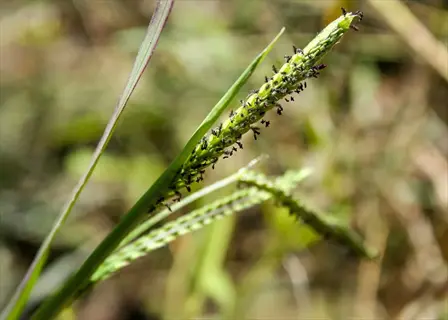
Goosegrass
- Key Difference: Goosegrass has a distinctive silvery-white or light-colored center where stems meet at the base, creating a zipper-like appearance that crabgrass lacks.
- Growth Timing: Goosegrass germinates 2-3 weeks later than crabgrass because it requires warmer soil temperatures of about 60-65°F (15.6-18.3°C).
- Leaf Color: Goosegrass leaves are darker green and flatter than crabgrass, often appearing almost black-green compared to the lighter yellow-green of crabgrass.
- Compaction Preference: Goosegrass favors compacted soil areas like path edges, driveways, and heavy traffic zones where other plants struggle.
- Seed Heads: Goosegrass seed heads are flatter and wider than crabgrass, with 2-6 finger-like spikes arranged in a distinctive zipper pattern.
- Control Method: Pre-emergent herbicides applied for crabgrass timing may miss goosegrass due to its later germination window.
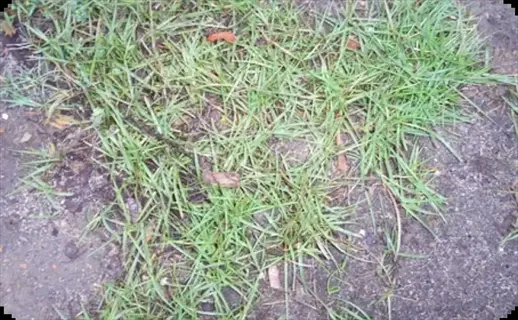
Bermuda Grass
- Key Difference: Bermuda grass is a warm-season perennial that spreads by both stolons (above-ground runners) and rhizomes (below-ground stems), while crabgrass is an annual without runners.
- Winter Behavior: Bermuda grass goes dormant and turns brown in winter but returns from its root system in spring; crabgrass dies off and only returns from seed.
- Leaf Size: Bermuda grass has much finer, narrower leaf blades than crabgrass, giving it a denser, carpet-like texture when established.
- Desired Lawn Grass: In southern states, bermuda grass is a desired lawn species, so misidentifying it as crabgrass could lead to killing your own lawn.
- Stolon Check: Look for visible above-ground runners with nodes that root into the soil at intervals; crabgrass spreads from a central crown without stolons.
- Regional Context: If you live in USDA zones 7-10 and the grass persists through mild winters, it is bermuda grass rather than crabgrass.
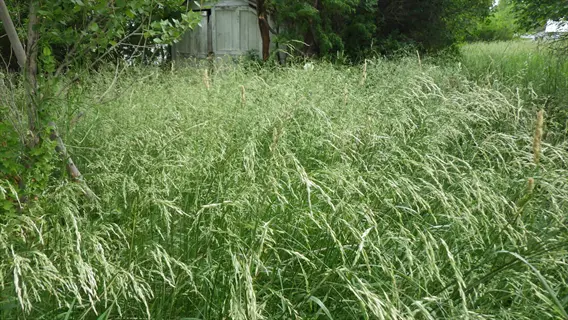
Tall Fescue Clumps
- Key Difference: Tall fescue is a cool-season perennial bunch grass that stays green year-round in most climates, while crabgrass only appears in warm months.
- Leaf Texture: Tall fescue has coarse, wide blades similar to crabgrass, but they grow in an upright bunch rather than spreading flat along the ground.
- Vein Pattern: Run your finger along the leaf blade; tall fescue has prominent raised veins (ribs) on the upper surface that crabgrass blades lack.
- Growth Pattern: Individual tall fescue clumps in a fine-textured lawn like bluegrass create ugly patches that homeowners mistake for crabgrass infestations.
- Year-Round Presence: If the coarse grass clumps persist through winter and reappear in early spring, they are tall fescue, not crabgrass.
- Removal Note: Tall fescue clumps in a bluegrass or ryegrass lawn must be dug out by hand, as no selective herbicide kills fescue without harming other cool-season grasses.
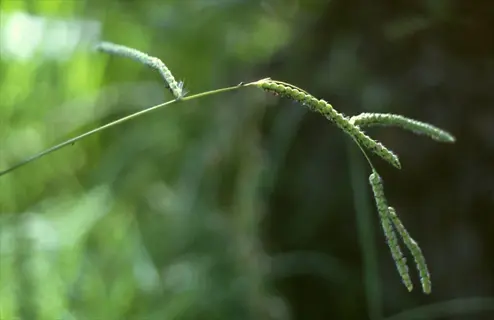
Dallisgrass
- Key Difference: Dallisgrass is a warm-season perennial that forms circular clumps from short thick rhizomes, while crabgrass is an annual that spreads flat from a single crown.
- Seed Head Shape: Dallisgrass seed heads have distinctive dark spots (fungal growths called ergot) on the seeds that crabgrass never produces.
- Growth Habit: Dallisgrass grows in a distinct ring pattern with an open or dead center as the clump ages, unlike the solid star-shaped mat of crabgrass.
- Root Depth: Dallisgrass has a deep, tough root system that makes it very hard to pull by hand, even more so than mature crabgrass.
- Mowing Response: After mowing, dallisgrass pushes up coarse, tall seed stalks that stand above the lawn canopy within just a few days.
- Southern Range: Dallisgrass is found most often in southeastern and south-central states, where it is one of the most troublesome perennial grassy weeds in lawns.
Prevention Through Lawn Care
The most effective crabgrass prevention strategy isn't a chemical at all. University research confirms that a dense, healthy lawn blocks crabgrass better than any single product on the market. When your turf fills every inch of soil with thick root growth, crabgrass seeds can't find the bare spots and sunlight they need to sprout.
Start with your mowing height for crabgrass control. Set your mower blade to at least 3 inches and leave it there all season long. Taller grass shades the soil surface and blocks the light that triggers crabgrass germination. I learned this the hard way after years of scalping my lawn short and watching crabgrass take over every summer.
Your lawn fertilization schedule matters just as much as mowing. Most lawns need 4 to 6 pounds of nitrogen per 1,000 square feet across 4 to 6 applications each year. Water deeply to reach 6 to 8 inches into the soil and do it less often. Deep watering trains your grass roots to grow down while quick daily sprinkles keep roots near the surface where crabgrass thrives.
Your pre-emergent herbicide timing matters because these products only work before seeds sprout. The table below shows you when to apply based on your region. Watch for forsythia blooms dropping as a natural signal in your area. That bloom drop matches the 55°F soil temperature mark that starts crabgrass germination.
You can learn how to prevent crabgrass without chemicals by sticking to two key habits. Focus on overseeding thin spots every fall and keep your mower blade high. Fill bare patches with grass seed so crabgrass finds no room when spring arrives.
Chemical Treatment Options
In my experience picking the right crabgrass killer starts with one question: can you see the crabgrass yet? If the answer is no and spring is just starting, you need a pre-emergent herbicide that stops seeds before they sprout. If you can spot green crabgrass in your lawn, you need a post-emergent herbicide that kills active growth.
I've watched too many homeowners grab the wrong product at the store and wonder why it didn't work. A selective herbicide targets crabgrass while leaving your lawn grass unharmed. The key is knowing which active ingredient to look for on the label. Rutgers weed science research helped me narrow down the 4 best options based on timing and situation.
Prodiamine (Barricade)
- Type: Pre-emergent herbicide that forms a barrier in the top layer of soil to prevent crabgrass seeds from establishing viable root systems.
- Timing: Apply before soil temperatures reach 55°F (12.8°C) for several consecutive days; provides season-long control with a single application.
- Advantage: One of the longest-lasting pre-emergent options available, reducing the need for a second application in most northern climates.
Dithiopyr (Dimension)
- Type: Pre-emergent with early post-emergent activity, making it unique among crabgrass preventers for its ability to control newly germinated seedlings.
- Timing: Effective when applied before germination and up to 4 weeks after crabgrass seeds have sprouted, offering a wider application window than most pre-emergents.
- Advantage: Ideal for homeowners who miss the optimal pre-emergent window by a few weeks, as it still provides control during early crabgrass growth stages.
Quinclorac
- Type: Post-emergent herbicide that controls both newly emerged seedlings and mature crabgrass plants with more than 4 tillers without harming most turfgrass species.
- Timing: Most effective when applied before early July on small plants at the 3-5 leaf stage, though it remains effective on larger plants later in the season.
- Advantage: Versatile selective herbicide that targets crabgrass at any growth stage while leaving cool-season lawn grasses like bluegrass and fescue unharmed.
Mesotrione (Tenacity)
- Type: Selective herbicide with both pre-emergent and post-emergent activity against crabgrass and several other common lawn weeds in a single product.
- Timing: Can be applied safely at the time of new turfgrass seeding, making it the preferred option for homeowners who are overseeding or establishing a new lawn.
- Advantage: Unique among crabgrass herbicides for its seeding-safe profile, allowing simultaneous weed control and lawn establishment in bare or thin areas.
Missed the pre-emergent window? Grab a product with quinclorac and spray before early July while plants are still small. Dithiopyr gives you a safety net if you're just a few weeks late on your spring round. For new lawns or overseeded areas, mesotrione is the only safe pick that won't hurt fresh grass seedlings.
Organic and Natural Control
More homeowners want to kill crabgrass naturally without pouring chemicals on their yard. Organic crabgrass control does work, but you need to set the right expectations before you start. Some methods deliver over 90% control while others won't do much at all. I've tested most of these natural weed removal options on my own lawn and in client yards over the years.
The biggest mistake I see is people grabbing vinegar or baking soda and hoping for the best. Those treatments burn the leaves on contact but don't touch the root system. With roots that can reach 6.5 feet deep, surface burns won't stop a mature plant from bouncing back. The methods below get real results backed by hard data.
Soil Solarization
- Method: Cover the infested area with clear plastic sheeting and secure the edges tight to trap solar heat, raising soil temperatures high enough to kill crabgrass seeds and seedlings.
- Duration: Leave the plastic in place for 4-6 weeks during the hottest part of summer to achieve maximum soil heating and seed destruction in the top soil layers.
- Effectiveness: Most effective in landscape beds and garden areas where you can sacrifice the existing turf temporarily; not practical for active lawn areas.
Mulch Barriers
- Method: Apply organic mulch materials such as wood chips, shredded bark, or straw to a minimum depth of 2 inches (5 centimeters) over bare soil to block light and prevent germination.
- Effectiveness: Cornell research shows physical mulch barriers at 2+ inches depth achieve over 90% control of crabgrass emergence in treated areas.
- Best Use: Ideal for garden beds, landscape borders, and tree rings where maintaining a thick mulch layer is practical and looks good.
Corn Gluten Meal
- Method: Apply corn gluten meal to lawns at 20 pounds per 1,000 square feet (9.8 kilograms per 93 square meters) in early spring as a natural pre-emergent that inhibits root development of germinating seeds.
- Limitation: Rutgers weed science research shows corn gluten meal seldom provides acceptable control of severe crabgrass infestations compared to synthetic pre-emergent products.
- Benefit: While not a reliable standalone crabgrass preventer, corn gluten meal adds nitrogen to the soil, helping to thicken existing turf over time.
Hand Pulling and Crown Removal
- Method: Pull or dig out individual crabgrass plants by hand, making sure to remove the entire crown where stems meet roots; the plant will not regrow if the crown is completely removed.
- Timing: Pull young plants before they set seed in late summer; each plant removed before July prevents up to 150,000 seeds from entering the soil bank.
- Technique: Water the area first to soften soil, then use a weeding tool to pry under the crown and lift the entire root mass in one piece.
For mulching for weed control in garden beds, soil solarization is your strongest tool. For lawns, the combination of hand pulling and thick turf gives you the best organic results over time. Corn gluten meal can help as part of a bigger plan but don't count on it alone to handle a serious infestation.
5 Common Myths
Crabgrass is a broadleaf weed that can be killed with broadleaf herbicides like 2,4-D.
Crabgrass is actually a grassy weed in the Poaceae family and requires grass-specific herbicides like quinclorac for post-emergent control.
Pouring boiling water or vinegar on crabgrass will permanently remove it from your lawn.
Hot water and vinegar only burn surface foliage and do not kill the extensive root system, which can extend 6.5 feet (198 centimeters) deep.
Corn gluten meal is just as effective as chemical pre-emergent herbicides for preventing crabgrass.
University research from Rutgers shows corn gluten meal rarely provides acceptable control of severe crabgrass infestations compared to synthetic pre-emergents.
Mowing your lawn short and frequently will starve crabgrass of sunlight and kill it.
Low mowing actually helps crabgrass thrive because it can produce seed at heights as short as 0.5 inches (1.3 centimeters), while taller mowing shades it out.
Once crabgrass dies in winter, the problem is gone and you do not need to worry about it returning.
A single plant drops up to 150,000 seeds before dying at first frost, and those seeds survive in soil for at least three years waiting to germinate.
Conclusion
Winning the fight against crab grass comes down to knowing what makes this weed so tough and using that knowledge to plan your attack. A single plant drops up to 150,000 seeds that survive in your soil for at least 3 years. That means your crabgrass prevention plan needs to stretch across multiple seasons to drain the seed bank for good.
Your lawn weed management success depends on timing more than anything else. Apply pre-emergent products before soil hits 55°F in your region and use the regional timing chart to get it right. Pair that with post-emergent quinclorac treatments before early July if any plants slip through. Every season you prevent seed production brings you closer to a crabgrass free yard.
I've spent years helping homeowners turn their crab grass control around by focusing on the basics first. Raise your mower blade to at least 3 inches, water deep instead of often, and fill bare spots with grass seed every fall. These three steps do more to block crabgrass than any chemical product used alone.
Don't try to tackle everything at once. Start with the single most impactful change you can make today: raise that mower height. Once you see how much of a difference thick, tall grass makes against crabgrass, the rest of your prevention plan will fall into place one step at a time.
External Sources
Frequently Asked Questions
What is crabgrass and why is it bad?
Crabgrass is an invasive summer annual weed that spreads rapidly through prolific seed production, forming dense mats that crowd out desirable lawn grasses.
What will kill crabgrass but not your lawn?
Selective post-emergent herbicides containing quinclorac or mesotrione target crabgrass while leaving most turfgrass species unharmed.
Is it safe to eat crab grass?
Crabgrass seeds are edible and have been consumed as a grain crop in parts of Africa and Asia for centuries.
Is crabgrass good for anything?
Crabgrass serves as excellent cattle fodder, prevents soil erosion, and its seeds can be ground into flour or cooked as porridge.
Should you remove crabgrass?
Removing crabgrass before it sets seed in late summer prevents thousands of new plants from emerging the following year.
What is poor man's grass?
Poor man's grass refers to low-maintenance ground covers or weedy grasses like crabgrass that fill bare areas without requiring expensive seed or sod.
How do professionals get rid of crabgrass?
Professionals use a combination of properly timed pre-emergent herbicides, targeted post-emergent treatments, and cultural lawn care practices.
Does baking soda really kill crabgrass?
Baking soda can damage crabgrass foliage on contact but is not a reliable long-term control method and may harm surrounding lawn grass.
Can I prevent crabgrass from growing?
Yes, combining pre-emergent herbicides applied at the right time with proper mowing height and thick turf density prevents most crabgrass growth.
What are the benefits of crabgrass?
Crabgrass benefits include erosion control on bare soil, livestock forage value, edible seeds, and the ability to thrive in poor soil conditions.