Houseplant · Piperaceae
Watermelon Peperomia
Peperomia argyraea
Give it soft, filtered light and an easy hand with water, and this little striped charmer really does look after itself.
Bright indirect
50–86°F · 10–30°C
USDA 10–12
6–9 in · 15–23 cm
Overview
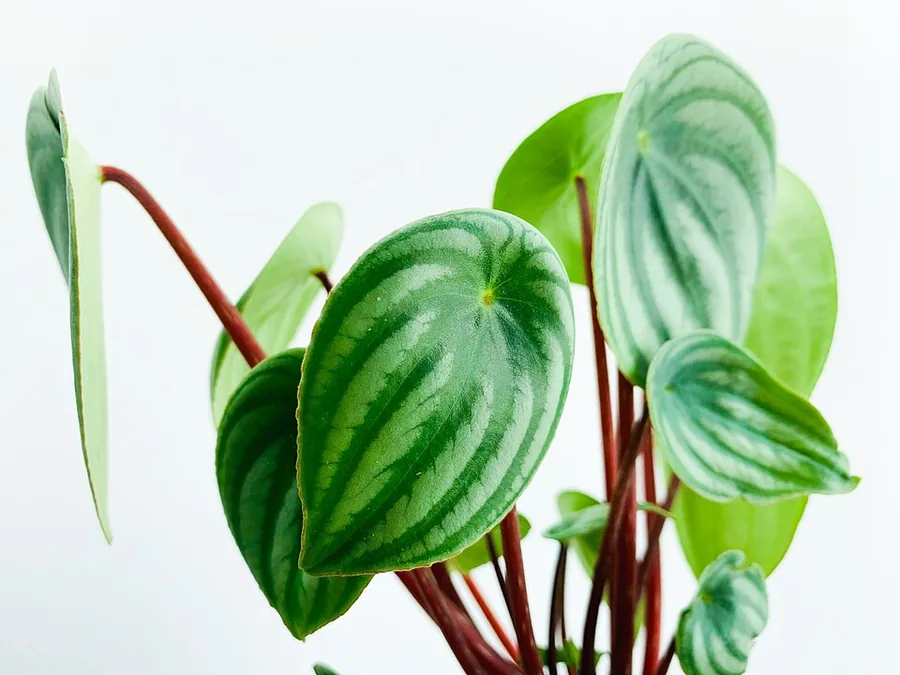
Watermelon peperomia gets its name from its leaves, which are round, glossy, and marked with silver bands that fan out from the center just like the rind of a melon. It hails from the rainforests of Brazil, where it nestles low on the forest floor in soft, dappled shade. Red stalks hold the foliage in a neat little mound, and the whole plant stays small enough to sit happily on a desk or shelf.
If you're new to houseplants, this is a wonderfully forgiving one to start with. It grows slowly, reaches only about 6 to 9 inches (15 to 23 cm) tall, and is perfectly content to sit pot bound in the same container for years. It's grown for its leaves rather than its blooms, and the thin flower spikes it sends up are easy to pinch off if you'd rather not keep them.
The one thing it really asks of you is a bit of balance with water. Too much and the roots rot, too little and it wilts, so the simple trick is to let the top of the soil dry before you water again. Find that easy rhythm and you'll see just how gentle and rewarding this plant can be.
Care
The short version: give it bright indirect light out of direct sun, a pot that drains freely, and water only once the top of the soil has dried. Keep it cozy and warm, feed it lightly through the growing season, and let it rest quietly the rest of the year.
Light
Offer it bright but indirect light, the kind found near an east or west window where direct sun never touches the leaves. It will manage in medium or low light too, though the silver markings fade a little and the growth stretches. Keep it out of harsh direct sun, which can scorch the leaves.
Water
Water moderately while it's growing, and let the top half of the soil dry out before the next drink. Soggy soil leads to root rot, while bone dry soil leaves it limp, so gentle balance is the goal. Ease off the watering from fall through late winter, when its growth naturally slows.
Soil
Settle it into a well drained, peaty or loam based mix, the kind sold for houseplants or cactus. Those roots really don't like sitting wet, so good drainage matters more than a rich soil. Do make sure the pot has a drainage hole, since that one detail saves a lot of worry.
Temperature
Keep it in the comfortable range of 50°F to 86°F (10°C to 30°C), and it's happiest toward the warmer end. Anything below 50°F (10°C) risks a chill, and cold drafts slipping in from a window or door can make the leaves drop.
Humidity
Ordinary room humidity suits it just fine, so there's no need to fuss over a number. It appreciates a little extra moisture in the air and won't mind a light misting, but it settles in well to everyday indoor conditions.
Feeding
Feed it every two weeks through the growing season, from spring into summer, using a half strength liquid houseplant fertilizer. Let it rest without feeding through fall and winter. A weak, regular feed does far more good than an occasional strong one.
Pruning
There's really very little pruning to do here, which is part of the charm. Gently remove any damaged, faded, or dead leaves as you notice them, and pinch off the slim flower spikes since the plant is grown for its foliage rather than its flowers. That's honestly the whole job.
Repotting
You'll rarely need to repot, because this plant is genuinely happy pot bound and can stay put for several years. Move it up only when the roots crowd the pot, the soil dries out far too fast, or new growth stalls. Fresh well drained mix and a pot just slightly larger is all it asks for.
Size & spacing
It stays nicely compact, reaching only 6 to 9 inches (15 to 23 cm) tall with a spread of 3 to 6 inches (8 to 15 cm). That small, tidy footprint makes it an easy and welcome fit for a desk, windowsill, or shelf.
Troubleshooting
Almost everything that troubles this plant comes back to watering, with light and the occasional pest making up the rest, and the good news is that most of it is easy to put right. The leaves will show you what's wrong before it turns serious, so match what you see below and act early with confidence.
Soft stems and a droopy plant sitting in wet soil
Take heart, because root and stem rot is something you can turn around if you catch it. It sets in when the soil stays wet or the pot sits in a saucer of water for too long. Lift the plant gently, snip away any soft brown roots, and settle it into fresh, well drained mix, then hold off watering until the surface feels dry again.
Fix:
- Stop watering and let the soil dry
- Remove the plant and trim away soft, brown, rotted roots
- Repot into fresh well-drained potting mix
- Resume watering only after the soil surface has dried
Leaves and stalks going limp
When the leaves flop and the soil has gone bone dry, your plant is simply thirsty, since it doesn't like to dry out all the way. If instead the soil is wet and the stems feel soft, the trouble is rot keeping the roots from drinking. Feel the soil first, then give it a good drink if it's dry or follow the rot steps if it's soggy, and it should perk back up.
Fix:
- If dry, water thoroughly and let excess drain
- If wet/rotting, follow the root-rot remedy instead
- Keep soil lightly moist but never soggy during active growth
Yellow leaves that let go and fall
Yellow leaves dropping from soil that stays wet usually mean overwatering has left the roots waterlogged. If leaves fall suddenly after a cold spell, a chilly draft or temperatures under the safe minimum are more likely to blame. Ease up on watering, help the pot drain better, and tuck the plant somewhere warm and away from drafty windows, and it will settle.
Fix:
- Correct watering and ensure good drainage
- Move away from cold drafts and keep above 10°C (50°F)
- Remove fallen and yellowed leaves
Speckled leaves with fine webbing beneath
Tiny pale dots on top and delicate webbing underneath point to spider mites, which tend to arrive when the air turns warm and dry. Give the leaves a rinse and a wipe, treat with insecticidal soap or horticultural oil, and keep the plant on its own while you repeat the treatment. Nudging up the humidity nearby makes it a much less inviting place for them to stay.
Fix:
- Rinse foliage and wipe leaves
- Treat with insecticidal soap or horticultural oil
- Isolate the plant and repeat treatment as needed
- Raise humidity to discourage mites
White cottony bits tucked where the leaves meet the stems
Little white cottony puffs where the stalks join the stems are mealybugs, and scale or whitefly sometimes come along with them. Lift them off with a cotton swab dipped in alcohol, then follow up with insecticidal soap or horticultural oil. Set the plant apart from your others and repeat gently until it's clean, and it will come through fine.
Fix:
- Dab mealybugs with a cotton swab dipped in alcohol
- Treat with insecticidal soap or horticultural oil
- Isolate the plant and repeat until clear
Fading stripes or pale, crisp spots on the leaves
Those lovely silver bands lose their contrast when the light isn't quite right, so don't blame yourself. Direct sun burns the leaves into bleached, crisp patches, while a spot that's too dim leaves the plant stretched and washed out. Shift it to gentle, filtered brightness near an east or west window and keep it clear of deep shade, and the color returns.
Fix:
- Move to a spot with bright but indirect/filtered light
- Shield from direct summer sun (an east- or west-facing window)
- Avoid deep shade and very low light
Toxicity
Here's some reassurance for pet-loving homes: watermelon peperomia is non-toxic all around. The ASPCA lists it as safe for both cats and dogs, and NC State Extension adds horses to that safe list. A curious nibble might bring a brief tummy upset, the way any plant can, but there's nothing harmful in the leaves to worry about.
Safe for
People · Cats · Dogs · Horses · Rabbits · Livestock · Birds
Cats None
You can relax if a cat takes an interest, since the ASPCA lists watermelon peperomia as non-toxic to cats. A cat that gnaws a lot of any leaf might feel a touch queasy, but there's nothing here that will poison one.
Dogs None
Dogs are just as safe, with this plant listed as non-toxic to them. At worst a chewed leaf might bring a brief, mild tummy upset that clears up on its own, so no need to worry.
Horses Safe
NC State Extension lists it as non-toxic to horses, so there's no poisoning risk if one happens upon it.
Rabbits Safe
A rabbit can nibble a leaf without coming to harm, since the plant carries no toxins, though it isn't something they'd normally graze on.
Livestock Safe
Grazing animals have nothing to fear from this plant, and since it lives happily indoors it stays well out of their way regardless.
Birds Safe
Pet birds can perch and peck close by with no trouble at all, as none of the foliage holds anything that would hurt them.
People Safe
The plant is grown for its pretty striped leaves rather than for eating, but it holds no toxins, so a child's curious taste is nothing to lose sleep over.
Although non-toxic, ingestion of any plant material can cause mild, transient stomach upset in pets
Varieties
Most people simply grow the species, and it's lovely on its own, but a couple of named selections turn up in collections and are worth learning to tell apart.
'Costa Rica'
Look for the small maroon dimple sitting at the base of each leaf, and you'll know you have this one.
'Harmony's Gold Dust'
This one is easy to love for the speckles of gold variegation scattered across its leaves.
How to propagate
Very few houseplants are as easy and rewarding to multiply as this one. A single leaf, a stem tip, or a divided clump will all take root with hardly any effort, so before long your one plant becomes several to keep or share.
Leaf cuttingsEasy
Spring to summer · Several weeks to root
Here's a gentle place to start: snip a whole leaf with its petiole and stand it upright in moist mix, and over a few weeks it quietly roots on its own. Aim for spring through summer, while the plant is putting on active growth, and let nature do the rest.
Stem cuttingsEasy
Spring to summer · Several weeks to root
A simple tip or stem cutting will happily root in a glass of water or a pot of moist mix, whichever feels easier to you. Take it in spring or summer, give it a few weeks, and you'll see fresh roots appear.
DivisionEasy
Spring at repotting · Several weeks
Once a clump has grown full, you can gently split it into pieces while you repot in spring. Each division takes a few weeks to settle, and before long it grows on as a plant all its own.
Myths
Watermelon peperomia is a kind of begonia.
The old name watermelon begonia leads a lot of people astray, so you're in good company if it fooled you. In truth this is Peperomia argyraea, a member of the pepper family, Piperaceae, and no kin to the begonias at all.