Houseplant · Piperaceae
String of Turtles
Peperomia prostrata
A trailing peperomia dressed in tiny leaves that mimic little turtle shells, content to drape over a shelf for years.
Bright indirect
Every 7–14 days
68–75°F · 20–24°C
USDA 10–12
Overview
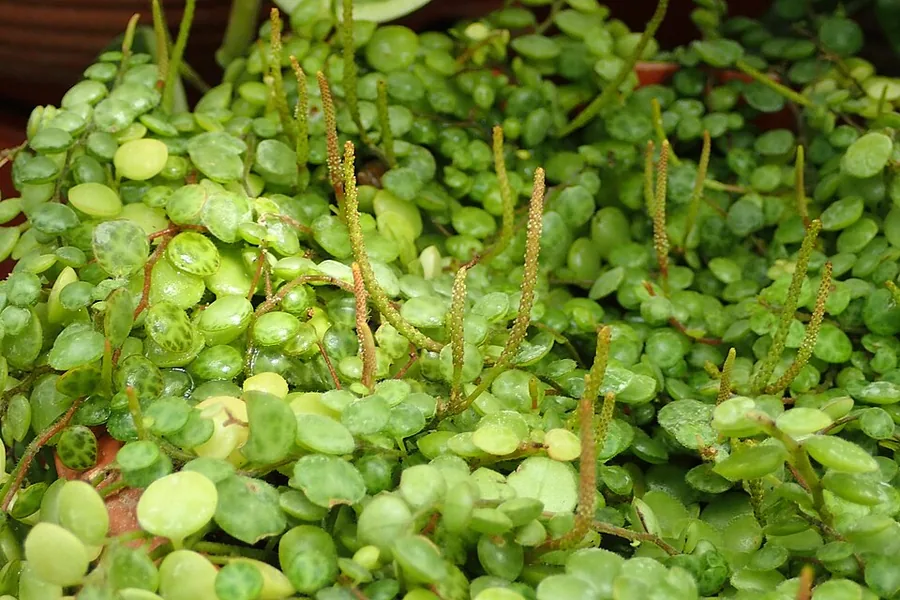
If this is your first trailing plant, string of turtles is a kind one to begin with. It comes from the rainforest floor of Ecuador, where it wanders over mossy logs, and its charm lives entirely in the leaves. Each one is round and no bigger than a fingernail, laced with pale veins that truly do resemble a tiny turtle shell. It grows slowly and stays small, trailing only 9 to 12 inches (23 to 30 cm), so a shelf edge or a little hanging pot suits it beautifully.
The reason it earns an easy name is that it asks so little of you. Set it somewhere with gentle, indirect light in a container that drains freely, and you have covered nearly all of its needs, since a skipped watering troubles it far less than a soggy pot. Those semi-succulent leaves keep a small water reserve of their own, letting the plant ride out the stretch between drinks. Small missteps here are easy to undo.
The single thing it cannot shrug off is standing moisture. Keep the soil constantly damp, the way you might a thirsty fern, and the roots give out quickly. Let it dry partway instead and give it decent light, and one modest plant will fill in to a long, patterned trail you can enjoy for years.
Care
The short version: give it bright, indirect light and a pot that drains fast, and water only once the upper half of the mix has gone dry. Keep it comfortably warm, feed it gently through the growing season, and go easy with the watering can.
Light
Aim for bright, indirect light, the soft kind you find a step back from a window facing east or south. It will get by in medium or even low light, but the sweet turtle-shell markings fade when things stay too dim. Spare it from harsh, direct sun, which can burn such tiny leaves.
Water
Wait until the top half of the soil has dried before watering again, which tends to fall every 7 to 14 days or so. Because the leaves are semi-succulent and keep their own little store, the plant handles a dry spell far more kindly than a wet one. If you are ever unsure, lean toward too dry rather than too wet.
Soil
Pot it in a free-draining houseplant or cactus mix, one that lets water pass straight through instead of pooling. A loamy or sandy blend is ideal, and it accepts a pH between 5.5 to 7.5 without complaint. More than anything else, drainage is what keeps this plant well.
Temperature
Ordinary room warmth suits it, so anywhere from 68°F to 75°F (20°C to 24°C) keeps it comfortable. It has no patience for frost or cold gusts, so tuck it away from drafty windows and chilly doorways once winter arrives.
Humidity
There is no target number here, since everyday household humidity is plenty. It enjoys a touch more moisture in the air when it can get it, yet it settles in happily with plain room air, no misting or humidifier required.
Feeding
Offer a little food across spring and summer, while it is putting on new growth. A gentle liquid feed roughly once a month does the trick, or a slow-release granular type once a year if you prefer. Since it grows slowly, a light hand is all it wants.
Pruning
Nip the trailing stems back every so often to coax fuller, bushier growth from the plant. Snip away anything that grows leggy or gets bruised, and it will hold a neater, rounder shape.
Repotting
This plant is happiest snug in its pot and can sit tight for several years. Size it up only when roots begin to peek from the drainage holes, water rushes straight through, or growth grinds to a halt, and even then choose just one size bigger.
Size & spacing
It keeps things small, trailing 9 to 12 inches (23 to 30 cm) with a slim spread of a mere 3 to 4 inches (8 to 10 cm). That tidy footprint is just why it fits so neatly on a desk, along a shelf edge, or in a compact hanging basket.
Troubleshooting
Almost anything that troubles this plant comes down to watering or light, and the good news is that it warns you early. Watch the leaves and roots for the first hints, and you will usually have time to set things right. Find your symptom below and take it from there.
Falling or yellow leaves paired with soft, mushy stems
When leaves drop or yellow and the stems go soft, the culprit is almost always root rot from too much water, the quickest way to lose this plant. The soil stays soggy, the roots turn brown and mushy, and the foliage simply lets go. Ease off the watering, move it into fresh, well-draining mix, and gently cut away any rotten roots so the trouble stops spreading.
Fix:
- Reduce watering frequency
- Let soil dry partway before watering again
- Repot into fresh well-draining mix and trim rotted roots if rot is present
Sticky film, light webbing, or little bugs on leaves and stems
A sticky coating, fine webbing, or small crawlers usually means sap-sucking pests have found it, think mealybugs, spider mites, scale, or whiteflies gathered under the leaves and in the stem joints. Wipe them away, follow up with insecticidal soap, and keep the plant apart from its neighbors so nothing spreads. This one shrugs pests off most of the time, so trouble tends to hitch a ride in on a newcomer.
Fix:
- Wipe off pests
- Treat with insecticidal soap
- Isolate the plant to prevent spread
Pale leaves with markings gone dull
If the turtle-shell pattern looks flat and lifeless, the plant is simply hungry for light. It has been sitting too far into a dim corner, away from any window. Shift it toward bright, indirect light near an east or south-facing window, and the little markings will crisp up again.
Fix:
- Move to a spot with bright, indirect light from an east or south-facing window
Toxicity
Here is a relief for anyone with pets or little ones underfoot. The ASPCA marks this plant non-toxic, so a nibbled leaf will not harm your cat, your dog, or a curious child. Set it on a low shelf and let everyone relax.
Safe for
People · Cats · Dogs · Horses · Rabbits · Livestock · Birds
Cats None
Cats are safe here. The ASPCA rates this peperomia non-toxic to them, so a curious nibble is nothing to lose sleep over.
Dogs None
Dogs are covered too. Marked non-toxic on the ASPCA's list, this plant will not poison a pup that chews a trailing stem, so let a wagging investigator explore.
Horses Safe
Nothing in this peperomia is known to bother horses, though a small trailing houseplant like this one seldom ends up within a horse's reach.
Rabbits Safe
Should a rabbit help itself to a mouthful of leaves, it will come to no harm, since the plant holds nothing toxic to them.
Livestock Safe
Cattle, goats, and sheep can graze near it without any toxic risk, so grazing livestock stay perfectly safe.
Birds Safe
A pet bird can perch and nibble with no trouble, because the plant carries nothing that would harm it.
People Safe
The plant is safe around children as well, so a stray leaf finding its way into a small hand is nothing to worry about.
How to propagate
Growing new plants from this one could not be gentler, and a single specimen hands you all the starts you need. Take just one leaf or a short piece of stem, and root either through the warm months of the year.
Leaf cuttingsEasy
Spring or summer during active growth · Several weeks to a few months to root and establish
Gently detach a healthy leaf, keeping its short stalk on, and lay it into damp, well-draining mix. Do this in spring or summer while the plant is growing, then give it time, since roots and a small new plant may be weeks, sometimes a couple of months, in the making.
Stem cuttingsEasy
Spring or summer during active growth · Several weeks to root
During the warm growth of spring or summer, cut a stem several inches long and rest it flat on damp mix. A touch of rooting hormone helps things along, and the cutting usually takes root within a few weeks.
Myths
Some growers assume string of turtles is a true succulent that wants cactus-style watering and bone-dry soil.
Not quite. It is only a semi-succulent, so although the leaves stash a little water, the plant wants to dry only partway, not completely, between drinks. Let it bake bone dry and it will sulk, yet leaning wet is the greater danger by far and the usual reason one is lost to rot.