Bulb · Liliaceae
Tulip
Tulipa spp.
Tuck the bulbs in each fall, let them rest through a long cold winter, and tulips will thank you with the boldest color of spring.
Full sun
USDA 3–8
9–24 in · 23–61 cm
Overview
A member of the lily family, the tulip grew wild first across the mountains of central Asia, where cold winters and dry summers taught it how to survive. Each one is a spring-flowering bulb, quietly storing a whole season of energy underground until the weather warms. That tucked-away reserve is what lets a single bulb send up a sturdy stem and a bright cup of petals in only a few weeks of spring.
The one catch is that tulips need a genuine winter before they will bloom. A bulb wants 12 to 16 weeks of cold ahead of flowering, so gardeners in mild zones chill their bulbs first or simply enjoy them for a single season. Most modern hybrids fade after a year or two in any case, which is why so many people set out fresh bulbs each fall and treat them as a glorious annual.
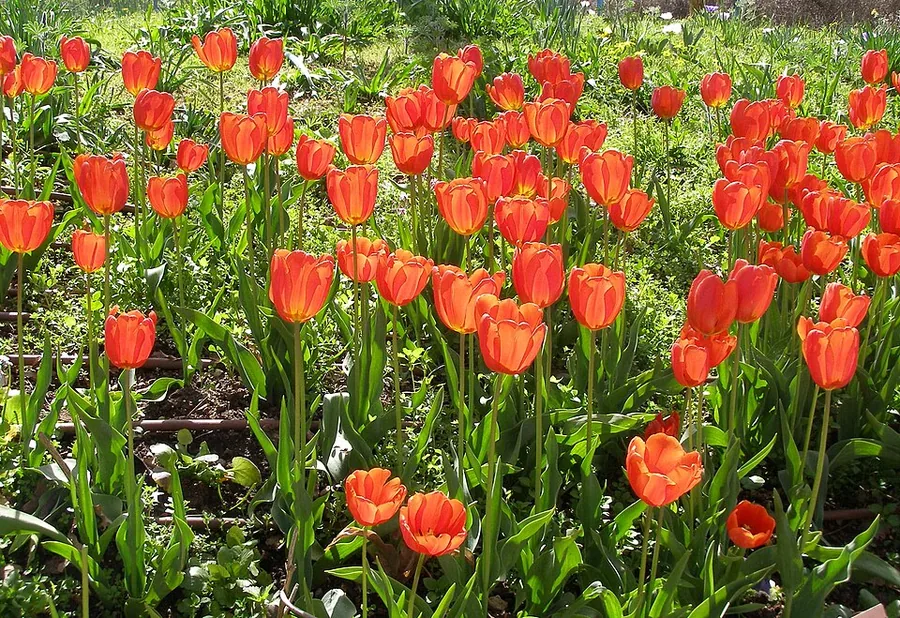
What you get in return is hard to top. Tulips reach 9 to 24 inches (23 to 61 cm) tall and come in nearly every color you can name, from a 6 inch species tulip to a tall Darwin hybrid. Give them full sun and soil that drains well, and they will reward you with the first big show of the season.
Care
The short version: give tulips full sun and fertile soil that drains freely, then plant each bulb 6 to 8 inches (15 to 20 cm) deep in fall. Water them in, take care the ground never turns soggy, and simply let the leaves die back on their own once the blooms are spent.
Light
Tulips do their best in full sun, so aim for 6 or more hours a day to power a strong bloom and refill the bulb for next year. A little partial sun is fine, but deep shade tends to leave you with weak flowers, or none at all, and that is worth avoiding.
Water
Give the bulbs a good drink when you first plant them, then relax and mostly leave them be. What tulips truly dislike is soggy soil, which rots the bulb, so keep things on the dry side once the leaves fade and the bulb settles into dormancy.
Soil
Plant into rich, fertile ground that drains freely, and you have covered the most important part. Drainage matters more than anything else here, because a bulb left sitting in wet soil will rot long before it ever gets its chance to flower.
Humidity
There is no need to fuss over the air around your tulips, and no target number to chase. What counts far more is good drainage and steady airflow, since damp, crowded beds are exactly where tulip fire and bulb rot get their start.
Feeding
A balanced slow-release fertilizer such as a 5-10-5 works nicely, once at planting and again after the flowers fade. Bone meal is not necessary and tends to invite digging animals, so a plain balanced feed is the kinder, simpler choice.
Pruning
Snip off the spent flowers so the bulb stops pouring energy into making seed. Then let the foliage stay put until it yellows and browns on its own, usually around late June into July, because cutting it back too soon leaves the bulb hungry.
Repotting
Every few years, once the foliage has died back, lift a crowded clump and gently divide it, then replant the bulbs at their proper depth. Crowding tends to show itself as smaller flowers and fewer blooms, or bulbs nudging their way up toward the surface.
Overwintering
Tulips are hardy in zones 3 through 8 and happily spend winter right in the ground, which is where they get the chill they need. In zone 9 and warmer, give the bulbs a pre-chill of 12 to 16 weeks, or simply replant fresh ones each year.
Size & spacing
Depending on the type, tulips stand 9 to 24 inches (23 to 61 cm) tall. Space the bulbs 3 to 6 inches (8 to 15 cm) apart and set them 6 to 8 inches (15 to 20 cm) deep, always with the pointed end facing up.
When to plant
Tulips keep a schedule that runs opposite to most of the garden, and that is easy to work with once you know it. Plant the bulbs in fall before the ground freezes, let them settle through a long cold winter, and the blooms arrive from April into late May.
Northern hemisphere
Southern hemisphere
Typical months for a temperate climate: start earlier in warm zones, later where spring frosts linger.
- Plant: September–November (fall before ground freezes; October ideal)March–May
- Bloom: April–May (early April to late May by division)October–November
Hardiness
USDA hardiness zones: 3–8
Temperature: down to -40°C
Troubleshooting
Most tulip troubles begin down at the bulb or wander in on four legs, and nearly all of them are manageable once you spot them. A bulb that rots, a deer that grazes, or a tired hybrid that has simply run its course covers the bulk of it. Find your symptom below, then step in early before it travels through the bed.
Scorched, twisted leaves under a fuzzy gray mold
What you are seeing is tulip fire, a fungus called Botrytis tulipae that moves quickly in damp, cool, overcast spells. Take heart, it is manageable: pull and destroy any plant showing it, and never set out a bulb dotted with tiny black pinhead specks on its husk. Shift the bed to fresh ground and the disease is left with nowhere to return.
Fix:
- Remove and destroy infected plants
- Apply fungicide as leaves emerge
- Discard damaged or spotted bulbs
Soft, smelly bulbs that barely grow or fail outright
This is bulb rot, and wet, poorly drained soil is nearly always why a bulb turns to mush. Dig one up and have a look; if the tissue feels soft and looks discolored, let it go. Sort out the drainage before you replant, since a bulb left in soggy ground will only rot a second time.
Fix:
- Discard rotted bulbs
- Improve drainage before replanting
Fresh holes and vanished bulbs soon after planting
Squirrels, chipmunks, voles, and mice love to dig up newly planted bulbs, and bone meal in the hole only calls them over sooner. Leave the bone meal out and lay a sheet of hardware cloth or chicken wire across the bed. A simple physical barrier holds off diggers far better than any repellent.
Fix:
- Cover beds with hardware cloth/chicken wire
- Skip bone meal
Streaked petals with mottled, stunted leaves
Odd streaks that are not part of the variety usually mean tulip breaking virus, which aphids ferry from one plant to the next. There is no cure, sadly, so dig up and destroy any affected plant, bulb and all. Keeping aphids in check is the best way to head the virus off before it reaches the rest of the bed.
Fix:
- Dig and destroy infected plants and bulbs
- Control aphids
Lots of leaves but few flowers or none
Gardeners call these blind tulips, and most modern cultivars slip into this after 3 to 5 years. Trimming the foliage before it dies back leaves the bulb underfed, and so does too little sunshine. Let the leaves yellow at their own pace, choose a spot in full sun, and pop in fresh bulbs when an old clump finally gives up.
Fix:
- Replace exhausted bulbs with fresh ones
- Let foliage die naturally
- Site in full sun
Shoots, buds, and blooms nibbled off in spring
To a deer, tulips are a treasured spring meal, and rabbits will happily browse them too. Repellents offer a little help, but a truly hungry deer walks right past them. A proper fence is the one dependable answer, so expect some grazed stems if the bed sits out in the open.
Fix:
- Fence or exclude with wire
- Apply repellents (less effective)
Twisted shoots with aphids on the bulbs and leaf bases
The tulip aphid likes to gather under leaf sheaths, at the base of the plant, and even on bulbs tucked away in storage. Those pale-green insects carry the breaking virus, so it pays to act early. Dunk any infested bulbs in insecticidal soap, and treat growing plants with soap, or a stronger spray if the colony refuses to budge.
Fix:
- Immerse infested bulbs in insecticidal soap
- Treat plants with insecticidal soap, pyrethroid or systemic
Fewer, smaller blooms as the years go by
Most modern hybrids fade after their first year, and a warm climate that cannot supply enough winter chill only deepens the decline. Treat these hybrids as annuals and replant fresh bulbs, or lean on species and Darwin hybrid types that return more reliably. In mild zones, give the bulbs a pre-chill before they go into the ground.
Fix:
- Replant fresh bulbs annually
- Choose species or Darwin hybrid types
- Pre-chill bulbs in warm zones
Toxicity
It helps to know up front that every part of a tulip is toxic, and the bulb holds the most of it. Inside are irritant compounds called tulipalin A and B, which unsettle the stomach in pets and people alike. Store and plant your bulbs where animals and children cannot reach them, and slip on gloves whenever you handle them.
Toxic to
Cats · Dogs · Horses · Rabbits · Livestock · Birds · People
Cats Moderate
You may notice drooling, vomiting, and diarrhea, often with a low, quiet mood. The bulb is the harshest part, so keep both stored and planted bulbs well out of a cat's reach.
Dogs Moderate
Watch for drooling, vomiting, and diarrhea after a dog digs up or chews on a bulb. A whole bulb swallowed by a small dog can also block the gut, so take it seriously.
Horses Moderate
The bulb tends to bring on an upset stomach and a dull, low mood. Keep tulip beds and any stored bulbs well away from where horses graze.
Rabbits Toxic
Tulips hold irritant compounds that rabbits should never nibble, and the bulb is the most dangerous part of all. Fence the plants off and keep every bulb far from the hutch.
Livestock Moderate
Cattle, goats, and sheep can react to the bulbs and foliage with drooling, vomiting, and diarrhea, and a larger helping may bring on heart and breathing trouble.
Birds Toxic
Both the bulbs and the foliage are toxic to birds. Keep poultry and pet birds away from tulip beds and from any bulbs you have in storage.
People Caution
No part of a tulip is safe to eat, and the bulbs are now and then mistaken for onions or shallots. Swallowing one can cause vomiting and diarrhea, and handling bulbs bare-handed can leave a rash, so do wear gloves.
Bulb is most toxic; handling bulbs can cause 'tulip fingers' contact dermatitis
Helpline numbers

United States
ASPCA Animal Poison Control: (888) 426-4435 (fee applies)
Poison Control: (800) 222-1222



Canada
Poison Centres: 1-844-764-7669
Varieties
Tulips are sorted into 15 official divisions, though only a handful of classes show up in most gardens. These are the friendly few worth learning by name.
Darwin hybrid
This class brings large, sturdy blooms in mid-spring, holds on the longest, and returns more reliably than the other hybrids.
Triumph
As the largest class, Triumph offers those classic cup-shaped single flowers in mid-spring across a wonderfully wide range of colors.
Parrot
Parrot tulips are the showy ones, easy to spot by their fringed, twisted, and feathered petals.
Species/botanical (e.g. Tulipa tarda)
These low-growing tulips last the longest of all, spread on their own over time, and open white flowers with a cheerful yellow eye.
Tulipa batalinii
This gentle species tulip carries soft-yellow single flowers atop 6 to 10 inch stems in April.
How to propagate
Tulips quietly multiply underground on their own, and you can lend a hand by dividing the bulbs. Growing them from seed is possible too, if you have the patience to wait for it.
Bulbs & cormsModerate
Lift and separate offsets when dormant in summer · 1-3 years to flowering size
When a clump grows crowded, lift it while it rests dormant in summer and ease the small daughter bulbs away from the parent. Most are still too little to flower in their first year, so replant them and let them settle in. Give them 1 to 3 years and they will reach blooming size.
SeedDemanding
Sow ripe seed; mainly for species tulips · 4-7 years to first bloom
Raising tulips from seed is slow, patient work, and it really only suits the species types. Sow the ripe seed and wait, because a seedling needs 4 to 7 years before it blooms. Hybrids will not come true from seed either, so whatever sprouts will not match its parent.
Myths
Tulips return bigger and better with every passing year.
In truth, most modern hybrids fade after 1 to 3 years, which is why so many gardeners plant them as annuals and start over. The species tulips are the ones that genuinely come back year after year.
Bury the bulbs as deep as you possibly can.
Aim instead for about 2 to 3 times the height of the bulb, which lands around 6 to 8 inches. Set it too deep and the bulb burns through its stored energy just climbing back to the surface.
Tie, braid, or cut the leaves right after bloom to keep the bed tidy.
Kindly leave the leaves alone until they die back on their own and turn brown. Cutting green foliage early starves the bulb and hands you blind, flowerless plants come spring.
Bone meal is a must whenever you plant bulbs.
Most soils already carry plenty of phosphorus, so bone meal rarely does much, and it leads squirrels and other diggers straight to your bed. A balanced slow-release feed simply does the job better.
A late spring snow will kill tulips that are already up.
Happily, tulip foliage shrugs off frost and a light snow, and that snow even works like a cozy blanket. Only a hard, bare freeze below the mid-20s°F (about minus 4°C) does any real harm.
Sources
- ASPCA Animal Poison Control
- Iowa State University Extension
- Iowa State University Extension
- University of Illinois IPM (Report on Plant Disease 609)
- NIH/NCBI PubMed Central
- Missouri Botanical Garden Plant Finder
- Royal Horticultural Society
- NC State Extension
- Iowa State University Extension
- University of New Hampshire Extension
- University of Georgia Extension
- Iowa State University Extension