Houseplant · Nepenthaceae
Tropical Pitcher Plant
Nepenthes
Give it warmth, humid air, and rainwater, and this gentle carnivore rewards you with its own little insect-trapping cups.
Bright indirect
Every 2–4 days
64–84°F · 18–29°C
USDA 10–12
Overview
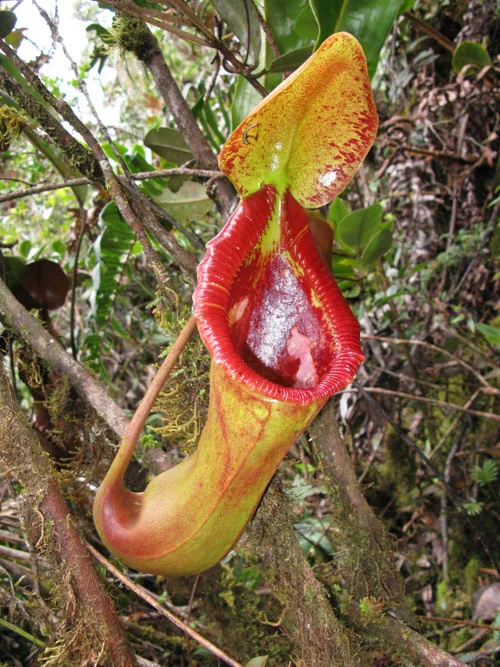
The tropical pitcher plant, which most people know as Nepenthes, is a climbing carnivore at home in the warm, damp forests of Southeast Asia and the lands around them. Each leaf reaches out into a thin tendril that puffs up at the tip into a hanging cup, and that cup is where all the magic happens. Insects lose their grip on the slick rim, drop into the fluid waiting below, and the plant slowly draws its nourishment from them, making up for the poor soil it grows in. The way those cups dangle is how it earned the sweet nickname monkey cups.
Keeping one indoors leans far more on getting the setting right than on constant fussing, which is reassuring news. It longs for soft, bright indirect light, gentle steady warmth, and moist air, the same feel as the forest edge it came from. Offer those three comforts and the vine keeps climbing and pushing out new cups, while letting them slide leaves you with plain foliage and no traps at all.
This plant does ask a little more of you than an easy windowsill starter, but mistakes here are recoverable. The real care goes into water and air rather than feeding, since the roots dislike the minerals in tap water and the mix needs to stay loose and lean. Think of it as the little bog dweller it truly is, and it thanks you with one of the most surprising, eye-catching shapes any houseplant collection can hold.
Care
The short version: offer bright indirect light, cozy warmth between 64°F and 84°F, and moist air around 60% to 80%. Settle it into an airy, nutrient-poor carnivorous mix, water it only with distilled or rainwater, and let the pitchers handle their own meals.
Light
Offer it bright, indirect light through most of the day, the kind of glow near an east window or a softly shaded south one. A touch of gentle morning sun is welcome, yet fierce midday rays can scorch the leaves, and skimping on light is the usual reason a plant quietly stops making cups.
Water
Keep the mix damp but never waterlogged, tipping in water every 2 to 4 days, and let a small pool of fluid rest in each cup. Reach only for low-mineral water like distilled, reverse-osmosis, or rainwater, because the minerals in tap water gather in that airy mix and slowly harm the tender roots.
Soil
Give it an airy, nutrient-poor carnivorous mix built from long-fiber sphagnum moss with perlite and orchid bark. Steer clear of ordinary potting soil, which cradles far more water and fertilizer than this lean-loving plant can handle. A gently acidic pH somewhere between 5.0 and 6.5 suits it beautifully.
Temperature
It grows happiest in warmth between 64°F and 84°F (18°C to 29°C). Frost is more than it can bear and a cold draft leaves it sulking, so a snug indoor corner well away from chilly windows keeps it content.
Humidity
This is the one that truly makes or breaks things. Hold humidity within the 60% to 80% band using a naturally humid room, a pebble tray, or a little enclosure, since dry air is the most common reason those hoped-for cups never arrive.
Feeding
Set aside any thought of feeding the roots, because the cups gather their own insects all through spring and summer. If your plant lives somewhere with no prey drifting by, a rare and very dilute foliar feed is welcome, and even that is more than it usually asks for.
Pruning
Snip off browned or spent cups and any dead leaves right down at the base so the plant stays neat. Trimming back the longest, straggling vines nudges it to branch and send out fresh cups as well.
Repotting
Freshen the plant into a clean airy mix every 1 to 2 years, since old sphagnum crumbles down and begins holding water with no air left. Roots creeping out of the drainage holes, a soggy tired mix, or cups turning smaller and fewer are all its quiet way of asking for a change.
Size & spacing
The vines stretch anywhere from 1 to 6 feet (30 to 180 cm) depending on the kind and how you guide them, spreading somewhere around 12 to 35 inches (30 to 90 cm) across. Leave a little open space so the cups can dangle freely instead of pressing against a wall or a neighboring plant.
Troubleshooting
Nearly every worry with a Nepenthes comes back to water, light, or humidity long before pests ever enter the picture. The plant is kind enough to show its feelings through the cups and leaf tips, so it helps to notice those little signals early. Find the match below and gently ease things back before any slide gets away from you.
Dry, browning cups and crisp leaf tips
Those crisp brown edges nearly always come down to mineral burn from tap water, which piles up quickly in such a lean mix. Dry air and stray fertilizer at the roots only add to the trouble, so don't lose heart. Move to distilled, reverse-osmosis, or rainwater, rinse the pot through to carry the salts away, and lift the humidity around your plant.
Fix:
- Switch to distilled, RO, or rainwater
- Flush the mix with low-mineral water to leach salts
- Increase humidity and stop any root fertilizing
Drooping plant sitting in wet, collapsed mix
A plant that flops in a wet, packed pot is usually telling you about root rot from a mix that can no longer breathe. Sphagnum eventually breaks down and clings to water with no air left for the roots, and plain potting soil behaves that way right from the start. Gently lift the plant, snip away any dark mushy roots, and settle it back into fresh airy sphagnum with perlite and bark, and it can bounce back.
Fix:
- Repot into fresh airy sphagnum and perlite/bark mix
- Trim mushy roots
- Keep the mix damp but never waterlogged
Lots of healthy leaves, but the cups just won't appear
If your Nepenthes keeps unfurling leaves yet never caps them with traps, take heart, because the fix is usually simple. The cups only swell when humidity stays in the 60% to 80% range and the plant enjoys strong indirect light for much of the day. Keep it warm and stick with low-mineral water, and those new traps will come along.
Fix:
- Raise humidity around the plant
- Move to a brighter spot with strong indirect light
- Maintain stable warm temperatures and keep watering with low-mineral water
Toxicity
Here is a comforting thought for pet owners: the tropical pitcher plant is not toxic to cats, dogs, or any other animal in the home. The fluid held inside the cups is mild rather than harmful, though it was never meant for sipping, so keeping curious pets from chewing the traps is mostly a kindness to the plant.
Safe for
People · Cats · Dogs · Horses · Rabbits · Livestock · Birds
Cats None
You can relax around cats. If a playful cat swats at a pitcher or laps up a bit of the fluid, no harm will come to it, though tucking the traps out of paw's reach keeps them from getting torn.
Dogs None
There is nothing here that can poison a dog. A pup that gnaws a leaf or slurps a little pitcher liquid may feel briefly queasy from something so unfamiliar, and that passes on its own.
Horses Safe
Horses have nothing to fear from this plant, and because it stays so small, it simply never shows up in a spot where they would be grazing.
Rabbits Safe
A rabbit can nibble it and come to no harm at all. Since the plant holds no toxin, a curious bite is perfectly fine, even though most rabbits pay it little mind.
Livestock Safe
Cattle, goats, and sheep are all in the clear. Neither the leaves nor the trap fluid holds anything that could upset them.
Birds Safe
Your pet birds are quite safe beside it. The plant carries no poison for them, though truth be told a small bird is likelier to end up as the pitcher's catch than to suffer from it.
People Safe
This one is gentle with people too. The fluid in the cups is not something to sip, yet the plant holds no poison, so a hands-on moment or a child's small taste is no cause for worry.
The digestive fluid in the pitchers is mild but it is sensible to keep pets from drinking it or chewing the traps.
Varieties
There are hundreds of Nepenthes species and hybrids out there, from gentle starter plants to the giants that collectors dream about. The few gathered here are the ones you are most likely to bring home.
Nepenthes ventricosa
This highland grower takes everyday household conditions in stride and forms pretty hourglass-shaped pitchers, which is exactly why so many beginners start here.
Nepenthes × ventrata
Born from a cross of ventricosa and alata, this sturdy hybrid forgives a lot and sits among the simplest tropical pitcher plants to keep thriving indoors.
Nepenthes alata
Easygoing and widely grown, this species wears slim winged pitchers and reaches more homes as a houseplant than nearly any of its relatives.
Nepenthes rajah
A Borneo giant celebrated for some of the biggest pitchers in the whole genus, roomy enough to cradle well over a quart of fluid.
How to propagate
Making more pitcher plants can go the quick way through cuttings or the slow, patient way from seed, and either is within your reach. Both simply ask for the same warm, humid comfort the parent plant already loves.
Stem cuttingsModerate
Active growth in spring to summer · 6 to 12 weeks to root in warm, humid conditions
Cuttings are the dependable route to more plants, and you will have the best luck while the plant is actively growing in spring and summer. Snip a length of vine holding two or three nodes, nestle it into damp sphagnum kept warm and humid, and give it patience while roots form over roughly 6 to 12 weeks.
SeedDemanding
Fresh seed sown any time under warm, humid conditions · Several months to germinate and a few years to reach mature size
Seed asks the most patience of you, so treat it as a long, gentle project. Start with fresh, viable seed and hold steady warmth and humidity, knowing it may sit for several months before sprouting and then take a few years to grow up.
Myths
You have to feed pitcher plants meat or fertilizer to keep them alive.
Rest easy, because these gentle feeders trap their own insects in the cups and their roots want nothing added. Good light, humid air, and low-mineral water carry the plant far further than any meal you could offer, while a habit of dropping in meat scraps or houseplant fertilizer usually just rots the traps.
Pitcher plants need rich, fertile potting soil like other houseplants.
In the wild they settle into thin, hungry ground, so an open blend of long-fiber sphagnum and perlite is what makes them happy. A rich potting soil simply carries too much water and fertilizer, and it can finish the plant off.