Houseplant · Cactaceae
Thanksgiving Cactus
Schlumbergera truncata
Offer it bright indirect light and cool fall nights, and this gentle forest cactus rewards you with blooms right around the holidays.
Bright indirect
50–86°F · 10–30°C
USDA 10–12
4–20 in · 10–50 cm
Overview
Do not let the word cactus worry you, because the Thanksgiving cactus is a forest cactus native to the coastal mountains of Brazil, where it settles onto tree branches instead of roasting in open desert. That gentle heritage is good news for you. It asks for a little more water and softer light than a prickly desert type, and it thanks you with a flush of bright flowers in late fall, typically as Thanksgiving arrives.
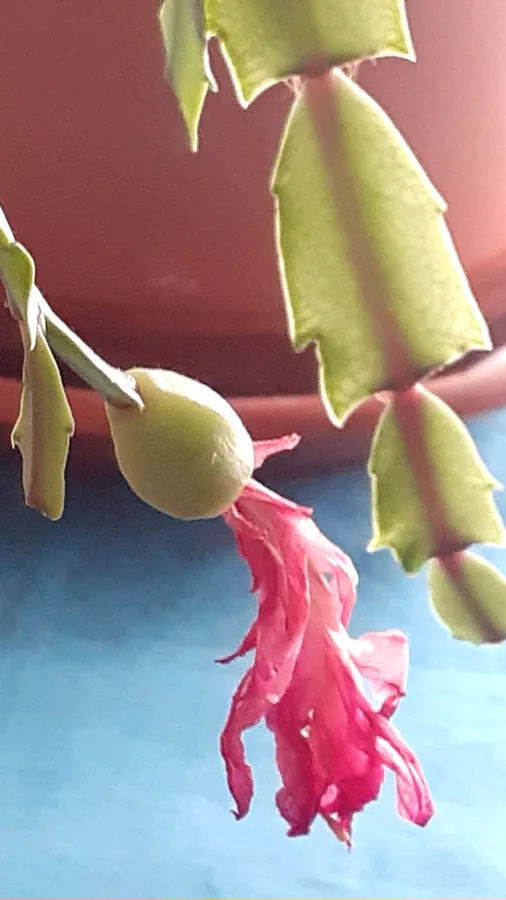
Telling it apart is simple once you know the trick. Look along the edge of each flat stem segment for pointed, claw-like teeth, the feature behind the names crab cactus and claw cactus. Its cousin the true Christmas cactus wears rounded, scalloped segments and opens its blooms about a month later, and most plants marketed as Christmas cactus are in fact this species.
Here is the reassuring part: this is an easy, forgiving plant that can live for decades and actually flowers more freely as it gets older. It really only asks two things of you, a steady home while it is in bud and a stretch of cool nights and shortening autumn days to set those buds. Manage those, and small slip-ups elsewhere are easy to recover from.
Care
The short version: bright indirect light, a drink whenever the top of the mix feels dry, and a run of cool fall nights to coax out the bloom. Keep it a little potbound, and once buds appear, leave it where it stands.
Light
Aim for bright, indirect light and keep it out of harsh direct sun. A bit of partial shade or soft morning sun is fine, but fierce midday rays will bleach the segments pale or red. A window facing east or north keeps it very happy.
Water
Allow the top half of the mix to dry before you water again, then give it a thorough drink. It likes more moisture than a desert cactus yet should never sit in soggy soil, which invites root rot. Once buds form, keep the potting mix evenly damp so those buds hold on.
Soil
Pot it in a well-drained, organic-rich potting mix, ideally one blended for epiphytes that drains quickly while still holding a little moisture. A gently acidic pH of 5.5 to 6.5 is right where it likes to be.
Temperature
This plant is easygoing about warmth, content anywhere from about 50°F to 86°F (10°C to 30°C). Fall is the exception that matters: a spell of cool nights alongside shortening days is the signal that tells it to start forming buds.
Humidity
Ordinary household humidity suits it just fine, so this is one number you can stop worrying about. A touch more humidity in the air helps a fresh cutting settle, though a grown plant simply does not need the extra help.
Feeding
Through spring and summer, feed monthly with a dilute balanced houseplant fertilizer, then pause in late summer to steer it toward its fall bloom. It craves more magnesium than the average plant, so treat it now and then to a weak Epsom-salt solution.
Pruning
When the flowers have faded, pinch or twist off a few stem segments. That one small gesture encourages branching and gradually fills the plant into a rounder, bushier shape.
Repotting
Plan to repot only every 3 to 4 years, because a slightly crowded pot actually encourages better bloom. Move it up a size when roots poke out of the drainage holes, water rushes straight through, or new growth stalls.
Size & spacing
It stays nicely compact, topping out around 4 to 20 inches (10 to 50 cm) in both height and width. A single plant is enough to fill out a hanging basket or brighten a windowsill without crowding what sits beside it.
Troubleshooting
Almost every hiccup here appears as buds that drop or stems that go soft and off-color, and both usually come down to watering habits and where the pot lives. Find your symptom below, then gently adjust the conditions before things go further.
Soft, blackening stems collapsing at the base
Soft, blackening stems point to root rot, brought on by soil that stays wet too long. Trim away the mushy segments and any brown, spongy roots, shift the plant into a fast-draining epiphytic mix, and cut back on water. Prevention is the real cure: wait until the top of the mix feels dry before the next watering.
Fix:
- Reduce watering frequency
- Repot into a fast-draining epiphytic mix
- Remove rotted segments and affected roots
Buds wither and fall before they can open
Bud drop is nearly always the plant reacting to a change it disliked. Once buds have set, it wants one calm spot, steady moisture, and no drafts or sudden temperature shifts. Carry it off to show it around and the buds can let go within days, so the kindest move is to leave it undisturbed until it finishes blooming.
Fix:
- Keep the plant in one stable spot once buds form
- Keep the mix evenly moist (not soggy) while in bud
- Avoid drafts and temperature swings
Segments turning pale, yellowish, or red
When segments fade to pale yellow or red, the cause is usually too much direct sun, and it shows up most in a bright, sun-baked window during summer. Shift the plant into bright indirect light and screen it from fierce midday rays. Once the light eases, the color comes back.
Fix:
- Move to bright indirect light
- Shade from hot midday summer sun
Toxicity
Here is a relief for anyone with pets: the Thanksgiving cactus is non-toxic to cats, dogs, horses, and everyone else in the house. The ASPCA gives it a clean pass. The only small footnote is that a pet who eats a good deal of the fibrous stems might get a brief, mild tummy upset, much like with most houseplants.
Safe for
People · Cats · Dogs · Horses · Rabbits · Livestock · Birds
Cats None
Cats are safe here, since neither the stems nor the flowers hold anything toxic. If one nibbles a good amount of the fibrous segments it may drool or bring a little back up, but that settles on its own.
Dogs None
Dogs have nothing to fear from this plant. Even a big, chewy mouthful of stems tends to bring on no more than a short, mild spell of tummy upset.
Horses Safe
Horses are cleared by the ASPCA as well, so a curious nibble carries no real danger.
Rabbits Safe
Rabbits can share a room with it in comfort. As with any fibrous green, a large helping could unsettle the stomach for a day.
Livestock Safe
Grazing animals meet no toxin in the stems or blooms. A heavy feed of the fibrous segments might stir a short, mild bout of indigestion, and nothing worse.
Birds Safe
Pet birds do fine near this cactus, as no part of it is poisonous.
People Safe
People are safe around it too, curious children included. It is not a plant meant for eating, and the fibrous stems would just taste unpleasant instead of causing any harm.
Varieties
Schlumbergera turns up in several flower colors and a couple of close relatives. Here are the ones you are most likely to bring home.
'White Christmas'
This truncata cultivar trades the usual pinks and reds for clean, pure white blooms.
'Cambridge'
Another truncata selection, prized for warm flowers that shade from pink toward orange.
Schlumbergera × buckleyi
The genuine Christmas cactus, a hybrid recognized by its rounded, scalloped segments and a bloom that lags the Thanksgiving type by about a month.
How to propagate
Few houseplants are as generous to a beginner as this one, and a single cutting will settle in and become an entirely new plant with barely any effort.
Stem cuttingsEasy
Late spring to early summer (May-June) · Roots in about 3-8 weeks
The best window is late spring to early summer, around May or June, while the plant is in active growth. Gently twist off a length of 3 to 5 jointed segments, give the cut end a day or two to callus, then tuck it into a moist, well-drained mix and keep the air humid around it. Expect roots within 3 to 8 weeks, and just like that you have raised a brand-new plant.
Myths
The plant tagged Christmas cactus at the shop is the genuine article.
Most of what is sold as holiday cactus is really Schlumbergera truncata, the Thanksgiving or crab cactus. The giveaways are the pointed, claw-like teeth along each segment and a bloom that shows up in late fall, roughly a month before the true Christmas cactus opens.
Holiday cactus will poison your pets.
The ASPCA lists Schlumbergera as non-toxic to cats, dogs, and horses. At worst, a pet that chews the stems gets a brief, mild bout of stomach upset, and only when a fair amount goes down.