Houseplant · Cactaceae
Bunny Ear Cactus
Opuntia microdasys
Give it bright sun and a dry, gritty pot and the bunny ear cactus will happily look after itself.
Full sun
Every 14–28 days
50–86°F · 10–30°C
USDA 9–11
Overview
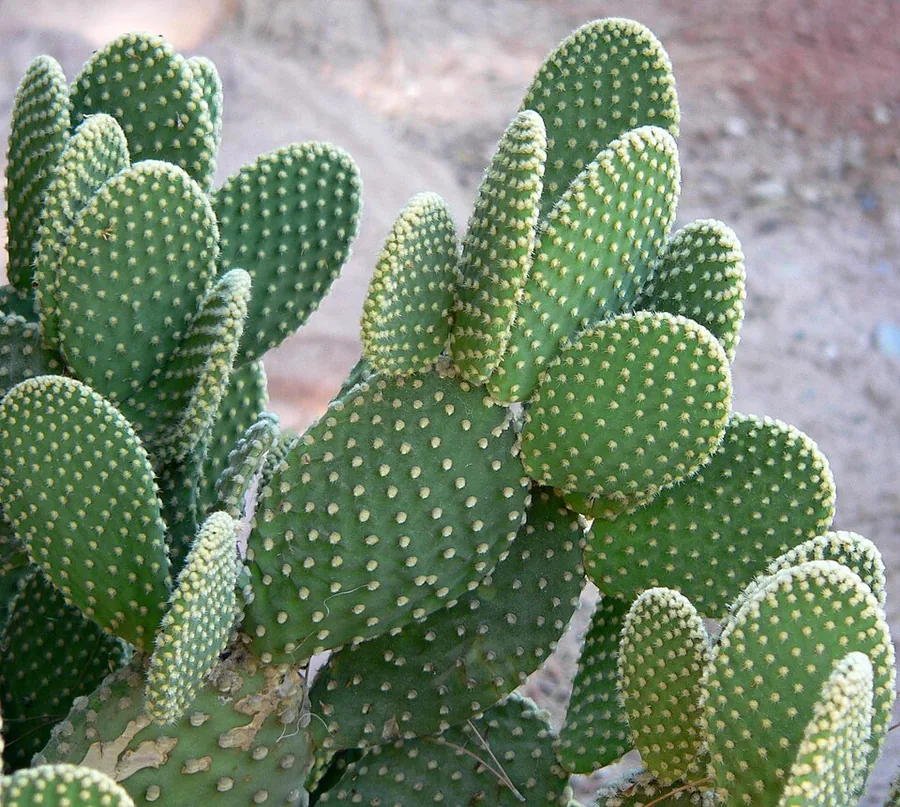
The bunny ear cactus gets its sweet name from the flat, paddle-shaped pads that grow in pairs and stand upright like a rabbit's ears. A native of the Mexican deserts, it takes its time, building slowly into a low, branching clump that reaches around 12 to 24 inches (30 to 60 cm) indoors. Once it matures it may surprise you with pale yellow flowers in late spring and summer, a lovely bonus rather than the main event.
Do not be fooled by how soft the pads look. Every polka-dot tuft is a cluster of glochids, tiny barbed bristles that slip free at the gentlest brush and settle into skin, lips, and eyes. They are a real bother to get out, so this is a plant to enjoy with your eyes and handle with gloves, never to stroke.
As houseplants go, this one asks for very little, which makes it a kind choice for a nervous beginner. Bright light, a pot that drains sharply, and long dry stretches between drinks are all it needs, and the one mistake to guard against is loving it with too much water.
Care
The short version: offer it as much direct sun as you can, plant it in a gritty, sharply drained mix, and water only once the soil has dried out completely. Handle it with gloves or tongs, and you will both do just fine.
Light
Give it as much direct sun as you can manage, and a bright south-facing window is just about ideal. It will cope in bright indirect light, but go light on the sun and you will see the pads grow thin and pale instead of staying plump and full.
Water
Remember it is a desert plant, so let the soil dry out completely, then water deeply until it runs from the drainage holes. In the growing season that tends to mean about every 2 to 4 weeks, and a good deal less in winter. Sitting water is the quickest way to lose it, so when in doubt, wait.
Soil
Pot it up in a gritty, sharply drained sandy or cactus mix that never traps water around the roots. Any pH between 6.0 to 7.5 keeps it content, and a handful of extra perlite or coarse sand only does it good.
Temperature
It feels right at home between 50°F and 86°F (10°C to 30°C), which suits most rooms all year. Just keep it above freezing, since frost will spoil the soft pads.
Humidity
Low household humidity is exactly what this desert native is after, so there is no target number to chase. If anything, dry air suits it best, while still, damp conditions are what invite rot.
Feeding
Feed it monthly through spring and summer with a diluted, low-nitrogen cactus fertilizer, and that is plenty. Let it rest in fall and winter with no food at all, since pushing growth then does more harm than help.
Pruning
Pruning is barely a job here. Take a pad off only to shape the plant or to start a new one, and always work with thick gloves and tongs, because the glochids let go at the lightest touch and stick fast in skin.
Repotting
There is no rush to repot; every 2 to 3 years in spring is fine, once roots peek from the drainage holes or pads press at the rim. A collar of folded newspaper and a pair of tongs make lifting it easy, and you can freshen the gritty mix while you are there.
Size & spacing
Indoors it stays a neat little clump, rising slowly to about 12 to 24 inches (30 to 60 cm) tall and roughly the same across. Thanks to that slow pace, one pot will hold it happily for years before it asks for more room.
Troubleshooting
Almost everything that troubles this cactus comes down to water or light, and the good news is that most of it is easy to put right. Take a moment to look at the pads and feel the soil before you water, since soft pads and dry pads ask for opposite care. Spot it early, match what you see below, and your plant will bounce back.
Pads turning soft and brown where they meet the soil
Try not to panic if a pad goes squishy and brown near the base, but do step in quickly, because this is root and stem rot from water lingering in heavy soil. Set the watering can aside, ease the plant out of its pot, and trim away every soft part until you reach firm green tissue with a clean blade. Settle it into fresh gritty mix, let it dry out fully, and it has a good chance of pulling through.
Fix:
- Stop watering immediately
- Remove the plant and cut away rotted tissue with a clean blade
- Repot into fresh gritty cactus mix
- Allow soil to dry fully before watering again
New pads growing long, pale, and leggy
If fresh pads come in stretched, washed out, and tilting toward the window, the plant is just reaching for more light, an easy fix that gardeners call etiolation. Move it to your sunniest spot or into full sun, and it will firm up again. Ease it into stronger light across a week or two so the tender new pads do not scorch.
Fix:
- Move to the brightest available window or full sun
- Introduce direct sun gradually to avoid scorch
Pads looking thin, creased, and shriveled
Wrinkled, thinning pads are nothing to worry about; they simply mean the soil has been dry far too long, which is plain underwatering. Give the plant a generous, soaking drink and let the surplus run out the bottom. Within a few days the pads fill out again, and from there you can go back to waiting until the mix is fully dry.
Fix:
- Water thoroughly and allow to drain
- Resume regular deep watering once soil dries
Toxicity
You can relax about poison: this cactus carries no toxin, and the ASPCA does not list it as harmful to cats or dogs. The thing to mind is physical instead. Its glochids, those fuzzy-looking tufts of barbed bristles, come loose at a touch and settle painfully into skin, mouths, and eyes, so keep it out of reach of pets and children and handle it only with gloves.
Safe for
People · Cats · Dogs · Horses · Rabbits · Livestock · Birds
Cats Safe
Rest easy: there is no poison here, so a taste will not make your cat ill. The thing to watch is the glochids, since a swat or a chew can load the paw, lips, and tongue with tiny barbed bristles, and you might notice pawing at the mouth or face afterward.
Dogs Safe
Good news for dog owners: this cactus holds nothing that will poison a dog. The only real worry is physical, because a sniff or a bite pushes dense barbed glochids into the muzzle and tongue, where they cling and are awkward to ease out.
Horses Safe
Nothing in the plant will poison a horse, so you can breathe easy on that count. A curious nose or mouth can still gather the fine barbed bristles, so it helps to keep the plant well out of reach.
Rabbits Safe
There is no toxin here to harm a rabbit, which is reassuring. A nibble can still drive glochids into the lips and mouth, so it is kindest to keep the plant somewhere your rabbit cannot reach it.
Livestock Safe
Cattle, goats, and sheep are in no chemical danger from this cactus, so you can set that fear aside. The barbed bristles are the lone hazard, since they can lodge in the mouth and muzzle of any animal that goes in for a closer look.
Birds Safe
There is nothing poisonous for a bird to swallow, so a stray peck will not sicken it. A pecking beak can still catch the tiny barbs, so a perch or pet bird is happiest kept clear of the pads.
People Safe
It will not poison you, but please never handle it bare-handed. Those fuzzy-looking tufts are glochids that come loose at a touch and bury themselves in fingers, lips, and eyes, where they hurt and are slow to remove, so reach for thick gloves or tongs every time.
The pads are covered in dense tufts of glochids, tiny barbed bristles that look soft and fuzzy but detach at the slightest contact and lodge painfully in skin, lips, mouth, and eyes. They are difficult to remove. Handle only with thick gloves or tongs and keep away from curious pets and children.
Varieties
Past the familiar golden form, you may come across a couple of named selections, told apart mainly by the color of their glochids.
Opuntia microdasys var. albispina
Its glochid tufts come in white rather than the usual golden yellow, which gives the pads a soft frosted, polka-dot look you will love.
Opuntia microdasys 'Rufida'
This one shows off reddish-brown glochids and is sometimes treated as its own species, Opuntia rufida.
How to propagate
If you have ever wanted to grow a new plant for free, this is the one to start with, since the bunny ear roots happily from a single pad and a parent plant gives you copies with almost no effort.
Stem cuttingsEasy
Spring to summer during active growth · 2 to 6 weeks to root
Here is the rewarding part: a single detached pad takes root with almost no effort, so spring or summer, while the plant is growing, is the perfect time to try. Twist or cut a pad away with tongs, leave the wound to callus over for several days, then rest it in dry gritty mix, where it settles in and roots over 2 to 6 weeks. Keep gloves or tongs on through every step so the glochids stay off your hands.
Myths
It looks fuzzy, so it must be soft and safe to pet.
It is an easy mistake to make, but those soft-looking tufts are glochids, clusters of fine barbed bristles that let go the moment you touch them and settle into skin, lips, and eyes, where they sting and are slow to work out. Never handle this cactus with bare hands. Keep thick gloves or a pair of tongs nearby and use them every single time.