Shrub · Ranunculaceae
Sweet Autumn Clematis
Clematis terniflora
Clouds of fragrant white flowers arrive every late summer, on an easygoing vine that forgives almost every beginner slip.
Full sun
Every 5–10 days
USDA 4–9
15–30 ft · 4.6–9.1 m
Overview
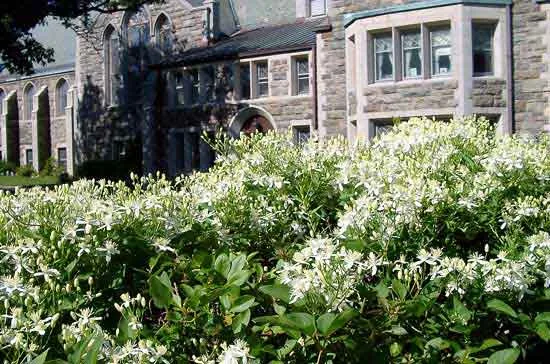
If you have never grown a climbing vine before, sweet autumn clematis is a kind place to start. It twines up a fence or arbor on its own and covers itself in small white flowers that carry a sweet scent from August into September, right when the rest of the garden is fading. A member of the buttercup family from East Asia, it climbs fast and can reach 15 to 30 feet (4.5 to 9 m) once its roots settle, so the blanket of bloom you get is genuinely rewarding for very little effort.
The care list is short and forgiving. Give it sun up top and cool, shaded roots below, plant it in ordinary well-drained soil, and it handles winters all the way down to -29°F (-34°C) without fuss. The one thing to stay ahead of is its enthusiasm: this vine drops seed freely, and in the eastern and central US it has spread beyond gardens and pushed out native plants, which is why several states now list it as invasive. Knowing that up front is half the battle.
None of that should scare a new grower off. Snip the faded flowers before they turn to seed, keep it a good distance from woodlands, and it will behave nicely on a trellis. If the extra tidying feels like too much right now, the native Clematis virginiana offers the same fragrant white display with none of the wandering, so there is a happy path either way.
Care
The short version: put it in full sun with the roots shaded and mulched, give it average well-drained soil and steady moisture, prune it hard each late winter, and clip the spent flowers before they seed so it stays where you planted it. None of these steps are hard to get right.
Light
Give it full sun and you will get the fullest flush of flowers, though a spot in partial shade still blooms nicely. The old clematis rule is a friendly one: let the top soak up the light while a layer of mulch or a low plant keeps the roots cool and shaded below.
Water
Aim for even, average moisture, watering about every 5 to 10 days while the plant is finding its feet. Once it settles in it becomes tough and easygoing and copes with dry stretches on its own, though a cool, mulched root zone always keeps it at its best.
Soil
Almost any well-drained soil will do, be it loam, clay, or sand, so this is rarely where a beginner goes wrong. Anywhere from 5.5 to 7.5 on the pH scale suits it happily.
Temperature
This is a genuinely cold-hardy vine, comfortable through winters as low as -29°F (-34°C) and summer heat up to 100°F (38°C). That easy tolerance is part of what makes it grow so willingly across so much of the country.
Humidity
Everyday outdoor air is all it needs, so there is no humidity to fuss over. What matters more is good airflow, since still, damp air late in the season is what lets mildew settle on the leaves.
Feeding
One spring helping of balanced general-purpose fertilizer covers it for the year. It grows plenty fast on its own, so there is no need to coax more out of it, and going easy actually helps keep its spread in check.
Pruning
Since the flowers come on new wood, cut the whole vine down to about 1 foot (30 cm) in late winter or early spring before it wakes up. Just as helpful, snip the spent blooms before they set seed, which is the kindest way to keep its heavy self-sowing under control.
Repotting
Grown in the ground, this vine hardly ever needs repotting. If you are keeping one in a container, only move it up when roots start circling the pot, water rushes straight through, or growth begins to stall.
Size & spacing
Plan for a large vine, 15 to 30 feet (4.5 to 9 m) in both height and width, so hand it a sturdy support and room to stretch. Leaving space between plants lets air flow through and helps keep late-season mildew away.
When to plant
Because the flowers form on new wood, the whole gardening year turns on one confident spring cut. Set young plants out in spring or fall, then in late winter cut everything back to about a foot, and the fresh shoots will carry bloom from August into September. Clip those flowers off before the seed ripens and you will save yourself a lot of weeding later.
Northern hemisphere
Southern hemisphere
Typical months for a temperate climate: start earlier in warm zones, later where spring frosts linger.
- Plant: spring or fall
- Harvest: August to September
Hardiness
USDA hardiness zones: 4–9
Temperature: down to -34°C
Troubleshooting
Most trouble with this vine comes from how happily it grows, so try not to take it personally. Keep a friendly eye out for seedlings turning up where you did not plant them, an occasional stem that wilts overnight, and a little mildew as the season cools. Find your symptom below and step in early, and each one is easy to handle.
Seedlings turning up all over and vines climbing everything in reach
What you are seeing is the plant's invasive streak showing itself. Once the flowers fade they release drifts of feathery, wind-carried seed that sprout far past the bed, and the fast twining stems will clamber over anything nearby. Take heart, this is fixable: cut off the spent blooms before the seed heads ripen, gently pull young volunteers while they are small, and keep the vine well away from woodlands. If you would rather sidestep the whole issue, the native Clematis virginiana is a fragrant swap worth planting instead.
Fix:
- Deadhead and remove seed heads before seeds mature and disperse
- Pull or dig out seedlings and unwanted runners promptly
- Cut back hard and bag spent flowering/seeding growth
- Do not plant near woodlands or natural areas; consider the native Clematis virginiana instead
One stem suddenly wilts, darkens, and flops over
This is usually clematis wilt, a fungus that runs down a stem from the tip while the roots keep living safely below. A knocked or injured stem, or a dry spell at the base, can set off the same quick collapse. Do not panic: cut the affected growth back to healthy tissue or right down to the ground, bag the trimmings, and keep the roots cool and mulched so fresh shoots can rise from the base. Reassuringly, this species handles wilt better than most clematis do.
Fix:
- Cut affected stems back to healthy tissue or to ground level
- Remove and dispose of infected material
- Keep roots cool, moist and mulched to support regrowth from the base
A soft white dust or spots showing up on the leaves
As the season cools, the leaves can pick up powdery mildew or a bit of leaf spot, and both take hold when the air around the plant goes still. The fix is gentle: thin out crowded stems so air can move through, pull off the worst leaves, and water at the base rather than over the top. A sunny, breezy spot keeps it from returning, so it rarely becomes a lasting problem.
Fix:
- Improve air circulation by thinning and proper spacing
- Remove badly affected foliage
- Avoid overhead watering
Toxicity
It helps to think of every part of this plant as look-and-admire, not taste-or-handle-bare. All of it holds ranunculin, which becomes the irritant protoanemonin as soon as a leaf or stem is chewed or crushed, and the ASPCA lists clematis as toxic to cats, dogs, and horses. The good news is that the bitter, sharp taste usually makes an animal quit before it swallows much, so serious poisoning stays rare. Slip on gloves when you prune, since the sap can nip bare skin, and both you and your pets will be fine.
Toxic to
Cats · Dogs · Horses · Rabbits · Livestock · Birds · People
Cats Mild
A curious cat that chews the leaves or stems tends to drool, paw at its mouth, and often bring up a little vomit or have loose stools. Happily, the sharp, bitter flavor usually stops it well before it eats enough to cause real harm.
Dogs Mild
A dog that gnaws on the vine can drool, get a sore mouth, and end up with an unsettled stomach and some vomiting or diarrhea. Most spit it right back out the moment the acrid sap reaches their tongue, so it rarely goes far.
Horses Mild
A horse that grazes the foliage can be left drooling with a raw, sore mouth, and the sap may stir up colic-style stomach upset and loose droppings. The bitter flavor usually keeps a horse from eating very much.
Rabbits Mild
The very same protoanemonin that bothers cats and dogs will blister a rabbit's mouth and digestive tract, so keep both the vine and its prunings well out of reach. It is safest to stick with greens you already know suit your rabbit.
Livestock Mild
Cattle, goats, and sheep that sample the plant come away with an irritated mouth and an upset gut, though the bitter sap usually means they take no more than a mouthful.
Birds Caution
Little is on record about birds eating this vine, but the irritant sap alone is good reason to keep poultry and pet birds clear of the foliage and any fresh prunings.
People Caution
None of this plant is meant for the table, and the sap can raise blisters on bare skin where it touches. Pull on gloves before pruning and wash your hands afterward, and gently steer children away from chewing the stems.
Sap can irritate skin; wear gloves when pruning and wash hands after handling.
Helpline numbers

United States
ASPCA Animal Poison Control: (888) 426-4435 (fee applies)
Poison Control: (800) 222-1222



Canada
Poison Centres: 1-844-764-7669
Varieties
There are not really named cultivars to compare here, more a small knot of names to untangle before you buy. Two simple points will keep you from bringing home the wrong plant.
Clematis terniflora (species)
This non-native species has compound leaves with smooth, untoothed leaflet margins, and that smooth edge is the quickest tell that sets it apart from the native Clematis virginiana, whose leaflets are toothed.
'Clematis paniculata' (name confusion)
You will often find it mislabeled at the nursery as C. paniculata, C. maximowicziana, or C. dioscoreifolia, so do not be thrown, since the real C. paniculata is a different species that comes from New Zealand.
How to propagate
This vine is already so keen to make more of itself that the trick is multiplying it on purpose without a carpet of seedlings to follow. Cuttings and layering both give you a faithful copy, while seed is the one to keep a firm hand on.
SeedEasy
After seed ripens in fall · 1-2 seasons
Since this vine already scatters seed so freely, deliberately sowing it is seldom worth the trouble. Should you let a batch of seed ripen in fall, give a young plant 1 to 2 seasons to settle in, though keeping that seed in check is honestly the wiser choice.
Stem cuttingsModerate
Late spring to summer · 1-2 seasons
If you want more plants without spreading seed around, cuttings are the tidy way to do it. Take softwood or semi-ripe stems from late spring through summer, and a rooted cutting will need roughly 1 to 2 seasons to fill out and look established.
LayeringEasy
Spring to summer · 1 season
The gentlest method of all is layering, since the stems will root by themselves wherever they lie against the soil. Pin a healthy stem down in spring or summer, and it usually roots and establishes within a single season.
Myths
Sweet autumn clematis and the native virgin's bower are one and the same vine.
They are actually two separate species that simply happen to resemble one another. The native Clematis virginiana carries toothed edges on its leaflets and keeps to itself, while the non-native Clematis terniflora has smooth-edged leaflets and reseeds hard enough to overrun a space. Choose the native virgin's bower and you get the same sweet fragrance without the invasion to manage.