Houseplant · Polypodiaceae
Staghorn Fern
Platycerium bifurcatum
Fix it to a board, offer bright indirect light and a steady soak, and your staghorn will unfurl antler fronds you can be proud of.
Bright indirect
Every 7–14 days
55–75°F · 13–24°C
USDA 9–12
Overview
Those forked fronds arching outward like a stag's antlers are where the name comes from, and their bold shape is far more forgiving to grow than it might first appear. This fern is an epiphyte, which means it naturally clings to bark and branches up in the canopy instead of rooting in soil, so a board or slab makes the most comfortable home for it. Its tropical origins give it a sculptural presence that few houseplants can offer, and it settles in kindly for a beginner.
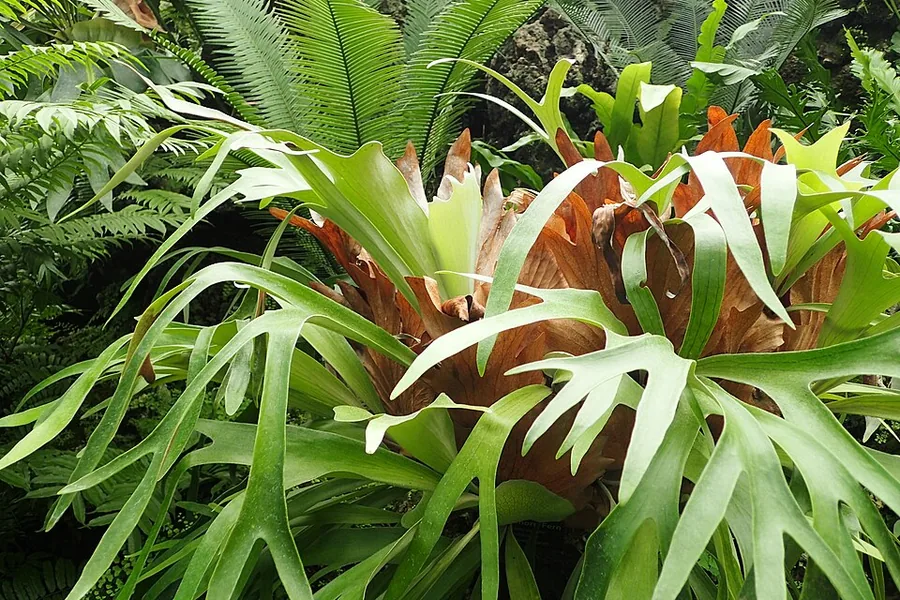
This fern grows two very different kinds of frond, and understanding each one takes away a lot of the worry. The green, forking antler fronds are the showy part that first catches the eye, while the broad, papery shield fronds press flat against the base and turn brown as they mature. That browning is nothing to be alarmed by, since those shields are quietly forming a protective collar over the roots.
Patience is really all this plant asks for, since it grows slowly and prefers a settled home to constant handling. Once the light, the mount, and a gentle watering rhythm are in place, a staghorn will reward that care for years and keep sending out fresh antlers. Small mistakes are easy to recover from, so there is every reason to feel confident giving one a try.
Care
The short version: offer bright indirect light, soak the mounted root ball now and then and let it dry down between drinks, keep the room warm, and give it humid air with a little breeze moving through.
Light
Aim for bright indirect light, the sort of soft, room-filling glow that never lets direct sun land on the fronds. A spot with partial shade or a touch of mild sun will do just fine, so there is no pressure to find the perfect window. Just steer clear of harsh direct rays, which scorch the leaves, and very dim corners, which leave the fronds looking tired and floppy.
Water
Plan on watering every 7 to 14 days, letting the root ball dry a little between drinks but never bake completely dry. The kindest method is to soak or immerse the mounted root ball, keeping the fertile fronds out of it, for a few minutes and then let it drain freely. Reach for the watering can more often during warm, active growth, and hold back through the quieter winter months.
Soil
Ordinary potting soil is not what this fern wants at all. Set it up in an epiphytic mix of sphagnum moss and orchid bark, or mount it on a board with moss tucked snugly around the roots. It likes things a little acidic, around 5.0 to 6.0 on the pH scale, with quick drainage and freely moving air to keep the roots content.
Temperature
Warm, everyday room temperatures between 55°F to 75°F (13°C to 24°C) suit it beautifully. It cannot cope with frost at all, so tuck it away from cold drafts and chilly winter glass to keep it comfortable.
Humidity
This fern is happiest when the air feels moist, ideally around 50% to 80% humidity. A steamy bathroom or a busy kitchen often provides just that, and clustering plants together or switching on a humidifier lifts dry rooms nicely. Pair that dampness with gentle air movement, since still, soggy air can invite black spot.
Feeding
Through spring and summer, while the fern is actively growing, offer a feed once a month using a balanced diluted liquid fertilizer. There is no need to feed during the darker months, when growth naturally slows right down and the plant is resting.
Pruning
Pruning asks almost nothing of you. Snip away only the antler fronds that have turned completely dead, brown, and shriveled. Please leave the brown shield fronds at the base right where they are, because they are a living, protective part of the plant and not something to tidy off.
Repotting
Remounting is a rare event, perhaps once every few years when the fern genuinely outgrows its board. Watch for shield fronds creeping past the edges, a root ball that is nudging the plant away from its mount, or a top-heavy shape that no longer sits steadily. Until then, it is perfectly content to stay put.
Size & spacing
Kept indoors, a staghorn grows to roughly 2 to 3 feet (61 to 91 cm) tall and spreads about as wide. Hang or place it somewhere the antler fronds can reach out freely without bumping a wall or crowding a neighbor.
Troubleshooting
Nearly every hiccup with a staghorn comes back to how it is watered or the air around it, and the fronds will show you the first hints. Catch those early and you can gently set things right long before real harm sets in. Find the picture that matches yours below and act while it makes a difference.
Dark spots slowly spreading over the fronds
Those marks are black spot, a fungal issue that settles in when moist air sits still and water is left resting on the leaves. Ease it by opening up the space so a gentle breeze can reach the plant, directing water at the root ball rather than the foliage, and trimming off any frond that has become heavily blemished. It is a recoverable setback once the air starts moving again.
Fix:
- Improve air circulation around the plant
- Reduce misting and avoid wetting the fronds when watering
- Remove badly affected fronds
Antler fronds drooping with brown-tipped ends
When the antler fronds go soft and floppy, the root ball has almost certainly dried out completely. That points to underwatering, and you will notice the mount feels surprisingly light in your hands. Lower the root ball into water for a few minutes, let it drain fully, and ease back onto a more regular schedule so it does not reach that point again.
Fix:
- Immerse the root ball (not the fertile fronds) in water for several minutes
- Drain thoroughly and resume regular watering before it fully dries
Fine webbing, cottony tufts, or little brown bumps on the fronds
Signs like these usually point to spider mites, mealybugs, aphids, and scale, which tend to move in when dry air has left the fern a bit run down. Gently wipe the pests away with a damp cloth, then treat with insecticidal soap, keeping it light over the felt-covered fronds. Set the plant apart from your others for a while until it is fully in the clear.
Fix:
- Wipe pests off with a damp cloth
- Treat with insecticidal soap, avoiding heavy coating of the felt-covered fronds
- Isolate the plant until controlled
Toxicity
Here is a reassuring note for anyone with pets or little ones at home: the staghorn fern is completely non-toxic. The ASPCA gives it the all-clear for cats, dogs, and horses, and nothing in its fronds poses a threat to people or other animals. A pet that eats a large mouthful of any plant might get a queasy tummy, but that really is the worst that could happen here.
Safe for
People · Cats · Dogs · Horses · Rabbits · Livestock · Birds
Cats None
Cats are in no danger near this fern, since the fronds hold nothing that could hurt an inquisitive chewer. If one does eat a fair bit, expect at most a short, mild bout of tummy upset, the same as any houseplant might cause.
Dogs None
Dogs can chew on a frond without any genuine risk, because the plant carries no toxins. A dog that overdoes it on greenery might have a brief spell of vomiting, but nothing beyond that.
Horses Safe
Horses have nothing to fear from these fronds, which hold no compounds that would trouble them. A curious taste is completely fine.
Rabbits Safe
Rabbits can nibble the fronds quite safely. A big serving of any new green can loosen the gut for a day, so it is kind to keep their tastes small.
Livestock Safe
Grazing animals are in no danger from this fern. It lacks the toxins that make certain ornamental plants a worry out in a pasture or barn.
Birds Safe
Pet birds are quite safe near the plant, as the fronds contain nothing poisonous. An inquisitive peck will do no harm at all.
People Safe
Adults and children alike can handle and grow this fern safely. It is not meant for eating, but an accidental taste will not lead to any trouble.
No special handling needed; non-toxic if nibbled, though eating large amounts of any plant may cause mild, temporary stomach upset.
Varieties
Most staghorns you will come across are the plain species, though there is one named type that pops up regularly on shop shelves.
Platycerium bifurcatum 'Netherlands'
This is a tough, compact form whose forked fronds sit broader and more upright than the wild type, and it is the staghorn you will most often see grown as a houseplant.
How to propagate
A staghorn takes its time before it is ready to share, but once it is mature it gives you one steady and beginner-friendly way to make another.
Offsets & pupsModerate
Spring · Several months to about a year
The surest way to raise another is from its offsets, the little pups that push up from the rhizome. Come spring, ease off a pup that has a few roots of its own and fix it to its own board, then simply be patient, because a young plant needs anywhere from several months to about a year to take hold. Spores are an option too, though that path is slow and rather finicky.
Myths
The papery brown shields at the base are dead and should be stripped off.
Far from dead, those browning shields are alive and hard at work. They wrap around the root crown, catch rainwater and bits of falling leaf litter, and keep the root ball from drying out. Leave them in place, since tearing them away damages the roots they are protecting.