Ornamental · Osmundaceae
Royal Fern
Osmunda regalis
Keep its feet wet and its soil acidic, tuck it into soft shade, and this gentle giant unfurls fronds that rise well overhead.
Partial shade
Every 2–4 days
USDA 3–9
2–6 ft · 0.6–1.8 m
Overview
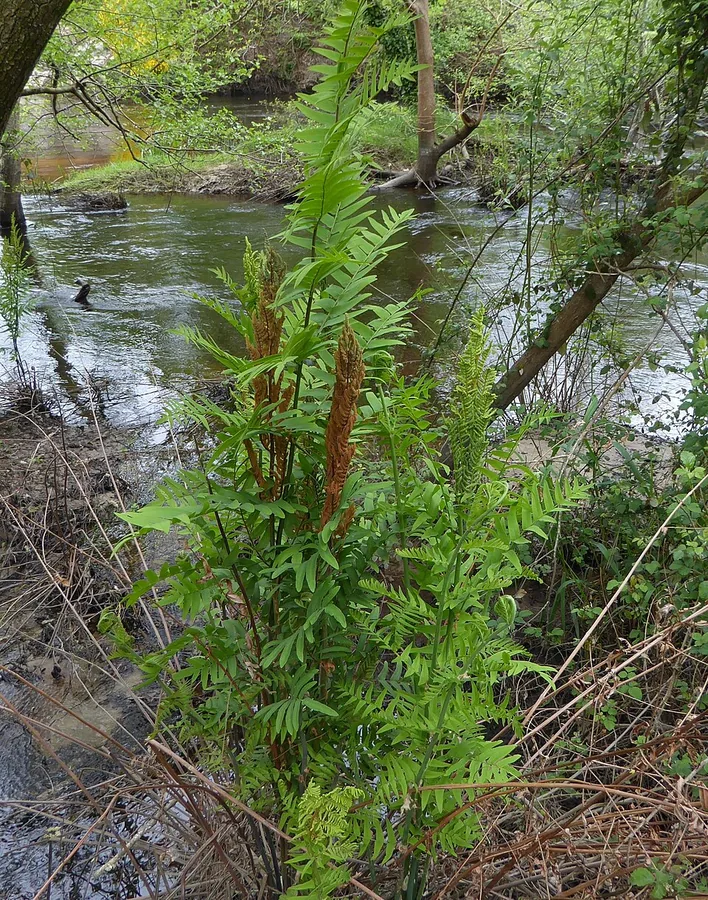
If you have a soggy, shaded corner that nothing else seems to love, the royal fern may become your new favorite. It is one of the biggest, most graceful ferns a home garden can hold, lifting arching fronds up to 6 feet (180 cm) once it feels settled. It comes from a very old plant family, the Osmundaceae, and forms such a full, dignified clump that people gave it a royal name. Late in the season the tips of its fertile fronds turn rusty brown, crowded with spores, which is why you may hear it called the flowering fern even though it never truly blooms.
More than anything, this fern simply wants steady moisture at its roots, and that makes it easy to please if you have a wet spot. It settles in happily along pond edges, in boggy dips, and anywhere the ground stays damp to wet through the year, and it will even sit contentedly in a little shallow standing water. Offer it acidic, humus-rich soil and a bit of shade, and there is honestly not much else it will ask of you.
Do not worry about winter with this one. It is remarkably tough and long-lived, taking cold as deep as -31°F (-35°C) and returning faithfully from the same woody crown every spring. The fronds fade and die back in autumn, then unroll again as tender fiddleheads once the weather warms, so your fern quietly keeps time with the seasons in a damp, shaded bed.
Care
The short version: give this fern soft shade and soil that stays damp, leaning acidic and full of organic matter, and it will thank you. Keep it reliably moist to wet, offer a light spring feed, and then relax and let it settle in on its own.
Light
Dappled light under open trees is where this fern feels most at ease, so partial shade is your safest choice. It can also cope with full shade or even full sun, but keep it out of strong sun unless the soil stays reliably wet, because dry roots plus hot sun will scorch the fronds quickly. When in doubt, a little more shade never hurts.
Water
This is the one thing worth getting right, and happily it is simple. Keep the soil consistently moist to wet and never let it dry out, watering about every 2 to 4 days and more often when it is hot or sunny. A pond margin or a boggy corner suits it perfectly, and it will even forgive a little shallow standing water.
Soil
Plant it in moist, rich, humusy soil that leans acidic, ideally somewhere around a pH of 4.5 to 6.5. It is not fussy about texture and will take clay, loam, or sand as long as the ground stays wet, and a generous scoop of leaf mold or compost keeps it truly content.
Temperature
You can relax about the cold with this fern, since it handles a huge range from -31°F to 86°F (-35°C to 30°C). That deep hardiness lets it thrive even in far-northern gardens, and each year it simply dies back and sends up fresh growth from the crown without any drama.
Humidity
Like most ferns, it is happiest when the air stays on the damp side, roughly 50% to 80%. Sheltered spots near water tend to offer that naturally, which is a big part of why it does so beautifully beside a pond or a slow stream.
Feeding
There is no need to feed it heavily, which makes life easy. A simple spring topdressing of compost or leaf mold is usually all it wants, or you can mix in a balanced slow-release fertilizer just once as new growth begins.
Pruning
There is delightfully little to do here. Snip away any faded, browned, or frost-killed fronds in late autumn or early spring, before the new fiddleheads start to push up, and then simply let the plant be.
Repotting
If yours lives in a container, resist the urge to disturb it and repot only every 3 to 4 years, since the roots dislike being moved. It will let you know it needs more room when roots creep out the drainage holes, the woody crown starts lifting above the soil, and the fronds come up smaller and weaker.
Size & spacing
Give this generous fern some elbow room, because a settled clump can reach 2 to 6 feet (60 to 180 cm) tall and spread 2 to 3 feet (60 to 90 cm) wide. Space your plants with that in mind so each crown has space to arch out into a full, handsome mound.
When to plant
The royal fern keeps an easy, forgiving calendar, so there is no need to fuss over exact dates. Move young plants into the garden in spring or in early autumn while the ground is still cool and damp, enjoy the fiddleheads uncurling as things warm up, and watch for those rusty fertile tips from late spring into summer.
Northern hemisphere
Southern hemisphere
Typical months for a temperate climate: start earlier in warm zones, later where spring frosts linger.
- Plant: Spring or early autumn
- Harvest: Non-flowering; spore-bearing fertile frond tips develop late spring to summer
Hardiness
USDA hardiness zones: 3–9
Temperature: down to -40°C
Troubleshooting
Take heart: almost every trouble a royal fern runs into comes back to a single cause, and that is soil that dried out. Brown tips, early yellowing, and thin weak growth all point the same way, so start by checking the moisture before anything else. Find your fern's symptom below and put it right while the crown is still strong, and it will very likely bounce back.
Brown, Crispy Edges And Tips On The Fronds
Nearly every time, crispy brown edges come down to thirst, the single thing a royal fern truly cannot forgive. It needs ground that stays moist to wet, so dry roots, fierce sun, or a drying wind will burn the tips fast. The good news is the fix is gentle: water deeply, tuck a mulch over the root zone, and shift any potted ferns into part shade.
Fix:
- Water deeply and keep soil consistently moist to wet
- Apply organic mulch to conserve moisture
- Move container plants to part shade or provide afternoon shade
- Trim badly damaged fronds at the base
Fronds Yellowing And Flopping Early In Summer
When a dry spell sets in, this deciduous fern may simply decide to call it a year and slip into early dormancy. It can look worrying, but the woody crown almost always comes through fine and sends up fresh fronds the following spring. Get back to deep, regular watering and trim off the collapsed growth, and trust it to recover.
Fix:
- Resume deep, consistent watering to keep soil wet
- Cut back collapsed fronds; the crown usually re-flushes the following spring
Pale, Washed-Out Fronds With Feeble Growth
Thin, yellow-green fronds usually mean the soil has turned too alkaline or too poor for a fern that longs for acidic, humus-rich ground. Uneven watering only adds to the trouble. Work in some fibrous, acidic material such as leaf mold or composted bark, keep the moisture steady, and the color and vigor should come back.
Fix:
- Incorporate fibrous, acidic organic matter such as leaf mold or composted bark
- Maintain even moisture
Toxicity
Here is some real peace of mind for homes with pets and little ones: the royal fern is a true fern and is not regarded as toxic. A chewed frond might bring on a bit of harmless, passing stomach upset, but there is no genuine poison in it to fear. The fine hairs and spores can leave sensitive skin a little itchy, so a quick hand wash after a long spell of handling keeps everyone comfortable.
Safe for
People · Cats · Dogs · Horses · Rabbits · Livestock · Birds
Cats None
The royal fern is a true fern and perfectly safe to keep around cats. A curious nibble might bring a little drool or a brief tummy grumble, but nothing more serious than that.
Dogs None
There is nothing here that will harm a dog. At worst, a chewed frond leaves a pup with some mild, short-lived digestive upset that passes on its own.
Horses None
Horses can graze nearby without concern, since the fronds hold no poison. A big mouthful of any greenery can loosen the gut for a while, and that is all.
Rabbits None
Rabbits are welcome to nibble a royal fern with no harm done. As with any unfamiliar leafy green, offer it a little at a time so their digestion has a chance to adjust.
Livestock None
Cattle, goats, and sheep will not be poisoned by this fern, so it makes a kind and safe planting for the damp margins of grazing land.
Birds None
Both garden birds and pet birds are quite safe around the fronds and spores. There is simply nothing toxic here for them to peck at.
People None
It is safe to have around children, with no poison in any part of the plant. The young fiddleheads of some ferns are eaten once cooked, though the spores and fine frond hairs can leave a few sensitive people a touch of skin irritation.
Royal fern is not known to be toxic, but as with any non-food plant, chewing fronds may cause mild, transient gastrointestinal upset, and spores or frond hairs can be a minor contact irritant.
Varieties
The plain species is lovely on its own and what most gardens grow, but a handful of named forms are worth hunting down for a little extra color or a different shape. These are the ones you are most likely to come across.
'Purpurascens'
Its new fronds and stems open in a warm purple-bronze that looks striking beside the older green growth.
'Cristata'
Crested, forked tips along the fronds and pinnae give this one a soft, tasselled and frilled character.
var. spectabilis
This is the royal fern native to North America, which some botanists treat as a separate species called Osmunda spectabilis.
'Gracilis'
A daintier, more compact form whose fresh growth arrives flushed with a gentle reddish tint.
How to propagate
Making more royal fern is a slow but steady pleasure, and you have two gentle routes: lifting and splitting an established crown, or coaxing new plants along from its short-lived spores.
DivisionModerate
Early spring or autumn · 1 to 2 growing seasons
The dependable way to get more royal fern is to divide that woody crown in early spring or autumn, making sure each piece keeps its own roots and a growing point or two. Because the plant dislikes being disturbed, only split it now and again, and give a fresh division time, since it usually takes 1 to 2 growing seasons to settle in and fill out. If you would like to try spores instead, sow the short-lived green spores onto moist, sterile peat the moment they ripen, keep them humid and shaded, and be patient for several months while tiny prothalli and then baby ferns appear.
Myths
Since it is called the flowering fern, the royal fern must produce flowers.
It never produces a single flower. Those flower-like clusters at the frond tips are simply packed sporangia holding spores, and the plant makes new ferns from spores rather than any flower or seed.
Like most plants, ferns are raised from seed.
Ferns set no seed at all. The royal fern grows from the spores dropped by its fertile frond tips, and you can also lift and divide the crown to make more of it.