Ornamental · Osmundaceae
Cinnamon Fern
Osmundastrum cinnamomeum
Offer it wet, acidic shade and the cinnamon fern will reward you with tall green fronds and rust-colored spikes, season after season.
Partial shade
Every 2–4 days
USDA 3–9
2–5 ft · 0.6–1.5 m
Overview
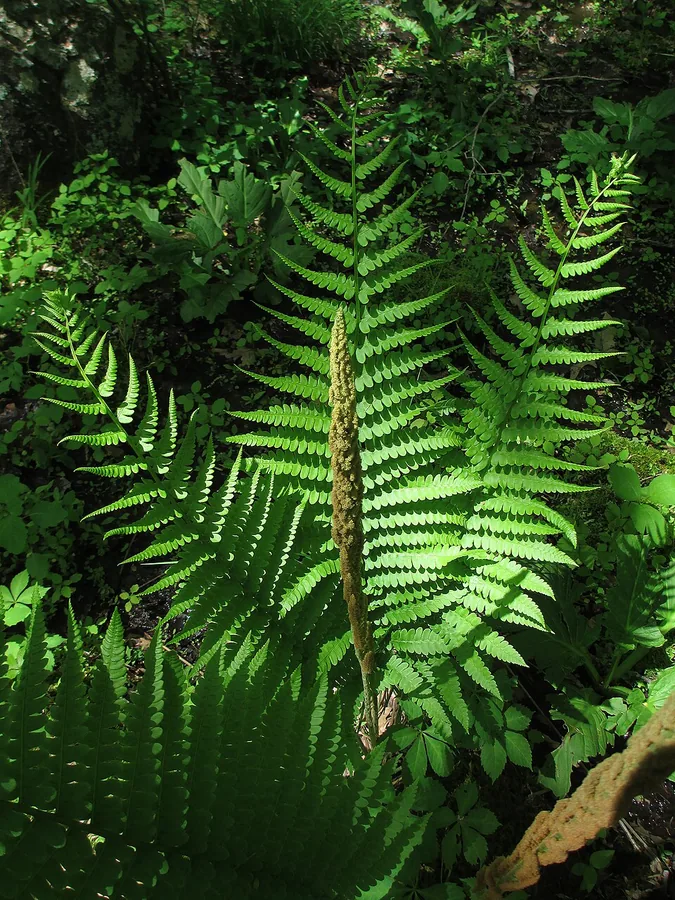
Cinnamon fern is a generous, clump-forming native of North American bogs and wet woodlands, and it grows the very same way across much of eastern Asia. Come spring, the crown lifts a ring of upright green fronds that can reach 2 to 5 feet (60 to 150 cm) tall, gathered into a graceful vase shape. From the middle rise separate fertile fronds dusted with rust-colored spores, the cinnamon-brown spikes that earned the plant its name.
This is the friend for those damp, shady corners where so many plants give up. Pond edges, rain gardens, stream banks, and the low spots that stay wet are all happy homes for it, and it laughs off cold right down to USDA zone 3. Growth is gentle rather than rushed, but a contented clump widens to 2 to 4 feet (60 to 120 cm) across and returns a little fuller every year.
What it needs from you is wonderfully simple: shade, acidic ground, and water that doesn't run out. Let the soil go dry in summer and the fern quietly protects itself by going dormant early, setting its fronds down well before fall, and that's recoverable, not a loss. Keep it watered and it stays lush from the first spring fiddlehead all the way to the first hard frost.
Care
The short version: give it part to full shade, rich and acidic soil that stays consistently moist to wet, and steady water all season so it never dries out and quits on you early.
Light
Cinnamon fern feels most at home in partial to full shade, the soft dappled light of a woodland floor. It will accept full sun too, but only where the soil stays wet enough to keep the frond edges from scorching, so don't fret if a sunnier spot is all you have, just keep it moist.
Water
This is the one place to give the fern your steady attention, and it's an easy promise to keep. Keep the soil consistently moist to wet, watering every 2 to 4 days in dry weather, and never let it dry right out. It happily takes standing water and boggy ground, while a summer drought is what nudges it into early dormancy.
Soil
Plant it in rich, humusy, acidic ground that holds onto moisture, aiming for a pH of 4.5 to 6.0. Those boggy, low-lying spots that stay wet are exactly what it loves, and a generous layer of leaf mold keeps the roots cool and damp for you.
Temperature
You really can't out-chill this one. It's hardy from -40°F to 86°F (-40°C to 30°C), which covers USDA zones 3 through 9, so even hard winters won't trouble it. The crown simply rests dormant underground until spring calls it back up.
Humidity
Coming from wet woods and bog edges, it enjoys air on the damp side, somewhere around 50% to 80%. In a naturally moist, shaded site the humidity looks after itself, so this is rarely something you'll need to think about.
Feeding
Good rich soil means there's very little feeding for you to do. A light spring top-dressing of compost or leaf mold is all it asks, and in truly good ground you can happily skip even that.
Pruning
Let the healthy green fronds be all season long, there's no need to tidy them. The only cut worth your time is clearing away the old, dead, or frost-damaged fronds in late winter, just before the fresh fiddleheads push up.
Repotting
Settled clumps rarely want disturbing, so you can leave them in peace. When the crowns grow crowded and overlap and the fronds start arriving smaller, that's your cue to lift and divide them rather than just shift the plant to a new spot.
Size & spacing
Look forward to a vase of fronds 2 to 5 feet (60 to 150 cm) tall, spreading 2 to 4 feet (60 to 120 cm) wide as the years pass. Give each crown that much elbow room and the mature clump will have all the space it needs to fill out beautifully.
When to plant
There's no harvest to fuss over with this fern, just one planting moment that really counts. Set new plants out in spring as the soil warms and the fiddleheads begin to rise, and you'll be giving the crown a whole season to root in comfortably before winter arrives.
Northern hemisphere
Southern hemisphere
Typical months for a temperate climate: start earlier in warm zones, later where spring frosts linger.
- Plant: spring
Hardiness
USDA hardiness zones: 3–9
Temperature: down to -40°C
Troubleshooting
Here's the encouraging part: cinnamon fern has no serious pests or diseases, so almost anything that goes wrong comes back to one simple thing, dry soil. The fronds will quietly tell you when the plant is thirsty, and if you catch it early a good deep soaking usually sets everything right again.
Scorched, crisping edges along the fronds
Almost every time, the answer here is thirst, and that's reassuring because it's easy to put right. Cinnamon fern was born in bogs and wet woods, so the leaf edges brown the moment the roots go short of water, and you'll notice it worst wherever the sun lands hardest. Give it a long, deep drink to bring the soil back to evenly moist, tuck leaf mold around it to keep that moisture in, and shift it into a little more shade if it has been sitting in full sun.
Fix:
- Water deeply to keep soil consistently moist
- Mulch with leaf mold to retain moisture
- Provide more shade if sited in full sun
Fronds yellowing and folding down too soon in summer
Try not to panic if the fronds turn yellow and lie down in the heat of summer. When the ground dries out the fern simply tucks itself away early to ride out the dry spell, and that quiet defense rarely costs you the plant. It nearly always returns the following spring once you get back to steady, deep watering and mix more organic matter into the soil so it holds onto moisture next time.
Fix:
- Resume consistent deep watering
- Improve soil organic matter and moisture retention
Toxicity
If you share your home with pets and children, you can breathe easy here. Cinnamon fern is a true fern with no known toxin, so a curious nibble won't poison a cat, a dog, or anyone else. The one small thing to keep in mind is the wiry, cinnamon-colored hairs at the base of the fronds, which can scratch or bother sensitive skin, so a quick wash of the hands after handling them is all it takes.
Safe for
People · Cats · Dogs · Horses · Rabbits · Livestock · Birds
Cats None
You can relax about the cat. Cinnamon fern is a true fern with no known toxin, so a curious nibble on a frond should leave your cat just fine. Any pet that overdoes it on greenery might be a little sick, but nothing in this plant will poison.
Dogs None
Your dog is welcome to share the garden with this fern. The fronds hold no toxic compound, though it's kindest to keep the stiff fibers at the frond bases out of reach of an eager chewer.
Horses None
There's nothing in the fronds that will harm a horse. Plant it without worry along paddocks and the edges of pasture.
Rabbits None
Rabbits can browse this fern with no trouble at all. Neither the tender young fiddleheads nor the grown fronds carry any toxin.
Livestock None
Cattle, goats, and sheep are in no danger from it. It's a safe presence in fields and along the wet ground where stock wander.
Birds None
Birds have nothing to fear from the fronds or the spores. Backyard flocks can forage and scratch around the crowns quite happily.
People None
There's no poison here, and the fiddleheads of related ferns are even gathered and eaten in spring. The one thing worth a gentle reminder is the wiry hairs at the frond bases, which can scratch tender skin, so give your hands a wash after handling them.
The cinnamon-colored hairs and fibers at the frond bases may cause mild mechanical skin irritation in sensitive individuals.
Varieties
Most gardeners grow cinnamon fern just as the wild species, but botanists do recognize a pair of regional forms that are nice to know about.
var. glandulosum
You can know this form by the glandular hairs running along its frond axes, and you'll find it growing in the southeastern parts of North America.
var. asiaticum
The Asian form makes its home from the Russian Far East down through Indochina.
How to propagate
You won't be sowing this fern from seed, simply because ferns don't produce any, and that's perfectly fine. The dependable route is dividing an established clump, with growing from spores waiting as the patient gardener's gentle alternative.
DivisionModerate
Early spring before the fronds unfurl · 1-2 years
The kindest and surest way to get more plants is to lift an established clump in early spring, before the fiddleheads open, and gently split the crown into pieces. Give each new division a year or two and it will settle in and fill out for you. If you feel adventurous you can sow fresh spores on a moist, sterile mix, though that path asks for more patience and fuss.
Myths
Cinnamon fern is where culinary cinnamon comes from.
Take heart, the name simply nods to the warm cinnamon color of the fibers and the fertile fronds, not to the spice on your shelf. Real cinnamon is the bark of unrelated Cinnamomum trees, so this gentle fern plays no part in what flavors your baking.
Cinnamon fern spreads and reproduces by seed.
Ferns never set seeds or flowers, so there's nothing to plant in that sense. This one makes more of itself with spores instead, carried on the upright fertile fronds, those rust-colored spikes that lend the plant its name.