Ornamental · Buxaceae
Japanese Pachysandra
Pachysandra terminalis
Give it deep shade and rich, moist soil, and pachysandra rewards you with a glossy evergreen carpet that lasts for years.
Full shade
Every 7–14 days
USDA 4–9
6–12 in · 15–30 cm
Overview
If you have a shady corner where grass just will not grow, pachysandra is a wonderfully forgiving place to start. It is an evergreen groundcover in the boxwood family, native to Japan and China, where it creeps along the forest floor on underground runners. Give it a home under trees or along the north side of the house and it does the very same thing, quietly filling in a low, dark green mat.
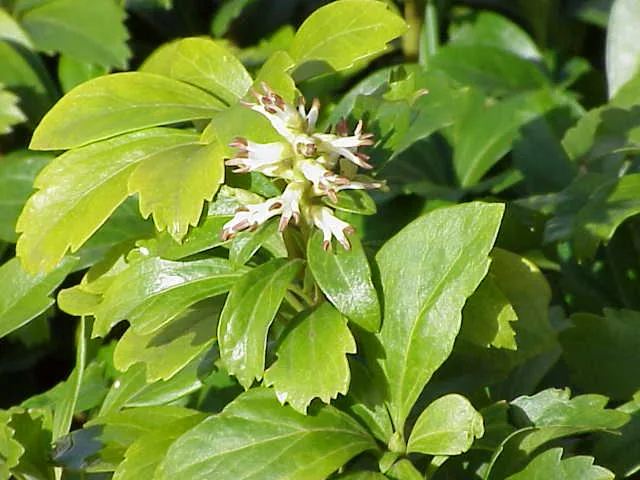
The best part is how little it asks of you. It keeps its glossy leaves right through winter, stays a tidy 6 to 12 inches (15 to 30 cm) tall, and crowds out weeds once it settles. Little white flower spikes appear in early spring, though the foliage is really the reason to grow it, so there is no pressure to fuss over the bloom.
Two simple things keep it thriving: shade and good airflow. Plant it where the sun never bakes it and the leaves can dry after rain, and it mostly looks after itself. The only real slip to avoid is crowding it into damp, stuffy air, which is where Volutella blight gets a foothold, and even that is manageable once you know to watch for it.
Care
The short version: give pachysandra part to full shade in rich, moist, well-drained soil on the slightly acidic side. Water it through dry spells, keep the bed from getting crowded and stuffy, and rake away fallen debris, and you will hold blight at arm's length.
Light
Pachysandra is a genuine shade plant, so aim for part to full shade and it will thank you. Dappled light beneath trees or the shaded side of a building suits it perfectly, while full sun bleaches and scorches the leaves and leaves the plant weaker.
Water
Try to keep the soil evenly moist, watering about every 7 to 14 days when rain runs short, though a settled bed shrugs off dry shade with ease. Water low at the base with drip rather than from above, since wet leaves are what Volutella blight feeds on.
Soil
It is happiest in rich, moist, well-drained soil that leans slightly acidic, ideally a pH of 5.5 to 6.5. Loam or clay are both fine as long as water moves through, because soggy ground is the one thing that rots the roots.
Temperature
This is a wonderfully cold-hardy plant that handles roughly -29°F to 95°F (-34°C to 35°C) without complaint. It sails through hard winters right in the ground, though a drying winter wind can scorch any leaves left exposed.
Humidity
Ordinary outdoor air is all it needs, so there is no target number to chase. What matters far more is airflow, because it is the crowded, still beds where leaf blight quietly takes hold.
Feeding
Pachysandra almost never needs feeding, which is a relief. A light balanced fertilizer in spring is plenty, and piling on more only invites disease by pushing out soft, crowded growth.
Pruning
There is very little to do here. Thin or mow a crowded bed to let the air move through, gently pull any diseased or scorched foliage, and rake off fallen leaves so spores have nowhere to spend the winter.
Repotting
This is a groundcover rather than a pot plant, so it is rarely put in a container or repotted at all. Once it is in the ground it stays put and spreads on its own by runners, no repotting needed.
Size & spacing
Plants keep low at 6 to 12 inches (15 to 30 cm) tall and each one spreads 12 to 18 inches (30 to 45 cm) across. Set new divisions 6 to 12 inches apart and, given a few seasons, they will close the gaps for you.
When to plant
Pachysandra is a hardy perennial that eases in at its own pace, so patience pays off. Plant it in spring or early fall while the soil is cool and damp, enjoy the short white flower spikes in early spring, and give the bed about three years to close into a full carpet.
Northern hemisphere
Southern hemisphere
Typical months for a temperate climate: start earlier in warm zones, later where spring frosts linger.
- Plant: spring or early fall
- Harvest: early to mid spring (April)
Hardiness
USDA hardiness zones: 4–9
Temperature: down to -34°C
Troubleshooting
Almost every pachysandra worry shows itself in the leaves, whether it is bleaching from too much sun or the spotting and dieback of disease. The good news is that the early signs are easy to spot, and catching them means you can help before a patch spreads. Find the picture that matches yours below, then step in while it still makes a difference.
Target-ringed spots, darkened stems, and dying patches
This is Volutella leaf and stem blight, the one problem worth taking seriously, and it thrives in beds that are crowded and damp. You will see tan spots ringed like a target, stems going brown to black, and salmon-pink spore masses after wet weather. Don't panic, because you can turn it around: cut the infected growth out on a dry day, thin the bed so air moves through, keep scale under control, and water low at the base.
Fix:
- Cut out and dispose of infected leaves and stems when dry
- Thin crowded plantings to improve air circulation
- Control scale insects
- Avoid overhead watering; use drip irrigation
- Apply fungicide during wet weather if severe
Wilting with soft, blackened stems in soggy ground
When the ground stays waterlogged, root and stem rot can move in, softening and darkening the roots and the stem bases. You will notice it gathers in the low, soggy corners of the bed. The fix is gentle and doable: help the water drain away, water a little less, and lift out any plants that have already gone.
Fix:
- Improve drainage
- Reduce watering and avoid waterlogged sites
- Remove and discard affected plants
Speckled leaves with little white waxy bumps
Those white or brown crusts along the stems and leaf undersides are euonymus scale, and fine speckling with a bit of webbing means spider mites have arrived. Both quietly sap the plant and dull its color, but neither is beyond you. Prune out the worst stems, treat scale with horticultural oil, and keep after it, since scale left alone can open the door to Volutella blight.
Fix:
- Prune out heavily infested stems
- Apply horticultural oil for scale
- Manage mites with appropriate miticide or oil
When the leaves fade pale or turn crispy brown
Take heart, because this one is easy to read and easy to fix. Pachysandra loves shade, so too much sun is almost always why its glossy green washes out to yellow or crisps at the edges, and drying wind or a hard winter can do the same. Move the plant somewhere shadier, keep the soil rich and moist, and the color comes right back.
Fix:
- Transplant to part or full shade
- Provide a moist, organically rich site
- Water during drought and avoid hot, exposed locations
Toxicity
You can plant pachysandra with a calm heart around pets, livestock, and children. It is not on the ASPCA toxic list, and while a mouthful of leaves might give a curious cat or dog a brief upset stomach, nothing serious follows. Feel free to use it freely in a yard shared by animals and little ones.
Safe for
People · Cats · Dogs · Horses · Rabbits · Livestock · Birds
Cats None
You can relax with a cat in the house. If one nibbles a leaf you might see a little drool or a mild tummy upset, and that is as far as it goes.
Dogs None
A dog can roam the garden freely. The leaves are not on the ASPCA toxic list, and the worst a mouthful brings is a short bout of queasiness.
Horses None
There is nothing here to worry a horse. No known toxin affects them, and most simply pass by the low, glossy carpet without a second look.
Rabbits None
Rabbits are safe grazing nearby. Both wild and pet rabbits browse around it without trouble, even if it is not a favorite of theirs.
Livestock None
Cattle, goats, and sheep can graze close by with no cause for concern. In the small amounts they might sample, this plant carries nothing that upsets them.
Birds None
Birds have nothing to fear from it. Many happily use the thick mat for cover and foraging, and the leaves and stems do them no harm.
People None
This is a reassuring choice for a family garden. It is not eaten and it is not poisonous, so you can plant it around children with an easy mind.
Discourage pets from chewing the foliage; not listed among ASPCA toxic plants but the alkaloid-containing leaves can irritate.
Helpline numbers

United States
ASPCA Animal Poison Control: (888) 426-4435 (fee applies)

United Kingdom
Animal PoisonLine: 01202 509000 (fee applies)

Australia
Animal Poisons Helpline: 1300 869 738
Varieties
A handful of named selections show up beside the common species. Here are the ones worth knowing before you head to the garden center.
Green Carpet
This one stays compact and low, and gardeners reach for it because of its rich, glossy dark green leaves.
Variegata (Silveredge)
Its leaves are edged in white, and it takes things slower, growing with less vigor than the plain green kind.
Pachysandra procumbens (Allegheny spurge)
A gentle, clumping native with matte blue-green leaves mottled in purple and white, and it wanders far less than P. terminalis.
How to propagate
Pachysandra is one of the easiest plants to multiply from what you already have, and most gardeners happily take that route rather than starting from seed.
DivisionEasy
Spring or early fall · About three years to fill in as a groundcover
Division is the simplest and most forgiving way to make more. In spring or early fall, lift a settled clump or a rooted runner, set the pieces 6 to 12 inches apart, and let them take about three years to knit into a solid carpet. There is no rush, and the plants do the work.
Stem cuttingsEasy
Late spring to summer · Several weeks to root
If you would like more plants sooner, take tip cuttings from late spring through summer and slip them into a moist medium, where they root in a few weeks. It is a friendly way to grow a wider patch from the growth you already have.
SeedModerate
Spring · Slow and seldom used
You can sow seed in spring, but it is slow going and hardly anyone bothers. Nearly every planting comes from divisions or cuttings instead, which settle in far faster and give you exactly the plant you started with.
Myths
Pachysandra grows well in full sun.
It is a shade lover at heart. Set it in full sun and high wind and the leaves yellow, bleach, and scorch, and that stress also invites Volutella blight. Give it part to full shade and you will get the deep, glossy green you planted it for.