Shrub · Buxaceae
Common Boxwood
Buxus sempervirens
Calm, dependable, and evergreen year-round, boxwood gives a clipped garden its steady green bones.
Full sun
Every 5–10 days
USDA 5–8
5–15 ft · 1.5–4.6 m
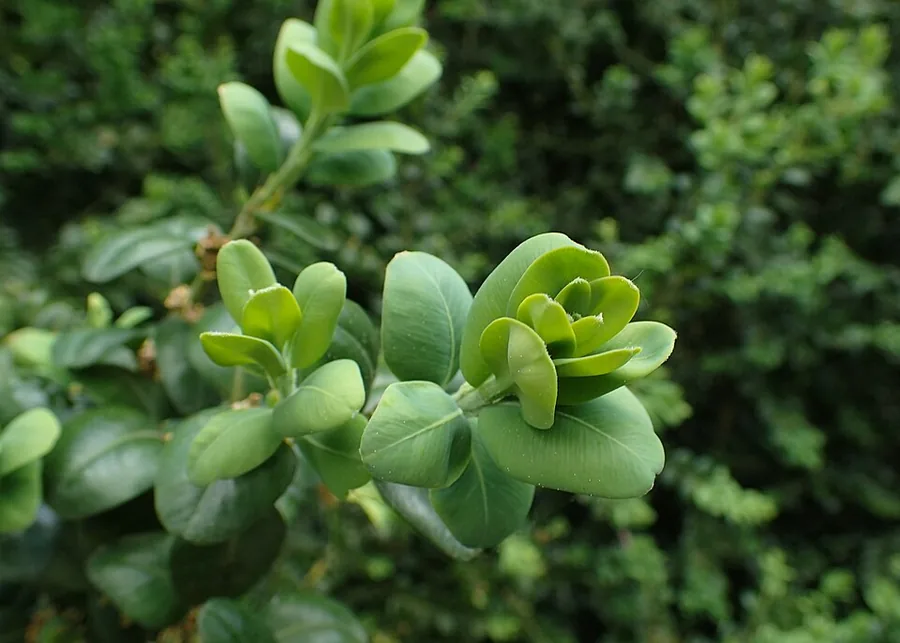
Overview
If you want a shrub that keeps its tidy green shape no matter the season, boxwood is a kind place to start. This is a slow-growing evergreen shrub in the box family, and it is happy to be clipped into a snug hedge, a low edging, or a soft rounded ball beside a path. Left to its own devices it can reach 15 feet, but you will almost certainly keep it shorter and neater, and that is perfectly fine.
The main thing boxwood asks of you is patience, and there is no rush. It puts on just a little growth each year, so a full hedge is the reward of time well spent rather than an overnight screen. In return you get a forgiving shrub that settles into deep shade through full sun, holds up to cold as low as zone 5, and keeps you company for decades once its roots take hold.
Boxwood does come with a few troubles, and knowing them in advance makes them far less scary. Boxwood blight can drop the leaves in days, leafminers and mites can mar the foliage, and soggy roots can rot, but none of this means you are doomed. Choose a good spot, keep things clean, and leave space for air to drift through, and most of these worries simply stay away.
Care
The short version: boxwood is wonderfully easygoing, content in full sun all the way to full shade, asking for evenly moist but well-drained loam, and growing so slowly that a single gentle shaping after the last spring frost is usually all it ever needs.
Light
Boxwood is refreshingly relaxed about light and will settle in anywhere from full sun to full shade, so you have real freedom in placing it. It fills in densest in sun, and the one thing worth dodging is full winter sun on an open site, which can leave the evergreen leaves scorched brown.
Water
Aim to keep the soil evenly moist but never waterlogged, giving it a drink roughly every 5 to 10 days once it has settled in. The roots sit shallow, so a layer of 1 to 2 inches of organic mulch holds moisture beautifully, and it is best to skip digging around the base. Take comfort that the main thing to avoid is overwatering and poor drainage, which are what lead to root rot.
Soil
Give boxwood well-drained loam that stays evenly moist and it will reward you. It is not fussy about pH and does well anywhere from 6.0 to 8.0, so slightly acidic right through to slightly alkaline ground will suit it. The only soil to improve or steer clear of is heavy, waterlogged clay.
Temperature
Boxwood is tougher than you might guess, comfortable across a wide span and hardy from about -20°F to 100°F (-29°C to 38°C). The thing to watch is not really the thermometer but exposure, since drying winter wind and sun trouble it more than cold on its own.
Humidity
Everyday outdoor humidity is all boxwood wants, so there is no level for you to chase or worry about. What matters far more is good air movement, because still, damp air in a crowded planting is exactly the setting blight and other fungal diseases enjoy.
Feeding
A simple balanced fertilizer in spring is plenty to keep boxwood healthy all year, with no need for anything elaborate. Pair that once-a-year feeding with a good layer of mulch and the plant keeps its color and fullness with ease.
Pruning
Shape boxwood after the last spring frost and never before, so you are not coaxing tender new growth into a late freeze. Take out any dead or diseased branches as soon as you spot them, and gently rake out leaves caught in the branch crotches, since trapped debris can be where disease begins.
Repotting
Boxwood is rarely repotted and would rather not be disturbed once it is growing well, so you can relax on this one. In a container, just keep an eye out for roots circling the pot, water rushing straight through, or growth that stalls, and step it up a size only when those signs appear.
Size & spacing
Plants reach 5 to 15 feet (1.5 to 4.5 m) tall and roughly as wide, though regular clipping keeps most far more modest. When planting a hedge, give each one the room its mature spread will want so air can move freely and disease has a much harder time settling in.
When to plant
There is no need to fret over timing, since boxwood goes into the ground in spring or early fall, whenever the soil is workable and the days are mild. Find a spot that is sheltered from biting wind and full winter sun, and let the roots have a calm season to settle before summer heat or hard cold rolls in.
Northern hemisphere
Southern hemisphere
Typical months for a temperate climate: start earlier in warm zones, later where spring frosts linger.
- Plant: Spring or early fall, in a site sheltered from strong winds and full winter sun
- Harvest: April to May (greenish-cream, insignificant flowers)
Hardiness
USDA hardiness zones: 5–8
Temperature: down to -29°C
Troubleshooting
Boxwood will often coast along happily for years, then show its small set of weak spots all at once, and that is nothing to panic over. Most signs turn up in the leaves, from sudden browning and dropping to blisters and a dull stippled look, while the more serious ones begin quietly at the roots. Find your plant's symptom below and act early, because the worst diseases cannot be cured, only headed off.
Brown spotting, fast leaf drop, and dark cankers on the stems
If you are seeing this, the likely culprit is boxwood blight, a quick-spreading fungus that can strip a plant bare in days, though Volutella blight can do similar harm after a hard winter. Once it has settled in there is no cure, but you are not helpless. Cut out the diseased stems and bag them, rake up every fallen leaf, lay down fresh mulch, and shield what remains with a chlorothalonil fungicide.
Fix:
- Remove and bag diseased stems and rake up all fallen foliage
- Apply fresh mulch over the soil surface
- Apply chlorothalonil, or chlorothalonil mixed with thiophanate methyl, fungicide
Yellowing leaves over rotted roots and peeling crown bark
When a whole plant slides from green to yellow and the roots lift out dark and mushy, the trouble is Phytophthora root rot living in wet, poorly drained soil. Check the crown, where the bark peels away once infection sets in. No spray will fix this one, so the kind thing is to mend the drainage, work over heavy clay, or move the plant to a raised bed and ease back on watering.
Fix:
- Improve soil drainage
- Amend heavy clay soils or plant in raised beds
- Avoid overwatering
Swollen, blistered leaves marked with yellow blotches
Those raised blisters come from the boxwood leafminer, whose larvae are tucked inside the leaf doing the feeding. Open a blistered leaf and you will see the little orange maggots in the mine, which is oddly reassuring once you know what it is. Keep an eye out for the adult flies from mid-April into early May, then treat with a foliar spray of acephate or spinosad, or a soil drench of imidacloprid.
Fix:
- Apply acephate or spinosad foliar spray to larvae in mines
- Use malathion contact spray against adults
- Apply soil-applied dinotefuran or imidacloprid
Dull, silvery leaves with fine stippling
Fine yellow scratches and a flat silvery cast usually point to the boxwood mite. To be sure, tap a branch over a sheet of white paper and watch for the tiny mites moving across it. You can knock them back gently with horticultural oil at 1 to 2 percent or insecticidal soap, and it helps to keep stressed plants out of hot, baking sun where mites breed fastest.
Fix:
- Apply horticultural oil at 1-2 percent to kill eggs and adults
- Apply insecticidal soap
- Apply tau-fluvalinate miticide if needed
Cupped new leaves wrapped in white waxy fluff
The boxwood psyllid sips sap from the fresh growth and leaves it curled and cupped, which can look worse than it is. Ease open the distorted shoots and you will find tiny pale-green nymphs hiding under a white waxy coat. The harm is mostly cosmetic, so you can simply leave light cases be and reach for acephate only when an infestation turns heavy.
Fix:
- Treat only heavy infestations
- Apply acephate foliar spray
- Apply soil-applied dinotefuran or imidacloprid
Brownish-yellow leaves arriving in late winter
Boxwood left in open winter sun and drying wind often picks up a dull brownish-yellow tone known as winter bronzing. It can look alarming, but it rarely harms the plant, and the new spring growth usually comes in a fresh, healthy green. Tuck plants where they are sheltered from wind and harsh winter sun, water them well in fall, and spread mulch over the shallow roots.
Fix:
- Site or transplant plants where they are sheltered from winter wind and full winter sun
- Ensure adequate fall soil moisture before winter
- Apply organic mulch to protect shallow roots
Toxicity
Boxwood is toxic, so it helps to know that no part of it should be eaten. The leaves and stems hold steroidal alkaloids, mainly buxine, which can cause vomiting and diarrhea in pets and people, and in large amounts can lead to seizures or breathing trouble in horses and livestock. Happily, the bitter taste turns most animals away before they swallow much, but it is wise to keep pets, grazing animals, and children clear of the foliage and any prunings.
Toxic to
Cats · Dogs · Horses · Rabbits · Livestock · Birds · People
Cats Moderate
A cat that nibbles the leaves usually starts to drool and then vomits, with diarrhea following soon after. The good news is the bitter taste tends to stop most cats before they eat enough to cause real harm.
Dogs Moderate
After a dog tastes the foliage or chews on fallen prunings, you can expect vomiting and diarrhea before long. It helps to keep clippings raked up and out of reach whenever you are trimming.
Horses Severe
Horses are the ones hit hardest, sadly. The alkaloids can bring on colic, diarrhea, seizures, and in large amounts respiratory failure, so it is safest to keep boxwood and its trimmings well away from any paddock.
Rabbits Toxic
The same buxine that troubles other animals makes boxwood unsafe for rabbits too. Never offer the leaves or stems, and fence the shrubs off from any free-ranging bunny so they cannot reach them.
Livestock Severe
Cattle, goats, and sheep can suffer serious digestive and respiratory trouble from the foliage, and heavy grazing has proven fatal. The bitter leaves put most stock off, but a hungry animal may still give them a try.
Birds Toxic
No part of boxwood is safe for birds to eat, so it is best to keep poultry and pet birds from pecking at the leaves or any scattered clippings.
People Caution
No part of boxwood is edible, and eating the leaves or stems can cause vomiting and diarrhea. The sap can also irritate sensitive skin, so slip on gloves when you prune and gently keep curious children away.
Sap can cause contact dermatitis in sensitive people; wear gloves when pruning.
Helpline numbers

United States
ASPCA Animal Poison Control: (888) 426-4435 (fee applies)
Poison Control: (800) 222-1222



Canada
Poison Centres: 1-844-764-7669
Varieties
Boxwood comes in shapes from low spreading mounds to slim upright columns, and a few cultivars are lovely to know by name for their form or their knack for fending off pests.
Vardar Valley
A low, gently spreading form that settles in around 2 to 3 feet with soft bluish leaves, and it happily shrugs off the boxwood leafminer that bothers other types.
Suffruticosa
The beloved English boxwood is a dense, fragrant dwarf that grows ever so slowly and, to be honest, is the least able to resist leafminers.
Dee Runk
A slim column that rises to about 8 feet while holding to just 2.5 feet across, which makes it a friendly choice for a tight vertical accent.
Elegantissima
A variegated cultivar treasured for the creamy-white edges that gently rim every leaf.
How to propagate
Boxwood is slow but very willing to multiply, and taking cuttings is the most reliable way to grow a faithful copy of a plant you already love.
Stem cuttingsModerate
Mid-July to early fall (semi-hardwood, current season's growth) · Several weeks to a few months to root
Boxwood roots willingly from cuttings as long as you give it time, so there is no need to hurry. Take semi-hardwood pieces of the current season's growth from mid-July into early fall, pick only healthy, disease-free plants, and keep the cuttings moist and shaded as you go. Rooting takes its own gentle pace, running anywhere from several weeks to a few months, and hardwood cuttings strike just as nicely.
Myths
Boxwood must be safe for pets, since it is just an ordinary garden hedge.
Every part of the plant carries alkaloids that are toxic to dogs, cats, and horses. A pet that chews the leaves can end up with vomiting and diarrhea, and horses can react far more seriously. Being a familiar hedge does not make it safe to eat.
Once boxwood blight appears, a fungicide will cure the plant.
Sadly, nothing cures the disease once it is inside the plant. Boxwood blight can only be managed, never reversed, by cutting away infected material, keeping the area tidy, and using protective fungicides to slow its spread to the healthy plants nearby.