Houseplant · Araceae
Swiss Cheese Plant
Monstera deliciosa
Offer it bright indirect light and something to climb, and the Swiss cheese plant will thank you with big, hole-punched leaves.
Bright indirect
Every 7–14 days
61–84°F · 16–29°C
USDA 10–12
Overview
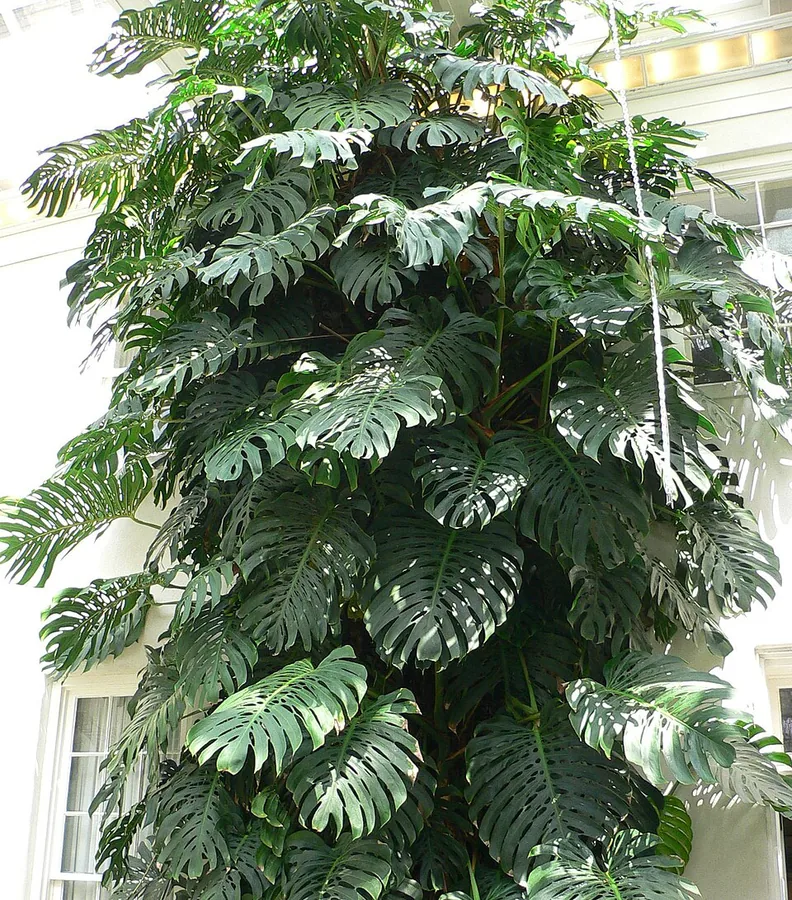
If you have been nervous about keeping a big statement plant alive, the Swiss cheese plant is a lovely one to start with. It comes from the rainforests of Central America, where it climbs up tree trunks, and it carries that same easygoing jungle feel into your home. Those huge leaves open up into the holes and ribbons that earned it its name, and the plant is remarkably forgiving of a beginner still finding their rhythm.
You may worry when a new leaf comes out plain and solid, but that is completely normal and nothing you did wrong. A young monstera makes simple heart shapes, and only as it grows up and settles into good light do the famous fenestrations arrive. Those holes are thought to help the leaves cope with heavy rain and let a little light slip down to the leaves below, which is a clever thing for a plant living under a shady forest canopy.
It grows quickly and stays easy, so most small stumbles are recoverable and you can relax into caring for it. Set it somewhere bright but out of direct sun, give it a moss pole to lean on, and it can reach 6 to 10 feet (1.8 to 3 m) tall indoors. The one thing to hold onto is that every part except the ripe fruit is an irritant, so keep it up out of reach of curious pets and little ones.
Care
The short version: give it bright indirect light, a moss pole to climb, and water only once the top of the soil has dried. Keep it warm and humid, and feed it gently through spring and summer.
Light
Settle it in bright, indirect light close to a window but away from the harsh midday sun, which can scorch the leaves. It will happily put up with medium light and a bit of shade, though a truly dim corner tends to leave you with small, solid leaves and no splits.
Water
Wait until the top inch or so of soil feels dry before you water again, which usually works out to every 7 to 14 days. Ease right off through fall and winter as growth slows down. Since sitting in soggy soil is the quickest way to trouble the roots, it is always safer to lean a little dry.
Soil
Give it a rich, well-drained mix with peat and plenty of airy structure so water can run straight through. A pH somewhere between 5.5 and 7.0 keeps it comfortable, and that open texture stops the roots from staying wet.
Temperature
Keep it in the cozy range of 61°F and 84°F (16°C to 29°C), which is simply the warmth of a normal home. It is not fond of cold drafts and will not survive frost, so nudge it away from chilly winter windows.
Humidity
Remember this is a rainforest plant that loves high humidity, and dry indoor air tends to brown and crisp the leaf edges. Grouping it with other plants, setting it near a humidifier, or standing it on a pebble tray all lift the moisture around it.
Feeding
Offer it a balanced liquid fertilizer monthly through spring and summer while it is busy growing. Let it rest in fall and winter, because feeding a resting plant only leaves salt building up in the soil.
Pruning
Prune in spring whenever you want to shape it or bring it back to size. The aerial roots can be guided onto a moss pole, tucked down into the soil, or trimmed off cleanly, so go with whatever look feels right to you.
Repotting
Move it up every 1 to 2 years in spring, stepping up just one pot size when the roots start circling or poking out the drainage holes. Growth that has slowed and water that pours straight through are the other gentle hints that it has outgrown its home.
Size & spacing
Indoors it can climb to 6 to 10 feet (1.8 to 3 m) tall and spread 3 to 8 feet (90 to 250 cm) wide, so do give it real room to stretch. A sturdy moss pole holds all that growth upright and keeps the heavy stems from snapping.
Troubleshooting
Try not to worry if something looks off, because most monstera troubles come down to watering or light and the plant shows you early. Look at what the leaves are doing, match it to the likely cause below, and you can usually put things right before they spread.
Wilting plant with dark, mushy roots
A monstera that droops even while its soil stays wet is telling you about root rot, usually from overwatering or a mix that holds too much water. Ease it out of the pot, snip off any soft, blackened roots, and settle it into fresh, free-draining soil. Water a little less from then on and the plant has a real chance to bounce back.
Fix:
- Unpot and trim rotten roots
- Repot in fresh draining mix
- Reduce watering
Lower leaves turning yellow
If a few of the older, lower leaves yellow together and the soil feels soggy, the answer is nearly always overwatering or a pot that drains too slowly. Let the top of the soil dry out before the next drink, and check that the pot can truly drain. A plant left standing in wet soil is drifting toward root rot, so catching this early really helps.
Fix:
- Reduce watering frequency
- Let top soil dry
- Ensure pot drains freely
Fine webbing and speckled leaves
Faint webbing and a dusty, stippled look across the leaves usually mean spider mites, which move in when the air turns hot and dry. Rinse the foliage well, raise the humidity so the plant is a poor host, and reach for insecticidal soap if they cling on. Peeking at the undersides of the leaves often catches them nice and early.
Fix:
- Rinse foliage
- Raise humidity
- Apply insecticidal soap
Little brown lumps and sticky patches along the stems
Small brown bumps stuck to the stems, often with a sticky film below, are scale insects quietly feeding on the sap. Scrape or wipe them away, then coat the plant with horticultural oil to smother any you missed. Most hitch a ride in on a new plant, so it pays to look any newcomer over before it joins the others.
Fix:
- Wipe off scale
- Apply horticultural oil
Floppy stems drifting sideways rather than climbing up
In the wild a monstera climbs, so indoors it tends to flop and sprawl when it has nothing to hold onto. Stand a moss pole or trellis in the pot and gently guide the aerial roots onto it. Doing this early keeps the stems upright and spares them from snapping under their own weight.
Fix:
- Add moss pole or trellis
- Train aerial roots onto support
Fluffy white patches or a sticky coating on the leaves
White cottony tufts or a sticky residue usually mean mealybugs, aphids, or thrips have settled in. Wipe the leaves clean and follow up with insecticidal soap, repeating until they are gone. Keeping any new plant apart for a couple of weeks and checking it over heads off most of these, since that is how they tend to start.
Fix:
- Wipe leaves
- Apply insecticidal soap
Leaves staying whole with no holes or splits
Please do not take this as a failure, because there are two easy explanations and the first is just youth. A young monstera makes solid, heart-shaped leaves and starts splitting only once it grows up, so a little patience goes a long way. The other reason is too little light, so shift it somewhere brighter but out of direct sun and offer it a pole to climb, which helps the splits come on sooner.
Fix:
- Move to bright indirect light
- Allow plant to mature
- Add climbing support
Brown, crispy edges along the leaves
Dry indoor air is usually behind this, and low humidity leaves the margins brittle and brown. Salt left over from fertilizer can bring on the same look. Lift the humidity around the plant, and every so often flush the pot through with plenty of plain water to rinse those salts away.
Fix:
- Raise humidity
- Flush soil to leach salts
Toxicity
This is one to place thoughtfully up high, and once you do, you can relax around it. Every part except the fully ripe fruit holds insoluble calcium oxalate crystals that sting the mouth and throat the moment they are chewed. A bite can hurt pets, livestock, and children, and the sap can irritate skin and eyes too, so it helps to wash your hands after you have been handling it.
Toxic to
Cats · Dogs · Horses · Rabbits · Livestock · Birds · People
Cats Moderate
A cat that bites a leaf feels a fast, painful burning in the mouth, then drools, paws at its face, and may be sick. The tongue and lips can swell enough to make swallowing hard, so keep it well out of reach.
Dogs Moderate
Soon after a chew, expect drooling, pawing at the mouth, and retching, since the crystals sting the moment they touch. Swelling of the lips and tongue can follow, so it is safest kept out of a dog's way.
Horses Moderate
Those same crystals irritate a horse's mouth and gut, bringing on heavy drool and real discomfort. Happily, most horses spit the bitter leaves out before they eat much.
Rabbits Moderate
The sharp oxalate crystals make this a poor and risky nibble for a rabbit, leaving mouth pain and a refusal to eat afterward, so please keep it well out of reach.
Livestock Moderate
Grazing animals that mouth the foliage meet the burning irritation and the drooling that come with it. The harsh taste usually stops them after that first bite.
Birds Caution
A pet bird that chews the leaves can suffer the same mouth irritation, so it is kindest to treat the plant as off-limits and keep cages and perches away from it.
People Caution
Chewing any part of this plant, ripened fruit aside, will burn both mouth and throat, and green fruit behaves just the same. Take heart that fully ripe fruit is harmless to eat, but do keep the foliage and any unripe fruit well away from little hands.
Sap may irritate skin and eyes; wash hands after handling
Helpline numbers

United States
ASPCA Animal Poison Control: (888) 426-4435 (fee applies)
Poison Control: (800) 222-1222



Canada
Poison Centres: 1-844-764-7669
Varieties
Once you fall for the plain green plant, you may want to meet its variegated cousins, which turn up now and then in collections. Here are the few most worth knowing by name.
'Thai Constellation'
Grown from tissue culture so its creamy white streaks stay put, this cultivar dusts deep green leaves with constellation-like flecks and comes along a touch slower than the plain species.
'Albo-Variegata'
Its bold white and cream patches come from an unstable chimera, so the markings wander from leaf to leaf and the foliage runs a little smaller than the species.
'Variegata'
A gentle catch-all for variegated forms, it carries patterned foliage on leaves that stay somewhat smaller than those of the species.
var. borsigiana
A smaller, more compact form that botanists now treat as simply another name for Monstera deliciosa rather than a plant of its own.
How to propagate
One of the joys here is how easily a single healthy plant becomes several, all for free. Two gentle methods cover nearly everything you will want to do.
Stem cuttingsEasy
Spring to summer · 4-8 weeks to root
Cuttings are the easiest way to make new plants, and spring through summer is the friendly window to take them. Cut a section that carries at least one node, ideally just below an aerial root, then stand it in water or nestle it into a moist mix. Give it 4 to 8 weeks and fresh roots quietly take hold.
Air layeringModerate
Growing season · 6-8 weeks
Air-layering asks for a bit more patience but works beautifully during the growing season. Wrap a handful of moist sphagnum moss around a node that has an aerial root and keep it damp until roots push into the moss, which takes around 6 to 8 weeks. Once they have formed, cut the rooted piece free and pot it up.
Myths
The monstera is a kind of philodendron.
That old trade name split-leaf philodendron lingers on, but it is not quite right. Monstera deliciosa sits in the genus Monstera, not Philodendron, even though both belong to the arum family Araceae and can look almost identical at a glance.
Misting the leaves makes them split.
Spraying the foliage with water does nothing to coax out those famous holes, so you can let go of that chore. The splits, called fenestrations, arrive with age and good light as the plant matures, not from any amount of misting.
Aerial roots should always be cut off.
Those thick roots reaching out from the stem are perfectly healthy, and the plant uses them to climb. Guide them onto a moss pole or tuck them into the soil, or trim them back if you would rather, since removing them does the plant no harm.
Monstera fruit is poisonous.
This fear is half true, which is exactly why it muddles people. Only the unripe fruit irritates the mouth thanks to calcium oxalate crystals, while the fully ripe fruit is safe and tastes of banana and pineapple.
A plant with more splits must be a healthier one.
Holes come from age and light, not from good feeding. A well-fed plant kept in dim light can stay solid-leaved, so judge its health by overall growth and color rather than counting how many splits it has.
A variegated monstera can be treated exactly like a green one.
The white parts of a variegated leaf carry no chlorophyll, so the plant has less to work with. Give it brighter light and expect slower growth, because it simply cannot power itself the way an all-green plant can.
Sources
- ASPCA Animal Poison Control
- NC State Extension Plant Toolbox
- Missouri Botanical Garden Plant Finder
- Wisconsin Horticulture, UW-Madison Extension
- University of Florida IFAS Extension
- Hawaii-Pacific Weed Risk Assessment (CGAPS / Invasive Species Committees)
- Royal Horticultural Society
- Royal Horticultural Society