Ornamental · Mazaceae
Creeping Mazus
Mazus reptans
A low, moisture-loving carpet that softens the gaps between pavers and lights up with purple-blue bloom each summer.
Full sun
Every 3–7 days
USDA 5–8
1–3 in · 3–8 cm
Overview
If you are new to groundcovers, creeping mazus is a lovely place to start. It knits into a dense green carpet only 1 to 3 inches (3 to 8 cm) tall, and because its rooting stems reach out and anchor at every node, even a handful of plants will close a space for you before long. Many gardeners lean on it as a lawn alternative or as a soft cushion between stepping stones, where it takes light foot traffic in its stride.
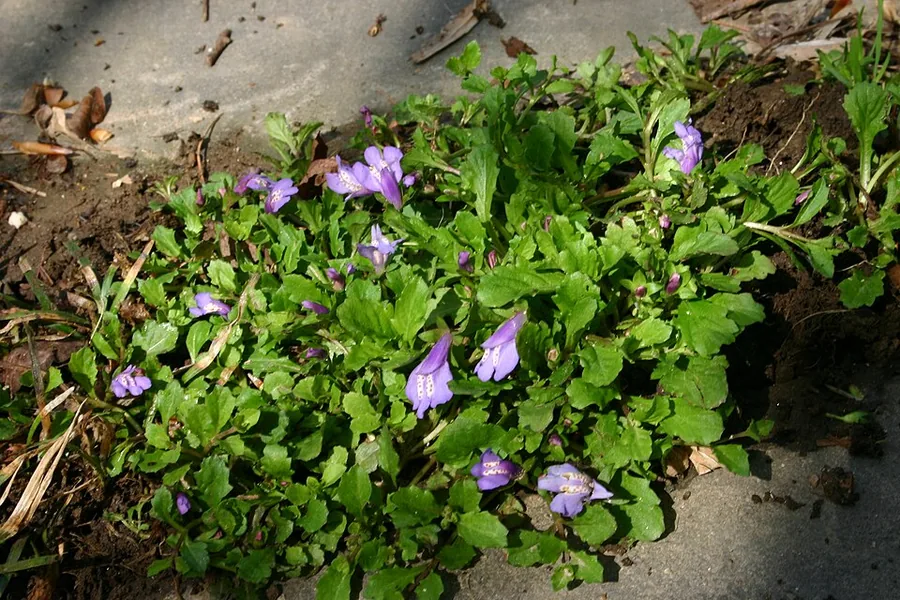
The reward arrives in early summer, when the mat sends up small, two-lipped flowers shaped like tiny snapdragons. Most plants bloom in a gentle purplish-blue with white and yellow throats, while the 'Albus' form opens pure white. Where many groundcovers struggle in dry sun, mazus simply asks for steady moisture and good rich soil, and it thanks you with fuller cover and more bloom.
The nicest part is how little it asks of you, though that same eagerness will carry it into the lawn if you let it wander. A few northern states list it as an invasive weed, so a simple edge or a contained bed keeps everyone happy. Give it a spot where a spreading green carpet is exactly what you want, and you truly cannot go far wrong.
Care
The short version: give it full sun to part shade, keep the soil steadily moist and never bone dry, and set an edge or a contained spot so it stays out of the lawn.
Light
Mazus is happy in full sun to partial shade, and it flowers best with a good few hours of sun. Where summers turn hot and dry, do it a kindness with some afternoon shade, which softens the heat stress that would otherwise brown the mat.
Water
This is the one place mazus asks for your attention, and it is an easy one to meet. Keep the soil consistently moist and never let it dry right out, especially through hot spells, since it drinks a little more than most groundcovers. Water every 3 to 7 days, and lean toward the shorter end during a heat wave.
Soil
Settle it into moist, humus-rich, well-drained soil and it will thank you. It is not fussy about texture and takes clay, loam, or sandy ground, along with medium to wet sites, and it happily copes with a broad pH from 5.5 to 7.5.
Temperature
Hardy through USDA zones 5 to 8, mazus takes cold down to about -20°F (-29°C) in its stride and copes with summer heat up to roughly 86°F (30°C). In the coldest reach of that range, do not be surprised by a touch of winter dieback.
Humidity
Everyday outdoor humidity suits it just fine, so there is no target to chase here. What really counts is soil moisture and airflow, since a soggy, stagnant corner is exactly what tempts slugs in.
Feeding
Mazus seldom needs feeding at all. Should growth look a little weak, a light spring topdressing of compost or balanced fertilizer is all it wants, and most plantings sail along on nothing whatsoever.
Pruning
Upkeep here is wonderfully light. An occasional mow or trim tidies the mat and it shrugs off light foot traffic, and really the only ongoing job is edging it back so it stays out of lawns and beds.
Repotting
not applicable as an in-ground groundcover
Size & spacing
Each plant keeps low, just 1 to 3 inches (3 to 8 cm) tall, and reaches 6 to 12 inches (15 to 30 cm) across. Space your plants so the runners can weave together into one seamless mat across a season.
When to plant
Mazus is a tough, easygoing perennial for zones 5 to 8. Set your plants out in spring once the last frost has slipped by, and they will settle in over the season and reward you with bloom from roughly June into July.
Northern hemisphere
Southern hemisphere
Typical months for a temperate climate: start earlier in warm zones, later where spring frosts linger.
- Plant: spring after the last frost
- Harvest: late spring to early summer (roughly June to July)
Hardiness
USDA hardiness zones: 5–8
Temperature: down to -29°C
Troubleshooting
Mazus is a forgiving plant, and nearly every hiccup comes down to a little too little water or a little too much wander. Learn to read the early signs in the mat and you can step in gently, well before a small thin patch grows into a bare one. Find what matches below, then act with confidence.
A summer scorch that leaves the mat thin and patchy
If your mat starts to brown and go sparse in high summer, take heart, because this is simply drought stress and it is easy to reverse. Mazus feels a dry spell before hardier groundcovers do, since it truly loves steady moisture, and hot afternoon sun makes it worse. Water it deeply, tuck a light mulch around it to hold that moisture, and shift it into a little afternoon shade if your summers run warm.
Fix:
- Water deeply and consistently to keep the soil evenly moist
- Site in part shade in hot climates to reduce heat stress
- Mulch lightly around the planting to conserve soil moisture
Happy runners that wander into the lawn and borders
Do not worry if you find it reaching past where you planted it, because mazus travels by rooting stems that anchor at each node, and in rich, damp soil it moves along with real gusto. Left to its own devices it eases into turf and neighboring beds, and a few northern states even count it as an invasive weed. You stay in charge easily: edge the bed, pull or mow the stray runners, or simply hand it a spot like the gaps between pavers where you are glad to see it roam.
Fix:
- Install edging to contain the planting
- Pull or mow back stems that escape the bounds
- Site it where vigorous spread is desirable, such as between pavers
A few thin spots showing up after a hard winter
In the chilliest corner of its range, mazus is only semi-evergreen to deciduous, so a little thinning or dieback after a rough winter is normal and nothing to fret over. It tends to show most at the cold end of zones 5 to 8 and in exposed sites. Lay a soft winter mulch over it for cover, tuck it into a sheltered and well-drained spot, and simply fill any bare patches come spring.
Fix:
- Apply a light winter mulch in marginal zones for protection
- Replant thinned areas in spring
- Grow in a sheltered, well-drained spot
Little holes in the leaves with a silvery trail
Damp, shaded ground is a slug's idea of heaven, so the odd chewed hole and shiny slug trail is no cause for panic. The nibbling is only skin deep and shows up most after a wet stretch. Pick the slugs off by hand at dusk, ease back on watering where the site allows, and reach for a little iron-phosphate bait if they turn stubborn. Past those, mazus is troubled by almost nothing, which makes it a forgiving plant to grow.
Fix:
- Hand-pick slugs in the evening
- Reduce excess moisture and improve air movement
- Use iron-phosphate slug bait if pressure is heavy
Toxicity
Here is welcome news for homes with animals and little ones: creeping mazus is not listed as toxic and is safe to grow around pets, livestock, and children. A pet that grabs a mouthful of foliage might feel a brief, mild stomach upset at the very most, and nothing more. You can plant it without any special handling.
Safe for
People · Cats · Dogs · Horses · Rabbits · Livestock · Birds
Cats Safe
You can relax around a curious cat, since mazus never made the ASPCA toxic list and a taste of the leaves does no harm. The worst a big mouthful might bring is a passing bit of tummy upset.
Dogs Safe
Dogs are welcome to brush past or sample the mat with nothing to fear. Even a real leafy binge tends to sort itself out, leaving only some brief, self-settling stomach trouble.
Horses Safe
Rest easy about horses, since the plant holds no toxins that concern them. A grazing horse can crop or tread the mat without any worry on your part.
Rabbits Safe
Rabbits are free to graze the foliage as they please. There is simply nothing poisonous in the plant to trouble them.
Livestock Safe
You need not fence it off from cattle, goats, or sheep, as the leaves carry no known toxic compounds and they can graze it in comfort.
Birds Safe
Backyard hens and other birds may peck at it happily, with no toxic parts anywhere for them to steer around.
People Safe
Weeding and handling mazus is perfectly safe, and it is not known to bother skin. It simply is not a plant grown for eating, so there is no call to put it on the plate.
Not poisonous; pets that nibble foliage may at most have mild, temporary stomach upset.
Varieties
Mazus comes in only a couple of forms, told apart chiefly by the color of their flowers. Both grow and spread in the very same easygoing way.
Species form (purple/blue)
The familiar form brings small, two-lipped blooms that look like little snapdragons in a soft purplish-blue, each throat brightened with white and yellow.
'Albus'
The 'Albus' selection is the same easygoing plant in every respect apart from its clean white flowers.
How to propagate
Making more mazus asks almost nothing of you, since the plant is already spreading and rooting all on its own. You can simply nudge it along by lifting and dividing the mat.
DivisionEasy
Spring · A few weeks to a season
The kindest and easiest route is to lift the rooted mat in spring and gently tease it into pieces. Because each piece comes away with roots already attached, it settles back in within a few weeks and knits the gap closed over the season.
LayeringEasy
Spring to summer · A few weeks
Here the plant does most of the work for you. All through spring and summer its creeping stems root themselves wherever a node meets the soil, and you can lift those rooted sections in a few weeks and settle them exactly where you would like more.
Myths
Mazus is only creeping thyme going by a different name.
The two are genuinely separate plants, and mazus sits in the family Mazaceae rather than among the thymes. Their needs part ways too: thyme wants dry ground and baking sun, while mazus needs steady moisture and rich soil. Mazus also opens small snapdragon-like flowers in purple-blue or white with spotted throats, something thyme simply never does.