Ornamental · Fabaceae
Lupine
Lupinus polyphyllus
Give it full sun, cool roots, and lean soil, and lupine will thank you with tall spires of color from late spring into summer.
Full sun
Every 3–7 days
USDA 4–8
3–4 ft · 0.9–1.2 m
Overview
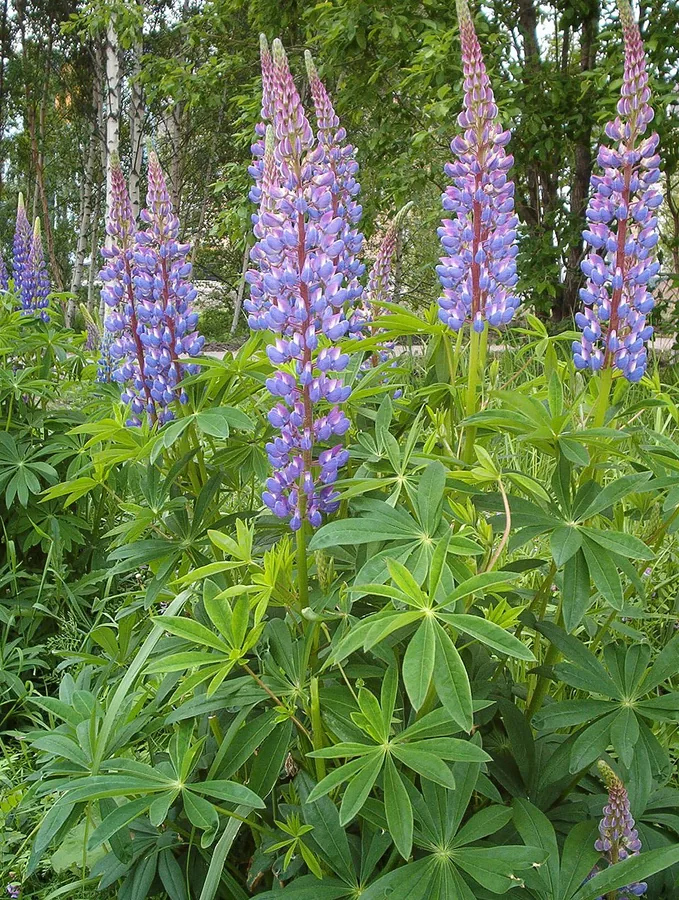
Lupine lifts tall, crowded spires of pea-like flowers over a fan of deeply cut leaves, and you would struggle to find a border plant that puts on a bolder early-summer show. It belongs to the legume family, which means it pulls its own nitrogen from the air and asks very little of your soil. The bigleaf type behind most garden strains comes from western North America and has settled happily across cool, temperate country.
Nearly all the named garden plants come back to the Russell hybrids, a strain raised for full, tightly packed spikes in clear colors and eye-catching bicolors. They are perennials, if short-lived ones, and they look their happiest where summers stay cool. Give them a sunny place with sharp drainage and they will reward you quickly.
There is one thing worth knowing right at the start, and it is nothing to be nervous about as long as you know it. Every part of the plant holds quinolizidine alkaloids, packed most heavily into the seeds and pods, which makes lupine a serious poison for grazing animals and no snack for people. It is grown to be admired, not eaten.
Care
The short version: give lupine full sun with cool roots in moderately rich, well-drained, slightly acidic soil that you keep evenly moist. Feed it sparingly, snip off the spent spikes, and simply plan to bring in fresh plants every few years.
Light
Lupine really wants full sun, and that is where you will get the tallest, most colorful spikes. It will accept partial shade, the afternoon kind especially in hot regions, but do not be surprised by fewer, looser flowers if it sits in too much shade.
Water
Keep the soil evenly moist without letting it go soggy, since lupine is a plant of medium thirst rather than a bog dweller. In warm regions a layer of mulch keeps the roots cool and the moisture even for you. Good drainage matters every bit as much as the watering itself.
Soil
Plant it in moderately rich, well-drained loam with a good helping of organic matter mixed in. Lupine leans toward the acidic side and is happiest at a pH of 5.5 to 6.5, so it tends to sulk in chalky or heavy ground.
Temperature
This is a wonderfully cold-hardy plant that shrugs off winters down to -29°F (-34°C), though it does resent real heat much past 84°F (29°C). Cool summers keep it lively, while hot, muggy ones will shorten its life.
Humidity
Average outdoor humidity suits lupine just fine, so there is no number to worry about. What truly matters is airflow, because still, damp air around crowded plants is what opens the door to powdery mildew.
Feeding
As a nitrogen-fixing legume, lupine makes plenty of its own and needs very little feeding, a light low-nitrogen feed at the very most. Dust the roots with legume inoculant at planting and you will be rewarded with sturdier, better-performing plants.
Pruning
Deadhead the faded spikes as they go over to coax a second flush, keep the plant vigorous, and gently curb self-seeding. Once the flowering winds down, cut the tired foliage back to tidy up the clump.
Size & spacing
Lupine reaches 3 to 4 feet (91 to 122 cm) tall in bloom and builds a clump around 12 to 18 inches (30 to 46 cm) wide. Give each plant that bit of elbow room so air moves freely and mildew stays away.
When to plant
Lupine follows a gentle cool-season rhythm you can easily work with. Sow seed in fall or start it indoors in late winter, move plants outdoors in spring once frost has passed, and watch the spikes open from May into July.
Northern hemisphere
Southern hemisphere
Typical months for a temperate climate: start earlier in warm zones, later where spring frosts linger.
- Sow: 6 to 8 weeks before last spring frost; nick/scarify and soak seed to aid germination
- Plant: Spring after last frost, or sow seed in fall
- Harvest: May to July
Hardiness
USDA hardiness zones: 4–8
Temperature: down to -34°C
Troubleshooting
Lupine is a forgiving plant that stays mostly trouble-free, though a handful of familiar issues can show up on the leaves and fresh shoots. Spot them early and nearly all are simple to put right. Find what matches below, then step in before it spreads.
A pale, dusty film spreading over leaves and stems
Do not panic if you spot this. It is powdery mildew, a common fungus that moves in wherever the air goes stale around crowded or shady plants. You can turn it around by thinning the clump for better airflow, watering low at the base instead of overhead, and picking off the worst leaves.
Fix:
- Improve air circulation by thinning and spacing plants
- Avoid overhead watering
- Remove and dispose of badly affected foliage
Tiny insects clustering on soft new shoots and curling tips
Those small soft-bodied clusters on the tender shoots and flower spikes are aphids, and they are nothing to fear. A firm jet of water knocks most of them right off, insecticidal soap handles any stragglers, and friendly lady beetles will happily finish the job. Go easy on nitrogen too, because the extra-lush growth it brings is exactly the meal they love.
Fix:
- Spray plants with a strong jet of water to dislodge aphids
- Apply insecticidal soap if needed
- Encourage natural predators such as lady beetles
A once-strong clump fading away after a few seasons
This is normal and not a failing on your part. Lupine is simply a short-lived perennial, and warm, sticky summers trim its years down further. Since vigor and bloom tend to slip within 2 to 5 years, it helps to keep a few new plants coming along, give them a cool-summer home or grow them as annuals where it gets hot, and let a couple set seed so the patch renews itself.
Fix:
- Replace plants every few years
- Grow in cool-summer sites or treat as annual in hot zones
- Allow some self-seeding or start new plants from seed
Torn holes appearing in tender seedlings by morning
When soft young leaves turn up chewed with shiny slime trails nearby, slugs and snails are the culprits, feeding quietly after dark. This one is very fixable: pick them off by torchlight or set traps, clear the damp debris and heavy mulch they shelter in near the crowns, and protect the plants with a barrier or iron-phosphate bait.
Fix:
- Hand-pick at night or set out traps
- Reduce damp hiding spots and mulch buildup near crowns
- Use barriers or iron-phosphate baits
Toxicity
It helps to think of lupine as a poisonous plant from day one. Every part holds quinolizidine alkaloids, concentrated in the seeds and pods, and grazing animals pay the highest price. Pregnant cattle face the worst of it, since the teratogen anagyrine causes crooked calf disease, and no part of the plant is safe for people to eat off the stem.
Toxic to
Cats · Dogs · Horses · Rabbits · Livestock · Birds · People
Cats Toxic
A curious cat that tastes lupine will feel the quinolizidine alkaloids in its stomach, and vomiting and diarrhea tend to follow. A larger mouthful, seeds most of all, can bring on drooling and tremors, so it is kindest to keep the plant somewhere your cat cannot reach.
Dogs Toxic
For a dog that has had a chew, expect vomiting and diarrhea to show up first. Because the seeds hold the most alkaloid, a bigger helping can leave your dog jittery, trembling, and wobbly on its feet.
Horses Severe
Horses take the alkaloids hard, and they can bring on muscle weakness, an unsteady stagger, and other nervous signs. Since the seeds and pods are the riskiest parts, take real care that they never reach your horse's feed or pasture.
Rabbits Severe
Please do not offer lupine to rabbits as forage. The same quinolizidine alkaloids that harm bigger grazers act on a rabbit's small frame just as surely, so keep the leaves, seeds, and pods well out of their reach.
Livestock Severe
Cattle, sheep, and goats can end up with muscular weakness, ataxia, and nervous signs after eating the alkaloids. The gravest worry is a pregnant cow grazing lupine on gestation days 40 to 100, when the teratogen anagyrine causes crooked calf disease, with skeletal contracture deformities and sometimes a cleft palate.
Birds Severe
The alkaloid-heavy seeds and pods are poisonous to birds, and no other part of the plant is any kinder to them. It is safest to keep poultry and pet birds away from lupine altogether.
People Caution
No part of garden lupine is something to nibble. The bitter seeds brim with alkaloids and only turn into food after a long soaking and debittering, so it is best to treat the whole plant as inedible and keep little ones from sampling the pods.
Keep grazing animals, especially pregnant cattle, away from lupines; seeds and seed pods are the most alkaloid-rich parts.
Helpline numbers

United States
ASPCA Animal Poison Control: (888) 426-4435 (fee applies)
Poison Control: (800) 222-1222



Canada
Poison Centres: 1-844-764-7669
Varieties
Most garden lupines trace back to a few well-loved strains and selections. These are the ones you are most likely to come across.
Russell Hybrids
George Russell's beloved strain gives you tall, tightly filled spikes in both bicolors and solid tones, though seed you save at home simply will not come back true.
The Governor
You will know this bushy Russell-type selection by its cheerful blue-and-white bicolor spikes.
Manhattan Lights
This compact hybrid carries lovely purple-and-yellow bicolor spikes on strong, upright stems that hold themselves well.
How to propagate
Lupine is grown almost entirely from seed, and while that hard coat needs a little help before it sprouts, it is an easy first step to learn.
SeedModerate
Sow in fall, or start indoors 6 to 8 weeks before last spring frost · Blooms the first or second year from seed depending on sowing time
Good news for beginners: lupine sprouts willingly from seed once you soften that tough coat for it. Nick or scarify each seed and give it a soak before sowing, then dust the roots with legume inoculant to help the young plants settle in comfortably. Sow in fall or start seed indoors 6 to 8 weeks before the last frost, and you can look forward to bloom the first or second year depending on when you sow. Just remember that hybrids will not come true from seed you save yourself.
Myths
Lupines are deadly to dogs and cats, so any contact is an emergency.
Take heart: for a dog or cat, a small nibble of lupine usually leads to nothing worse than a bout of vomiting or diarrhea. The real danger sits with grazing livestock, above all pregnant cattle, in whom the alkaloids cause poisoning and the teratogen anagyrine sets off crooked calf disease.
You can save seed from Russell hybrid lupines and get identical plants.
Seed you gather from a hybrid at home grows into a happy jumble of surprises rather than copies of the parent plant. Only purchased seed or vegetative propagation will faithfully bring a named strain back.