Ornamental · Fabaceae
False Indigo
Baptisia australis
Hand it full sun and lean, well-drained soil, and false indigo will settle in for decades and ask almost nothing of you.
Full sun
Every 7–14 days
730–1095 days
USDA 3–9
Overview
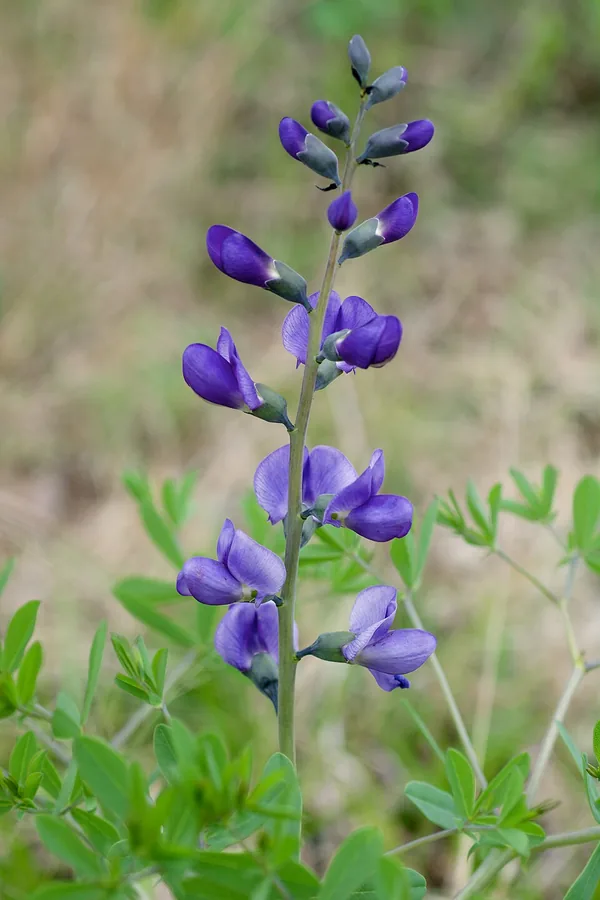
False indigo is a long-lived native perennial that fills out into a soft, shrubby, rounded clump of blue-green leaves. It is part of the pea family, and like its relatives it raises spikes of lupine-like flowers in late spring, most often in a deep indigo blue. Once the blooms fade, they hand off to puffy black seed pods that rattle in the breeze and stay on show well into winter.
This is a plant that rewards a little patience, so there is no need to rush it. It grows slowly and takes 2 to 3 years to reach blooming size, but once it gets there it can keep its place for a generation or more. A deep taproot steadies it through dry spells and poor ground, and that very root is also why a settled plant would rather not be moved.
After it finds its feet, false indigo is about as forgiving as a perennial gets, which makes it a kind choice for a first try. It takes heat, cold, and lean soil in stride, makes its own nitrogen, and seldom needs feeding or spraying. Give it sun and good drainage at the start, and from there it mostly looks after itself.
Care
The short version: full sun, lean and well-drained soil, and a little steady water through that first year. After that the deep taproot sees it through dry spells, so you can simply leave it be and watch it grow.
Light
False indigo blooms best in full sun, which means 6 or more hours a day. It will get by in partial sun or light shade, but with too little light the stems stretch and flop and the flower show thins out.
Water
Give it regular water through the first year while the taproot reaches down. From then on it is highly drought tolerant and only wants a drink during a long dry spell. It likes dry to medium soil and dislikes wet feet, so when in doubt, keep it on the dry side.
Soil
Set it in average, well-drained soil and it will thank you for it. It puts up with poor, clay, and shallow rocky ground, leans a little acidic, and asks only that water drains away freely. A pH between 5.0 and 7.0 suits it nicely.
Temperature
This is a wonderfully cold-hardy plant, content anywhere from about -40°F to 95°F (-40°C to 35°C). It needs no winter coddling across most of the country and shrugs off summer heat without complaint.
Humidity
Ordinary outdoor humidity is all it asks, so there is no number to chase. Good airflow matters most here, keeping the leaves dry and out of trouble.
Feeding
Being a nitrogen-fixing legume, false indigo grows much of its own food and wants little to no fertilizer. A light feed in spring is plenty, and piling on nitrogen only gives you soft, floppy stems.
Pruning
It asks very little of you. Trim off the spent flower spikes after bloom if you like, or shear the foliage by about a third to hold a tidy, rounded shape, though doing so trades away the ornamental pods. Cut the old stems right to the ground in late winter or early spring.
Repotting
False indigo is meant for the open ground over the long haul, not a pot. The deep taproot resents disturbance, so once a plant has settled in, the kindest move is to leave it be and skip any moving or dividing.
Size & spacing
A grown clump reaches 3 to 4 feet (91 to 122 cm) tall and fans out 2 to 4 feet (61 to 122 cm) wide. Give each plant room to spread, since over the years it grows into a generous, shrub-sized mound.
When to plant
False indigo keeps an unhurried calendar, and that is perfectly fine. Sow seed in fall or start it indoors in late winter after a good long chill, set the young plants out in spring once frost has passed, and look forward to the indigo-blue spikes in May and June. Don't fret if the first year or two pass without flowers.
Northern hemisphere
Southern hemisphere
Typical months for a temperate climate: start earlier in warm zones, later where spring frosts linger.
- Sow: Late winter, after scarifying and cold-stratifying seed 6 to 12 weeks
- Plant: Spring after last frost, or sow fresh seed in fall
- Harvest: Late spring to early summer (May to June)
Hardiness
USDA hardiness zones: 3–9
Temperature: down to -40°C
Troubleshooting
False indigo gives you very little to worry about, and the few hiccups it does have nearly always come back to too little sun or soil that is too rich. Match what you are seeing to the notes below before you reach for any fix, because more often than not the plant is doing better than it looks.
Fading and yellowing near a black walnut
If a healthy plant starts to yellow and slip for no clear reason, look up for a black walnut nearby, since Baptisia is sensitive to juglone, the toxin those roots leak into the soil. No amount of careful tending will win this one, so don't blame yourself. Gently lift the crown with as much of the deep root as you can manage and move it well clear of the tree, or simply start fresh plants in a kinder spot.
Fix:
- Transplant the crown to a site away from black walnut influence, taking as much of the deep root as possible
- Relocate or start new plants from seed well away from walnut trees
When the stems splay open and the middle thins out
Take heart, because flopping is one of the easiest things to fix. Stems go soft and weak when the plant sits in too much shade or in soil that is a little too rich for it. Right after the flowers fade, shear the foliage back by about a third to coax a tighter, self-supporting mound, ease off any nitrogen, and slip a grow-through ring around plants in partial shade to give them a gentle hand.
Fix:
- Shear the foliage back by about one-third right after flowering to encourage a denser, self-supporting mound
- Provide a grow-through support ring early in the season for plants in partial shade
- Stop applying nitrogen fertilizer
Hollow seeds tucked inside healthy pods
This one looks worse than it is, so breathe easy. Weevils slip their eggs into the young pods, and the larvae quietly eat the seeds from the inside while the plant itself stays perfectly happy. Crack open a few black pods and you may spot tiny larvae or their exit holes. Since the plant's health is never in question, you can simply pick off and bin the affected pods if you want to keep some seed.
Fix:
- Remove and discard affected pods to reduce the local weevil population
- No control is needed for plant health since damage is cosmetic to seeds only
Toxicity
Every part of false indigo carries quinolizidine alkaloids, which makes it mildly toxic to pets, livestock, and people. A small taste tends to mean an upset stomach rather than anything frightening, but the rattly black seed pods are the part to keep an eye on, since they catch the curiosity of pets and children. Tuck them out of reach and wash your hands after pruning.
Toxic to
Cats · Dogs · Horses · Rabbits · Livestock · Birds · People
Cats Mild
Should a cat nibble the leaves or mouth a pod, expect a little drooling, perhaps a bit brought back up, and some loose stool afterward. The upset tends to settle in the stomach and clear on its own, so there is rarely cause for worry.
Dogs Mild
A dog is the one most tempted by a rattly pod, and a mouthful usually means a queasy stomach with some vomiting or diarrhea. The more eaten, the rougher it goes, so tucking the pods out of reach spares everyone the trouble.
Horses Mild
Horses tend to walk right past it, which is reassuring. Still, the alkaloids in the foliage and pods can unsettle the gut and dull the appetite if a hungry horse decides to graze on much of it.
Rabbits Mild
It is best kept off a rabbit's menu. The same alkaloids run through the leaves and seeds, so anything past a small nibble can leave a rabbit with a digestive upset.
Livestock Mild
Cattle, goats, and sheep usually leave it standing in the pasture. Trouble shows up mostly when good forage runs short and they eat a real helping, which can bring on a stomach upset.
Birds Caution
The seeds and pods are not a safe treat, so it is kindest not to offer them. Wild birds tend to ignore the plant entirely, and the one thing to watch is a pet bird picking at a pod that has dropped.
People Caution
No part of false indigo is meant for the table. Swallowing the seeds or pods can bring on nausea and a stomachache, so wash your hands after pruning and keep those tempting pods well away from small children.
Generally safe to handle; wash hands after pruning and keep the rattly black seed pods away from curious pets and small children.
Helpline numbers

United States
ASPCA Animal Poison Control: (888) 426-4435 (fee applies)
Poison Control: (800) 222-1222



Canada
Poison Centres: 1-844-764-7669
Varieties
The wild species shows off true indigo-blue spikes, but breeders have stretched the palette into purples and yellows. These are the named selections you are most likely to come across.
Purple Smoke
A strong-growing hybrid that lifts smoky violet-purple flowers on charcoal-gray stems and forgives a touch more shade than most.
Twilite Prairieblues
A big, bold pick whose spikes weave violet-purple and yellow together into an eye-catching bicolor bloom.
Carolina Moonlight
Sets aside the species' indigo blue for soft butter-yellow spikes that glow warmly against the blue-green leaves.
Companions
False indigo pairs well with other sun-loving prairie plants that share its taste for dry, well-drained ground, and it struggles only near black walnut, whose roots poison the soil around it.
Plant near
Ornamental grasses: Pair well in sunny borders and prairie plantings, providing contrast and support for the upright clumps.
Coneflower (Echinacea): Shares the same full-sun, well-drained, low-water conditions in native and pollinator plantings.
Keep apart
Black walnut (Juglans nigra): Baptisia is sensitive to juglone and performs poorly within the root zone of black walnut.
How to propagate
False indigo is slow to multiply and slower still to bloom, but seed is the dependable path and well within reach. Cuttings come along with a little care, and division is kindest left alone once the taproot has set.
SeedModerate
Sow fresh seed in fall, or cold-stratify stored seed 6 to 12 weeks, then scarify and soak 24 hours before spring sowing · 2 to 3 years to first bloom
Seed is the dependable, beginner-friendly way to raise false indigo. The hard coat wants a quick scarify with sandpaper or a nick, then a 24 hours soak, after which you can sow fresh seed in fall or cold-stratify stored seed 6 to 12 weeks ahead of a spring sowing. Fresh seed comes up best, in about two weeks, and the only thing it asks of you is patience, since it takes 2 to 3 years to reach first bloom.
Stem cuttingsModerate
Spring, from softwood growth in late April to early May · Roughly 8 weeks to root
Softwood cuttings are worth a try in spring, taken from that fresh late-April to early-May flush. Dip the ends in rooting hormone, keep them snug under a cover with plenty of humidity, and roots should form in roughly 8 weeks.
DivisionDemanding
Spring, only if absolutely necessary · Slow and unreliable to recover
Save division for spring and only when you truly have no other choice. That deep woody taproot makes the job hard and risky, and the plant is slow and unsure to bounce back, so replant right away and keep the roots damp. For most gardeners, the happiest plan is to leave the clump whole.
Myths
False indigo is the true source of indigo blue dye.
Long ago settlers leaned on Baptisia when true indigo from Indigofera was hard to come by, though it gives a much paler color. The everyday name is honest about it, since this is the false indigo, not the real commercial dye plant.
You can move or divide an established false indigo as easily as most perennials.
An older plant drives down a deep, woody taproot and truly dislikes being disturbed, which leaves division slow, chancy, and often fatal. The kindest thing you can do is plant it once and let it stay put, where it can thrive happily for decades.