Ornamental · Fabaceae
White Clover
Trifolium repens
A soft, self-feeding carpet that greens the lawn, welcomes the bees, and asks almost nothing of you.
Full sun
Every 5–10 days
40–90 days
USDA 3–10
Overview
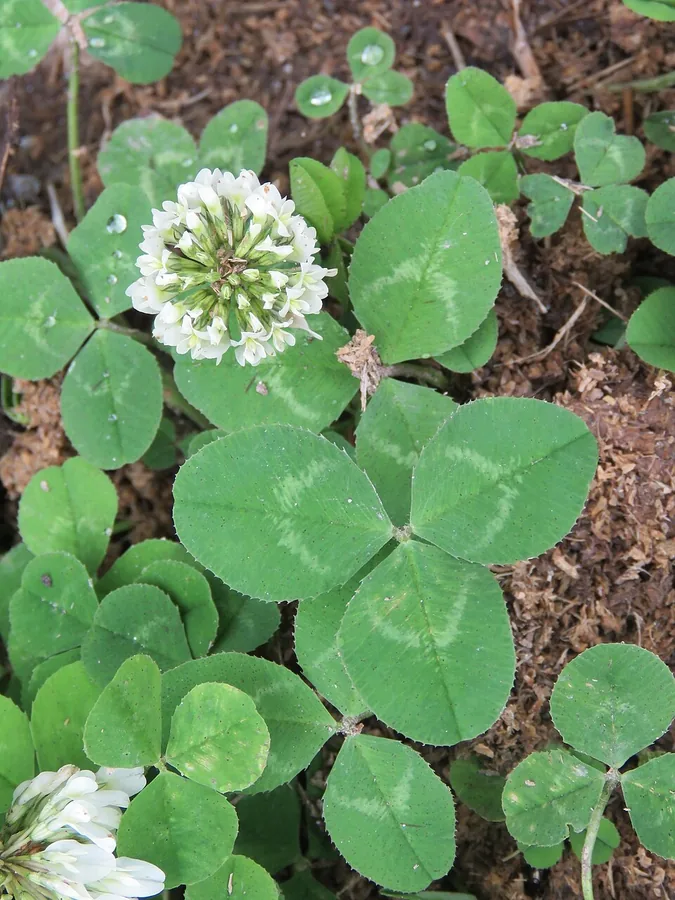
White clover is a creeping perennial from the pea family, and you will spot it just about everywhere, from tidy lawns to grassy roadsides. It travels by stolons, slender stems that creep across the soil and take root at each node, so a few small plants soon grow together into a soft, low mat. Its leaves come in threes and carry a pale V-shaped watermark, and round white to pinkish flower heads rest just above them.
The lovely part is that this plant makes its own food. Down in its roots it partners with Rhizobium bacteria to draw nitrogen from the air, feeding itself and the plants growing nearby. That generosity is why gardeners tuck it into lawns, sow it as a cover crop, and let it spread as a living mulch beneath vegetables and orchard trees.
It is also wonderfully tough, which is reassuring when you are still finding your feet. White clover shrugs off cold down to -29°F (-34°C), takes mowing and foot traffic in stride, and greens up with barely any water or feeding. The only things to keep half an eye on are its habit of wandering where you might not want it and the bees it draws right down at ground level while it blooms.
Care
The short version: give white clover full sun to a bit of shade and moist, well-drained soil, water it through a hard drought, and skip the fertilizer since it feeds itself. A gentle mow keeps it low, and honestly, it is hard to get wrong.
Light
White clover is happiest in full sun, though it gladly accepts partial sun and even partial shade. More light rewards you with a thicker stand and more flowers, while a shadier corner still fills in nicely, just a little more open.
Water
Aim to keep the soil moist but well drained, offering a drink roughly every 5 to 10 days when the weather is dry. Established clover copes with drought, and even if a long hot spell leaves it looking brown and thin, it usually greens back up on its own once the rain returns.
Soil
Clover is easygoing about soil and settles into a wide range, though it does best in a moist, fertile, well-drained loam. A pH of 6.0 to 7.0 suits it well, and good drainage matters more than rich ground, since the plant makes its own nitrogen anyway.
Temperature
This is a wonderfully hardy plant that takes cold down to -29°F (-34°C) and summer heat up to about 95°F (35°C). That wide comfort zone is what lets it grow happily across hardiness zones 3 through 10.
Humidity
Everyday outdoor air is all this plant asks for, so there is no number to fuss over. Clover takes dry spells and damp weather alike, as long as the soil stays evenly moist.
Feeding
Here is the reward of growing a legume: it needs little to no fertilizer because it pulls its own nitrogen from the air. The one kind thing you can do is coat the seed with Rhizobium where those soil bacteria are missing, which matters most in warmer zones.
Pruning
A simple mow or trim keeps clover low and tidy, and it takes the cut without any fuss. Regular mowing also gentles back the flowers, which is handy in play areas where bare feet and busy bees might otherwise meet.
Repotting
none
Size & spacing
White clover stays low, reaching just 4 to 8 inches (10 to 20 cm) tall, while each plant creeps outward on stolons to cover 1 to 3 feet (30 to 100 cm). That friendly spreading habit is what lets a light sowing grow together into a full mat in a single season.
When to plant
Clover is relaxed about timing, so there is no need to fuss. Scatter seed outdoors in spring or in late summer, leaving about 40 days before the first hard frost, and it will green up within a few weeks. Flowers arrive from late spring through fall and peak in early summer.
Northern hemisphere
Southern hemisphere
Typical months for a temperate climate: start earlier in warm zones, later where spring frosts linger.
- Sow: Not typically started indoors; direct sow outdoors.
- Plant: Spring or late summer; allow about 40 days before first killing frost for late-summer seeding.
- Harvest: Late spring through fall (peak early summer); round white to pinkish flower heads.
Hardiness
USDA hardiness zones: 3–10
Temperature: down to -40°C
Troubleshooting
White clover rarely causes worry, and most so-called problems are really just questions of where it grows and who it invites. Find what matches below, take a breath, and decide whether to steer it or simply let it be.
Clover going brown and thin in a dry spell
Clover roots sit shallow, so a long, hot drought can leave the foliage brown and patchy for a while. The comforting news is that an established patch almost always bounces back once the rain returns. Water it deeply through the worst of the dry stretch to hold the soil moist, then let it recover in its own time.
Fix:
- Water deeply during prolonged drought to keep soil moist
- Allow established stands to recover naturally once rainfall resumes
Clover drifting into the lawn in soft patches
Those patches come from creeping stolons, stems that run along the ground and root wherever a node meets soil, so a few plants soon knit together. Low soil nitrogen also tips things toward clover and away from hungry grass. If you would rather it stayed out of the turf, feed the grass to thicken it and treat with a broadleaf herbicide holding fluroxypyr or clopyralid, which works best in fall.
Fix:
- Decide whether clover is desirable (eco-lawn) or a weed before acting
- Fertilize turf with nitrogen to favor grass over clover
- For removal, apply a broadleaf herbicide such as one containing fluroxypyr or clopyralid, most effective in fall
Bees busy in the flowers underfoot
White clover blooms are a real draw for honeybees and bumblebees, which forage right at ground level all through the flowering. That is lovely for pollinators but a worry for bare feet in play areas. Mow off the open flowers before the children head out, wear shoes on blooming patches, and leave some clover unmown elsewhere so the bees still have their meal.
Fix:
- Mow before or during peak bloom to temporarily remove flowers in high-traffic or play areas
- Wear shoes when walking on flowering clover
- Keep some unmowed clover elsewhere to support pollinators
Toxicity
Here is a reassuring bit: white clover is non-toxic and even edible. Cats, dogs, rabbits, birds, and people are all safe around it, and its young leaves and flowers have been eaten in small amounts for generations. The only real caution is for grazing horses and livestock, where a lot of lush clover can bring on bloat or a harmless drooling called slobbers.
Safe for
People · Cats · Dogs · Horses · Rabbits · Livestock · Birds
Cats None
Nothing here to worry about. A cat that nibbles a leaf or a flower will be perfectly fine, since clover holds nothing that bothers them.
Dogs None
Safe for dogs to sniff, chew, or roll around in. It is a non-toxic plant, so a curious mouthful does no harm at all.
Horses Mild
Clover makes good forage for horses in normal amounts. Just keep an eye on heavy grazers on lush stands, since clover can now and then carry a fungus that brings on the harmless but messy drooling known as slobbers.
Rabbits Safe
A true rabbit favorite and a wholesome treat. Both the leaves and flowers are safe for them to graze.
Livestock Mild
Wonderful pasture, though a belly full of lush, wet clover can bring on bloat in cattle, sheep, and goats. Watch for a swollen left flank and clear discomfort, and ease ruminants onto rich stands rather than turning them out hungry.
Birds Safe
No concern for birds. Hens and other poultry can peck happily at the leaves and flowers without any trouble.
People Safe
The young leaves and flower heads are edible and have long been eaten in small amounts. Clover is safe for people, with no toxic parts to steer around.
Safe for cats, dogs, and people. Note that lush white clover can cause bloat in grazing ruminant livestock (cattle, sheep) and clover can occasionally accumulate cyanogenic glycosides or fungal infection affecting grazing animals, but it is excellent forage and not poisonous to pets or people.
Varieties
White clover comes in a handful of sizes, from tall forage types down to tiny lawn selections, so there is one to suit most plans. These are the ones you are most likely to come across.
Ladino clover
Ladino is a large, vigorous forage type that grows two to four times taller than the intermediate clovers and fixes the most nitrogen of them all.
Dutch white clover
Dutch white clover is the familiar low lawn clover, standing around 6 to 12 inches (15 to 30 cm) tall, and it takes summer heat in stride.
Microclover
Microclover covers the small-leaved turf selections like Pirouette and Pipolina, which stay low, flower less, and blend almost invisibly into a lawn.
Companions
Clover pairs well with plants it can feed. Its nitrogen-fixing roots support neighboring grass and crops, which is why it turns up in lawn mixes and as a living mulch.
Plant near
turf grasses (fescue, ryegrass): Clover fixes nitrogen via Rhizobium that feeds neighboring grass, reducing fertilizer needs in lawn mixes.
vegetables and orchard/vineyard crops: Low-growing living mulch that suppresses weeds and enriches soil with nitrogen.
How to propagate
Multiplying clover is about as easy as gardening gets, which makes it a lovely confidence-builder. You can sow fresh seed or simply let the plant spread itself across the ground.
SeedEasy
Spring or late summer (about 40 days before first killing frost) · Establishes within several weeks; full stand in one season
Most clover is simply scattered onto the soil in spring or late summer, leaving about 40 days before the first hard frost for a late sowing. Where the right soil bacteria are missing, especially in warmer zones, coat the seed with Rhizobium first to give it a good start. A fresh stand settles in within a few weeks and covers the ground fully in a single season.
DivisionEasy
Spring through early fall · Quickly, as stolons root at the nodes
Clover also spreads on its own, sending out creeping stolons that root at every node into a self-mending mat. You can gently lift and move rooted pieces any time from spring through early fall, and they take hold quickly because their roots are already formed.
Myths
Clover is nothing but a lawn weed you should get rid of.
Clover picked up its weed label back in the days of broadleaf herbicides, but the plant does far more good than that suggests. It makes its own nitrogen, feeds pollinators, and asks for next to nothing, which is exactly why gardeners now sow it on purpose into eco-lawns, bee lawns, cover crops, and living mulch.