Ornamental · Gentianaceae
Lisianthus
Eustoma grandiflorum
Slow to wake and well worth waiting for, lisianthus repays a cool, patient start with rose-like blooms right through summer.
Full sun
Every 3–7 days
50–75°F · 10–24°C
60–75 days
Overview
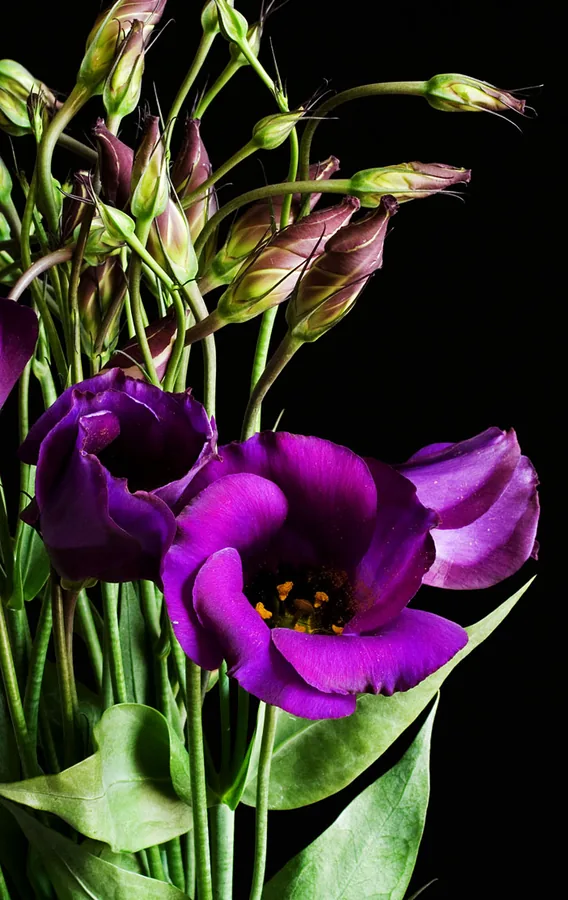
Lisianthus, also known as prairie gentian or Texas bluebell, is a prairie native that grows wild across the southern plains. Its flowers resemble roses so closely that florists reach for them again and again, yet they ride on tall, slim stems with a softness all their own. Out in the garden it lives as a tender perennial grown as an annual, giving you its show from summer into fall.
It has earned a name as a demanding plant, and honestly that comes down to how it begins. The seed is fine as dust, growth is slow, and there is one stubborn habit to know about: give it too much warmth while young and it settles into a flat rosette that never blooms. Carry it through that cool, careful start, though, and it turns wonderfully easygoing, flowering for months and asking very little of you.
Offer it full sun, soil that stays moist yet never soggy, and a feed across the growing season. Pinch the young plants to coax out more branches, snip the faded flowers so fresh ones keep coming, and you will be rewarded with cut blooms that hold for two weeks in the vase.
Care
The short version: full sun and a cool start, soil kept evenly moist but well drained, a light feed every couple of weeks, and a little patience through those slow first months.
Light
Give lisianthus full sun and it will flower at its strongest and fullest, though it happily takes a bit of afternoon shade where summers turn hot. Leave it in too much shade and you are left with weak stems and far fewer blooms.
Water
Keep the soil evenly moist but never waterlogged, watering about every 3 to 7 days as the top layer dries. Soggy ground leads straight to the stem and root rots this plant is prone to, so good drainage matters every bit as much as the water itself.
Soil
Plant it in fertile, well-drained loam with a pH between 6.0 and 7.0. Ground that drains freely is your single best defense against the rots that trouble the roots and stems.
Temperature
Lisianthus feels most at home between 50°F and 75°F (10°C to 24°C), and cool early conditions are what set it up to flower well. Let young seedlings drift past about 72°F (22°C) and they may rosette rather than rise, so keep them on the cooler side until they are well grown.
Humidity
Everyday garden humidity suits it just fine, so there is no number you need to chase. Air movement counts for far more, since still, damp air around crowded plants is what opens the door to stem disease.
Feeding
Feed with a balanced water-soluble fertilizer at low to moderate strength, about every two weeks through the growing season. Steady, gentle feeding serves you better than heavy doses, which push soft leafy growth ahead of flowers.
Pruning
Pinch the young plants back and they answer with more branches and more flowering stems. As the season rolls on, snip away the spent blooms and the plant keeps offering up fresh ones.
Size & spacing
Plants grow 1 to 3 feet (30 to 91 cm) tall with a slender spread of 9 to 12 inches (23 to 30 cm). Leave each one a little breathing space so air moves freely and disease stays away.
When to plant
Lisianthus keeps a long, slow clock and truly dislikes heat at the start, so give it room to take its time. Sow indoors in late winter and hold the seedlings cool, move the plants out once frost has passed, and then enjoy flowers from midsummer until the cold comes back around.
Northern hemisphere
Southern hemisphere
Typical months for a temperate climate: start earlier in warm zones, later where spring frosts linger.
- Sow: Start indoors 10 to 12 weeks before last frost; surface sow tiny seed and do not bury.
- Plant: Transplant after danger of frost has passed in spring.
- Harvest: Blooms summer to frost; allow 60 to 75 days from transplant to flowering.
Hardiness
USDA hardiness zones: 8–10
Temperature: down to -12°C
Troubleshooting
Lisianthus brings few worries once it is settled in, and most of its trouble shows up at the seedling stage or in wet, crowded soil. Get to know the early signs below and you can step in before you lose a plant. Match what you notice, then act while your help still counts.
The plant hugs the ground and never lifts a flower stem
If your young plants settle into a low cluster and stay there, that is rosetting, and it is not a sign you failed. What happened is simple: warmth reached the seedlings too soon. Once tiny plants pass about 72°F (22°C), they stall in that flat form instead of rising. The kind fix is to keep those first weeks cool, near 50°F to 65°F (10°C to 18°C), until each plant has grown well past its fifth pair of leaves, and the stems will come up on their own.
Fix:
- Grow seedlings at 50 to 65°F until well past the fifth leaf pair
- Avoid heat stress on young plants
Stems soften or rot right where they meet the soil
Sunken sores low on the stem usually mean stem canker and the soilborne fungi that come with it, and they take hold most easily in wet, tightly packed beds. Once the rot circles a stem there is no bringing that plant back, so lift it gently and toss it, and try not to take it personally. To protect the ones still standing, open up the spacing so air can pass, water down at the base instead of over the leaves, and keep that soil draining freely.
Fix:
- Remove and discard affected plants
- Improve air circulation and avoid overhead watering
Leaves come in mottled or twisted and growth stalls
When the foliage shows a lasting mottle or a strange twist, a viral infection is the likely cause, and sadly no feeding or watering will mend it. The gentle truth is that these plants do not recover, so pull and destroy any that show it to spare the rest. Because aphids and thrips usually carry the virus in, you give yourself the best odds by starting with clean transplants and keeping those little sap-feeders under control.
Fix:
- Remove and destroy infected plants
- Control insect vectors such as aphids and thrips
Toxicity
Here is some peace of mind for pet owners: lisianthus is safe. The ASPCA lists it as non-toxic to cats and dogs, and it carries no compound known to harm other animals or people. As with any non-food plant, a very large mouthful might bring a brief stomach upset, but there is nothing here that could poison a curious pet or child.
Safe for
People · Cats · Dogs · Horses · Rabbits · Livestock · Birds
Cats None
You can relax if your cat takes an interest, because lisianthus sits on the ASPCA's safe list for cats. A big mouthful of any non-food plant might bring a little drool or a passing tummy grumble, but nothing worse than that.
Dogs None
A dog can share the room with lisianthus and come to no harm at all. If one gets carried away and eats a pile of leaves, the most you'll likely see is brief, mild stomach upset, just as with most greenery that isn't dinner.
Horses Safe
There is nothing in lisianthus that can hurt a horse. It holds no known toxin, so a curious graze is nothing to worry over.
Rabbits Safe
Rabbits are perfectly fine around lisianthus, since the plant carries no toxic compounds. Any new food is still kindest introduced a little at a time.
Livestock Safe
Cattle, goats, and sheep have nothing to fear from this plant. It does not appear among the species that poison grazing animals.
Birds Safe
Pet birds are safe in its company as well. Not one part of the plant holds a compound known to harm them.
People Safe
You and the children can handle and grow it without any worry. It is not something to eat, so there is no crop here, but a stray taste will not cause poisoning.
Varieties
Most of the lisianthus you will come across were bred for the vase, and they sort out mainly by whether their flowers arrive single or double. Here are the names worth keeping in mind.
Echo series
A well-loved cut-flower series that gives you large, fully double blooms on tall, sturdy stems.
Arena
A double-flowered favorite among greenhouse growers, chosen for cutting because its stems stay upright and hold beautifully in the vase.
Cadence Yellow
A single-flowered pick for cutting, opening clean blooms in a soft yellow that feels easy and cheerful.
How to propagate
Lisianthus is grown almost entirely from seed, and it asks a little more patience of you than nearly any other annual you might start, which is perfectly fine.
SeedDemanding
Surface sow indoors 10 to 12 weeks before last frost; germinate at 70 to 75°F. · About 5 months from sowing to first bloom
Seed is how most people begin lisianthus, and it will gently test your patience, which is all right. Scatter the dust-fine seed right on top of the mix and leave it uncovered, then keep it cozy at 70°F to 75°F (21°C to 24°C) to sprout, starting 10 to 12 weeks before your last frost. Plan on roughly five months from sowing to the first flower, so if that feels like a lot, know that many growers reach for pelleted seed or simply buy plugs, and there is no shame in it.
Myths
Lisianthus is easy to grow from seed at home, just like most annuals.
The seed is as fine as dust and slow to stir, and the plant needs about five months from sowing to its first bloom. That long, tender beginning is exactly why most growers happily skip seed and start instead with plugs or transplants, and you are welcome to do the same.
Lisianthus is dangerous and toxic to pets.
You can set that fear aside, because the ASPCA lists lisianthus as pet-safe and non-toxic to cats and dogs. As with any plant that isn't meant for eating, a big mouthful could bring a short stomach upset, but there is no real poison waiting here.