Tree · Cupressaceae
Leyland Cypress
Cupressus × leylandii
Give it room to breathe and steady water, and this fast, forgiving evergreen raises a private green wall in just a few years.
Full sun
Every 7–14 days
USDA 6–10
40–70 ft · 12.2–21.3 m
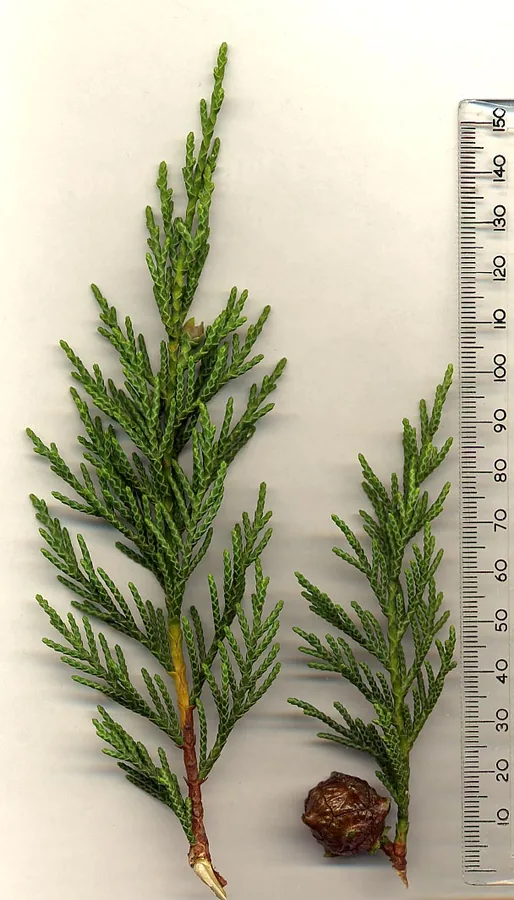
Overview
If you want a green wall and you want it soon, Leyland cypress is the tree that makes it feel achievable. It is a fast-growing evergreen, a happy accident crossing Monterey cypress with Nootka cypress, and it can gain several feet a year as it fills into a dense, feathery column. That speed is what wins people over, and it's also where most of the fussing comes from, so knowing that up front puts you ahead.
Here is the honest part, and it's nothing to worry about once you plan for it: this is a short-lived, disease-prone tree, and the usual way of planting it makes life harder than it needs to be. Crammed into a tight row as one long single-species hedge, the trees press against each other, the air goes still, and cankers and root rot creep in. Give each one honest space and it will live far longer than a squeezed, neglected screen ever could.
Treat it as a real landscape tree rather than a quick patch and it gives back generously. It takes a wide range of soils in stride, accepts shearing into a neat shape, and asks very little once its roots settle. Spacing, drainage, and a good drink in dry spells are the whole secret between a screen that thrives and one that thins, and every one of those is well within your reach.
Care
The short version: give it full sun, well-drained soil, and plenty of breathing room between plants. Water deeply during dry spells, prune only when the weather is dry, and gently resist the urge to pack the trees in close.
Light
Leyland cypress is happiest in full sun, which keeps the canopy full and even all the way around. It will make do with partial sun or light shade, but a shaded side tends to thin and brown sooner, and that's the very spot where needle blight likes to get its start.
Water
Once it's settled in it copes well with drought, but drought stress is exactly what sets off deadly canker, so don't leave it bone dry for long. When the weather turns dry, water deeply every 7 to 14 days, giving extra care to young trees and to any plant that's crowded or already having a hard time.
Soil
This easygoing tree takes loam, clay, or sand and a broad pH of 5.0 to 8.0 without complaint. The one thing it truly can't forgive is poor drainage, since soggy ground invites root rot, so loosen and amend heavy clay before you plant and you'll spare it a lot of grief.
Temperature
It is both cold-hardy and heat-tolerant, holding steady from about -9°F to 100°F (-23°C to 38°C). That's a wide comfort zone covering plenty of climates, though hard ice and freeze injury can crack the bark and give canker an opening.
Humidity
Everyday outdoor humidity suits it fine, so there's nothing for you to adjust. What counts far more is air moving freely through the canopy, because still, damp air around crowded trees is what feeds the foliage diseases.
Feeding
Feed it lightly in spring, if you feed it at all, using a balanced complete fertilizer. Established trees rarely ask for any, and pushing soft, fast growth with extra nitrogen honestly does the tree no favors.
Pruning
Prune only in dry weather, since damp cuts help disease travel, and know that the tree takes shearing well for a tidy screen. When you clear out cankered or diseased branches, cut several inches below the damage and wipe your tools with 10 percent bleach or alcohol between cuts.
Repotting
This is a landscape tree rather than a container plant, so it's rarely potted on. If you're holding a young one in a nursery pot for now, move it along before the roots begin to circle and growth stalls, then settle it into the ground where it belongs.
Size & spacing
Left to its own devices, it climbs to a towering 40 to 70 feet (12 to 21 m) tall and fills out 10 to 20 feet (3 to 6 m) wide. Those figures are the whole reason spacing matters so much, so give each tree real room from the next, letting air move through and keeping disease at bay.
When to plant
There's no wrong season to fret over here, since you set out a nursery tree rather than start it from seed. Plant in spring or fall while the soil works easily and the weather stays mild, and let the roots settle in comfortably before the next run of heat or hard cold arrives.
Northern hemisphere
Southern hemisphere
Typical months for a temperate climate: start earlier in warm zones, later where spring frosts linger.
- Plant: spring or fall
Hardiness
USDA hardiness zones: 6–10
Temperature: down to -23°C
Troubleshooting
Nearly every Leyland cypress worry comes back to the same root cause: trees set too close in the wrong place. Keep a gentle eye on the lower and inner branches, since canker, blight, and root rot all tend to show up there first. Find what matches below, then act early, because the serious diseases can't be cured once they spread, and early help is the kindest thing you can do.
Whole branches fading to rust-brown with sunken, weeping patches on the bark
If you spot this, take a breath, because it is the most common trouble a Leyland cypress faces: Seiridium or Botryosphaeria canker. These fungi find their way in through small bark wounds and settle fastest on trees left thirsty or hemmed in by neighbors. No spray will cure it, but you can help your tree by pruning well below each canker, wiping tools clean between cuts, and keeping it watered and roomy.
Fix:
- Prune out infected branches several inches below the canker and destroy them
- Disinfect pruning tools with 10 percent bleach or alcohol between every cut
- Reduce stress by deep watering during drought and mulching beyond the lowest limbs
- Remove severely declined trees as there is no chemical cure
A stunted, off-color tree struggling in soggy ground
Foliage fading to yellow, purple, or tan while the tree thins and the roots break down usually means Phytophthora root rot, and it comes from wet, packed soil more than any mistake on your part. Young trees feel it hardest. Once the roots decay there is no saving that tree, so lift and destroy it, put the drainage right, and choose a fresh spot rather than a Leyland cypress in the same ground.
Fix:
- Remove and destroy infected plants and do not replant Leyland cypress in the same spot
- Improve drainage and amend heavy clay with organic matter
- Avoid overwatering and waterlogged sites
Browning that starts deep inside the canopy and works its way out
When the browning begins low and tucked inside the plant and only the tips stay green, the likely culprit is Passalora needle blight, and it is nothing to panic over. The fungus travels on splashing rain and settles wherever the foliage stays damp, so crowded, shady trees feel it worst. You can turn things around by thinning for airflow, watering at the roots rather than overhead, and clipping out the worst branches.
Fix:
- Space and thin plantings to improve airflow and reduce leaf wetness
- Switch to drip irrigation or water early in the morning, avoiding overhead watering
- Prune out and destroy diseased branches
- Apply a labeled fungicide (e.g., thiophanate-methyl or myclobutanil) preventively from late spring through summer if needed
Small spindle-shaped bags dangling from thinning branches
Those little 1 to 2 inch (2.5 to 5 cm) silk bags dressed in scraps of foliage hold bagworms, and the caterpillars inside can nibble a branch bare if left alone. The good news is they are easy to handle: pluck the bags off through winter and early spring before the eggs hatch. Catch the larvae while they are young and a gentle spray of Bt takes care of them.
Fix:
- Hand-pick and destroy bags in winter and early spring
- Apply Bacillus thuringiensis (Bt) when larvae are small in spring
- Use a labeled contact insecticide for heavy mature infestations
Needles speckled yellow and bronzing under fine webbing
Fine yellow speckling that drifts toward a bronze cast, sometimes with a little webbing, points to spruce spider mites, and they are quite manageable. They feed in the cool of spring and fall rather than the summer heat. Knock them off with a firm spray of water or treat with insecticidal soap or horticultural oil, and steer clear of broad insecticides, which take out the very predators that keep mites in check.
Fix:
- Spray plants forcefully with water to dislodge mites
- Apply insecticidal soap, horticultural oil, or neem oil
- Avoid broad-spectrum insecticides that kill predatory mites
Toxicity
Here's a reassuring bit for pet owners and parents: Leyland cypress is not toxic. No part of the tree poisons cats, dogs, horses, or people, so it makes an easy, worry-free choice for a yard shared with animals and children. The single caution is for your hands rather than anyone's stomach, since the foliage can bother skin, so pull on gloves before you prune.
Safe for
People · Cats · Dogs · Horses · Rabbits · Livestock · Birds
Cats Safe
You can relax about the cat, because Leyland cypress is not toxic to cats, and a curious nibble of foliage won't poison one. If a cat wolfs down a big mouthful of any plant it might cough it back up or feel briefly queasy, and that goes for almost anything leafy.
Dogs Safe
Your dog is welcome around this tree, since it carries no known toxin. The only thing worth a glance is a dog that chews and swallows a lot of woody foliage, which might bring on a mild, passing bout of tummy trouble.
Horses Safe
Horses can graze near a Leyland cypress with nothing to fear. Unlike some of the truly poisonous evergreens, this hybrid holds no toxin that would harm them.
Rabbits Safe
Rabbits are safe around the foliage, and a stray bite does them no harm at all. It isn't something they like to eat, so most of the time they simply leave it be.
Livestock Safe
Cattle, goats, and sheep can share a pasture edge with this tree, which holds no poison for any of them. Grazing animals usually pass over the resinous foliage and go for the grass instead.
Birds Safe
Birds are welcome to nest and shelter in the thick canopy with no danger at all. Nothing in the foliage or the bark they peck at can hurt them.
People Safe
No part of the tree poisons people, so it is safe to grow around children. The one thing to mind is your skin rather than anyone's stomach: handling the foliage can bring on contact dermatitis in some people, so slip on gloves before you prune.
Wear gloves when pruning or handling foliage to avoid skin irritation.
Varieties
Most Leyland cypress sold for screening is one of a handful of named selections, told apart mainly by color and shape. These are the friendly few you're most likely to run into at the nursery.
Leighton Green
The trusted old standby, a tall, dense, columnar tree in deep green that southern gardeners lean on when they want a quick screen or a Christmas tree grown at home.
Castlewellan
A tidier, more compact choice whose gold-tipped foliage glows its warmest yellow right through fall, winter, and spring.
Naylor's Blue
A looser, more open column wearing soft blue-gray foliage on a frame that grows a touch more slowly.
Murray
A tough, vigorous dark green form grown much like the standard when you want a privacy wall up in a hurry.
How to propagate
Because it's a sterile hybrid, you can't raise this tree true from seed, so every new plant starts as a copy taken from one already growing, and that's easier than it sounds.
Stem cuttingsModerate
Late summer to fall (semi-hardwood cuttings) · Several weeks to months to root
Since this is a sterile hybrid, seed won't hand you the same tree, which is why cuttings are the friendly, reliable route. Take semi-hardwood cuttings from late summer into fall, then give them time and patience, because they may need several weeks to a few months to settle in and root.
GraftingDemanding
Dormant season · Weeks to months
A few growers graft it in the dormant season, letting the union knit together over weeks to months. It asks for a steady hand, though, and it turns up far less often than rooted cuttings for landscape stock.
Myths
Leyland cypress is a maintenance-free, plant-it-and-forget-it instant hedge.
It shoots up fast, but it doesn't live long and it catches disease easily, and it suffers most when it's jammed in tight as a single-species wall. Crowding and thirst open the door to Seiridium and Botryosphaeria cankers, needle blight, and root rot, while the shallow roots can let a big tree lean or topple in a storm. Give it real elbow room and steady water and it stays a happy screen rather than a needy one.
Cankers and needle blight can be sprayed away with fungicide.
Once a canker has settled in, no spray will cure it, and that is okay to know up front. The care that actually works is all cultural: trim out the sick wood, ease the tree's stress, space the planting with room to spare, and keep your tools clean between cuts.