Ornamental · Polemoniaceae
Jacob's Ladder
Polemonium caeruleum
Give it cool shade and steady moisture, and Jacob's ladder rewards you with tidy rungs of foliage under spring-blue flowers.
Partial shade
Every 3–7 days
USDA 4–8
18–24 in · 46–61 cm
Overview
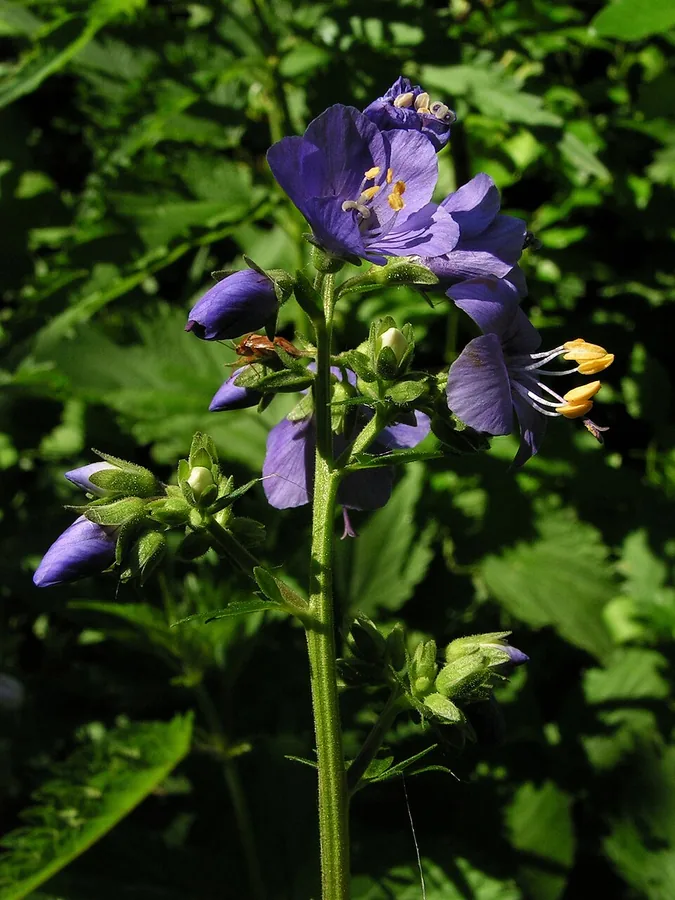
The name Jacob's ladder comes from the leaves, where pairs of little leaflets step up each stem just like the rungs of a ladder. It's a gentle, clump-forming perennial in the phlox family, at home in the cool, damp meadows and woodland edges of the northern hemisphere. Come spring it lifts loose sprays of nodding blue flowers above a soft, ferny mound.
This is a wonderfully easy, forgiving plant, and a fine choice if you're just starting out. Give it rich soil that stays moist and a break from harsh sun, and it will hold its good looks from spring right through the season. Should the tips ever brown, that is simply the plant telling you the ground went dry, and a good drink puts it right.
It's also a happy fit for beds where pets and children play. Despite an old mix-up with a toxic look-alike, Polemonium caeruleum is not poisonous, and a related species even has a long history of human use, so you can plant it with real peace of mind.
Care
The short version: part to full shade, rich humusy soil kept evenly moist, and a spot where the air moves freely. Divide the clump every few years and cut it back after bloom, and you'll find it mostly takes care of itself.
Light
Settle Jacob's ladder into part to full shade and it will thank you. A touch of morning sun is fine, but strong afternoon light scorches the leaflets, so lean toward more shade in a hot garden and you can hardly go wrong.
Water
Aim to keep the soil evenly moist at all times, which usually means a drink every 3 to 7 days depending on the weather. It really doesn't like to dry out, and if it ever does, the brown, crispy leaflet tips are just a gentle nudge to water a bit sooner next time.
Soil
Give it rich, humusy loam that holds moisture but still drains. Mixing in a generous scoop of compost or leaf mold is worth the effort, since that spongy, organic ground of a woodland floor is exactly the home it loves.
Temperature
This is a cool-natured plant, content anywhere from about 19°F to 75°F (-7°C to 24°C) and hardy through zones 4 to 8. Heat, not cold, is what tests it, so a little summer shade keeps it looking fresh and happy.
Humidity
Ordinary outdoor humidity is no bother to it. What really counts is good air movement, because still, muggy air is what tempts leaf spot and mildew onto the leaves, and a breezy spot spares you that worry.
Feeding
There's no need to fuss with feeding. One spring meal of balanced fertilizer, or simply a top-dressing of compost, is plenty to carry the plant right through the season.
Pruning
Once the flowers have faded, feel free to cut it back to the basal foliage to neaten the clump and keep it from seeding around. A fresh mound of leaves fills back in and carries the look through the rest of the year.
Repotting
Lift and divide the clump every 2 to 4 years to keep it strong and full. When you notice the center thinning out, flowering falling off, or leaves crowding and fading, that's simply the plant letting you know it's ready to be split.
Size & spacing
Look for a tidy mound of about 18 to 24 inches (46 to 61 cm) tall and roughly the same across. Leave each plant that same 18 to 24 inches (46 to 61 cm) of elbow room so air flows through and disease stays away.
When to plant
Jacob's ladder leans into the cooler part of the year, and its timing is easy to follow. Start seed indoors in late winter or sow it under glass in autumn, set young plants out in spring once frost has passed or in fall, and you'll be greeted by blue flowers from April into May.
Northern hemisphere
Southern hemisphere
Typical months for a temperate climate: start earlier in warm zones, later where spring frosts linger.
- Sow: Late winter to early spring, or autumn under glass
- Plant: Spring after frost, or autumn
- Harvest: April to May
Hardiness
USDA hardiness zones: 4–8
Temperature: down to -34°C
Troubleshooting
Almost anything that troubles this plant comes down to one of two things: too much sun and dryness, or too much humidity in still air. The good news is the leaves tell you plainly which it is. Match what you're seeing below, tweak the spot, and the plant bounces back.
Dark spots or a dusty white bloom across the leaves
If you spot dark blotches or a powdery white haze on the foliage, take heart, because both leaf spot and powdery mildew are easy to walk back. They settle in when warm, muggy air sits still around the plant, so gently pick off the marked leaves, open up the clump so a breeze can pass through, and try to keep water off the foliage. You caught it early, and the plant recovers well.
Fix:
- Remove and discard affected foliage
- Improve air circulation by thinning or spacing plants
- Avoid overhead watering
Browned leaflet tips or sun-tired, crisping foliage
Brown, crisp edges are simply leaf scorch, and they mean the plant has had a bit too much sun or the soil slipped dry on you. Nothing here is lost, so move it into cooler part to full shade, keep the ground damp, and tuck a layer of mulch around it to hold that moisture. Give it those gentler conditions and the fresh growth comes in clean.
Fix:
- Move or transplant to part to full shade
- Keep soil consistently moist
- Mulch to conserve soil moisture
Ragged holes appearing in the leaves overnight
Torn holes and a shiny slime trail are the calling card of slugs, and they are simple to manage once you know it's them. They creep out to feed at night in cool, damp shade, so step out after dark to pick them off, set down a few traps or some iron-phosphate bait, and clear away the moist debris they hide under. Ease mulch back from the crown and they lose their shelter.
Fix:
- Handpick slugs in the evening
- Use slug traps or iron-phosphate baits
- Reduce moist hiding spots near plants
Toxicity
Here's some reassurance if you share your home with pets or little ones: Jacob's ladder is not toxic. It belongs to the friendly phlox family, and the scary warnings floating around online actually point to a different plant that happens to share the name. Plant it freely wherever curious noses and hands might wander.
Safe for
People · Cats · Dogs · Horses · Rabbits · Livestock · Birds
Cats None
You can relax about cats here. If yours takes a curious nibble of a leaf or flower, it won't be poisoned.
Dogs None
Dogs are in the clear too. A pup that chews a stem might get a little tummy grumble from the plant fiber, and that's all.
Horses Safe
Horses are safe alongside it, since the plant holds no compounds known to harm them.
Rabbits Safe
Rabbits can nibble the leaves with no harm done, though a hungry one may graze a young clump hard enough to slow it down.
Livestock Safe
Cattle, goats, and sheep can graze near it with nothing to worry about.
Birds Safe
Birds are perfectly safe around it. The blooms invite in bees and other pollinators instead of posing any threat.
People Safe
It won't poison people, and a related species carries a long history of human use. Still, enjoy it as a garden ornamental rather than as food.
No special handling precautions reported; routine garden plant.
Varieties
The plain species gives you those classic blue flowers, but a handful of selections are worth hunting down for their pretty leaves or different bloom color. These are the ones you're most likely to come across.
Brise d'Anjou
You'll love this clump-forming pick for its ladder-shaped leaves neatly edged in cream and green.
Snow and Sapphires
Its white-margined leaves sit under the familiar blue flowers, giving you a cheerful two-tone display.
White Pearl
If you fancy a softer look, this selection swaps the usual blue for clean white blooms.
How to propagate
Making more Jacob's ladder is genuinely simple, and there's no need to feel intimidated. You can split a settled clump for instant new plants, or just let the plant sow itself around the bed.
DivisionEasy
Early spring or fall · One growing season
Dividing is the friendliest way to keep a clump full and happy, and it gives you free plants besides. Lift and split it in early spring or fall every 2 to 4 years, keeping both roots and shoots on each piece, and don't worry, the new divisions settle in comfortably over one growing season.
SeedEasy
Spring or autumn · Self-seeds freely; blooms typically the following year
Left to its own devices, the plant scatters seed freely in spring or autumn, and those seedlings usually bloom the following year, so a little patience is rewarded. If you'd rather keep the volunteers in check, just deadhead the faded flowers or cut the plant back before the seed drops.
Myths
Jacob's ladder is poisonous to cats and dogs.
Take a deep breath, because this phlox-family plant carries no reported toxicity at all. The worry traces back to an ASPCA entry for 'Jacob's ladder' that actually describes a different plant, Smilax herbacea. Polemonium caeruleum is safe to grow around pets and children.