Ornamental · Polemoniaceae
Garden Phlox
Phlox paniculata
Give it sun, breathing room, and steady moisture, and garden phlox will crown your border with color from midsummer on.
Full sun
Every 3–7 days
USDA 4–8
2–4 ft · 0.6–1.2 m
Overview
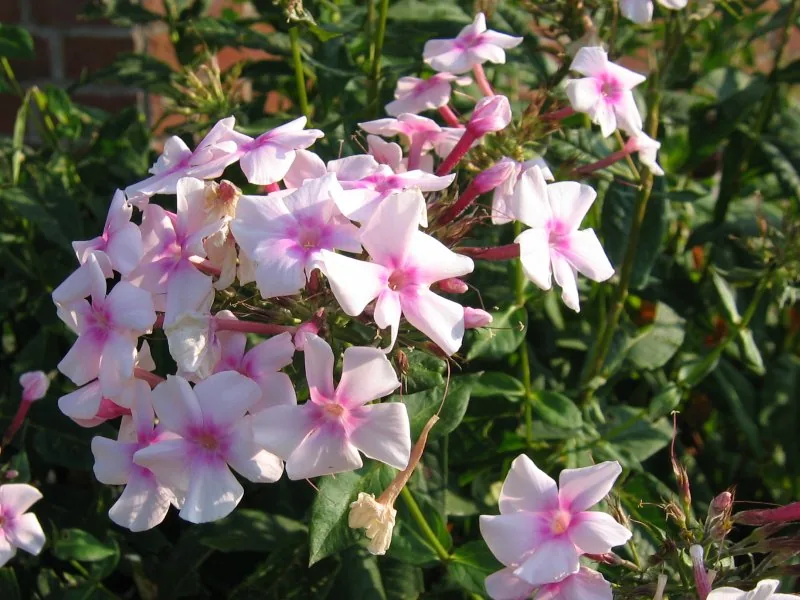
Garden phlox is one of those steady, generous plants that carries a summer border, lifting tall stems capped with wide, sweetly scented flower heads. It's a hardy perennial from the eastern United States, and once it settles in it returns fuller every year, so early nerves soon give way to pride. The blooms come in pink, white, lavender, and red, and they keep butterflies and other pollinators visiting all season long.
The real gift of phlox is when it shows up. It comes into its own in midsummer to fall, right as the spring perennials are bowing out, and it holds that color for weeks on end. Each clump widens slowly, so a lone plant grows into a leafy, generous stand that gives the back of a bed real presence.
The single thing to watch is powdery mildew, which favors the same crowded, still air a full border tends to hold. Leave each plant some space, water at the roots instead of over the leaves, and you'll mostly keep it at bay. Pick a mildew-resistant variety and you can nearly put it out of mind, so don't let this one worry stop you.
Care
The short version: give it full sun to part shade, rich, moist, well-drained soil, and steady water through dry spells. Leave each clump enough space for air to move, water down at the base, and divide it every few years so it keeps blooming with strength. Small missteps are easy to recover from.
Light
Garden phlox blooms most freely in full sun, yet it takes partial shade and partial sun happily too. Too much shade thins out the flowers and leaves the plant leggier and readier to catch mildew, so aim for the brightest spot you can offer.
Water
Aim to keep the soil evenly moist, giving it a drink every 3 to 7 days and more through a dry summer. Phlox simply can't cope with drought, so a blanket of mulch is a real friend here, holding moisture and cooling the roots. Water low at the base rather than over the leaves, and you'll dodge powdery mildew.
Soil
Set it into moist, fertile, well-drained ground with plenty of organic matter, be that loam or a weightier clay. It's easygoing about pH across a broad 6.0 to 8.0 span, so most garden soil will do once you mix in a little compost.
Temperature
Garden phlox is tough right through, weathering winter cold as low as -29°F (-34°C) and summer heat up to 95°F (35°C). A span that wide suits a great many climates, which is just why it's such a reliable border perennial.
Humidity
Ordinary outdoor humidity is perfectly fine, so there's no number to chase. What counts far more is moving air, since the still, packed conditions powdery mildew thrives on are the ones to avoid.
Feeding
Offer a feed in spring, either a balanced fertilizer or a generous scoop of compost mixed into the soil. That one seasonal feeding into already fertile ground is plenty to see the plant through its long run of bloom.
Pruning
Deadhead the tired flower heads to keep new bloom arriving and to hold back stray self-seeding. Thin any crowded stems early so air can pass through, then cut the whole plant down to the ground in winter and clear the debris so disease has nowhere to shelter.
Repotting
Garden phlox lives in the ground rather than a pot, though it still wants dividing now and then. Lift and split each clump every 2 to 4 years in spring or fall; a packed center with smaller blooms and weaker stems is your cue that it's ready.
Size & spacing
Plants stand 2 to 4 feet (61 to 122 cm) tall and build clumps 2 to 3 feet (61 to 91 cm) across. Grant each one that full width so air can flow freely and mildew gets far less of a hold.
When to plant
Garden phlox is a perennial that comes back on its own each year, so the planting is a one-time task you handle in spring after the last frost or in early fall. After that it keeps its own schedule, pushing up fresh growth in spring and flowering from midsummer well into fall, all with little from you.
Northern hemisphere
Southern hemisphere
Typical months for a temperate climate: start earlier in warm zones, later where spring frosts linger.
- Sow: Late winter to early spring (species seed; cultivars do not come true from seed)
- Plant: Spring after last frost or early fall
- Harvest: Mid-summer to mid-fall (July to September)
Hardiness
USDA hardiness zones: 4–8
Temperature: down to -34°C
Troubleshooting
Most of what troubles garden phlox turns up on the leaves, and powdery mildew is the one you'll meet most often by far. Spot the early signs and you can usually head off a problem before it dims the show. Find the match below, then act while your effort still counts, and take heart that these plants recover well.
Droopy stems giving way at a soft, browned base
If the ground stays soggy for too long, crown and root rot can move in and leave the base brown and soft. The telltale clue is a plant that droops even while the soil is plainly wet. A hard-hit clump usually can't be rescued, but that's fine: dig it out, sort the drainage, and lighten up on watering so the rest of the bed stays healthy.
Fix:
- Remove and destroy severely affected plants
- Improve soil drainage
- Avoid overwatering and waterlogged sites
A pale, dusty coating settling over the foliage
Try not to worry if you spot a chalky white dusting on the leaves. This is powdery mildew, the one issue garden phlox is famous for, and it settles in when the air stays still and the foliage never fully dries. You can turn it around: open up the clump by thinning the stems, water down at the soil line, and pull off the leaves that look worst. Next time, a resistant pick like David or Jeana skips the trouble entirely.
Fix:
- Thin stems to improve air circulation
- Avoid overhead watering and water at the base
- Remove and destroy infected foliage
- Cut plants to the ground in winter and clear debris
Tiny pale flecks and delicate webs showing up in hot spells
When a hot, dry stretch drags on, spider mites sometimes gather beneath the leaves and feed until the foliage turns dull and coppery. The good news is they clear off easily. Give the plant a firm spray of water to knock them loose, and keep the soil damp so it stays comfortable through the heat. Should a few linger, insecticidal soap or horticultural oil finishes the job kindly.
Fix:
- Spray foliage with a strong stream of water to dislodge mites
- Keep plants well watered during heat
- Apply insecticidal soap or horticultural oil if needed
Toxicity
Garden phlox is safe to have around everyone at home. The ASPCA lists it as non-toxic, with no harmful compounds in any part of the plant, so pets, livestock, and children can all share the garden with it without a second thought. A random nibble of leaf or flower does no harm.
Safe for
People · Cats · Dogs · Horses · Rabbits · Livestock · Birds
Cats None
You can relax with a cat in the garden, since the ASPCA records phlox as carrying no toxic principles. If yours takes a curious bite of leaf or flower, it will be completely fine.
Dogs None
A dog can roam right through a patch of phlox with nothing to fear. Even a mouthful of stem or bloom holds nothing that would make one sick.
Horses Safe
There's nothing in phlox that bothers a horse, so a grazing bite does no harm at all.
Rabbits Safe
You'll often catch rabbits nibbling the leaves, and it never hurts them, because phlox holds no toxins for them.
Livestock Safe
Cattle, goats, and sheep can wander among garden phlox in safety, as not one part of the plant is poisonous.
Birds Safe
Birds have nothing to fear from phlox, and its flowers welcome pollinators rather than pose any risk to a visitor.
People Safe
Phlox brings no poisoning risk to people, so even a child picking at the cheerful blooms is safe.
Safe to grow where pets have access; no special handling required for toxicity.
Varieties
Hundreds of garden phlox cultivars have been bred over the years for color, scent, and mildew resistance. Here are a few that are worth knowing by name.
David
Beloved for its crisp white panicles and its dependable knack for standing up to powdery mildew.
Jeana
Bears thick heads of lavender-pink flowers, holds off mildew with real strength, and welcomes more pollinators than most.
Eva Cullum
Wears bright pink petals brightened by a deeper red eye at the heart of every flower.
Companions
Garden phlox pairs well with other sun-loving perennials that share its taste for moist, fertile soil and add their own form to the summer border.
How to propagate
Garden phlox is a forgiving plant to make more of, and the method you choose comes down to what you're after. Division and cuttings both copy a named variety faithfully, while seed hands you the wild species and a cheerful mix of colors.
DivisionEasy
Spring or fall · One growing season
If you've never split a plant before, this is a gentle place to start, and it keeps garden phlox thriving. Ease a grown clump out of the ground in spring or fall, break it into a few pieces, and set them back in; each one roots comfortably within a single growing season. Repeating it every 2 to 4 years also stops the middle of the clump from fading out.
Stem cuttingsModerate
Late spring to summer · Several weeks to root
Softwood cuttings are your way to reproduce a named cultivar just as it is, something seed can never manage. Snip them from fresh growth in late spring or summer, and give them several weeks to root before you move them into their own pots.
SeedModerate
Late winter to spring · One season or more to flowering
Growing the wild species from seed is well within reach, sown in late winter or spring, though blooming waits a season or more. Named cultivars won't come true this route, so sow saved seed only if you're delighted by whatever colors appear.
Myths
Phlox of any kind will make a cat or dog sick.
You can set this worry aside. The ASPCA records phlox as non-toxic for cats and dogs alike, with no harmful compounds noted. A pet that samples a leaf or bloom will be perfectly fine.
Seed saved from a named garden phlox gives you the very same plant back.
Named cultivars seldom copy themselves from their own seed, so a seedling rarely resembles its parent. Snip the spent panicles to head off surprise self-seeding, and grow the varieties you love from division or cuttings instead.