Ornamental · Balsaminaceae
Impatiens
Impatiens walleriana
Give it shade and steady moisture, and impatiens will fill a shady bed with color all summer long.
Partial shade
59–75°F · 15–24°C
60–90 days
USDA 10–11
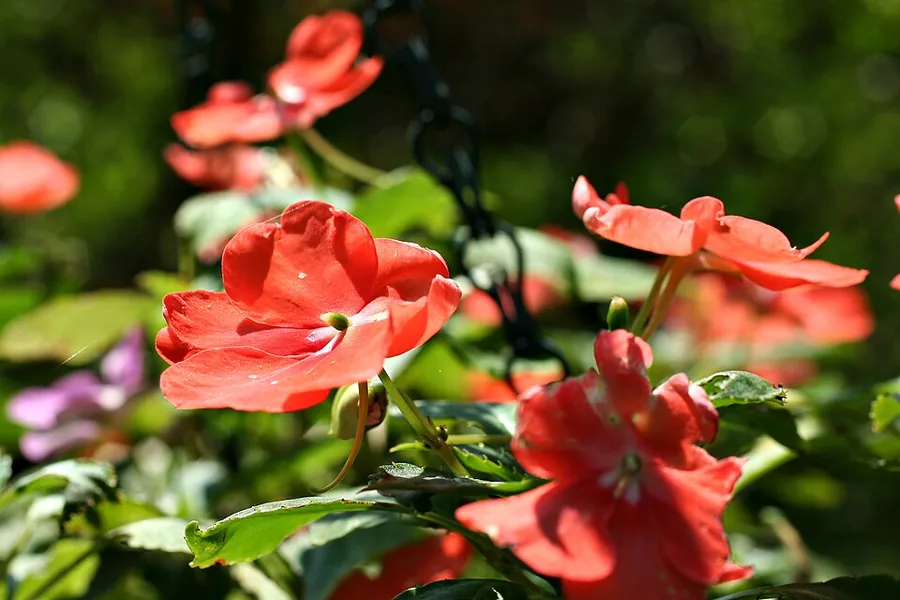
Overview
If a shady corner has you stumped, take heart, because few plants brighten it the way impatiens does. This tender perennial from East Africa is grown almost everywhere as a warm season annual, and it will happily fill your beds, borders, and pots with bloom from late spring until the first frost. Where most flowers sulk without sun, this one settles in and thrives in the partial to full shade under trees and along the north side of a house.
It picked up the sweet old nickname Busy Lizzie because it blooms on and on with so little fuss, asking only for moist soil and a rest from the hot afternoon sun. The plants stay low and softly mounded, between 6 and 24 inches (15 to 61 cm) tall and about as wide, so even a few of them soon grow together into one gentle sheet of color.
There is one thing worth knowing, and it's nothing to fear: a disease called downy mildew once swept through gardens and made the old seed impatiens a bit of a gamble. The happy answer is simply to choose newer resistant varieties, which is exactly why a name like Beacon is a friend to you when you're deciding what to plant.
Care
The short version: settle impatiens into partial to full shade, keep the soil evenly moist, feed it monthly, and pinch off the spent blooms, and it will keep flowering for you.
Light
Impatiens are shade plants at heart, and they are happiest in partial to full shade where they bloom freely without burning. Too much hot, direct sun scorches the leaves and leaves the whole plant wilting, so treat it to the dappled light under trees or a comfortable north-facing spot and it will thank you.
Water
Try to keep the soil consistently moist, because impatiens wilt fast the moment they dry out, though don't panic when they do, since they usually bounce right back once you water them. Water gently at the base rather than over the top, as wet foliage invites downy mildew and gray mold. If your soil is heavy and drains poorly, ease off, because soggy roots can rot.
Soil
Give them fertile, organically rich ground that holds moisture yet still drains freely. A little compost worked in is all it takes to offer the roots the steady, even dampness these plants love.
Temperature
Impatiens like things mild, somewhere between 59°F and 75°F (15°C to 24°C). They are tender and a frost will finish them, so simply wait for warm, settled weather before you set plants outside and you'll both be happier for it.
Humidity
Everyday outdoor humidity suits them just fine, so there's no number for you to chase. What really counts is good airflow, since crowded, stagnant plantings hold the damp that downy mildew and gray mold need to get going.
Feeding
Feed them monthly through the growing season with a balanced fertilizer, or a weaker liquid feed a little more often, and keep in mind that plants in pots grow hungry faster. Go gently with the nitrogen, since too much pushes soft growth that aphids happen to love.
Pruning
Deadhead the spent flowers to keep fresh buds coming, and clip away any damaged or diseased growth whenever you notice it. That small bit of tidying keeps your plant blooming and the air moving nicely.
Size & spacing
Plants reach 6 to 24 inches (15 to 61 cm) tall and spread about the same, so give each one a little room to fill out. That breathing space lets air move between them, which quietly keeps disease at bay.
When to plant
Impatiens really can't take frost, so there's no rush to move them outdoors. Start seed indoors in late winter, wait to set the plants out until the last frost has truly passed and the soil has warmed, and you'll be rewarded with bloom from late spring right up to the first fall frost.
Northern hemisphere
Southern hemisphere
Typical months for a temperate climate: start earlier in warm zones, later where spring frosts linger.
- Sow: 8 to 10 weeks before the last spring frost
- Plant: After the last spring frost once soil has warmed
- Harvest: Late spring to the first fall frost
Hardiness
USDA hardiness zones: 10–11
Temperature: down to -1°C
Troubleshooting
Most impatiens troubles show up on the leaves first, whether it's disease in damp weather or pests in dry heat, and that's actually good news for you. Spot the signs early and you can step in before a small worry grows into a big one. Match what you see below, then act while it still makes a difference, and you'll usually turn things around.
Yellowed, curling leaves collapsing to naked stems
This one is impatiens downy mildew, the disease that cost so many gardeners their bedding impatiens. You'll see leaves yellow and curl downward, a white fuzz gather underneath, and within a few days the foliage falls away to leave bare stems. It's heartbreaking, but an infected plant can't be saved, so gently pull it, bag it, and please never add it to the compost.
Fix:
- Remove and bag infected plants including fallen leaves and do not compost them
- Note that fungicides cannot cure infected plants and only protectant fungicides slow spread
- Replant with resistant types such as Beacon or Imara XDR, New Guinea impatiens or SunPatiens, or switch to begonia, coleus, or caladium
Speckled, bronze-tinged leaves and light webbing in the heat
A fine speckling and a bronze tinge across the leaves usually mean spider mites, which love it when the air turns hot and dry. Tap a leaf over a sheet of white paper and you'll catch the tiny specks moving. Don't fret: rinse the foliage, lift the humidity around the plant, and treat with insecticidal soap or horticultural oil on the label's schedule, and it will come back.
Fix:
- Rinse foliage and raise humidity
- Apply insecticidal soap or horticultural oil, repeating as directed
Soft gray mold on spent blooms in cool, damp spells
Botrytis blight, the gray mold, tends to settle on tired flowers and soft tissue when the weather stays cool and damp. You'll notice a pale gray, cobweb-like fuzz creeping from dying blooms onto the leaves and stems. It's manageable: pick off the faded flowers and any rotted bits, open the planting up so air moves through, and keep water off the foliage.
Fix:
- Remove spent flowers and affected tissue
- Improve air circulation and avoid wetting foliage
Tiny bugs clustering on sticky young shoots
Take a breath, this is an easy fix: those little clusters on the tender new shoots are aphids, and the sticky film is just their honeydew. They twist the young leaves a bit but seldom cause lasting harm. Wash them off with a firm jet of water, and if a few stragglers return, follow up with insecticidal soap or horticultural oil.
Fix:
- Dislodge them with a strong jet of water
- Apply insecticidal soap or horticultural oil as needed
Toxicity
Here's a bit of reassurance for pet owners and parents: impatiens is safe. The ASPCA lists it as non-toxic to cats, dogs, and horses, and it poses no poisoning risk to the other common household animals or to people either. You can plant it right where pets graze and children play and simply enjoy it.
Safe for
People · Cats · Dogs · Horses · Rabbits · Livestock · Birds
Cats None
You can relax with cats in the house, since a curious nibble on the leaves or flowers won't poison them.
Dogs None
Dogs are welcome to sniff and pass by without concern. If one chews a stem it might get a mild, passing tummy upset, the same as with almost any plant.
Horses None
Rest easy around horses, as it is listed non-toxic and a grazing horse has nothing to fear from it.
Rabbits Safe
Rabbits can browse the foliage with no harm at all, and some keepers even grow impatiens as a safe little nibble for them.
Livestock Safe
Goats, sheep, and cattle are in no danger of poisoning from it, so you needn't fence it off.
Birds Safe
Pet and backyard birds are perfectly fine around the plant and its flowers.
People Safe
It isn't poisonous to people, and the flowers are sometimes enjoyed as a garnish. All the same, plants aren't a food crop, so it's best not to make a meal of it.
Varieties
Hundreds of impatiens have come and gone over the years, but a few names are well worth knowing, above all the ones bred to shrug off downy mildew.
Super Elfin
This early, compact seed series gives you a lovely spread of colors, but like most of the older Impatiens walleriana it gives in easily to downy mildew, so plant it knowing that.
Beacon
Here is the reassuring one: it was bred to stand up well to impatiens downy mildew, so you can grow seed impatiens again even where the disease has taken hold.
Double-flowered (rosebud) types
If you love a fuller look, these carry plush, rose-like double blooms rather than the familiar flat, five-petaled single flowers.
How to propagate
Making more impatiens is genuinely easy and hard to get wrong, whether you start a packet of seed indoors in late winter or snip quick cuttings from a plant you already love.
SeedModerate
Sow indoors 8 to 10 weeks before the last spring frost · Germinates in about 1 to 3 weeks; flowers roughly 10 to 13 weeks after sowing
Don't worry if seed feels fussy: begin indoors 8 to 10 weeks before your last spring frost and you'll have plenty of time. Just press the seed gently onto the surface and leave it uncovered, because impatiens want light to wake up, then keep the mix cozy at around 75°F (24°C) and humid. Little seedlings appear in 1 to 3 weeks and come into bloom roughly 10 to 13 weeks after sowing, so patience pays off.
Stem cuttingsEasy
Spring through summer · Roots in about 1 to 2 weeks
Here is the easy, forgiving path: tip cuttings taken spring through summer root almost on their own, settling in within 1 to 2 weeks in a glass of water or a pot of moist mix. It's a happy way to carry a plant you adore through winter indoors. Just be sure to take cuttings from healthy stock with no hint of downy mildew, and you're set.
Myths
Impatiens need full sun to bloom well.
It's actually the reverse, so don't worry about finding a sunny bed. Impatiens walleriana is a shade plant that blooms best in partial to full shade, and hot, direct sun only scorches the leaves and leaves it wilting.
A good fungicide can rescue impatiens that have already caught downy mildew.
Sadly not: a fungicide can only protect plants that are still healthy and cannot cure one already infected, so that plant has to come out. The kinder path forward is to replant with resistant varieties and start fresh.