Ornamental · Boraginaceae
Heliotrope
Heliotropium arborescens
Give it full sun and steady moisture, and heliotrope will thank you with clusters of deep violet, sweetly fragrant bloom.
Full sun
Every 2–4 days
50–86°F · 10–30°C
USDA 10–11
Overview
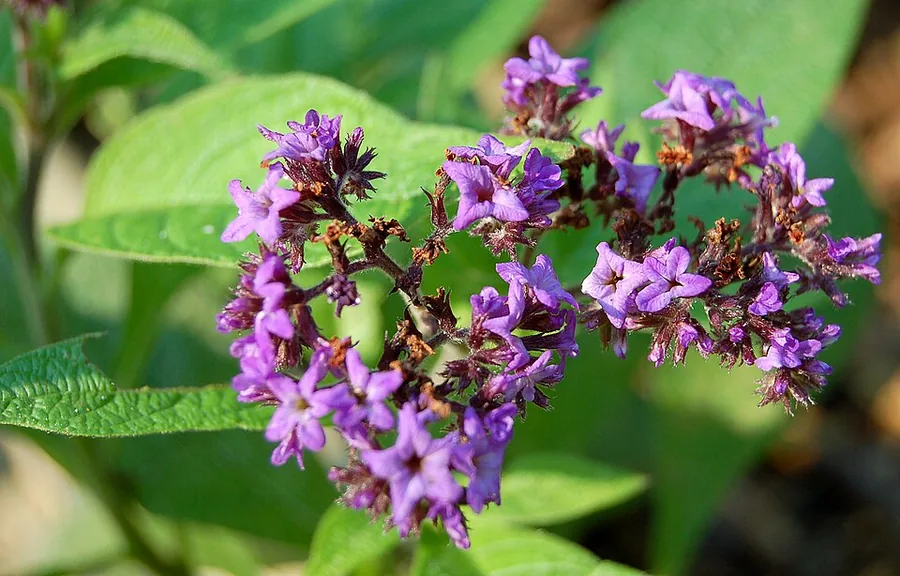
Heliotrope is a tender shrubby perennial from Peru, and across most of the country gardeners grow it as a warm-season annual for its dense clusters of violet to deep blue flowers. The scent is what wins hearts, a rich sweetness that earned the plant its cozy old name, cherry pie. It settles in happily along a sunny border or in a container on the patio, where the fragrance drifts on warm evenings.
This is a plant that blooms best when you give it a little attention, and the good news is that its wants are simple. It asks for full sun, rich soil, and water that never runs dry, and it repays a bit of pinching with a fuller, flower-heavy shape. Where it lives year-round, in zones 10 to 11, it can grow into a small woody shrub, though most gardeners treat it as a one-season annual or carry cuttings through winter, and either path is perfectly forgiving.
One thing sets heliotrope apart from most border favorites, and it is worth knowing from the start. Every part of the plant holds pyrrolizidine alkaloids that are toxic to animals and people, so it earns its spot for its looks and scent alone and never for the table.
Care
The short version: full sun, with a little afternoon shade where summers run hot, soil kept evenly moist and never bone dry, rich ground with plenty of organic matter, and a gentle pinch while the plant is young to keep it bushy.
Light
Heliotrope flowers best in full sun, though it accepts a touch of partial shade and truly welcomes afternoon shade where summers turn brutal. Give it too little light and it stretches and grows shy about blooming, so aim for the brightest spot you have.
Water
This plant has medium water needs and really dislikes drying out, so keep the soil evenly moist and water every 2 to 4 days, more often in containers or during a heat wave. A parched heliotrope wilts and drops leaves fast, but it forgives you the moment you water it.
Soil
Plant it in moist, organically rich, well-drained soil with plenty of organic matter mixed in. It settles happily across a fairly wide range, from a slightly acidic pH of 6.0 to 7.5, so you have room to work with what you have.
Temperature
Heliotrope is most content between 50°F and 86°F (10°C to 30°C). It carries no frost tolerance, so wait to set it out until the cold has passed, and bring it in or replace it before the season turns cold again.
Humidity
Average humidity suits it just fine, and there is no target number you need to chase. Good airflow does far more good than fussing over moisture in the air, especially for plants overwintered indoors, where pests like to gather.
Feeding
All through the growing season, feed every two weeks with a balanced water-soluble fertilizer to keep those flowers coming. Steady feeding is what powers heliotrope's long, continuous show, so it is worth keeping to a rhythm.
Pruning
Pinch the stems back while the plant is still young to draw out side branches and build a bushy shape. Then deadhead the faded flower clusters as the season rolls on, and the plant rewards you with fresh bloom for the effort.
Size & spacing
Heliotrope grows 12 to 24 inches (30 to 60 cm) tall and spreads 12 to 18 inches (30 to 45 cm) wide. Give each plant that much elbow room so air can move freely around the foliage and keep it healthy.
When to plant
Heliotrope loves warmth and simply will not take a frost, so timing is on your side once you know it. Start seed indoors about 10 to 12 weeks before your last spring frost, set the plants out only after the cold has fully passed and the soil has warmed, and then settle in to enjoy the bloom from summer into fall.
Northern hemisphere
Southern hemisphere
Typical months for a temperate climate: start earlier in warm zones, later where spring frosts linger.
- Sow: Start seed indoors about 10 to 12 weeks before the last spring frost.
- Plant: Transplant outdoors after all danger of frost has passed and soil has warmed.
- Harvest: Blooms from summer into fall.
Hardiness
USDA hardiness zones: 10–11
Temperature: down to -1°C
Troubleshooting
Almost every heliotrope worry comes down to a few simple things: soil that dried out, too little sun, or pests that move in once a plant comes inside for winter. None of it is hard to undo, so read the early signs below and step in gently before a small problem has a chance to spread.
Sticky leaves, a little webbing, and speckled foliage
Try not to worry if you spot these signs, because they point to sap-sucking pests such as whiteflies, spider mites, aphids, and mealybugs, and they love a plant that has come indoors for winter. Turn a few leaves over and look for tiny insects, a puff of white that lifts when you brush the plant, or thin webbing, and you will know what you are dealing with. A firm rinse of water, followed by insecticidal soap or horticultural oil, usually sets things right, and moving the plant away from its neighbors while it recovers keeps everyone else safe.
Fix:
- Rinse foliage with a strong spray of water
- Treat with insecticidal soap or horticultural oil
- Isolate affected indoor plants to prevent spread
A droopy plant that is shedding leaves and barely growing
Take heart, because a wilting heliotrope is almost always just thirsty and bounces back quickly once you help it. The plant has medium water needs and no patience for drought, so when the soil dries out the foliage sags and drops and growth stalls. Feel the surface and lift the pot, and if the top dries fast and the container feels light, a slow, thorough drink will perk the leaves up within hours. Water deeply to soak the whole root zone, tuck a layer of mulch over the soil to hold that moisture, and slide containers out of the fierce afternoon sun where summers run hot.
Fix:
- Water thoroughly to rewet the root zone
- Mulch to conserve soil moisture
- Move containers out of intense afternoon sun in hot climates
Stretched-out stems that carry hardly any flowers
If your plant is reaching tall and thin with wide gaps between the leaves and few blooms, do not take it as a failure, because the fix is gentle and quick. Heliotrope stretches like this when it wants more sun or has missed a little pinching and deadheading. Move it into full sun, pinch the stem tips to coax out side branches, and snip away the faded flower clusters so the plant keeps making fresh ones for you.
Fix:
- Move to a full-sun location
- Pinch back stem tips to encourage branching
- Deadhead spent flower clusters regularly
Toxicity
Heliotrope is toxic, and the caution covers the whole plant, so it helps to know this clearly from the start. Every part carries pyrrolizidine alkaloids that harm the liver over time, and the concern reaches cats, dogs, horses, rabbits, livestock, birds, and people alike. No part is edible, so grow it for its beauty and scent and keep it well out of reach of grazing animals, curious pets, and children.
Toxic to
Cats · Dogs · Horses · Rabbits · Livestock · Birds · People
Cats Moderate
A curious nibble tends to bring some drooling and a queasy stomach, but the deeper worry is the pyrrolizidine alkaloids that gather in the liver with each repeat visit. Keep the plant somewhere a cat cannot reach.
Dogs Moderate
A dog that chews the leaves or stems may drool, vomit, and lose its appetite, and the very alkaloids that harm livestock livers sit in this plant too. It is kindest to keep a dog from grazing on it at all.
Horses Severe
Horses are among the most at risk of all. Steady grazing brings on cumulative liver damage that can tip into liver failure, showing up as weight loss, jaundice, photosensitization, and the staggering and confusion of hepatic encephalopathy.
Rabbits Moderate
The pyrrolizidine alkaloids that trouble other animals are no gentler on a rabbit, so this foliage is best kept off the menu. A nibble can upset digestion, and anything more strains the liver.
Livestock Severe
Cattle, sheep, and goats that eat heliotrope, whether fresh or dried in tainted hay, develop progressive liver degeneration, wasting, jaundice, and photosensitization. Ongoing ingestion can turn fatal.
Birds Moderate
Birds are not spared the liver toxin, so pecking at leaves or flowers carries the same building risk. Keep them clear of the plant and of any dried trimmings.
People Caution
No part of heliotrope belongs on a plate. The alkaloids running through the whole plant are hepatotoxic to people, so treat it as ornamental only and gently steer curious children away from chewing the leaves or flowers.
Keep grazing animals away from heliotrope and PA-contaminated hay; pyrrolizidine alkaloids accumulate in the liver over time.
Helpline numbers

United States
ASPCA Animal Poison Control: (888) 426-4435 (fee applies)
Poison Control: (800) 222-1222



Canada
Poison Centres: 1-844-764-7669
Varieties
A few named heliotropes show up again and again, picked for a tidy compact shape, richer color, or the sheer strength of their perfume. These are the ones worth getting to know first.
Marine
A well-loved compact choice that lifts deep violet-blue flower clusters over dark green leaves.
Scentropia Dark Blue
A selection treasured above all for its strongly fragrant, deep blue-purple blooms.
How to propagate
Heliotrope is a forgiving plant to multiply, whether you root a few cuttings to keep a favorite going or start fresh plants from seed, and both are well within reach for a beginner.
Stem cuttingsModerate
Take cuttings from garden plants in late summer to overwinter, or in spring. · Roots typically form in a few weeks under warm, humid conditions.
Cuttings are the reassuring, reliable route, keeping a named cultivar exactly like its parent and carrying a favorite plant safely through winter indoors. Snip them from garden plants in late summer to overwinter, or make a fresh start in spring, and simply give them warmth and humidity. Roots usually appear within a few weeks, so patience is all it really asks.
SeedModerate
Sow indoors about 10 to 12 weeks before the last spring frost. · Germination and growth to transplant size take several weeks; warmth aids germination.
Growing from seed is welcoming too, though you may find seed-grown plants vary a little from their parents. Sow indoors about 10 to 12 weeks before your last spring frost and keep the tray warm and bright. Germination and the slow climb to transplant size take several weeks, with warmth quietly doing most of the work for you.
Myths
One nibble of heliotrope will send a dog or cat into severe neurological poisoning.
You can relax on this one, because poison control and extension sources point to horses and grazing livestock as the animals most at risk, and those animals take in the pyrrolizidine alkaloids over many feedings. The ASPCA lists heliotrope as toxic to horses, while a casual bite from a cat or dog usually causes only mild stomach upset. The real hazard is cumulative liver damage from repeated ingestion, not a sudden neurological crisis.
A single bite of heliotrope will poison an animal on the spot.
In truth, pyrrolizidine alkaloids work at a slow pace, wearing on the liver a little at a time. Serious poisoning in horses and livestock tends to follow large or repeated meals rather than one small taste. The threat builds with exposure, so the loving move is to keep animals off the plant for good.