Ornamental · Boraginaceae
Lacy Phacelia
Phacelia tanacetifolia
Scatter it once and the bees will find you, a soft haze of lavender-blue humming with pollinators all summer long.
Full sun
Every 5–10 days
42–56 days
USDA 3–10
Overview
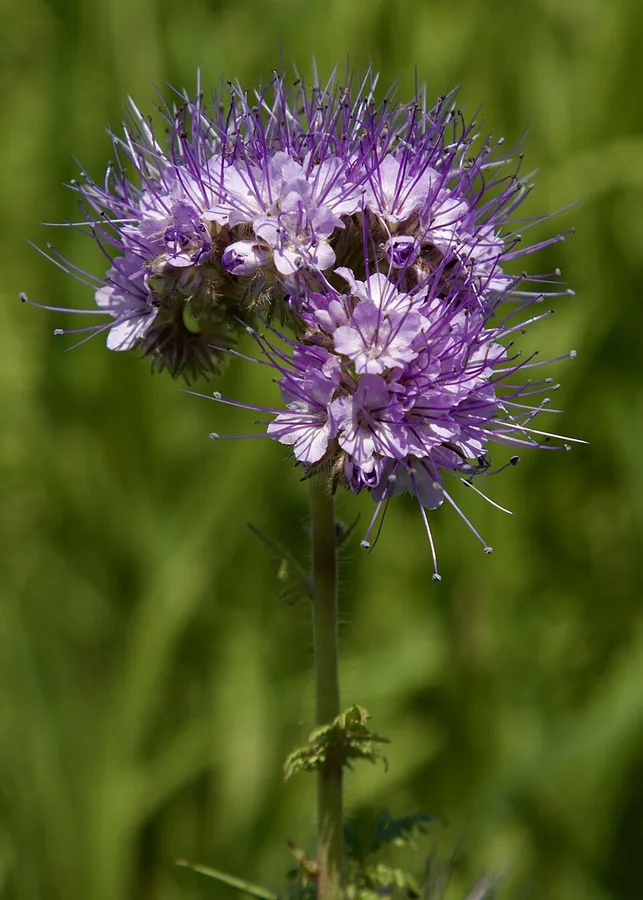
Lacy phacelia is a quick, good-natured annual from California and the western states, and it takes its name from the delicate, fern-like leaves and the coiled sprays of lavender-blue bells that unfurl like a young fiddlehead. It sits in the borage family rather than with the daisies, even though the tansy-like foliage fools many a gardener, and you will find few plants this easy to grow that give back so much.
Where phacelia truly shines is its welcome to bees. Honey bees, native bees, hoverflies, and parasitic wasps all crowd the flowers, which is why it shows up in cover-crop and pollinator mixes far more than in tidy borders. Many gardeners also grow it as a green manure, since it gathers up loose soil nitrogen and shades out weeds as it fills in.
Think of it as a cheerful quick annual that blooms a few weeks after sowing and lives just the one season, so there is no long wait and little to fear. Sow it in spring or fall, offer it sun and soil that drains, and stagger a few sowings for bloom that keeps going. Let it run all the way to seed, though, and it will turn up again on its own the next year.
Care
The short version: give phacelia full sun and well-drained soil, water it only until it settles in and then leave it be, sow in succession for a long, easy bloom, and cut it back before it seeds.
Light
Offer phacelia full sun and you will get the fullest bloom and the strongest draw for bees. It will accept partial sun or light shade if that is what you have, but flowering thins out in the shade and the plants tend to stretch and lean.
Water
Keep young seedlings watered until they find their feet, then you can ease right off, because phacelia turns drought tolerant once established and gets along on 7 to 18 inches of rain or watering a year. Let the top half of the soil dry between drinks, and take care never to leave it sitting in soggy ground.
Soil
Phacelia is happy in well-drained sandy, gravelly, or loamy soil and shrugs off the poor, dry ground that would defeat fussier plants. Its pH tolerance is generous, anywhere from 6.4 to 8.5, so most garden soil will suit it just fine as long as the water moves through.
Temperature
Phacelia copes with a wide swing, roughly 18°F to 95°F (-8°C to 35°C), and young plants take a light frost in stride. A hard freeze near the bottom of that range does finish the foliage, which is why it earns its place as a spring or fall plant rather than a winter one.
Humidity
Ordinary outdoor humidity is all phacelia asks of you, so there is no number to chase. Good airflow matters more than moisture in the air, since crowded, still plantings are where aphids and rot tend to gain a foothold.
Feeding
You can set the fertilizer aside in all but the very poorest soil. As a cover crop phacelia scavenges the nitrogen already in the ground rather than asking for more, and a heavy dose only grows soft, aphid-tempting leaves.
Pruning
There is no real pruning to worry over. Deadhead the spent flower clusters to keep fresh bloom coming and to hold back self-seeding, and if you are growing it as a cover crop, mow or till the whole stand at flowering before it sets seed.
Repotting
none
Size & spacing
Plants reach about 1 to 3 feet (30 to 91 cm) tall with a spread near 8 to 18 inches (20 to 45 cm). Sown thickly as a cover crop they knit together and crowd weeds out, while a thinner stand gives each plant elbow room and better airflow.
When to plant
Phacelia keeps to a short, gentle timetable, so there is nothing tricky to master. Direct sow it in early spring once the soil can be worked, or in fall where winters stay mild, and it will bloom about 6 to 8 weeks later. Stagger sowings every couple of weeks for color that carries on, and simply remember that a hard frost brings the stand to a close.
Northern hemisphere
Southern hemisphere
Typical months for a temperate climate: start earlier in warm zones, later where spring frosts linger.
- Sow: Generally direct-sown; if starting indoors, sow 4 to 6 weeks before last frost in darkness (light inhibits germination)
- Plant: Direct sow in early spring when soil is workable, or in fall in mild-winter climates; sow seed about 0.25 inch deep when soil temperatures are below 68 degrees F
- Harvest: Late spring through summer; blooms roughly 6 to 8 weeks after sowing over a long period
Hardiness
USDA hardiness zones: 3–10
Temperature: down to -40°C
Troubleshooting
Phacelia asks very little and rarely gives real trouble, and most of what does crop up traces back to wet soil or its own keenness to reseed. Match what you notice to the notes below and step in gently and early, and you will find a small snag here is easy to settle before it grows.
Surprise seedlings turning up where nothing was sown
Take heart, this is normal and easy to manage. When the little coiled seed heads dry out and split, phacelia scatters its own seed, and those seeds wake up with the next good rain. You stay ahead of it by mowing, tilling, or pulling the patch at full bloom before seed ripens, and by snipping off finished clusters so they never get the chance.
Fix:
- Mow, till, or pull plants at flowering before seed matures
- Deadhead spent flower clusters before they dry and shatter
- Hand-pull or hoe volunteer seedlings while young
Drooping yellow plants and dark roots in soggy ground
This one comes down to drainage, and it is worth catching early. Phacelia really dislikes standing water, and wet ground brings on root rot that leaves the roots soft and dark and rots the crown right at soil level. A plant that has already flopped cannot be revived, so lift it out and put things right by planting in sandy, gravelly, or loamy soil and keeping away from low spots that stay damp.
Fix:
- Improve drainage and stop overwatering
- Remove and discard collapsed plants
Blooms winding down sooner than you hoped
Nothing has gone wrong here, since this is simply how the plant lives. Phacelia is a short-lived annual that gives you a few weeks of flowers from each sowing, and its soft leaves darken once a hard frost dips near 18°F (-8°C). Sow a fresh little patch every 2 to 4 weeks and you will keep the color rolling, and once the cold has passed you can always start again.
Fix:
- Make successive (succession) sowings every 2 to 4 weeks to extend continuous bloom
- Replace winterkilled plantings with a new sowing once frost danger passes
Little soft insects gathered on sticky new stems
Don't worry, these are just aphids, and they tend to settle on soft or stressed new growth, leaving a sticky film as they feed. A quick blast from the hose sends them packing, and a few of them really are fine to ignore. The lovely part is that phacelia invites hoverflies, lacewings, and parasitic wasps that quietly tidy up the aphids for you.
Fix:
- Spray off colonies with a strong jet of water
- Tolerate light infestations, as phacelia attracts predatory and parasitic beneficial insects that help control aphids
Toxicity
Phacelia is safe, friendly company in the garden, non-toxic to pets, livestock, and people alike, with no poison in any part of the plant. The one small thing to know is that the hairy foliage can leave an itchy rash on people who handle it and react, so slip on gloves before pulling or mowing a stand.
Safe for
People · Cats · Dogs · Horses · Rabbits · Livestock · Birds
Cats None
You can relax about the cat. A curious nibble of the leaves does no harm, because phacelia holds nothing that would upset them.
Dogs None
Your dog is perfectly fine near this one. A brush past or a chewed leaf causes no trouble, and phacelia never appears on poison-control lists.
Horses Safe
Horses that graze phacelia come away just fine, since the plant carries nothing harmful for them.
Rabbits Safe
Rabbits are welcome to browse the leaves as they please, with no worrying compounds in the mix.
Livestock Safe
Cattle, goats, and sheep get on well with phacelia, and it often turns up right in their pasture cover-crop blends.
Birds Safe
Birds have nothing to fear. Plenty come by for the seed heads, and there is no poisoning risk in the plant.
People Safe
Nothing here will poison you, so breathe easy. The only thing worth minding is the foliage, whose glandular hairs can leave an itchy rash on sensitive skin, so slip on gloves before you handle or mow a stand.
Phacelia foliage bears glandular hairs and contains skin-sensitizing compounds (geranylhydroquinone and related substances). Some people develop allergic contact dermatitis (an itchy skin rash) from handling the leaves. Wear gloves when handling or terminating the plants if you are sensitive, and supervise children who handle the foliage.
Varieties
Most seed sold as phacelia is the everyday lacy type, though a close relative slips into wildflower plantings now and then. These two are simply the ones worth learning to tell apart.
Lacy phacelia (Phacelia tanacetifolia)
This is the familiar cover-crop and bee-garden type you will meet most often, showing off finely divided fern-like gray-green leaves and coiled, one-sided sprays of lavender-blue bells whose long stamens reach well past the petals.
California bluebell (Phacelia campanularia)
A close ornamental cousin grown for its deep gentian-blue bells, this one keeps lower and bushier than lacy phacelia and is loved as a desert wildflower rather than a cover crop.
How to propagate
Phacelia grows from seed and nothing else, and happily it does so with ease, both from a packet you sow yourself and from the seed a settled patch drops on its own.
SeedEasy
Direct sow in early spring, or in fall in mild-winter climates; make successive sowings to extend bloom · Germinates in about 15 to 30 days; flowers roughly 6 to 8 weeks after sowing
Growing phacelia from seed is genuinely forgiving, and it does best sown straight into its final spot. Tuck the seed about a quarter inch deep once the soil has cooled below 68°F (20°C), since light and warmth above that point slow it down. Expect green in 15 to 30 days and flowers about 6 to 8 weeks after sowing, and once a patch settles in it will happily reseed itself for you.
Myths
Names like scorpionweed and fiddleneck mean phacelia is a dangerous garden plant.
You can set that worry aside. Those old names simply picture the coiled, scorpion-tail curl of the flower clusters, and say nothing about danger. Phacelia is one of the finest bee and beneficial-insect plants you can grow, and it is non-toxic to pets and people, with only a chance of skin irritation if you are sensitive to handling the hairy leaves.
Phacelia fixes nitrogen like clover or vetch.
It is easy to assume so, but phacelia sits in the borage and waterleaf family rather than among the legumes, so it adds no new nitrogen to your soil. What it does instead is gather up the nitrogen already present as it grows, then release it back into the ground as it breaks down.