Ornamental · Boraginaceae
Brunnera
Brunnera macrophylla
Give it shade and steady moisture, and Brunnera will reward you, brightening the darkest corners with silvered leaves and tiny blue spring flowers.
Partial shade
USDA 3–8
12–18 in · 30–46 cm
Overview
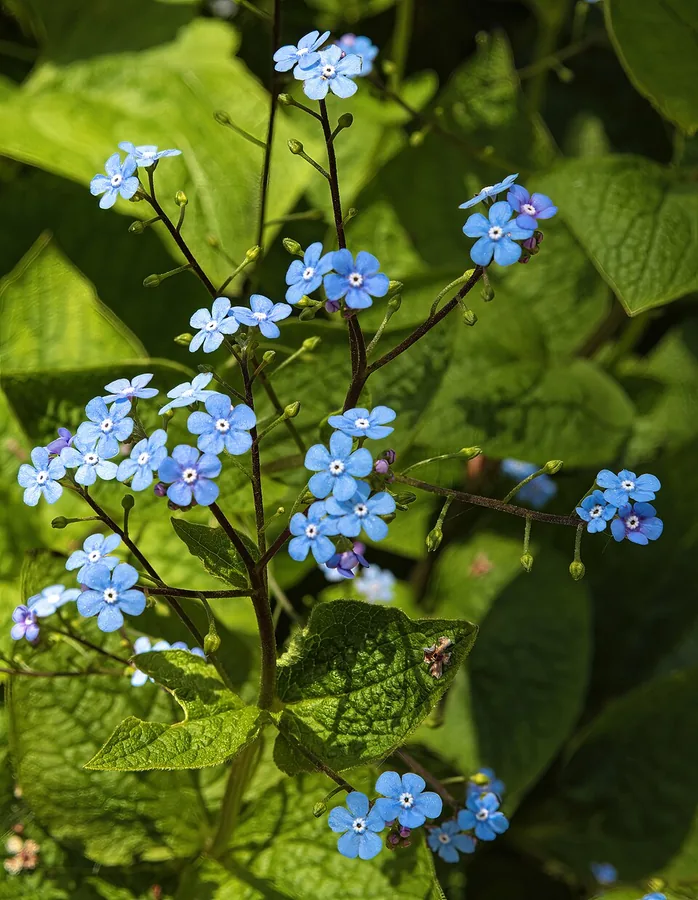
Brunnera is a forgiving friend for the shade, where its big heart-shaped leaves keep the show going long after the flowers fade. It belongs to the borage family, answers to Siberian bugloss, and forms a slow, clump-forming perennial that spreads gently from a creeping rhizome. Come early spring it sends up airy sprays of small blue flowers so like forget-me-nots that it earned the name false forget-me-not.
The leaves are what win most hearts. They're plain green on the species, but the favorite kinds wear silver frosting, bright veins, or soft creamy edges that catch what little light slips into a shady bed. The plant keeps low, around 12 to 18 inches (30 to 46 cm) tall, and slowly rounds out into a tidy mound that sits happily beside hostas and ferns.
Once it has settled, it asks very little of you. Brunnera wants shade, rich soil, and water it can rely on, and it cheerfully shrugs off deer and rabbits alike. The one thing it can't easily forgive is heat and drought, which brown the leaf edges and leave it looking weary by midsummer, though a cooler, shadier home soon sets it right.
Care
The short version: part to full shade out of the hot afternoon sun, soil kept evenly moist and never left bone dry, and rich ground topped with mulch to hold that moisture and keep the roots cool.
Light
Brunnera is a true shade plant, so treat it to part to full shade with shelter from the hot afternoon sun. Direct light scorches the leaves and drains their color, while a dappled spot beneath trees lets it look its best.
Water
Keep the soil consistently and evenly moist, because dry ground is the one thing Brunnera won't put up with. A layer of mulch holds that moisture in and keeps the roots cool, and it matters most through the heat of summer.
Soil
Give it fertile, organically rich loam that drains freely yet stays evenly moist. It happily takes a wide pH range, anywhere from 6.0 to 8.0, so most garden beds enriched with a little compost will suit it just fine.
Humidity
Everyday garden humidity is plenty, so there's no target number to chase. What does wear Brunnera down is hot, humid summers, the kind common in the deep South, where heat and moisture together tire the plant.
Feeding
Feed lightly through the growing season with a balanced fertilizer, or simply work compost and organic matter into the soil each spring. Rich ground keeps the foliage full, and that's most of what this easygoing plant ever asks for.
Pruning
Tidy away scorched or tattered leaves whenever they appear, and trim the spent flower stems once the blue blooms are done. In late fall or early spring, cut the old foliage right down to the ground so fresh growth can come through clean.
Size & spacing
Plants rise to about 12 to 18 inches (30 to 46 cm) tall and slowly widen 18 to 30 inches (46 to 76 cm) across. Give each clump that bit of room and it fills in into a neat, ground-covering mound you'll be glad to have.
When to plant
Brunnera lives on as a perennial, so once it's in the ground there's no yearly replanting to fret over. Settle new plants or divisions in spring or fall while the weather stays mild, then enjoy the blue flowers from early to mid-spring before the foliage carries the rest of the season.
Northern hemisphere
Southern hemisphere
Typical months for a temperate climate: start earlier in warm zones, later where spring frosts linger.
- Sow: Usually propagated by division rather than seed; sow indoors is not typical.
- Plant: Plant in spring or fall during mild weather to avoid heat or cold stress.
- Harvest: Blooms early to mid-spring (about April to May), sometimes into early summer.
Hardiness
USDA hardiness zones: 3–8
Temperature: down to -40°C
Troubleshooting
Brunnera asks for little and seldom causes worry, and when something does slip, it usually traces back to too much sun or too little water. Keep a gentle eye on the leaf edges and the foliage through high summer, since that's where trouble shows first. Match what you notice to the list below and step in early, and the plant bounces back happily.
Drooping, tired growth once the summer heat arrives
If your plant sulks in the heat, that's normal, since Brunnera finds hot, humid weather hard going, the sort that settles over the deep South and any place with warm summers. Offer it deep shade and steady water through the worst stretch, and pile on mulch to keep the roots cool and comfortable. It feels most at home in zones 3 to 8, so a cooler, shadier corner is the kindest help you can give.
Fix:
- Provide deep shade and consistent soil moisture in summer
- Mulch heavily to cool soil
- Grow in cooler microclimates or northern zones where possible
Leaf edges turning brown and crisp as the color fades
Don't worry if you spot this, it's just leaf scorch, and it simply means the plant caught too much hot sun or its soil dried out in the heat. Gently shift it to a spot in part to full shade where afternoon sun can't reach, keep the soil evenly moist, and tuck mulch around it to hold that moisture. Snip away the worst leaves and you'll soon see fresh ones rise to take their place.
Fix:
- Move or transplant to part to full shade with afternoon shade
- Keep soil consistently moist
- Mulch to cool and conserve soil moisture
- Remove badly scorched leaves to encourage fresh growth
Chewed openings in the foliage and shiny trails left behind
Take heart, those holes and shiny trails just mean slugs and snails found the cool, damp shade your Brunnera enjoys. Step out at dusk and lift them off by hand, which is easier than it sounds. Tidy up the wet mulch and leaf litter they shelter under, and if a few keep returning, a little iron phosphate bait will settle them.
Fix:
- Handpick slugs and snails in the evening
- Reduce excess moisture and remove debris hiding spots
- Use iron phosphate slug bait if needed
Toxicity
Here's reassuring news for pet owners and parents: Brunnera is not toxic. It doesn't appear on the ASPCA's list of plants dangerous to cats or dogs, and there's no known hazard to other animals or to people. You can plant it freely in a garden shared by pets and children and rest easy.
Safe for
People · Cats · Dogs · Horses · Rabbits · Livestock · Birds
Cats None
You can relax with a curious cat around, since Brunnera isn't on the ASPCA's toxic list and a sniff or a nibble won't harm them.
Dogs None
A dog that tastes a leaf is in no danger here, because the plant holds no toxin known to trouble them.
Horses Safe
Horses grazing nearby face no poisoning risk, so there's nothing to fear.
Rabbits Safe
Rabbits usually pass Brunnera by, and even a stolen bite leaves them perfectly fine.
Livestock Safe
Cattle, goats, and sheep can browse it safely, though it seldom catches their interest.
Birds Safe
Birds are quite safe around it, with no toxic seeds or foliage to give you pause.
People Safe
There's nothing toxic here to worry handlers or children, so it's gentle to grow around the family. It's an ornamental rather than food, so there's simply no need to eat it.
Varieties
Most gardeners grow Brunnera for its named foliage selections rather than the plain green species, and these are the ones you're most likely to meet and love.
Jack Frost
You'll know it by frosted silver leaves traced with green veins and a slim green rim, on a gentle plant of about 12 to 15 inches tall.
Looking Glass
Its heart-shaped leaves shine an almost solid metallic silver, with hardly a trace of green remaining.
Variegata
Broad creamy white edges frame its green leaves at roughly 12 to 15 inches tall, and they bring real cheer to a shady corner.
Alexander's Great
This generous variety grows large, lifting big silvered leaves veined and rimmed in green to about 12 to 18 inches.
How to propagate
Brunnera multiplies in the easiest way of all, by dividing a settled clump rather than fussing over seed, so it's a lovely place for a new gardener to start.
DivisionEasy
Divide clumps in early spring or fall. · Usually establishes within one growing season.
Making more Brunnera is wonderfully simple, thanks to its creeping rhizome. Lift an established clump in early spring or fall, ease the rhizomes apart with your hands, and replant the pieces, and each one settles in within a single growing season. Just one gentle reminder: patented cultivars can't be legally propagated, so glance at the name before you divide.
Myths
Brunnera is just another forget-me-not.
It's an easy mix-up, since the flowers really do look the part and one common name is false forget-me-not. Even so, Brunnera macrophylla stands apart as its own rhizomatous perennial in the borage family. Gardeners grow it for the big heart-shaped leaves, not as a true Myosotis, and that's where its charm lies.
Brunnera won't flower unless it gets a spot in full sun.
You can set that worry aside, because this is a shade lover at heart. It thrives in part to full shade with shelter from hot afternoon sun, and too much sun scorches the leaves rather than helping the flowers along.