Shrub · Cupressaceae
Creeping Juniper
Juniperus horizontalis
Hand it full sun and soil that drains freely, and this hardy evergreen carpet mostly takes care of itself.
Full sun
Every 10–21 days
USDA 3–9
6–18 in · 15–46 cm
Overview
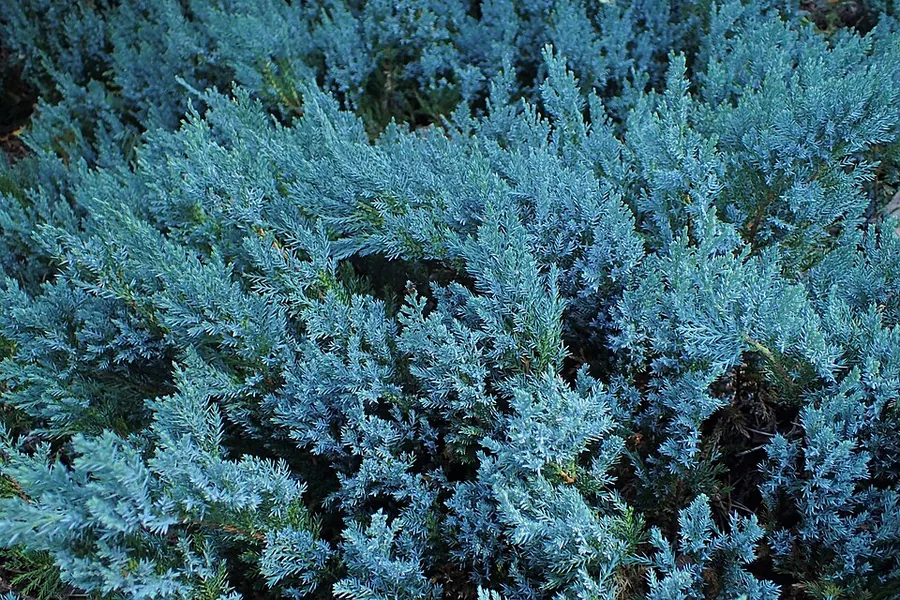
Creeping juniper is a low, mat-forming evergreen that hugs the ground and reaches out wide. It sits in the cypress family and grows wild through the cold northern stretches of North America, which is exactly why it brushes off winters as low as -40°F (-40°C). One plant can travel 4 to 8 feet (122 to 244 cm) across while barely topping a foot in height, so you get a lot of cover from very little.
Gardeners love it for slopes, rock gardens, and hot, dry banks where almost nothing else wants to grow. Once it has settled in it asks for next to nothing, taking poor sandy soil, salt, drought, and full sun completely in stride. Because the trailing branches root wherever they rest on the ground, the mat slowly weaves itself together for you, which is reassuring if you are new to this.
The one thing it truly cannot stand is wet feet. Plant it where water drains away fast, keep the spray off the foliage, and leave it room to breathe, and it will stay healthy and easygoing for decades. The only way to lose that toughness is to crowd it or sit it in soggy soil, and both of those are within your control.
Care
The short version: full sun, soil that drains fast, and very little water once it has settled in. Skip the rich beds and frequent watering, leave each plant space to spread, and let it dry out between drinks. It is hard to get wrong.
Light
Creeping juniper craves full sun, the more the better. Plenty of light keeps the mat thick and the color rich, while shade thins the foliage out and opens the door to the blight that loves damp, crowded growth. Sunny and simple.
Water
Once it has settled in this is a very drought tolerant plant that wants a drink only every 10 to 21 days, if that. Water deeply but seldom, let the soil dry between waterings, and keep the spray off the foliage, since damp leaves invite tip blight. Underwatering is far safer than overdoing it here.
Soil
More than anything, give it fast-draining soil, whether sandy, rocky, or on the poor side. It is comfortable across a broad pH range from 5.5 to 8.0 and copes with lean ground, but it simply cannot live in anything that stays wet.
Temperature
This is a remarkably tough evergreen, hardy from -40°F to 100°F (-40°C to 38°C). It takes bitter winters and scorching summers in its stride, which is why it earns its keep on exposed banks where gentler plants give up.
Humidity
Creeping juniper is happiest in low humidity with dry air moving around the foliage. Damp, stagnant air is what it dislikes, so the goal is never to add moisture but to open the plant up so air flows freely through it.
Feeding
Feeding is barely on the to-do list. A light balanced or slow-release fertilizer in spring only helps if growth has stalled, and a plant in average soil can carry on for years with nothing at all. One less thing to remember.
Pruning
Prune on a dry day to take out dead, diseased, or blight-killed tips, cutting several inches below the damage into healthy wood and wiping your blades clean between cuts. Thin the mat now and then to open it up and keep air circulating through the middle. The plant forgives a generous trim.
Repotting
It hardly ever needs repotting, and most plants happily spend their whole lives in the ground. If it is in a container, just keep an eye out for roots circling or pushing out the drainage holes, water rushing straight through, or growth that quietly stops.
Size & spacing
Plants stay low at 6 to 18 inches (15 to 46 cm) tall yet stretch 4 to 8 feet (122 to 244 cm) wide. Set them far enough apart to grow together over time without crowding, and that spacing alone keeps air moving and disease at bay.
When to plant
Creeping juniper goes into the ground in spring or early fall, while the soil is workable and the plant has time to root before harsh heat or a hard freeze. It puts out small cones in late spring, and the blue berry-like cones take two full seasons to ripen. There is no harvest to keep up with, so timing is really just about giving those roots a comfortable head start.
Northern hemisphere
Southern hemisphere
Typical months for a temperate climate: start earlier in warm zones, later where spring frosts linger.
- Plant: Spring or early fall
- Harvest: Inconspicuous cones in late spring; blue berry-like cones mature over two seasons
Hardiness
USDA hardiness zones: 3–9
Temperature: down to -40°C
Troubleshooting
Almost every juniper hiccup comes back to two things: foliage that stays damp and soil that holds water. Catch the early hints on the tips, the inner branches, and the roots, and you can step in long before a small patch spreads. Find your plant's symptom below, then act while it still does the most good. You have got this.
The whole plant thinning while its roots go brown
Soggy ground is usually behind Phytophthora root rot, where the roots shift from white to reddish-brown and the top of the plant slowly starves. No spray will undo it once the roots have gone, so don't waste effort there. Let the soil dry out, gently lift any plant that's badly affected, and replant it somewhere that drains freely. A mildly hit plant often pulls through.
Fix:
- Allow soil to dry out; mildly affected plants may recover
- Improve drainage by amending with organic matter or pine bark or planting in raised beds
- Remove and discard severely affected plants
- Replant with resistant species in well-drained sites
Tips fading and dying back from the very ends
Take a breath: this is tip blight, and it is something you can manage. Two fungi cause it when the foliage stays damp, with Phomopsis going for fresh spring and summer shoots and Kabatina turning up on older, wounded tips in late winter. Wait for a dry day, snip the dead tips off several inches down into healthy wood, and wipe your blades clean between cuts. Your plant will bounce back.
Fix:
- Prune out blighted tips in dry weather, cutting several inches into healthy wood
- Disinfect pruners between cuts with 10 percent bleach or 70 percent alcohol
- Discard or destroy infected prunings
- Apply a labeled fungicide preventively for Phomopsis as new growth emerges if pressure is high (no effective fungicide for Kabatina)
Speckled, dull foliage wrapped in fine webbing
Tiny yellow specks and delicate webbing usually mean spider mites, which multiply quickly on hot, dusty, stressed plants. They tend to peak in the cooler weeks of spring and fall, so that is when to watch. A strong jet of water knocks them loose, and you only need insecticidal soap or oil if they keep returning. This is a very fixable one.
Fix:
- Dislodge mites with a strong, regular spray of water
- Apply insecticidal soap, horticultural oil, or a miticide if needed
- Avoid broad-spectrum insecticides that kill mite predators
Spindly bags dangling from nibbled branches
Those hanging cases are bagworms, caterpillars that feed while tucked inside a silk bag woven from snippets of your juniper. Each bag is full of eggs that wait out the winter and hatch into the next generation, so removing them really pays off. Pick the bags off through winter and early spring, and treat any young larvae with Bt when they show up. Staying ahead of them is simple once you know the trick.
Fix:
- Handpick and destroy bags in winter and early spring to remove overwintering eggs
- Spray Bt or another labeled insecticide on young larvae in spring
Little white scales and a sticky film on the needles
Small white or gray bumps clustered on the needle undersides are juniper scale, sap-feeders that leave the foliage dull and tacky with honeydew. A dormant oil spray in late winter smothers them before they can get a foothold, which is the easiest moment to win. Catch the crawlers in spring with an insecticide and you will have it well in hand.
Fix:
- Apply horticultural oil as a dormant spray in late winter
- Treat crawlers with a labeled insecticide during the spring growth flush
Brown lumps sending out orange jelly horns in spring
Those odd galls are cedar-apple rust, a fungus that can only finish its life cycle with an apple or crabapple nearby. The hard brown lumps swell into bright orange tendrils during wet spring weather, which looks alarming but is easy to handle. Prune the galls away, and keeping junipers well clear of apples and crabapples stops the cycle for good.
Fix:
- Prune out and destroy galls
- Apply a labeled fungicide (mancozeb or propiconazole) if needed
- Avoid planting near susceptible apples or crabapples
Brown, dead branches tucked inside the mat
As the canopy fills in, the shaded center loses light and airflow, so the inner branches quietly die back while the outside stays a healthy green. Good news: this is about placement and density, not a disease. Thin the plant to open it up, clear the dead wood on a dry day, and give it full sun with a little breathing room. It responds well to a tidy.
Fix:
- Thin and prune to open up the canopy and improve air movement
- Remove dead interior branches in dry weather
- Site in full sun with adequate spacing
Toxicity
Creeping juniper is a comforting choice to keep around the home and garden. It does not appear on the ASPCA toxic-plant lists, and the worst it tends to cause is a mild stomach upset if a pet eats a lot of the scented berries or foliage. The likelier annoyance is the prickly foliage, which can scratch sensitive skin, so pop on gloves when you prune and you are good.
Safe for
People · Cats · Dogs · Horses · Rabbits · Livestock · Birds
Cats Caution
You can relax around cats here. A cat that munches a lot of the scented foliage or berries might get a slightly upset tummy from the volatile oils, so it helps to gently discourage nibbling, but there is no real danger.
Dogs Caution
A curious sniff poses no threat at all. If a dog eats a good amount of berries or foliage it may drool or have a short spell of vomiting and loose stool, and that settles down on its own.
Horses Caution
A nibbled sprig here and there is harmless, though the berries and resinous oils can unsettle a horse's gut in larger amounts, so simply keep them from grazing it heavily.
Rabbits Safe
Nothing to worry about with rabbits. The dense, prickly foliage holds little appeal for them, and they usually pass it by.
Livestock Safe
Cattle, goats, and sheep can share a pasture with it just fine, since the resinous, sharp foliage rarely tempts them to eat much.
Birds Safe
Completely fine for birds, which happily eat the blue cones and carry the seed off to new ground.
People Safe
Safe to plant and handle, and some juniper berries even season food as a spice. The prickly foliage can scratch sensitive skin, so slip on gloves before you prune and you are all set.
Aromatic foliage and berry-like cones may cause mild stomach upset if eaten in quantity; the prickly foliage can also irritate skin in sensitive people.
Varieties
Most creeping junipers in the trade are named cultivars picked for their foliage color and just how flat they spread. These are the ones you are most likely to come across.
Wiltonii (Blue Rug)
It lays down an exceptionally flat, ground-hugging carpet of silvery blue-green foliage.
Bar Harbor
A low, quick-spreading type with feathery blue-green foliage that warms to a mauve or purplish cast through winter.
Plumosa (Andorra)
Its mounded, soft gray-green foliage shifts to a clear plum-purple once cold weather arrives.
Mother Lode
A Wiltonii seedling, it wears golden-yellow foliage on the same very low, flat carpet.
Lime Glow
Its bright lime to golden foliage builds a low vase-shaped mound that picks up bronze tones in winter.
How to propagate
There are three ways to make more creeping juniper, and the one you choose comes down to how much patience you have and whether the new plants need to match the parent exactly. Pick the one that feels comfortable.
Stem cuttingsModerate
Late fall to winter using semi-hardwood cuttings · Several weeks to a few months to root
Cuttings are how you keep a named cultivar exactly like its parent. Take semi-hardwood cuttings from late fall into winter and dip them in rooting hormone, because juniper roots slowly and can need several weeks to a few months to settle in. Patience pays off here.
LayeringEasy
Spring through summer · One or more seasons
Layering simply works with what the plant already does, since the trailing branches root by themselves wherever they touch soil. Pin a low branch down from spring through summer and let it anchor for a season or more before you cut it loose. It is the most forgiving method to try first.
SeedDemanding
After cold stratification · Slow and variable, often a year or more
Seed is the long, slow route for the truly patient. It needs cold stratification first, then sprouts unevenly over a year or more, and the seedlings will not match a named cultivar. There is no shame in skipping this one.
Myths
Creeping juniper is poisonous and will badly hurt any cat or dog that brushes against or tastes it.
Juniperus is absent from ASPCA toxic-plant lists, and the plant is treated as non-toxic. The most that usually happens is a mild, short-lived stomach upset if a pet eats a lot of the scented foliage or berries, not anything truly harmful.
Junipers love rich, moist soil and grow better with regular watering.
This plant is made for dry ground and wants soil that empties quickly. Heavy, wet, or overwatered soil is exactly what triggers Phytophthora root rot, the single problem most likely to take it down.
Sources
- NC State Extension Gardener Plant Toolbox
- USDA Forest Service Fire Effects Information System (FEIS)
- Clemson Cooperative Extension Home and Garden Information Center
- Iowa State University Extension and Outreach
- Washington State University Hortsense
- Lady Bird Johnson Wildflower Center (Native Plant Information Network, University of Texas at Austin)
- ASPCA Animal Poison Control