Ornamental · Cleomaceae
Cleome
Cleome hassleriana
Sow it once in full sun and the spider flower rises tall, blooms until frost, and returns on its own.
Full sun
Every 5–10 days
55–90°F · 13–32°C
70–80 days
Overview
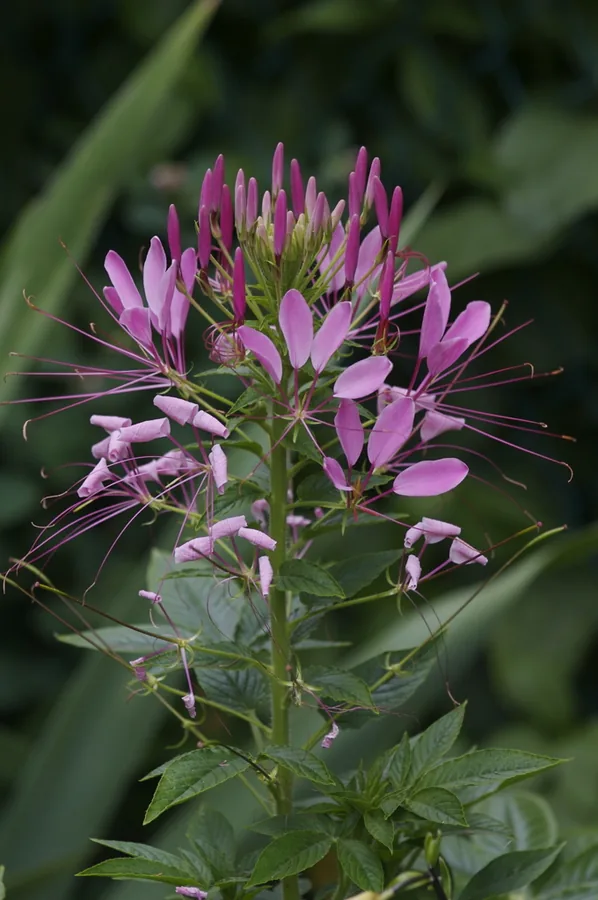
Cleome, the spider flower, is a tall garden annual that rewards you with airy, whiskered blooms crowning its stems all summer long. Each flower sends out long stamens and slim seed pods that splay like spider legs, and that is exactly where the name comes from. It climbs fast to 2 to 6 feet (60 to 180 cm) in one season, so it more than earns its place at the back of a bed.
This is a forgiving plant that asks very little of you. Give it full sun and ground that drains, and it takes heat, dry spells, and lean soil in stride where fussier flowers would falter. The one thing to know is that it self-sows eagerly, dropping seed that pops up as volunteers next spring unless you snip the spent pods.
Bees, butterflies, and hummingbirds visit the flowers from early summer until the first frost finally takes the plant down. The stems carry small prickles and the leaves give off a musky scent, so slip on gloves before you handle it, or simply choose one of the thornless, scentless selections instead.
Care
The short version: give it full sun, average well-drained soil, and only the occasional drink once it has settled in. Go light on the fertilizer, pinch young plants to keep them bushy, and deadhead the pods if you would rather skip the volunteers next year.
Light
Cleome wants full sun, 6 or more hours a day, to stand up straight and flower its best. It will put up with a little afternoon shade, but skimp on light and you get tall, floppy stems with far fewer blooms, so give it the sunniest spot you have.
Water
Keep the soil moist while plants are young, then ease right off once they are established, since cleome takes dry spells in stride. Water through a real drought and no more, because overwatering brings on the soft, leggy growth you would rather avoid.
Soil
Average, well-drained loam suits it best, though it manages clay or rocky ground just fine as long as water moves through. Aim for a pH of 6.0 to 7.0, and resist the urge to over-enrich poor soil, since lean ground keeps the plant nicely compact.
Temperature
Cleome loves warmth and grows happily between 55°F and 90°F (13°C to 32°C). It needs heat to get going and cannot survive a frost, so in cold-winter gardens it lives out a single cheerful season.
Humidity
Everyday outdoor humidity is no trouble, so there is nothing to chase here. What matters more is air circulation, because crowded, still plantings invite mildew and rust onto the leaves.
Feeding
Feed lightly through the growing season with a balanced fertilizer, about once a month at the very most. A heavy hand backfires and gives you a soft, leggy plant with weak stems, so when you are unsure, simply feed less.
Pruning
Pinch back the stem tips in early summer to coax the plant into bushier, branching growth. Deadhead or strip off the spent seed pods as the season goes on to keep the eager self-seeding in check.
Size & spacing
Plants reach 2 to 6 feet (60 to 180 cm) tall and spread 1 to 5 feet (30 to 150 cm) wide depending on the strain. Set them about 10 to 15 inches (25 to 38 cm) apart so air moves freely and mildew keeps its distance.
When to plant
Cleome is a warm-season annual that waits for heat and will not face a frost. You can start seed indoors in late winter or sow it straight into the ground once things warm up, then enjoy the bloom from early summer right through to the first frost.
Northern hemisphere
Southern hemisphere
Typical months for a temperate climate: start earlier in warm zones, later where spring frosts linger.
- Sow: 6 to 8 weeks before the average last spring frost
- Plant: After all danger of frost has passed and soil reaches 70 to 75°F; or direct sow then
- Harvest: Early summer until first frost
Hardiness
USDA hardiness zones: 10–11
Temperature: down to -1°C
Troubleshooting
Cleome is one of the most forgiving flowers you can grow, and nearly everything that goes wrong comes down to too much water, too little sun, or crowding. Find what you are seeing below, and the fix is usually a small, easy change to how you are growing it.
Stems shoot up tall and floppy with lots of leaf but few flowers
If you are seeing soft, leggy growth, take heart, because it is one of the easiest things to put right. The usual reasons are a little too much water or feed, or a spot that simply lacks sun. Ease off the watering and feeding, settle the plant where it gets full sun with 6 or more hours of light, and pinch the tips in early summer so it fills out lower down.
Fix:
- Reduce watering and feeding
- Site in full sun (6+ hours)
- Pinch back stem tips in early summer to force branching
A white powdery film or rusty spots show up on the leaves
When the weather turns hot and humid and plants sit close together, powdery mildew and rust can settle in, and it is nothing to worry over. Loosen the planting so air can move through, take off the worst of the leaves, and water down at the base so the foliage stays dry. Giving each plant 10 to 15 inches of room makes a real difference.
Fix:
- Improve air circulation
- Remove affected foliage
- Water at the base to keep leaves dry
New growth looks twisted and the leaves feel sticky
Little clusters of aphids, spider mites, or whiteflies like to gather on the tender new shoots, and the sticky film they leave is the telltale sign. A firm spray of water knocks most of them off, and you only need insecticidal soap if they really dig in. A happy, unstressed plant tends to recover from this on its own, so you have less to do than you might think.
Fix:
- Spray off with a strong jet of water
- Apply insecticidal soap if infestation is heavy
Holes and notches turn up chewed in the leaves
Those small holes usually point to flea beetles or cabbage budworm stopping by for a bite. Just pick off any caterpillars you spot by hand and let the plant carry on. Cleome is tough and rarely troubled by pests, so a healthy one in full sun grows right past a little nibbling.
Fix:
- Handpick caterpillars
- Tolerate minor damage as plants are generally pest-free
Toxicity
If you share your home with pets, you can breathe easy: cleome is non-toxic to cats, dogs, and horses, and the ASPCA records no cases of toxic ingestion. The only thing worth minding is the prickly stems and musky leaves, so keep a pair of gloves within reach when you handle the plant.
Safe for
People · Cats · Dogs · Horses · Rabbits · Livestock · Birds
Cats Safe
You can relax around a curious cat, since the ASPCA lists spider flower as non-toxic to them and a nibble does no harm. The one small thing to keep in mind is the prickly stems, and a cat will steer clear of those without any help from you.
Dogs Safe
There is no risk of poisoning for dogs around cleome, so you can let them share the garden freely. A dog that munches a lot of any plant might feel a touch queasy, but the leaves hold nothing that can actually hurt them.
Horses Safe
Horses are perfectly safe near cleome, which carries no known toxins. Its musky scent usually puts grazers off before they ever take a bite, so you have little to manage.
Rabbits Safe
Rabbits have nothing to fear from cleome and cannot be poisoned by it. Between the prickly leaves and the strong smell, they tend to wander off to tastier corners of the bed on their own.
Livestock Safe
Cattle, goats, and sheep can graze near cleome with no trouble at all. Nothing in the record points to toxic ingestion, and the musky foliage rarely tempts them in the first place.
Birds Safe
Birds in the yard or passing through are in no danger from cleome. The flowers welcome pollinators and hummingbirds, and later on the seed pods become a meal for the birds themselves.
People Safe
You can plant cleome with children nearby and rest easy, because no part of it is poisonous. Slip on gloves when you handle it, since the stems and leaves carry small prickles, and that is the whole of it.
Stems and leaves bear prickles/spines and the foliage has a pungent, musky scent; wear gloves when handling. Thornless cultivars exist. These are handling nuisances, not toxicity.
Varieties
Cleome comes in a handful of named strains that mostly differ in height, color, and whether they keep the usual thorns and scent. Here are the ones you are most likely to come across.
Helen Campbell
A well-loved heirloom whose fragrant, pure white flowers ride atop tall stems that reach 4 to 5 feet.
Queen series
The familiar 3 to 5 foot strain you will spot in rose, violet, pink, and white, offered as Rose Queen, Violet Queen, and the others.
Linde Armstrong
A neat 18 to 24 inch pink pick that kindly leaves behind both the thorns and the musky scent.
Senorita series
Thornless, odorless sterile hybrids raised from cuttings, so they flower all season without scattering seedlings around.
How to propagate
Cleome grows from seed alone, and the happy part is that it does most of the work itself once it takes to a spot.
SeedEasy
Start indoors 6 to 8 weeks before last frost, or direct sow after frost when soil is 70 to 75°F · Germinates in 7 to 14 days; blooms about 70 to 80 days after germination
Seed is the only way to grow cleome, and the good news is that seed is all you need. Start it indoors 6 to 8 weeks before your last frost, or take the easy road and sow it straight into warm ground once the soil reaches 70°F to 75°F (21°C to 24°C). Barely cover the seed, and look for sprouts in 7 to 14 days with flowers about 70 to 80 days later. A few strains like the Queen series come up better after 4 or 5 days of chilling in the fridge, and once a plant has settled in it quietly sows next year's crop for you.
Myths
Cleome is poisonous to cats and dogs.
You can set this worry aside, because the ASPCA lists spider flower as non-toxic to cats, dogs, and horses, with no records of toxic ingestion. What gets mistaken for danger is the prickly stems and the musky scent, and those are only handling nuisances. Cleome is safe to grow around pets and children.
Cleome has to be started indoors and transplanted to do well.
There is no need to fuss with it, since cleome dislikes having its roots disturbed and a transplant can sulk afterward. Sow the seed right into warm ground once frost has passed and it comes up happily on its own. Direct sowing often works as well as transplants, and a settled plant reseeds freely for you.