Ornamental · Saxifragaceae
Pigsqueak
Bergenia cordifolia
Tough, evergreen, and happy in the shade, bergenia blankets the ground and blooms when little else dares.
Partial shade
Every 5–10 days
USDA 3–8
12–18 in · 30–46 cm
Overview
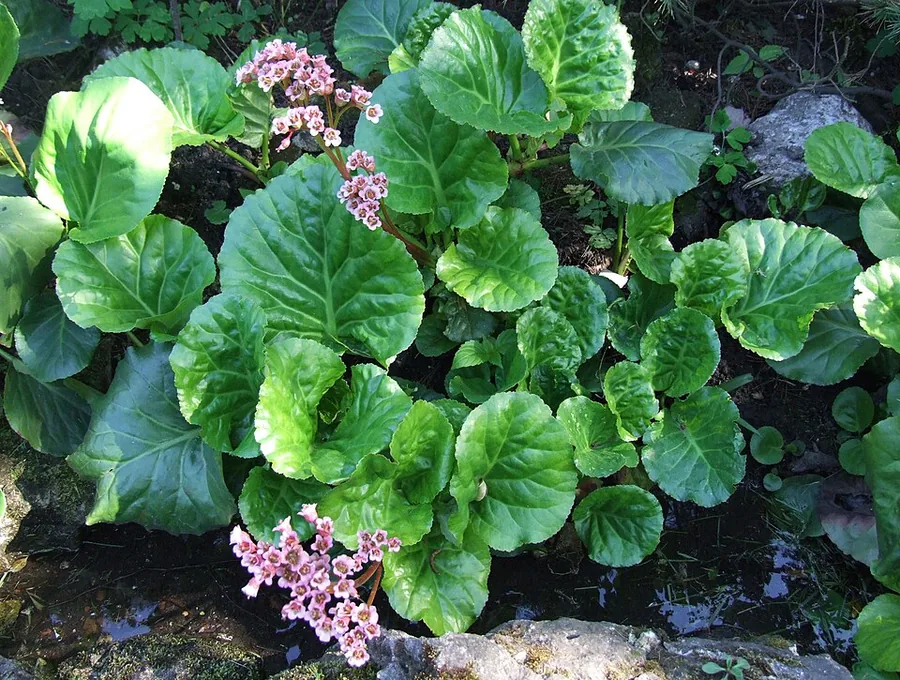
If you've never grown a groundcover before, bergenia is a wonderful place to start, and it earned the nickname pigsqueak from the funny sound its leaves make when you rub them. It sits in the saxifrage family and travels by thick rhizomes that weave together into a low, leafy mat. Those big, rounded, leathery leaves give it a second affectionate name, elephant's ears.
The best part is how hard it is to lose. It happily takes deep shade, handles sun wherever the soil stays moist, and rides out winters down to -40°F (-40°C) in the coldest zones, so an early mistake rarely sets you back. Deer and rabbits usually leave it alone, and serious pests and diseases hardly ever bother it.
Your reward comes early in the year. Clusters of pink, red, or purple flowers lift on stout stems in spring, sometimes as soon as winter in mild southern gardens. Many kinds also warm to a rich bronze or red as the cold arrives, so the leaves keep the planting looking cared for through the quiet season.
Care
The short version: part shade with steady moisture makes it happiest, though it forgives almost any spot you give it. Plant it in organically rich, well-drained soil, water it through dry spells, and divide the clumps every few years so they keep flowering.
Light
Bergenia is happiest in part shade, but it bends kindly to almost any light you offer. It takes full shade and full sun both, though in hot, sunny spots you'll want to keep the soil moist or the leaves can scorch.
Water
Aim to keep the soil consistently moist, especially through the first season and anywhere the sun is strong. Settled clumps shrug off short dry spells, so watering roughly every 5 to 10 days works well, and a little more often in full sun.
Soil
Average, organically rich, well-drained soil suits it nicely, and it gets on fine with sand, loam, or clay. It welcomes a wide pH from 5.5 to 8.0, so most garden ground works just as it is.
Temperature
This is a truly cold-hardy friend, holding on through winters as low as -40°F (-40°C) and taking summer heat up to about 86°F (30°C). Its evergreen leaves can look worse for wear after a harsh, windy winter, but the crown comes through just fine.
Humidity
Ordinary outdoor humidity is all it ever asks, so there's no figure you need to chase. Steady soil moisture matters far more to bergenia than anything happening in the air.
Feeding
Feed gently in spring with a balanced general-purpose fertilizer, or simply spread a little compost or leaf mold on top. One seasonal feeding is plenty for such an undemanding plant.
Pruning
Trim away damaged leaves in late winter to early spring so fresh growth can take their place, and snip off the spent flower stems as the blooms fade. That gentle yearly tidy is most of the care it needs.
Repotting
Out in the ground, lift and divide the clumps every 3 to 4 years once they crowd up or go hollow in the middle. Crowded woody clumps, bare centers, and weaker flowering are friendly little signals that it's time.
Size & spacing
Plants stay low at 12 to 18 inches (30 to 46 cm) tall and spread 9 to 24 inches (23 to 61 cm) across. That slow, mat-forming spread makes bergenia a reliable groundcover along the front of a shady bed.
When to plant
Bergenia holds its leaves all year and asks very little of you by the calendar, which is reassuring for a first-time grower. Plant it in spring or early fall, look forward to flowers in April and May, and tidy the winter-worn leaves once the new growth begins to show.
Northern hemisphere
Southern hemisphere
Typical months for a temperate climate: start earlier in warm zones, later where spring frosts linger.
- Sow: Late winter to early spring (seed is slow and variable; division is preferred)
- Plant: Spring or early fall
- Harvest: April to May (as early as December in warm southern climates)
Hardiness
USDA hardiness zones: 3–8
Temperature: down to -40°C
Troubleshooting
Bergenia rarely runs into real trouble, and whatever does turn up almost always shows on the leaves rather than the heart of the plant. Catch the early signs below and you can settle the cause before the planting looks rough. The crown is tougher than the foliage ever lets on, so you have room to recover.
Leaves looking pale or a little thin
When the foliage turns dull and sparse, it usually means hot, direct sun paired with too little water, and it gets worse once the soil dries right out. The good news is the fix is easy: shift the plant into afternoon shade if your summers are hot, and keep the ground evenly moist. A little compost worked in helps the soil hold water, and the color comes back.
Fix:
- Move to part or afternoon shade in hot climates
- Keep soil consistently moist and add organic matter
Tired, brown leaves once winter lets go
If the leaves come through the cold looking ragged, take heart: this is simple winter burn, where freezing wind dries out the evergreen foliage even while the crown below stays safe and sound. Sometimes frost lifts the crowns a little and adds to the worn look. Trim the battered leaves away in late winter and you can count on fresh ones rising from the base.
Fix:
- Cut back damaged foliage in late winter to early spring
- Allow fresh new growth to emerge from the crown
Toxicity
Here's some reassuring news if you share your home with animals: bergenia isn't known to be poisonous. It doesn't show up on the ASPCA toxic plant lists, and people have long brewed the leaves as Siberian tea. You can plant it around pets, livestock, and children and rest easy.
Safe for
People · Cats · Dogs · Horses · Rabbits · Livestock · Birds
Cats Safe
You can relax around a curious cat, since bergenia carries no reported toxin and a nibbled leaf should cause no harm. A really big mouthful of any plant might bring a touch of drooling or a brief tummy upset, and that passes.
Dogs Safe
Bergenia stays off the ASPCA dog list and isn't reported as poisonous, so a stray bite is nothing to worry over. The leaves are so leathery that most dogs walk right past them anyway.
Horses Safe
Nothing in this plant is known to harm horses, so you can plant it near them with an easy mind. They usually graze straight past the tough, glossy leaves.
Rabbits Safe
Rabbits can browse bergenia with no trouble at all, and it often turns up on lists of plants they leave be. Those thick leaves tend to stay untouched.
Livestock Safe
Cattle, goats, and sheep face no poisoning risk here, which is a real comfort near a pasture. The plant simply lacks the toxins that make some garden plants a worry around grazing animals.
Birds Safe
Backyard birds and poultry can be around bergenia in safety, because no harmful compound has ever been found in it. There's nothing here to fret about.
People Safe
The plant is gentle to handle, and its leaves have a long history brewed as Siberian tea. Even so, give your hands a wash after a session in the garden, just as a kind habit.
No special handling required; wash hands after gardening as a general practice.
Varieties
Most bergenias share the same rugged, easygoing habit, so the named types matter mainly for their flower color and their winter foliage. These three show up often and give you a sense of the range.
Winterglut (Winter Glow)
You get deep rosy-red flowers from this one, and then a lovely second show in winter when the leaves take on a bronzy-red glow.
Miss Piggy
Cheerful bubblegum-pink flowers sit on sturdy red stems above glossy leaves, giving this one more sparkle than the older kinds.
Abendglocken (Evening Bells)
Its reddish-purple, bell-shaped flowers give it the name, and the leaves warm to a soft reddish tone as the cold months come on.
Companions
Bergenia pairs best with other plants that like rich, moist shade, where its bold leaves play off finer foliage around them.
Plant near
Hosta: Shares preference for moist, part-shade woodland conditions and contrasts in leaf texture.
Brunnera macrophylla: Both are shade-tolerant groundcovers that thrive in rich, evenly moist soil.
Heuchera (coral bells): Companionable Saxifrage-family relative for the front of a shady border with complementary foliage.
How to propagate
Making more bergenia is genuinely simple, and dividing a settled clump is far and away the most dependable way to end up with new plants just like the one you already love.
DivisionEasy
Late winter to early spring (or early fall) · One growing season
Division is the friendliest way to make more bergenia, and it rarely lets you down. In late winter to early spring, or in early fall, gently lift a crowded clump and ease the thick rhizomes apart into pieces, leaving roots and a growing point on each. Each division settles in comfortably over a single growing season.
SeedModerate
Late winter to early spring · Slow; one or more seasons to reach flowering size
Seed is worth a try if you don't mind waiting. Sow in late winter to early spring and expect slow, uneven sprouting, with a season or more before the plants are big enough to flower. Named cultivars won't come true from seed, so divide those instead if you want an exact match.
Myths
Bergenia is dangerously poisonous and will burn a dog's mouth.
You can set that worry aside, because bergenia isn't on the ASPCA toxic plant database and isn't reported as poisonous to cats or dogs by trusted sources. The scary burning-mouth claims come from commercial plant-seller pages rather than careful toxicology references. Grown as the tough ornamental it is, it poses no known poisoning risk to pets.