Ornamental · Saxifragaceae
Rodgersia
Rodgersia aesculifolia
Keep its feet cool and damp, and rodgersia will hand you huge, hand-shaped leaves you can be proud of.
Partial shade
USDA 5–7
3–5 ft · 0.9–1.5 m
Overview
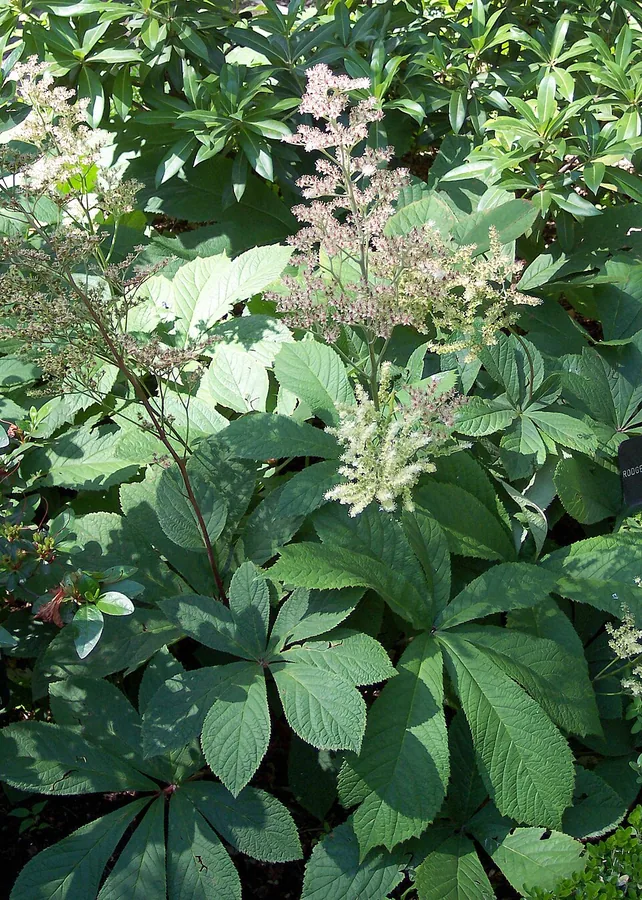
If you want a plant that makes a shady corner feel lush, rodgersia is a lovely place to start. It earns its keep with big, deeply cut leaves shaped like a horse chestnut's, broad enough to fill space that many plants leave bare. Come summer, tall branched flower heads rise above the foliage, looking a good deal like an astilbe.
Here is the reassuring part: rodgersia actually wants the damp, shady ground that frustrates so many perennials. A bog garden, the rim of a pond, a soggy low spot by a stream, or the cool north side of the house will all make it happy. It is tough and long-lived, so once it feels at home it will stay with you for years.
The one thing to watch is dryness, and even that is easy to manage. If the ground bakes, the leaf edges brown, but that is the plant asking for a drink rather than a sign you have failed. Keep the roots cool and moist and rodgersia will ask almost nothing more of you.
Care
The short version: give rodgersia a spot in part to full shade with rich, humusy soil that stays moist to wet, keep it from drying out, and feed it with a little compost through the growing season.
Light
Rodgersia is happiest in part to full shade, and the shadier the spot the better if your summers run hot. Strong afternoon sun is the main thing to avoid, since it scorches the leaf edges brown.
Water
This is the one to care about most, and it is simple. The soil needs to stay evenly moist to wet and never dry out, which is exactly why rodgersia loves bog gardens and the banks of ponds and streams. Let it get thirsty and the leaf margins brown within days, so a regular drink keeps it looking its best.
Soil
Plant rodgersia in rich, humusy soil full of organic matter, the sort that soaks up water and holds it. Aim for ground that stays moist to wet without turning into stagnant muck, so a touch of gentle drainage or moving water helps.
Temperature
Rodgersia is fully hardy and takes real winter cold, down to about -20°F (-29°C), while shrugging off summer warmth up to roughly 75°F (24°C). It feels most at home in cool, temperate gardens rather than hot, dry ones.
Humidity
You do not need to fuss over humidity at all, so there is no number to chase. What rodgersia truly wants is steady moisture at its roots, and the air around the leaves can look after itself.
Feeding
Mix a little compost or a balanced fertilizer into that rich soil during the growing season, and the plant will thank you. A yearly blanket of organic mulch feeds it and keeps the ground pleasantly damp at the same time.
Pruning
There is very little to do here. Snip off the spent flower stalks once the blooms fade, and tidy away any tattered or browned leaves through the season to keep the clump fresh and happy.
Size & spacing
Given time, rodgersia grows into a generous clump around 3 to 5 feet (91 to 152 cm) tall and just as broad. Leave it that full 3 to 5 feet (91 to 152 cm) of elbow room so the large leaves have space to open.
When to plant
There is no rush and no tricky timing to master. Set rodgersia outside in spring once frost has passed, choosing a cool, moist, part-shaded spot, and it will flower from June to August. After that it quietly fills out its clump a little more each year.
Northern hemisphere
Southern hemisphere
Typical months for a temperate climate: start earlier in warm zones, later where spring frosts linger.
- Sow: Sow seed in late winter to early spring; seed may need cool stratification.
- Plant: Plant outdoors in spring after frost in a moist, partly shaded site.
- Harvest: Blooms June to August with branched, astilbe-like panicles.
Hardiness
USDA hardiness zones: 5–7
Temperature: down to -29°C
Troubleshooting
Rodgersia rarely gives you much grief, and when something does show up it usually appears on the leaves. Dry soil, a few hungry slugs, or a little mildew cover almost all of it. Match what you see below, act gently, and the plant will bounce back.
Brown, crisping edges on the leaves
Those crisp brown edges are leaf scorch, and they nearly always mean the soil dried out or the sun grew too strong on the leaves. This plant likes to keep its roots cool and moist right through the day. Water so the ground stays damp, move it into a bit more shade, and tuck mulch around the crown to lock that moisture in.
Fix:
- Keep soil consistently moist
- Provide partial to full shade
- Mulch to conserve moisture
Chewed, ragged holes in the leaves
The damp shade rodgersia loves is also slug and snail heaven, and they graze ragged holes in those big leaves under cover of night. A few silvery slime trails will confirm who did it. Head out after dark to pick them off, put down baits or a copper ring, and clear the leaf litter they shelter under by day.
Fix:
- Hand-pick at night
- Use slug baits or barriers
- Reduce excess debris around plants
A powdery white film over the leaves
A powdery white film usually points to powdery mildew, which turns up most on crowded clumps or plants left thirsty. Take off the worst leaves, thin the clump so air can drift through it, and keep the soil evenly moist so the plant never runs short of water.
Fix:
- Improve air circulation
- Avoid drought stress
- Remove affected foliage
Toxicity
If you share your home with pets or little ones, you can relax here. Rodgersia is not known to be toxic, the ASPCA leaves it off its list of plants that harm cats and dogs, and no one reports trouble for other animals or people. Plant it freely and let the garden stay a place everyone can explore.
Safe for
People · Cats · Dogs · Horses · Rabbits · Livestock · Birds
Cats Safe
Cats are not poisoned by rodgersia, so a chewed leaf will not do real harm. A curious one might get a mild, passing bout of stomach upset from nibbling the foliage, and it clears up quickly.
Dogs Safe
Dogs are safe in the company of rodgersia, which holds no poison known to affect them. Like any coarse plant fiber, wolfing down a big mouthful of leaf could bring a short-lived tummy ache.
Horses Safe
No cases of rodgersia harming horses have been recorded, so they can graze beside it with nothing to fear.
Rabbits Safe
Rabbits are in no danger from rodgersia, and its large, rather coarse leaves are not a treat they seek out, so most simply hop past.
Livestock Safe
Cattle, sheep, and goats can graze a damp meadow or pond margin set with rodgersia, because it carries nothing toxic to them.
Birds Safe
Garden birds and backyard poultry have nothing to fear from rodgersia, whether they nibble the leaves or hunt for food in the moist soil at its base.
People Safe
People grow rodgersia for its foliage and blooms rather than the table, and it holds no poisoning risk for them. Children can play near it in the garden without any cause for concern.
Varieties
Only a handful of rodgersia types show up in gardens, each loved for a slightly different leaf or bloom. These two are the ones worth getting to know.
Rodgersia pinnata 'Superba'
This featherleaf form unfurls bronze-purple new leaves that mellow to green, then lifts rose-pink to red flowers all through summer.
Rodgersia podophylla
Its bold palmate leaves carry 5 lobes, and sometimes 7, stretch as wide as 16 inches across, and close the season in warm bronze-red.
How to propagate
Making more rodgersia is genuinely easy, mostly by splitting a clump you already have, and from seed too if you enjoy waiting for it.
DivisionModerate
Divide thick rhizomes in spring or early fall. · One to two growing seasons
Splitting a clump is the most reliable way to get more, and it is very forgiving. In spring or early fall, ease up a mature plant and slice the thick rhizomes into chunks, making sure each keeps a bud and a few roots. Settle the pieces back into rich, moist soil and give them one to two growing seasons to find their feet. Seed is an option too, and a contented plant will slowly widen on its own as the rhizomes creep outward.
Myths
Rodgersia must sit underwater like a true pond plant.
It certainly loves moisture, settling in happily in the moist to wet soil beside ponds and streams, but it is not an aquatic. Keep the soil dependably moist and it will never need to stand in stagnant, waterlogged mud.