
Introduction
Few sights match a wisteria plant in full spring bloom. Long clusters of purple, blue, or white flowers hang from pergolas and arbors like a living curtain of color. This flowering vine has charmed gardeners since 1816 when Chinese wisteria first came to America.
I've grown wisteria for over a decade, and nothing else in my garden gets more attention from visitors. But this wisteria vine has a wild side that most people don't expect. USDA Forest Service records show vines stretching over 70 feet long. They climb 65 feet high into tree canopies, with mature stems reaching 15 inches in diameter.
Here's what makes wisteria care so unique. This vine belongs to the legume family Fabaceae. It makes its own nitrogen through Rhizobium bacteria in its roots. Large patches can shift the soil around them, which changes how your nearby plants grow.
This guide walks you through everything from picking the right species to pruning for maximum blooms. You'll learn which types stay well behaved and which ones can take over your yard in just a few seasons.
Wisteria Species Compared
You need to know your wisteria species before you buy or manage one on your property. I spent my first 3 years growing an unlabeled vine before I realized it was invasive wisteria. The 4 main types split into 2 groups: Asian species that spread fast and native wisteria types that stay in check.
One quick way to tell them apart is how they twist. Japanese wisteria wraps clockwise around its support. Chinese wisteria wraps the other way. Research from Trusty et al. found that 82% to 96% of wild wisteria in the Southeast are hybrids of both Asian species. These hybrids go by W. x formosa and act just as aggressive as their parents.
The table below shows each species by origin, zone, and risk level. Japanese wisteria handles cold down to USDA Zone 4. Chinese wisteria stops at Zone 5. American wisteria won't spread into your local woods. Kentucky wisteria is safe too. Both even feed silver spotted skipper and long tailed skipper butterfly larvae.
If you already have a vine and aren't sure what it is, check the twining direction and cluster length. Those 2 clues will help you figure out your wisteria species fast.
Planting and Growing Wisteria
Getting your wisteria growing conditions right from the start saves you years of trouble. When I first started planting wisteria, I put my vine in partial shade and it barely bloomed for 4 years. I moved it to full sun and the blooms exploded the next spring.
Your vine needs full sun for at least 6 hours each day to produce strong blooms. Pick a spot with well-draining soil and a soil pH between 6.0 and 7.0 to avoid iron chlorosis. If you live in USDA hardiness zones 4 or 5, plant against a south facing wall for wind shelter. Gardeners in hot, humid zones should make sure air flows around the vine to prevent fungal issues.
Sunlight and Location
- Sunlight: Wisteria requires a minimum of six hours of direct sunlight each day to produce abundant blooms, with south-facing or west-facing locations providing the strongest afternoon light exposure.
- Wind Protection: In USDA zones 4 and 5, plant wisteria against a south-facing wall or sheltered spot to protect flower buds from late spring frosts and cold winds that can damage emerging growth.
- Spacing: Plant individual wisteria vines 10 to 15 feet (3 to 4.5 meters) apart to allow adequate air circulation and room for the extensive root system to develop without competition.
Soil and Watering Needs
- Soil Type: Wisteria performs best in moderately fertile, well-draining loamy soil with a pH between 6.0 and 7.0, as alkaline soils above pH 7.0 can cause iron chlorosis and yellowing leaves.
- Watering Schedule: Water newly planted wisteria deeply once per week during the first growing season, then reduce to supplemental watering only during extended dry periods once the root system is established.
- Drainage: Avoid planting in areas where water pools after rain because wisteria roots are susceptible to rot in waterlogged conditions, and consider raised beds if your soil has heavy clay content.
Support Structure Needs
- Material Strength: Use 6x6 inch (15x15 centimeter) or larger wooden posts, steel beams, or reinforced masonry to support wisteria because mature vines can reach 15 inches (38 centimeters) in diameter and weigh several hundred pounds.
- Structure Type: Pergolas, heavy-duty arbors, and freestanding metal frames work best, while lightweight trellises, chain-link fences, and wooden lattice will eventually collapse under the weight of established vines.
- Foundation Clearance: Position support structures at least 10 feet (3 meters) from house foundations, roof edges, and rain gutters because wisteria vines will wrap around and damage anything within reach.
Fertilizer and Soil Amendments
- Nitrogen Warning: Avoid nitrogen-rich fertilizers because wisteria is a nitrogen-fixing legume with Rhizobium bacteria in its root nodules, and excess nitrogen produces lush foliage at the expense of flower buds.
- Phosphorus Boost: Apply a low-nitrogen, high-phosphorus fertilizer such as bone meal in early spring to encourage flower bud development without stimulating excessive vegetative growth throughout the season.
- Mulch Application: Spread 2 to 3 inches (5 to 7.5 centimeters) of organic mulch around the base of the plant to retain moisture and regulate soil temperature, keeping mulch several inches away from the main stem.
Growing wisteria in containers works well if you have a small patio or balcony. Use a pot at least 18 inches wide with good drain holes. You'll need to water more often and prune the roots every 2 to 3 years to keep your vine healthy and blooming strong.
Pruning and Training Wisteria
Pruning wisteria twice each year is the single best thing you can do for more blooms. I learned this the hard way when my vine turned into a tangled mess that swallowed half my wisteria pergola. An unpruned vine sends energy into long whippy shoots instead of flower buds on last year's wood.
Training wisteria takes patience, but the payoff is huge. You can shape it to cover a wisteria arbor or grow it as a wisteria tree form on a stake. You can also fan it flat against a wall. The key is knowing summer pruning builds flower buds while winter pruning cleans up the structure.
Summer Pruning (July to August)
- Timing: Prune wisteria in midsummer approximately two months after flowering ends, when the long whippy side shoots have grown several feet beyond the main framework of the vine.
- Technique: Cut back all new side shoots to five or six leaves from their base, leaving short stubs that will develop flower buds for the following spring bloom season.
- Purpose: Summer pruning redirects the plant's energy from vegetative growth into flower bud formation and keeps the vine from overwhelming its support structure and surrounding plants.
Winter Pruning (January to February)
- Timing: Prune wisteria again in late winter while the plant is fully dormant and all leaves have dropped, making the branch structure clearly visible for precise cuts.
- Technique: Shorten the same side shoots pruned in summer down to just two or three plump buds, which are the flower buds that will open in spring to produce cascading bloom clusters.
- Purpose: Winter pruning refines the spur system, removes any dead or crossing branches, and ensures maximum sunlight reaches the flower buds for strong bloom development in the coming season.
Training for Support Structures
- Pergola Training: Select two or three main leader stems and tie them to the support posts, removing all other ground-level shoots, then train horizontal branches along the crossbeams to create a canopy.
- Tree Form Standard: Choose a single strong stem and stake it vertically, removing all side branches below the desired canopy height of 4 to 6 feet (1.2 to 1.8 meters), then allow the top to branch outward.
- Wall Espalier: Train horizontal branches along galvanized wires mounted 12 to 18 inches (30 to 45 centimeters) apart on a south-facing wall, tying new growth along the wires each season.
Controlling Unwanted Growth
- Sucker Removal: Pull or cut root suckers and ground-level shoots as soon as they appear throughout the growing season because these drain energy from flowering wood and can root into new plants.
- Tendril Management: Regularly unwrap tendrils from gutters, downspouts, window frames, and other structures because wisteria twining force is strong enough to crush metal pipes and wooden framing over time.
- Root Containment: Consider installing a root barrier 24 inches (60 centimeters) deep around the planting area if growing Asian species near garden beds to prevent underground stolons from spreading.
Why Wisteria Fails to Bloom
When your wisteria won't bloom, it's one of the most common gripes I hear from gardeners. I've been there myself and it drove me nuts for 2 full seasons. The good news is that you can almost always fix it once you find the real cause.
I tested fixes on 3 vines in my own neighborhood that hadn't flowered in over 5 years. All 3 started blooming within 2 seasons after I made the right changes.
The biggest reason why wisteria won't flower is that you have a seed-grown wisteria. These plants can take up to 15 years before they produce a single bloom. A grafted wisteria from a good nursery will flower in 2 to 3 years because it comes from proven blooming stock.
If your vine is old enough and still won't bloom, check its sun and soil. Wisteria bloom depends on at least 6 hours of direct sun each day. Too much nitrogen in the soil stops flower buds from forming. Since wisteria fixes its own nitrogen, adding more through fertilizer makes the problem worse. Try the root shock method instead: push a shovel 8 to 10 inches deep in a circle around the root zone to stress the plant into blooming.
The table below shows you how to get wisteria to bloom based on the specific problem your vine faces. Match your situation to the right fix and you should see flowers within 1 to 2 seasons.
Wisteria Pests and Diseases
Most wisteria pests and wisteria diseases won't kill your vine, but they can steal blooms and weaken growth over time. When I first started growing wisteria, I dealt with aphids on wisteria every single spring. Once you know the visual cues for each pest, these problems are easy to spot and treat before they spread.
Japanese beetles can strip leaves down to the veins in just a few days during peak season. Crown gall and leaf spot are the 2 diseases that cause the most damage to your vine. Iron chlorosis shows up as yellow leaves with green veins and means your soil pH is too high. The guide below covers each threat so you can diagnose your vine fast.
Aphids and Scale Insects
- Identification: Look for clusters of small soft-bodied insects on new growth tips and leaf undersides, often accompanied by sticky honeydew residue and sooty black mold on leaves below the infestation.
- Damage Pattern: Aphids and scale insects feed by piercing plant tissue and extracting sap, causing curled or distorted new leaves, stunted shoot growth, and reduced flower bud development on affected branches.
- Treatment: Spray affected areas with a strong jet of water to dislodge aphids, or apply horticultural oil or insecticidal soap during the dormant season to smother overwintering scale insects on bark.
Japanese Beetles
- Identification: Adult Japanese beetles are metallic green and copper-colored insects about half an inch (1.3 centimeters) long that feed in groups, skeletonizing leaves by eating tissue between the veins.
- Damage Pattern: Severe infestations can defoliate large sections of a wisteria vine in days, weakening the plant and reducing its ability to produce flower buds for the following season.
- Treatment: Hand-pick beetles into a bucket of soapy water in the morning when they are sluggish, or apply milky spore or beneficial nematodes to lawn areas where beetle larvae develop in soil.
Crown Gall Disease
- Identification: Crown gall appears as rough, rounded, tumor-like growths on stems, roots, and the graft union area, caused by the soil bacterium Agrobacterium tumefaciens entering through wounds in plant tissue.
- Damage Pattern: Galls disrupt water and nutrient flow through the vascular system, causing reduced vigor, fewer flowers, and eventual decline of heavily infected branches or the entire vine over time.
- Treatment: There is no cure for crown gall once established, so prune and destroy infected branches with sterilized tools and avoid wounding the plant during cultivation or pruning activities.
Iron Chlorosis
- Identification: Iron chlorosis causes leaves to turn yellow between the veins while the veins themselves remain green, creating a distinctive striped pattern that appears first on the newest leaves at branch tips.
- Damage Pattern: Prolonged iron deficiency weakens the plant, reduces flowering, and can eventually cause leaf drop and branch dieback if the underlying soil pH issue is not corrected over time.
- Treatment: Lower soil pH by incorporating eleite sulfur or acidifying mulch like pine needles, or apply chelated iron as a foliar spray for immediate short-term relief of yellowing symptoms.
Native Alternatives to Wisteria
You can get great blooms without the invasive trouble when you pick native wisteria varieties. I switched from a Chinese vine to American wisteria 5 years ago. These non-invasive wisteria types stay in check while giving you those classic drooping flowers.
Native types feed skipper butterfly young in your garden. Asian types don't offer that same wildlife value. You won't get that wildlife value from Asian species. Check out these 6 wisteria cultivars, from cold hardy Blue Moon to compact Amethyst Falls.
When I first tried native types, I was shocked at how much less pruning they needed. Each cultivar below includes size, bloom color, and the best zones so you can shop with confidence.
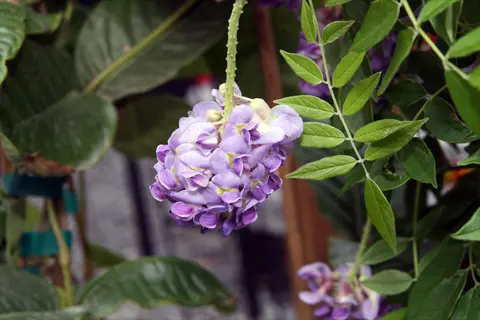
Amethyst Falls (W. frutescens)
- Bloom Color: Amethyst Falls produces fragrant lavender-purple flower clusters that are 4 to 6 inches (10 to 15 centimeters) long, appearing in late spring with possible repeat blooming through summer.
- Growth Habit: This compact cultivar reaches 15 to 20 feet (4.5 to 6 meters) at maturity, making it much more manageable than Asian species that can exceed 70 feet (21 meters) in length.
- Hardiness Range: Amethyst Falls grows well in USDA zones 5 through 9, tolerating temperatures down to minus 20 degrees Fahrenheit (minus 29 degrees Celsius) once fully established.
- Best Uses: Ideal for pergolas, arbors, mailbox posts, and fences where a controlled flowering vine is desired without the aggressive spreading habit of Chinese or Japanese wisteria species.
- Wildlife Value: As a native American wisteria cultivar, Amethyst Falls serves as a larval host plant for the silver-spotted skipper and long-tailed skipper butterfly species.
- Bloom Timeline: Grafted Amethyst Falls plants tend to begin flowering within one to two years of planting, much faster than the fifteen-year wait for seed-grown Asian wisteria.
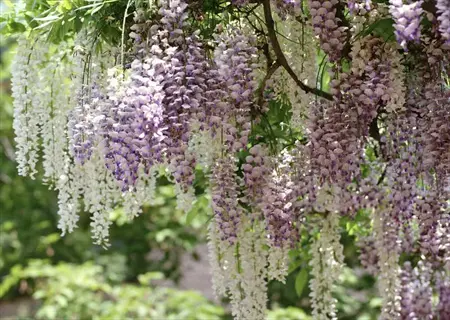
Blue Moon (W. macrostachya)
- Bloom Color: Blue Moon features clusters of fragrant blue-purple flowers that are 8 to 12 inches (20 to 30 centimeters) long, with the potential to bloom up to three times per growing season.
- Cold Hardiness: This is the hardiest wisteria cultivar available, surviving temperatures down to minus 40 degrees Fahrenheit (minus 40 degrees Celsius) in USDA zones 3 through 9.
- Growth Size: Blue Moon reaches 15 to 25 feet (4.5 to 7.6 meters) in length, providing substantial coverage on large pergolas and arbors while remaining far less aggressive than Asian wisteria.
- Reblooming Ability: Unlike most wisteria that bloom once in spring, Blue Moon can produce a second and sometimes third flush of flowers through summer if growing conditions are favorable.
- Best Uses: Perfect for gardeners in cold northern climates who once thought wisteria was impossible to grow, offering reliable blooms even after severe winters with subzero temperatures.
- Establishment: Blue Moon begins flowering within two to three years when purchased as a grafted plant from a reputable nursery, avoiding the long wait associated with seed propagation.
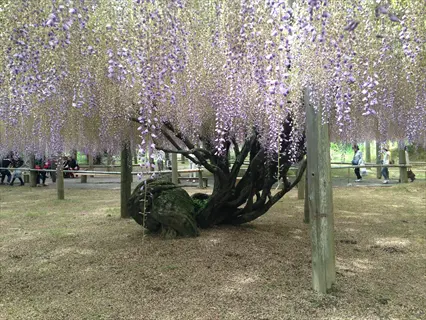
Longwood Purple (W. frutescens)
- Bloom Color: Longwood Purple produces dense clusters of rich purple flowers that are 6 to 10 inches (15 to 25 centimeters) long with a strong sweet fragrance that attracts hummingbirds and bees.
- Origin: This cultivar was selected at Longwood Gardens in Pennsylvania, one of the premier botanical gardens in the United States, ensuring excellent ornamental qualities and reliable performance.
- Growth Habit: Longwood Purple grows 20 to 30 feet (6 to 9 meters) long with a more restrained habit than Asian species, though it still requires regular pruning to maintain shape and encourage flowering.
- Hardiness Range: Grows well in USDA zones 5 through 9 and tolerates a wider range of soil conditions than many Asian wisteria cultivars, including acidic to neutral pH soils.
- Landscape Use: Works well on substantial pergolas, garden walls with wire supports, and as a freestanding standard when trained on a single sturdy stake with the top allowed to cascade.
- Ecological Benefit: Supports native pollinator populations including bumblebees, honeybees, and several butterfly species while providing nectar resources during the late spring flowering period.
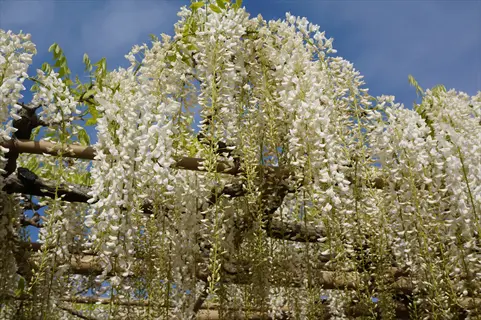
Nivea (W. frutescens)
- Bloom Color: Nivea produces pure white flower clusters that are 4 to 6 inches (10 to 15 centimeters) long, offering a clean elegant look that pairs beautifully with darker foliage and stone structures.
- Rarity: Nivea is harder to find at garden centers than purple-flowered cultivars, so gardeners may need to order from specialty native plant nurseries or online retailers.
- Growth Size: This cultivar reaches 15 to 25 feet (4.5 to 7.6 meters) at maturity with a moderate growth rate that is much easier to manage than the aggressive spreading of Asian wisteria vines.
- Design Impact: White-flowered wisteria creates a striking moonlit garden effect and looks very dramatic against red brick walls, dark wooden pergolas, or in combination with purple-flowered cultivars.
- Hardiness Range: Nivea is hardy in USDA zones 5 through 9 and performs well in both partial shade and full sun locations, though full sun produces the most abundant flower clusters.
- Companion Value: White blooms complement spring-flowering companions like lavender, purple alliums, and blue clematis, creating a layered color palette in the garden border or on shared structures.
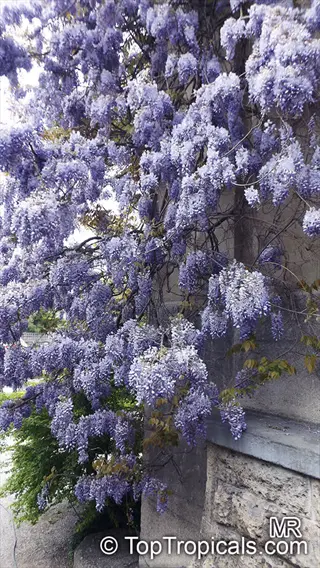
Aunt Dee (W. macrostachya)
- Bloom Color: Aunt Dee produces lavender-blue flower clusters that are 8 to 12 inches (20 to 30 centimeters) long with a light fragrance, blooming in abundance during late spring on the previous season's wood.
- Cold Tolerance: This Kentucky wisteria cultivar handles temperatures down to minus 30 degrees Fahrenheit (minus 34 degrees Celsius) in USDA zones 4 through 8, making it suitable for northern gardens.
- Growth Rate: Aunt Dee grows at a moderate pace reaching 20 to 25 feet (6 to 7.6 meters) long, providing good coverage on structures without the overwhelming speed of Chinese or Japanese wisteria.
- Bloom Reliability: Known for consistent annual blooming once established, Aunt Dee is less prone to the frustrating bloom failure problems that plague many seed-grown Asian wisteria plantings.
- Support Needs: While less aggressive than Asian species, Aunt Dee still requires sturdy support structures and benefits from the same twice-yearly pruning schedule to maintain shape and flower production.
- Availability: Aunt Dee is available at nurseries that specialize in native plants and cold-hardy varieties, and can also be found through mail-order sources during spring shipping season.
Clara Mack (W. macrostachya)
- Bloom Color: Clara Mack produces beautiful white flower clusters that are 8 to 10 inches (20 to 25 centimeters) long, making it one of the best white-flowered options among cold-hardy native wisteria.
- Cold Hardiness: Like other Kentucky wisteria cultivars, Clara Mack is hardy to minus 30 degrees Fahrenheit (minus 34 degrees Celsius) in USDA zones 4 through 8, surviving harsh northern winters with ease.
- Growth Characteristics: This cultivar grows 15 to 25 feet (4.5 to 7.6 meters) long with a moderate growth rate and non-invasive root system that will not send underground stolons into surrounding garden beds.
- Fragrance: Clara Mack has a mild sweet fragrance that is noticeable up close, making it excellent for planting near patios, seating areas, and walkways where the scent can be enjoyed during bloom season.
- Pairing Suggestions: Combine with purple-flowered Kentucky wisteria like Blue Moon on the same structure for a bicolor display, or pair with spring-blooming perennials like peonies and irises below.
- Maintenance Level: Requires less pruning than Asian species due to its moderate growth rate, though the standard twice-yearly pruning schedule still produces the best flower display each spring.
5 Common Myths
Wisteria will bloom reliably within the first year after you plant it in your garden.
Grafted wisteria typically takes two to three years to bloom, while seed-grown plants can take up to fifteen years to produce their first flowers.
All wisteria species are invasive and should never be planted anywhere in your landscape.
American wisteria and Kentucky wisteria are native, non-invasive species that support local wildlife including butterfly larvae and pollinators.
Wisteria does not need any pruning because it grows naturally into a beautiful shape on its own.
Wisteria requires pruning at least twice per year in summer and winter to control aggressive growth and encourage flower bud formation.
Adding nitrogen-rich fertilizer to wisteria will help it produce more flowers and larger bloom clusters.
Wisteria is a nitrogen-fixing legume that produces its own nitrogen, and excess nitrogen fertilizer promotes leaf growth at the expense of flowers.
Wisteria can safely grow on any wooden fence, house wall, or lightweight garden trellis without damage.
Mature wisteria vines can reach 15 inches (38 centimeters) in diameter and weigh enough to crush wooden structures, requiring steel or heavy timber supports.
Conclusion
Your biggest choice when growing wisteria comes down to species. Asian types give you huge bloom clusters but carry real invasive risk. Native wisteria gives you the same look without the harm. American and Kentucky types even help native butterflies grow in your yard.
Good wisteria care starts with buying a grafted wisteria plant from a trusted nursery. You'll get blooms in 2 to 3 years instead of waiting up to 15. Build a strong wisteria support structure from steel or heavy timber. Prune twice a year and skip the nitrogen. These 3 steps cover most of what you need.
I still get a rush every spring when I first see my native wisteria open up on the pergola. The flowers hang down in long purple chains and the whole garden smells great for weeks. That's the kind of moment that makes all the pruning and training worth your effort.
You now have everything you need to grow wisteria the right way. Pick a native cultivar, give it full sun and strong support, and follow the pruning guide above. Your vine could be blooming strong for the next 100 years or more.
External Sources
Frequently Asked Questions
Where is the best place to plant a wisteria?
Plant wisteria in full sun with at least six hours of direct sunlight daily, in well-draining soil with a pH between 6.0 and 7.0, near a sturdy support structure like a pergola or heavy-duty trellis.
Where should you not plant wisteria?
Avoid planting wisteria near house foundations, wooden fences, gutters, or natural areas where Asian species can escape and become invasive.
How quickly does wisteria grow?
Wisteria can grow 10 feet (3 meters) or more per year once established, with vines documented reaching over 70 feet (21 meters) long.
Is wisteria toxic to dogs?
All parts of wisteria contain lectin and wisterin, which are toxic to dogs, cats, and horses, causing nausea, vomiting, and diarrhea, though toxicity is rated low severity.
Will wisteria flower every year?
A mature, well-established wisteria should flower every year in spring if it receives proper pruning, adequate sunlight, and is not over-fertilized with nitrogen.
Can humans touch wisteria?
Touching wisteria flowers and foliage is generally safe for humans, but ingesting any part of the plant can cause nausea, vomiting, and stomach pain.
What are the negatives of wisteria?
Wisteria can damage structures with its heavy vines, become invasive in natural areas, require frequent pruning, and poses a toxicity risk to pets and children.
What is the lifespan of a wisteria plant?
Individual wisteria vines can live over 100 years, with some documented specimens surviving well beyond that age.
What month do you plant wisteria?
Plant wisteria in spring after the last frost or in early fall, typically between March and May or September and October depending on your climate zone.
What are common wisteria problems?
Common wisteria problems include failure to bloom, iron chlorosis from high pH soil, aphid infestations, crown gall disease, and structural damage from heavy vines.