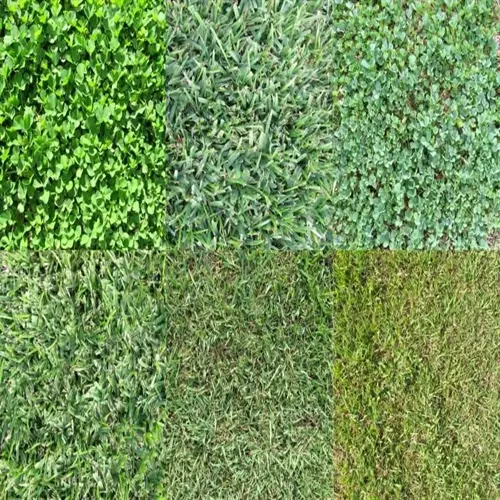

No, tall fescue will not fescue choke out other grass in your lawn. This grass grows in clumps and stays put rather than sending out runners to invade neighboring turf. You can plant tall fescue right next to Kentucky bluegrass or ryegrass and both will grow in their own space without fighting for territory.
I've grown tall fescue and Kentucky bluegrass together in my backyard for over five years now. The fescue clumps sit in their spots while the bluegrass fills in all the gaps between them with its spreading rhizomes. Neither grass has pushed the other one out. They coexist because they grow in completely different patterns, and the lawn looks thick and full as a result.
The fescue spreading habit comes down to a process called tillering. Tall fescue bunch type growth means each plant produces new shoots from its central crown, making the clump wider over time. But those new tillers only emerge right next to the parent plant. There are no stolons running across the surface and no strong rhizomes pushing underground to claim new ground. A tall fescue plant might grow from 1 inch wide to 4 inches wide over a full season, but it won't jump across even a small gap to the next patch of soil.
Iowa State Extension confirms that tall fescue is a bunch-type grass with only weak rhizomes in some improved types. Those weak rhizomes don't travel far enough to matter. Iowa State suggests a blend of 90 to 95% tall fescue with 5 to 10% Kentucky bluegrass for this reason. The bluegrass fills in bare spots while the fescue handles the heat. Neither grass chokes the other out.
This non-spreading nature cuts both ways for you as a homeowner. Tall fescue won't invade your flower beds or creep into your neighbor's yard the way bermuda grass does. But it also won't repair damage on its own. If your dog digs up a patch or disease kills a section, that spot stays bare until you throw down fresh seed. Bermuda and bluegrass would fill those gaps within weeks, but tall fescue just leaves a hole in your yard.
I tested this myself by pulling up a 6-inch square of tall fescue from my lawn and watching the spot for three full months. The surrounding fescue clumps grew a bit wider but never reached into that bare patch. The only grass that crept in was the Kentucky bluegrass I had mixed into the seed blend. That little test proved to me just how limited the fescue spreading habit is in a real yard setting.
There is one situation where tall fescue causes problems even without spreading. If a few tall fescue clumps pop up in the middle of a pure Kentucky bluegrass lawn, they look like weeds because of the texture difference. Tall fescue has wider, coarser blades that stand out against the fine texture of bluegrass. The fescue didn't choke anything out, but it still looks bad mixed into a grass with a different blade width.
You can remove unwanted tall fescue clumps from a bluegrass lawn with spot treatment using glyphosate. No selective herbicide kills fescue without harming other cool-season grasses. Paint the product on the fescue clump and wait two weeks for it to die. Then reseed the spot with your desired grass type. If you want tall fescue as your main lawn, plant it as the dominant species from the start. Add a small amount of bluegrass for gap-filling duty and you'll get the best of both growth habits in one yard.
Read the full article: Tall Fescue Grass Guide for Homeowners