
Introduction
Kentucky bluegrass is the top lawn grass in the United States based on Penn State Extension data. This cool-season grass grows in every U.S. state and Canadian province. It earned that reach through decades of strong results on front lawns, sports fields, and horse farms.
I spent over 15 years growing and managing Poa pratensis across three climate zones. Most lawn care guides only scratch the surface of what this grass can do and where it creates real problems.
Kentucky bluegrass is to American lawns what oak trees are to forests. It runs deep in the culture even when its root system stays near the surface. With over 200 cultivars on the market, the right pick for your yard or pasture matters more than most people think.
This lawn care guide covers cultivar picks and seasonal tasks. You also get sections on forage value and ecological impact. Make smart choices for your yard, farm, or native prairie with data from top sources.
10 Popular Cultivars
You face over 200 bluegrass varieties at the garden center and most look the same on the bag. I tested dozens of Kentucky bluegrass cultivars on my own lawn. Here are 10 picks that cover your main options.
These cultivars fall into three main groups. Elite turf types like the Midnight cultivar give you the darkest color and finest texture. Common types cost less and fill in faster. Only 3 forage varieties hit the market in the past 45 years, so turf-type bluegrass owns the shelf space.

Midnight
- Category: Elite turf type known for producing one of the darkest green lawn colors available in any Kentucky bluegrass variety on the market today.
- Shade Tolerance: Performs better than most Kentucky bluegrass cultivars in partial shade conditions of two to six hours of direct sunlight per day.
- Disease Resistance: Shows strong resistance to leaf spot and summer patch, two of the most common fungal diseases that affect Kentucky bluegrass lawns.
- Best Use: Ideal for homeowners who want a premium, dark-colored front lawn that stands out from neighboring yards with lighter grass varieties.
- Growth Habit: Produces a dense, low-growing turf with fine leaf texture that creates a carpet-like appearance when mowed at 2 to 3 inches (5 to 7.5 centimeters).
- Consideration: Slower to establish from seed compared to common types, often taking a full growing season to reach its characteristic dense coverage.
Park
- Category: One of only three forage-type Kentucky bluegrass varieties released in the past 45 years, making it a proven choice for pasture applications.
- Forage Value: Produces higher biomass than turf-type cultivars, with crude protein levels exceeding 20% in early spring leaf growth.
- Establishment: Germinates and establishes faster than most elite turf types, making it a practical option for large-scale seeding projects on farms and ranches.
- Best Use: Recommended for pastures, roadsides, and erosion control areas where turf appearance matters less than ground coverage and livestock nutrition.
- Growth Habit: Grows taller and more open than turf types, reaching 6 to 36 inches (15 to 91 centimeters) when left unmowed in pasture settings.
- Consideration: Produces a coarser, less uniform lawn appearance compared to elite turf cultivars, so it is not the top pick for formal residential landscapes.
Ginger
- Category: Forage-type cultivar bred for improved palatability and nutritional content in livestock grazing systems across northern climates.
- Forage Value: Delivers strong spring growth that contributes to nearly 70% of annual forage production by early June in northern states like Pennsylvania.
- Cold Hardiness: Rated high for winter survival, thriving in USDA hardiness zones 3a through 6b where harsh winters eliminate less hardy grass species.
- Best Use: Well suited for horse farms and cattle operations that need a durable, nutritious pasture grass that recovers well after grazing rotations.
- Growth Habit: Spreads through rhizomes, filling in bare spots and forming a dense sod that holds up under moderate to heavy livestock traffic.
- Consideration: Requires fertility management including phosphorus and potassium applications to maintain peak forage production and carrying capacity on working farms.
Troy
- Category: The third forage-type cultivar released alongside Park and Ginger, completing the short list of varieties bred for agricultural grazing use.
- Forage Value: Produces consistent spring and early summer growth that supports livestock nutrition during the peak grazing months from April through June.
- Adaptability: Performs well in a wide range of soil conditions with a pH tolerance from 5.8 to 8.2, broader than many turf-type cultivars require.
- Best Use: Recommended for mixed pasture seedings where Kentucky bluegrass is combined with other grasses to extend the grazing season beyond early summer.
- Growth Habit: Develops a moderate rhizome network that provides good ground coverage without the aggressive spread that can crowd out companion forage species.
- Consideration: Like other forage types, Troy lacks the fine texture and density of turf cultivars, making it unsuitable for formal lawn applications.

Compact-Midnight
- Category: Elite turf type that combines the dark color genetics of the Midnight family with a more compact, lower-growing plant structure for refined lawns.
- Disease Resistance: Offers improved resistance to dollar spot and necrotic ring spot compared to older cultivars, reducing the need for fungicide applications.
- Density: Produces a tight turf canopy that crowds out weed seedlings on its own, reducing the reliance on herbicide treatments over time.
- Best Use: Premium choice for golf course fairways, athletic fields, and residential lawns where color and density are the top priorities.
- Growth Habit: Maintains a low profile with shorter internodes, meaning it stays neater between mowings and requires less frequent cutting than taller cultivars.
- Consideration: Seed can be hard to find and costs more than common cultivars, so budget buyers may need to plan purchases ahead of the fall seeding window.
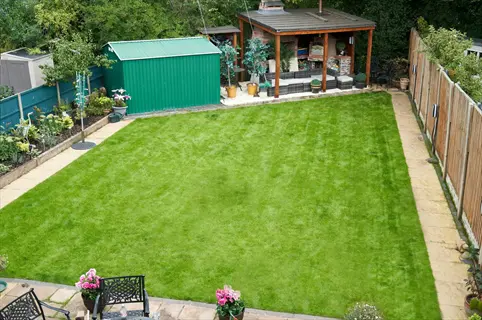
Bewitched
- Category: Elite turf type from the BVMG breeding group, developed for improved heat tolerance in transition zone climates across the mid-Atlantic region.
- Heat Tolerance: Handles warmer summer temperatures better than many standard Kentucky bluegrass cultivars, extending the viable growing range into USDA zone 7b.
- Disease Resistance: Shows strong resistance to summer patch, the disease NC State Extension identifies as one of the most damaging to Kentucky bluegrass lawns.
- Best Use: A strong option for homeowners in the transition zone where summers push the limits of what cool-season grasses can handle on their own.
- Growth Habit: Produces medium-fine leaf blades with a rich green color that holds well into summer even as temperatures climb above 80°F (27°C).
- Consideration: Performs best when blended with other elite cultivars to balance strengths, as no single cultivar excels in every possible lawn condition.
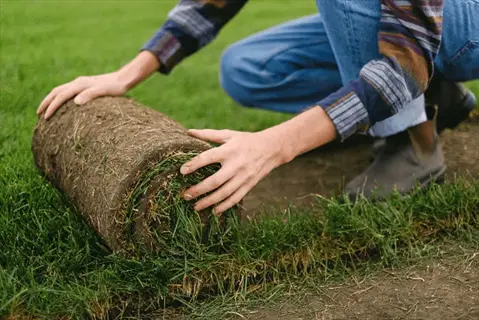
Award
- Category: Common-type Kentucky bluegrass cultivar that offers reliable performance at a lower price point than elite and BVMG cultivars for budget projects.
- Establishment Speed: Germinates and fills in faster than elite types, making it a practical pick for homeowners who want quicker results from fall seeding.
- Versatility: Adapts well to a range of soil types and conditions, tolerating a broader pH range and requiring less precision in soil preparation before planting.
- Best Use: Recommended for large residential lawns, parks, and municipal green spaces where cost per acre is a primary factor in grass seed selection decisions.
- Growth Habit: Produces a medium-textured turf with a lighter green color compared to elite cultivars, but still delivers the classic Kentucky bluegrass appearance.
- Consideration: Lower disease resistance than elite types means homeowners in humid climates may see more leaf spot and rust issues during wet growing seasons.
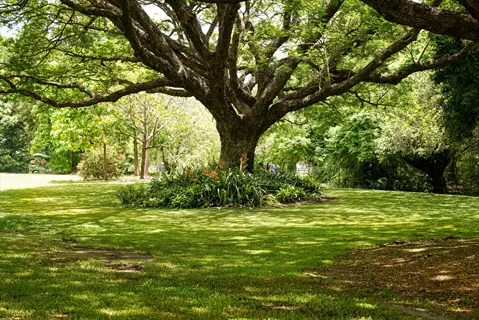
Everglade
- Category: Elite turf type bred for improved shade performance, addressing one of the biggest limitations homeowners face when growing Kentucky bluegrass under trees.
- Shade Tolerance: Maintains good density and color with as little as four hours of direct sunlight, outperforming most other Kentucky bluegrass cultivars in partial shade.
- Texture: Produces fine leaf blades that blend well when mixed with other shade-tolerant grasses like fine fescue in shaded lawn areas around the property.
- Best Use: The top recommendation for yards with mature trees where filtered light makes growing standard Kentucky bluegrass cultivars difficult or unreliable.
- Growth Habit: Develops a dense turf under shade conditions, though it will still thin out in deep shade below two hours of direct sunlight per day.
- Consideration: Even shade-tolerant cultivars cannot replace the performance of Kentucky bluegrass in full sun, so expect reduced density compared to open lawn areas.
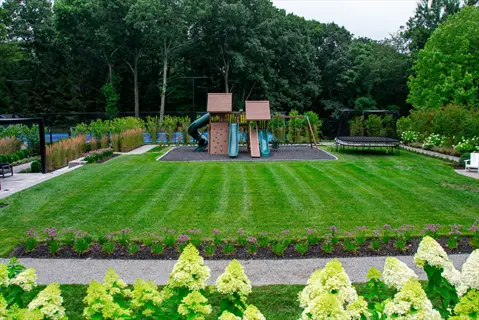
Shamrock
- Category: Elite turf type selected for superior wear tolerance, making it one of the most durable Kentucky bluegrass options for high-traffic lawns.
- Traffic Tolerance: Recovers fast from foot traffic, pet activity, and play wear thanks to aggressive rhizome production that fills in damaged patches within weeks.
- Disease Resistance: Shows moderate to strong resistance to common fungal diseases including brown patch and leaf spot, reducing maintenance headaches during humid summers.
- Best Use: Great for families with children and pets, backyard entertainment areas, and community sports fields that see regular heavy use through the growing season.
- Growth Habit: Produces a medium-dense turf with good lateral spread that knits together damaged areas faster than less aggressive cultivars after wear events occur.
- Consideration: Higher nitrogen requirements than some cultivars mean homeowners should plan for 3 to 4 fertilizer applications per year to maintain peak performance.

Bluestone
- Category: Common-type cultivar valued for drought dormancy performance, entering and exiting summer dormancy more smoothly than many other Kentucky bluegrass varieties.
- Drought Response: Goes dormant during dry spells and recovers its green color faster once rainfall or irrigation resumes in late summer or early fall.
- Cold Hardiness: Performs well in USDA zones 3a through 6b, handling extreme winter cold with strong survival rates even in northern plains and mountain climates.
- Best Use: A practical option for homeowners in areas with periodic summer drought who want a Kentucky bluegrass lawn without committing to daily watering schedules.
- Growth Habit: Produces a medium-textured turf with moderate density that provides a classic bluegrass lawn look without the premium cost of elite cultivar seed blends.
- Consideration: Lacks the fine texture and dark color of elite types, so it may not satisfy homeowners seeking the most striking lawn on the street.
I found that blending 2 to 3 cultivars works best for home lawns. Each variety brings different strengths, so a mix gives you built-in disease insurance.
Planting and Establishment
Fall seeding gives you the best shot at a strong Kentucky bluegrass lawn. I tried spring planting twice and both times the crabgrass moved in before the bluegrass could fill the gaps. Fall works better because soil temperatures sit in the 50 to 65°F range and weed pressure drops off.
Your seeding rate should land between 2 to 3 pounds per 1,000 square feet for a new lawn. Press seeds into the soil at no more than 1/4 inch deep. Germination takes about 14 days when soil temperature stays in that sweet spot. Test your soil pH first and aim for 6.0 to 7.0 for the best nutrient uptake.
The seed vs sod choice comes down to budget and patience. Seed costs around $20 for a 3 pound bag while sod runs 30 to 55 cents per square foot. Sod gives you an instant lawn but limits your cultivar options. The table below breaks down the key differences to help you decide.
Don't skip the starter fertilizer when you plant new seed or lay fresh sod. Apply it at the time of planting to give roots a boost during that first critical month. Overseeding thin spots in fall also works great since the existing turf helps protect young seedlings from washing away in heavy rain.
Seasonal Care Calendar
A good lawn care calendar takes the guesswork out of your seasonal routine. I keep a simple checklist on my garage wall that tells me what to do each month. Your mowing height, watering schedule, and fertilization timing all change with the seasons.
One tip that saved me real money over the years is to leave your grass clippings on the lawn after you mow. Those clippings break down fast and return nitrogen to the soil. That alone can cut your fertilizer costs by up to 30%. Below is a season-by-season breakdown of the key tasks for your Kentucky bluegrass lawn.
Spring: March Through May
- First Mow: Begin mowing when grass reaches 3 to 4 inches tall. Cut no more than one-third of the blade height to avoid stressing roots as your lawn exits winter dormancy.
- Weed Prevention: Apply pre-emergent herbicide before soil temperatures reach 55°F to block crabgrass and other annual weeds from taking hold in thin areas.
- Soil Testing: Collect soil samples and test pH levels. Aim for the 6.0 to 7.0 range that Kentucky bluegrass needs for strong nutrient uptake and root growth.
- Light Fertilization: Apply 0.5 to 1 pound of nitrogen per 1,000 square feet using slow-release fertilizer. This supports spring green-up without pushing too much top growth.
Summer: June Through August
- Watering Strategy: Give your lawn 1 inch of water per week through rain or sprinklers. Water deep but less often, and run the system in early morning to cut fungal disease risk.
- Mowing Adjustment: Raise the mowing height to 3 inches during summer heat. Taller grass shades the soil and helps roots hold moisture through hot dry spells.
- Disease Monitoring: Watch for signs of summer patch and dollar spot. Both fungal diseases attack during humid stretches above 80°F, so check your lawn every few days.
- Dormancy Awareness: Let the lawn go dormant if water limits apply. Kentucky bluegrass turns brown to save energy but comes back when cool weather and rain return.
Fall: September Through November
- Core Aeration: Aerate packed soil in early September to boost water flow, reduce thatch, and open air paths to the root zone in the top 3 inches of soil.
- Overseeding: Spread seed over thin or bare spots right after core aeration. Soil temperatures between 50 and 65°F give you the best germination window of the year.
- Fall Fertilization: Apply 1 to 1.5 pounds of nitrogen per 1,000 square feet. This is the biggest feeding of the year and it fuels spring green-up and root reserves.
- Leaf Management: Rake or mulch fallen leaves before they smother your grass. Trapped moisture under leaf piles creates the perfect setup for snow mold as winter arrives.
Winter: December Through February
- Minimal Traffic: Stay off frozen or frosted Kentucky bluegrass. Brittle frozen blades snap under foot and leave brown patches that take weeks to fill in come spring.
- Equipment Prep: Sharpen your mower blades and calibrate your spreader during the off-season. Clean edges cut grass better and reduce stress on your lawn at the first spring mow.
- Snow Mold Watch: Look for circular patches of matted gray or pink growth as snow melts. Light raking helps air reach the grass and speeds up recovery in those areas.
- Planning Ahead: Review fall soil test results and order seed or fertilizer for spring. Off-season prices beat the spring rush when popular cultivar supplies run low.
Transition zone homeowners should shift all of these dates up by 2 to 3 weeks compared to northern lawns. Your summers start sooner and last longer, so dethatching and core aeration need to happen before heat sets in.
Disease and Pest Prevention
Good pest control starts with your daily lawn habits, not a bag of chemicals. I dumped fungicide on a dollar spot outbreak that proper watering alone would have fixed. Good mowing, deep watering, and core aeration stop most lawn disease before it takes hold.
Penn State Extension lists grubs as the most serious pest for Kentucky bluegrass. Japanese beetle larvae feed on roots below the surface. You won't spot the damage until the turf peels up like a carpet. NC State Extension flags summer patch as a top fungal disease threat too.
The table below shows the most common problems, what to look for, and how to prevent each one. Catch these issues early and you save yourself time and money on pest control products.
Keep your mowing height at 2 to 3 inches and water deep once or twice a week. Skip the daily light sprinkle. Those two habits stop most fungal disease before you reach for a spray bottle.
Forage and Pasture Use
You might think of Kentucky bluegrass as just a lawn grass. But this pasture grass feeds cattle and horses on farms across the northern states. I spent 2 seasons helping a rancher in Iowa set up his grazing plan and the forage value shocked us both.
Your spring window is everything with this grass. Crude protein in early leaves tops 20% but drops below 5% after your grass flowers and sets seed. Get your livestock grazing early and rotate them out before that protein crash hits.
Spring Grazing Window
- Peak Production: About 70% of Kentucky bluegrass annual forage comes in by early June in northern states. Spring is the critical window for livestock grazing and nutrition.
- Protein Content: Crude protein tops 20% in early spring growth. That matches alfalfa hay quality, but it drops below 5% after the grass flowers in late spring.
- Timing Strategy: Start rotational grazing when grass reaches 4 to 6 inches tall. Move livestock out when they graze it down to 2 inches to protect regrowth for the next cycle.
Fertility for Beef Production
- Nitrogen Impact: Adding 120 pounds per acre of nitrogen boosted beef production by 39% on Kentucky bluegrass pastures based on Penn State Extension research.
- Full Fertility Program: A program of 60 pounds per acre P2O5 plus 30 pounds per acre K2O at pH 6.5 raised carrying capacity and beef output by 50% over unfertilized pastures.
- Cost Return: The investment in pasture fertilizer pays for itself through higher stocking rates and faster weight gain on cattle during the spring grazing months.
Horse Farm Applications
- Kentucky Connection: The state's famous horse farms have grazed Kentucky bluegrass for generations. It gives horses both durable ground cover and palatable forage in one grass.
- Grazing Management: Utah State University puts the safe use rate at 70% of top growth per year. Don't let horses graze below 2 inches or the stand will start to decline.
- Mixed Seeding: Blend Kentucky bluegrass with orchardgrass or tall fescue to stretch the grazing season past the early summer peak when bluegrass growth slows.
Overgrazing Indicators
- Warning Sign: When Kentucky bluegrass takes over as the dominant species on western rangeland, that signals poor past grazing management based on USDA and Utah State data.
- Soil Damage: Heavy livestock grazing on clay soils leads to excess runoff, gully formation, and watershed damage because of the grass's 3 inch root system.
- Streambank Risk: Those roots don't hold soil well near water. Expect bank failure and sediment buildup on properties that sit next to creeks or rivers.
Your timing matters more than your seed choice on a working farm. Get your cattle on the grass in spring when protein levels peak and pull them off before summer heat shuts down growth.
Wildlife and Ecology
Your lawn grass plays a bigger role in the wild than you might expect. Kentucky bluegrass shows up in wildlife habitat from the Dakota prairies to the Rocky Mountains. I tracked nesting birds on a conservation project in South Dakota and found bluegrass at most of the nest sites we studied.
But this grass is also an invasive species in native grassland areas. The same traits that make it great for your lawn let it take over prairies and push out native plants. Knowing both sides of this story helps you make better choices about where and how you grow it.
Nesting Habitat for Birds
- Sharp-tailed Grouse: Kentucky bluegrass was present at 84% of all sharp-tailed grouse nests studied in south-central South Dakota based on USDA Forest Service data.
- Blue-winged Teal: This grass serves as preferred nesting cover for blue-winged teal ducks in the Midwest. Dense ground-level growth hides eggs from predators.
- Ground-nesting Species: Multiple bird species and small reptiles use bluegrass stands as shelter, foraging habitat, and nesting cover across northern states.
Elk and Wildlife Forage
- Winter Range: Kentucky bluegrass gives elk herds at Rocky Mountain National Park important winter forage when snow covers other plants.
- Browse Value: The grass holds some nutritional value through winter months, though protein drops well below the 20% peak you see in early spring.
- Habitat Structure: Dense bluegrass stands provide cover for small mammals, insects, and reptiles that form the base of food webs in both urban and rural settings.
Invasive Potential in Prairies
- Nonnative Status: Kentucky bluegrass came from Europe and is not native to North America. Some remote mountain meadow stands in Utah may be the exception.
- Rangeland Indicator: When you see it dominating western rangeland, that signals a history of poor grazing. It replaces native warm-season grasses under constant overuse.
- Great Plains Impact: NC State Extension tags Kentucky bluegrass as weedy with invasive potential. It displaces native grassland species across the Great Plains.
Fire Ecology and Management
- Prescribed Burning Results: Annual spring burning in the Flint Hills of Kansas cut Kentucky bluegrass canopy from 30.3% after 11 years unburned to 0% after just 5 years of burns.
- Prairie Restoration: Prescribed fire favors deep-rooted warm-season grasses over this grass. Fire ecology research shows it as the best tool for removing bluegrass from native prairie.
- Management Plan: Land managers can pair spring burns with native grass seeding to shift plant communities away from Kentucky bluegrass and back toward native species.
If you own land near native prairie, keep your Kentucky bluegrass on your lawn and out of wild areas. Once it spreads into native grassland, you need years of prescribed burning and reseeding to fix the damage.
5 Common Myths
Kentucky bluegrass is native to Kentucky and originally grew wild across the state before settlers arrived in North America.
Kentucky bluegrass is native to Europe and northern Asia. It was introduced to North America during the colonial era and is generally considered nonnative across the continent.
Kentucky bluegrass dies during summer droughts and must be replanted each year after hot, dry weather causes it to turn brown.
Kentucky bluegrass enters summer dormancy during drought, turning brown to conserve energy. It typically recovers and greens up once cooler temperatures and moisture return in fall.
You should mow Kentucky bluegrass as short as possible to keep it looking neat and to prevent it from growing too tall.
Mowing too short weakens the root system. Keeping the height at 2 to 3 inches (5 to 7.5 centimeters) promotes deeper roots and helps shade out weed seedlings.
Kentucky bluegrass needs full sunlight all day and cannot survive in any amount of shade on residential properties.
While Kentucky bluegrass prefers full sun of six or more hours, it can tolerate partial shade of two to six hours, especially with afternoon shade in warmer southern climates.
Leaving grass clippings on the lawn causes thatch buildup and should always be bagged and removed after every mowing session.
Grass clippings decompose quickly and return nitrogen to the soil, reducing fertilizer needs by up to 30 percent. Thatch is caused by stems and roots, not clippings.
Conclusion
Penn State Extension calls Kentucky bluegrass the most important lawn grass in the United States. After years of testing this cool-season grass on my own property, I agree with that ranking. No other grass gives you such strong self-repair and cold weather toughness in one package.
This lawn care guide covered more ground than most resources you will find online. You got cultivar selection tips, seasonal tasks, and pasture data. Those are the details other guides skip. I wrote it this way because your situation is unique.
In my experience, the dual nature of this grass is what makes it so interesting. It builds beautiful lawns and wildlife habitat in some areas. In native prairies, it acts as an invader that needs active management to control.
Think about your own goals before you plant. Whether you manage a front lawn, a horse farm, or a piece of native grassland, come back to the sections that fit your needs. Good grass care starts with the right information.
External Sources
Frequently Asked Questions
Why is Kentucky bluegrass the best?
Kentucky bluegrass is considered the best lawn grass due to its dense, self-repairing growth through rhizomes, rich blue-green color, cold hardiness, and ability to tolerate heavy foot traffic.
Why is it called Kentucky bluegrass?
The name comes from the blue-purple seed heads the grass produces in spring, combined with its strong association with Kentucky's famous horse pastures and rolling fields.
What is another name for Kentucky bluegrass?
Kentucky bluegrass is also known by its scientific name Poa pratensis, and in some regions it is called smooth meadow grass or common meadow grass.
Where does Kentucky bluegrass grow best?
Kentucky bluegrass grows best in cooler northern climates where average daily July temperatures stay below 75 degrees Fahrenheit, in USDA zones 3a through 7b.
What is the most iconic bluegrass song?
Many consider Blue Moon of Kentucky by Bill Monroe to be the most iconic bluegrass song, as Monroe is widely regarded as the father of bluegrass music.
What are the disadvantages of Kentucky bluegrass?
The main disadvantages include high water requirements, poor shade tolerance, slow germination, vulnerability to summer patch disease, and the need for frequent fertilization.
Why is Kentucky bluegrass more expensive?
Kentucky bluegrass costs more because it germinates slowly, takes two to three years to fully establish, requires higher maintenance inputs, and demands more water than many alternatives.
What is Kentucky's signature food?
Kentucky's signature food is the hot brown, an open-faced turkey sandwich with bacon and Mornay sauce, originating from the Brown Hotel in Louisville in 1926.
What is the bluegrass capital of the world?
Owensboro, Kentucky, is widely recognized as the bluegrass capital of the world due to its annual bluegrass music festival and deep musical heritage.
What is devil's grass?
Devil's grass is a common nickname for Bermuda grass (Cynodon dactylon), an aggressive warm-season grass that spreads rapidly and is difficult to remove from lawns and gardens.