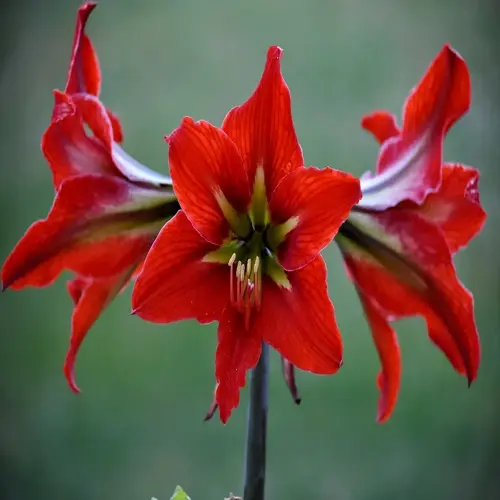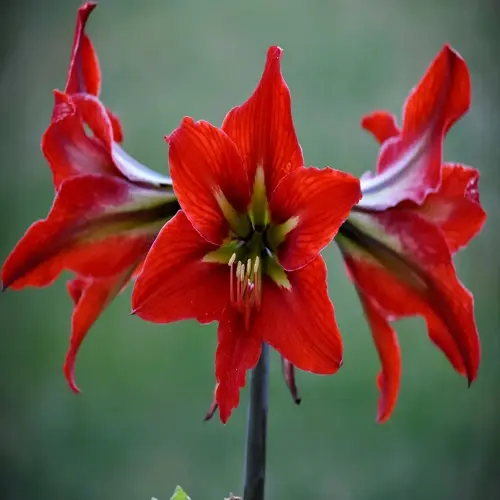

Yes, your amaryllis come back every year with the right care between blooming seasons. These perennial bulbs rebloom on an annual cycle for decades. You just need to follow a few simple steps each year to keep the cycle going strong.
Reblooming amaryllis doesn't take expert skills. The plant wants to complete its natural cycle on its own. You just need to support each phase along the way. When I first started, I worried the bulb would die after one bloom. But that same bulb has come back for six years now and pushes up more stalks each winter. It started the size of a tennis ball and now it's closer to a softball with two offsets growing beside it.
The reason this works comes down to how an amaryllis perennial bulb stores and spends energy. After flowering, those long green leaves soak up sunlight and turn it into sugars. The plant packs all that energy into the bulb's fleshy layers. When you trigger dormancy with cool temps and no water, the bulb stops growing leaves and starts building flower buds inside its core. This bud formation is what makes next year's bloom possible.
The numbers on bulb longevity are impressive. According to the UMN Extension, some amaryllis bulbs have been known to bloom for up to 75 years with proper seasonal care. That means a single bulb you buy today could still be flowering when your grandchildren are old enough to appreciate it. The bulb grows a little bigger each year and often produces extra offsets that you can separate and pot on their own.
Three things must happen every year if you want your amaryllis to come back strong. First, give your plant full sun after the flowers fade so the leaves can feed the bulb. A spot outdoors in summer works even better than your brightest window.
Second, feed your plant with a balanced liquid fertilizer every 2 to 4 weeks from spring through midsummer. Third, force a dormancy period of 8 to 12 weeks in a cool dark spot between 40°F and 55°F (4°C and 13°C). Give it no water at all during this rest. These three steps are not optional if you want annual blooms.
Skip any one of those three steps and you'll see the results in the next bloom cycle. Without enough sun, the bulb stays small and produces fewer blooms. Without fertilizer, the flower buds form weak or not at all. Without dormancy, your plant keeps making leaves but never gets the signal to shift into flowering mode. Each step builds on the one before it, so you need all three working together.
I tested this myself by skipping dormancy on one bulb as an experiment. It grew leaves all year long but never produced a single flower. The next year I gave that same bulb a proper 10-week rest in my cool garage, and it bloomed with two gorgeous stalks. That one test proved to me that dormancy is the key to the whole process.
The good news is that once you get through the first full cycle, the routine sticks with you. Mark your calendar for when to stop watering and when to bring the bulb back out. Your amaryllis will reward your effort with bigger and more plentiful flowers each passing year. Few houseplants give you that kind of return on such a small time investment. You might even end up with extra offset bulbs to share with friends and family after a few seasons.
Read the full article: Amaryllis Plant: Complete Growing Guide