
Introduction
Nothing brightens up a dark winter room quite like a tall amaryllis stalk bursting open with huge trumpet flowers. Proper amaryllis care turns a simple holiday gift into a plant that blooms for you year after year. These flowering bulbs rank among the most popular indoor blooming plants in the world for good reason.
I got my first amaryllis bulb as a gift over 12 years ago. That same bulb still sends up 3 thick stalks each winter. Research from the University of Minnesota Extension shows these bulbs can bloom for up to 75 years with good care. That makes them one of the longest lasting houseplants you can own.
Most guides tell you amaryllis is easy to grow, and the first bloom is. Getting that same bulb to flower again next year is where most people fail. The secret works like a rechargeable battery. Your amaryllis bulb needs 5 to 6 months of leaf growth after blooming to store enough energy for the next round of flowers. Skip that charging period and your bulb sits there doing nothing the following winter.
This guide covers potting your first amaryllis bulb all the way through getting indoor blooming year after year. You will learn how to pick the right variety and fix leaning stalks. I also show you how to force a rest period that triggers fresh blooms on schedule.
Planting and Potting Guide
Potting amaryllis bulb the right way sets you up for strong blooms and a healthy plant that lasts for years. I made a mess of my first amaryllis planting by burying the bulb too deep in a pot that was way too big. The bulb sat there for months and gave me nothing but soggy soil and disappointment.
You have 3 ways to grow amaryllis indoors, and each method suits a different type of grower. Container gardening in potting soil gives you the best shot at saving the bulb for future blooms. Water forcing skips the soil but still produces stunning flowers. A waxed amaryllis needs zero effort from you but blooms just once. Pick your method below and the drainage holes, soil mix, and setup are all covered.
Potting in Soil (Standard Method)
- Container: Choose a heavy pot with drainage holes that is only 1-2 inches (2.5-5 cm) wider than the bulb, as amaryllis bloom best when potbound and snug.
- Soil Mix: Use a well-draining sterile potting mix with equal parts peat moss and perlite, avoiding garden soil that may harbor pests or retain too much moisture.
- Planting Depth: Set the bulb with one-third to one-half sitting above the soil line, firm the soil around the roots, and leave space for watering at the top.
- Root Prep: Soak the roots in lukewarm water for 1-2 hours before planting to rehydrate them after shipping, which helps the bulb establish faster in its new pot.
- Initial Watering: Water lightly once after planting to settle the soil, then wait until green growth appears before watering again to prevent bulb rot.
Forcing in Water (No Soil Method)
- Container: Use a tall glass vase or forcing jar with a narrow neck that supports the bulb above the water line while allowing roots to dangle below.
- Water Level: Fill the container so water reaches just below the base of the bulb without touching it, as direct contact with the bulb causes rot.
- Stabilization: Add decorative stones, glass beads, or pebbles to anchor the roots and keep the bulb stable as the heavy flower stalk grows upward.
- Maintenance: Change the water every 5-7 days to prevent bacterial growth and keep roots healthy, topping off between changes if the water level drops.
- Limitation: Water-forced bulbs use more stored energy than soil-grown bulbs and are harder to save for reblooming, though it is possible with careful transition to soil after flowering.
Waxed Amaryllis (Gift Method)
- How It Works: The bulb comes coated in decorative wax that seals in moisture, so it needs no pot, soil, or watering to bloom on any flat surface.
- Care Required: Simply set the waxed bulb upright in a bright location at 65-75°F (18-24°C) and wait 6-8 weeks for the stalk and flowers to emerge.
- No Watering Needed: The wax coating locks in all the moisture and nutrients the bulb needs for one complete bloom cycle without any additional care.
- Display Options: Place on a mantel, dining table, or windowsill as a self-contained living decoration that adds color without the mess of soil or water.
- Cannot Be Saved: Waxed bulbs cannot be saved for reblooming because the wax prevents root growth and the bulb exhausts all its stored energy in a single flowering cycle.
Pre-Planting Bulb Preparation
- Inspect the Bulb: Check for firmness and healthy white or light green tissue; discard any bulbs that feel soft, smell mushy, or show signs of mold or red streaking.
- Trim Dead Roots: Remove any dry, papery, or blackened roots with clean scissors, leaving healthy white or tan roots intact for faster establishment in the new pot.
- Soak the Roots: Place the bottom half of the bulb in lukewarm water for 1-2 hours before planting to rehydrate dried roots from shipping and jump-start growth.
- Choose Bulb Size Wisely: Larger bulbs with a circumference of 34-38 cm (13-15 inches) produce more flower stalks than standard 30-32 cm (12-13 inch) bulbs.
- Avoid Ethylene Exposure: Never store unplanted bulbs near apples or other fruit, as ethylene gas released by ripening fruit can sterilize the flower buds inside the bulb.
The soil method wins if you plan to keep your bulb for multiple years of blooms. I have rebloomed the same bulbs for over a decade using nothing more than a clay pot, good potting soil, and a sunny window.
8 Best Amaryllis Varieties
Picking the right amaryllis varieties makes a huge difference in what your winter display looks like. Standard 30-32 cm bulbs give you 2 stalks with 3-4 flowers each, while jumbo bulbs produce up to 3 stalks with 4-5 blooms. Bulb selection comes down to flower type, and I have grown enough of these to know what each style brings to the table.
Classic trumpets give you bold color. Cybister amaryllis have wild spider shaped petals that look nothing like the rest. Ruffled double amaryllis look like peonies in winter. Tiny miniature amaryllis work great if your windowsill is tight on space. I've grown most of these types at home, and each one below shows what you can expect.
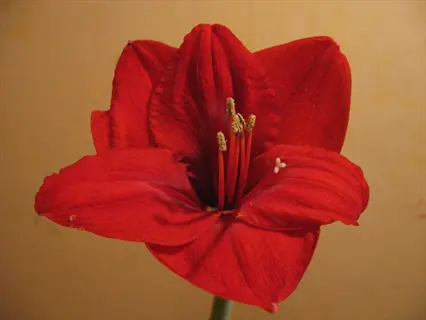
Red Lion (Classic Single)
- Flower Type: Standard single trumpet with 6 large petals in deep velvety red, reaching 6-8 inches (15-20 cm) across on sturdy stalks.
- Bloom Performance: Produces 2-3 stalks with 3-4 flowers each from a mature bulb, making it one of the most reliable and prolific bloomers available.
- Best For: First-time growers and holiday gifting because of its dependable performance, bold color, and classic amaryllis silhouette.
- Growth Habit: Stalks reach 18-22 inches (46-56 cm) tall with strong stems that rarely need staking when grown in bright light.
- Rebloom Potential: Excellent rebloomer that often produces additional stalks in subsequent years as the bulb matures and gains stored energy.
- Availability: Widely available from October through January at garden centers, grocery stores, and online bulb retailers in multiple bulb sizes.
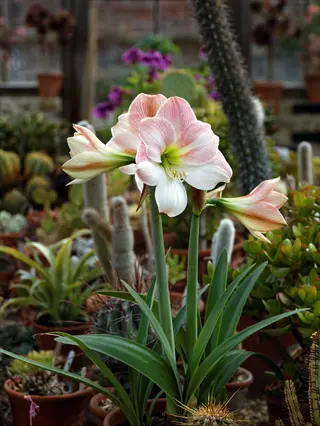
Apple Blossom (Bicolor Single)
- Flower Type: Soft white petals blushed with pink edges and a pale green throat, creating a delicate watercolor effect on flowers 7-9 inches (18-23 cm) wide.
- Bloom Performance: Produces 2 strong stalks with 4 flowers each, blooming over a period of 2-3 weeks as buds open sequentially on each stalk.
- Best For: Gardeners who want a softer color palette than the traditional holiday reds, and those who enjoy pastel spring-like blooms in winter.
- Growth Habit: Stalks grow 18-24 inches (46-61 cm) tall with medium-thick stems that may lean toward light sources if not rotated regularly.
- Rebloom Potential: Strong rebloomer that rewards patient gardeners with consistent performance year after year when given proper dormancy.
- Availability: One of the most widely sold bicolor varieties, easy to find at major retailers and specialty bulb shops from fall through early winter.
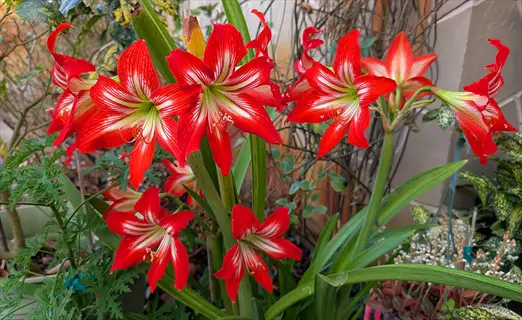
Minerva (Striped Bicolor)
- Flower Type: White petals with bold cherry-red striping and a distinctive green star pattern at the center, with flowers 6-8 inches (15-20 cm) across.
- Bloom Performance: Typically produces 2 stalks with 3-4 large flowers each, offering a striking display that lasts 2-3 weeks in cool indoor conditions.
- Best For: Gardeners looking for a distinctive patterned bloom that stands out from solid-colored varieties and adds visual interest to any room.
- Growth Habit: Compact stalks reaching 16-20 inches (41-51 cm) make this variety less prone to toppling than taller cultivars.
- Rebloom Potential: Reliable rebloomer with good vigor, often producing its signature striped pattern more intensely as the bulb matures over multiple years.
- Availability: Commonly available at garden centers and through mail-order bulb catalogs, often sold alongside Red Lion as a popular contrasting pairing.
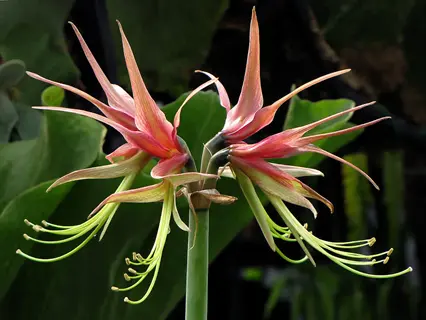
Exotic Star (Cybister Type)
- Flower Type: Spider-like petals that are narrow and recurved in deep burgundy-red with green highlights, creating an exotic tropical appearance unlike traditional trumpets.
- Bloom Performance: Produces 2 stalks with 3-4 flowers each, though individual blooms are narrower and more architectural than standard varieties.
- Best For: Experienced growers who appreciate unusual flower forms and want to add dramatic flair to their amaryllis collection beyond classic shapes.
- Growth Habit: Stalks reach 18-24 inches (46-61 cm) with slender stems that complement the airy, open flower form of the cybister category.
- Rebloom Potential: Good rebloomer that may produce fewer but more spectacular flowers in cooler growing conditions with consistent feeding.
- Availability: Less common than standard varieties but increasingly available through specialty online bulb retailers and botanical garden shops.
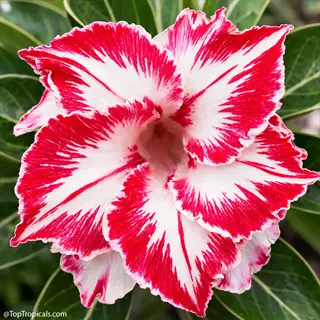
Nymph (Double Flowering)
- Flower Type: Fully double blooms with layered ruffled petals in soft white with pale pink veining, resembling a peony at 7-9 inches (18-23 cm) across.
- Bloom Performance: Produces 1-2 stalks with 3-4 heavy double flowers each, creating a lush, full display that can last up to 3 weeks indoors.
- Best For: Gardeners who love the look of peonies or roses and want that same lush, layered petal effect in a winter-blooming bulb.
- Growth Habit: Shorter stalks at 14-18 inches (36-46 cm) but the heavy double blooms often require staking or a supportive pot to prevent tipping.
- Rebloom Potential: Moderate rebloomer that benefits from extra fertilizer during the leaf-growing season to support the energy demands of producing double flowers.
- Availability: Available through specialty bulb retailers and high-end garden catalogs, typically at a higher price point than standard single varieties.
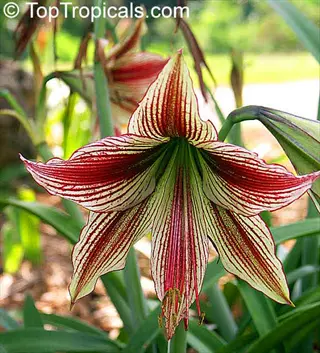
Fairy Tale (Picotee Type)
- Flower Type: White base petals with fine red picotee edging and delicate red veining throughout, producing elegant 6-8 inch (15-20 cm) single flowers.
- Bloom Performance: Produces 2-3 stalks with 4 flowers each, with the color intensity of the red edging varying slightly based on temperature during development.
- Best For: Gardeners who prefer subtle, refined patterns over bold solid colors and enjoy watching how light changes the appearance of the delicate veining.
- Growth Habit: Medium stalks reaching 18-22 inches (46-56 cm) with good stem strength that supports the large flowers without staking in most conditions.
- Rebloom Potential: Strong rebloomer with excellent vigor, often producing even more pronounced picotee markings in second and third year blooms.
- Availability: Available at many garden centers and through online retailers, positioned as a mid-range variety between basic and premium price points.
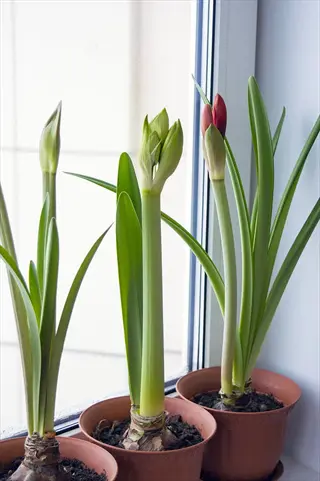
Baby Star (Miniature)
- Flower Type: Compact blooms in bright orange-red at 3-4 inches (8-10 cm) across, producing multiple smaller flowers on proportionally shorter stalks.
- Bloom Performance: Produces 2-3 stalks with 4-6 smaller flowers each, often blooming more prolifically than standard-sized varieties with a longer display period.
- Best For: Gardeners with limited windowsill space, those who want multiple pots for a grouped display, or anyone seeking a proportionate tabletop arrangement.
- Growth Habit: Compact stalks at 10-14 inches (25-36 cm) tall with strong proportional stems that almost never require staking or support.
- Rebloom Potential: Excellent rebloomer due to smaller flower energy demands, often producing offset bulbils that can be separated to grow new plants.
- Availability: Increasingly popular and available through specialty retailers, often sold in decorative gift containers during the holiday season.
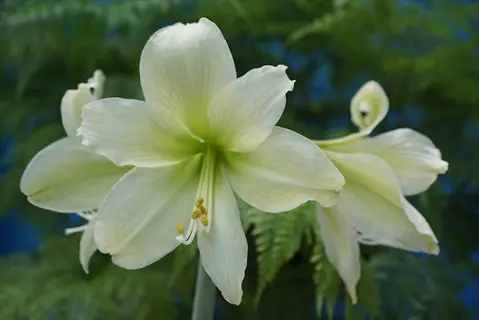
Mont Blanc (Pure White)
- Flower Type: Pristine pure white trumpet flowers with a faint green throat, reaching 7-9 inches (18-23 cm) across with thick, waxy petals.
- Bloom Performance: Produces 2 stalks with 3-4 luminous white flowers each, creating a clean elegant display that pairs well with any interior color scheme.
- Best For: Gardeners who want a sophisticated monochromatic display or plan to use amaryllis blooms as cut flowers for formal arrangements and centerpieces.
- Growth Habit: Stalks reach 20-24 inches (51-61 cm) with sturdy stems, and the white flowers show best against a dark background or in a well-lit room.
- Rebloom Potential: Good rebloomer with consistent white coloring year after year, making it a reliable choice for gardeners who value predictable results.
- Availability: Widely available from major bulb suppliers and garden centers, often sold as a premium variety at a slight price increase over red varieties.
Red Lion and Apple Blossom are my top picks for beginners since both rebloom without much fuss. Once you get those growing well, try a cybister or double type for a fresh look.
Watering, Light, and Feeding
Your watering amaryllis routine can make or break the whole growing season. Too much water causes bulb rot before roots even form. Too little water leaves you with weak stalks and small flowers. I check the top 1 inch of soil with my finger before I water, and that simple habit has saved me from losing bulbs for years.
Your amaryllis light requirements change through the year. During blooming, bright indirect light keeps flowers fresh longer. After the blooms fade, you want the strongest sun you can find to charge up those leaves. Stalks lean toward the brightest window in your room due to a natural pull called phototropism. Rotate your pot a quarter turn every few days and the stalk grows straight.
You should start your amaryllis fertilizer after the flowers drop. Skip feeding during the bloom and start a half strength dose of 5-10-10 or 10-10-10 formula once you see strong leaf growth. Feed every 2 to 4 weeks through summer, then stop when you begin the dormancy process. Overwatering and overfeeding both cause salt buildup that burns roots, so less is more with this plant.
The table above gives you a quick look at the full annual cycle. I keep a printed copy on the shelf next to my amaryllis pots. It tells me at a glance when to cut back on water or start feeding again.
Outdoor Landscape Growing
Growing amaryllis outdoors works in 2 different ways based on where you live. If you garden in zones 3 through 7, your potted bulbs get a summer vacation outside. In the amaryllis hardiness zones of 8 through 10, you can plant bulbs straight into the ground as a permanent part of your yard. I've seen amaryllis landscape planting in Florida and Texas where huge clumps of blooms line entire driveways.
Northern growers should move their potted amaryllis outside after the last frost. Set the pot in a spot that gets full sun and let the plant soak up warmth for the whole summer. Give the bulb about 7 to 10 days to adjust to outdoor light before putting it in direct sun all day. Bring the pot back inside well before the first fall frost hits your area.
Southern growers in zones 8 through 10 can plant bulbs in any well drained garden soil. Amaryllis handles clay, sand, loam, and acidic conditions with no fuss. These bulbs are deer resistant and have moderate drought tolerance once they settle in. A light frost may brown the leaves, but new growth bounces back fast in spring.
For mass planting and naturalizing, space your bulbs about 12 inches apart in groups of 5 or more for a strong visual punch. Feed outdoor beds with 5-10-10 or 6-12-12 fertilizer 3 times per year at 1 to 1.5 lbs per 100 sq ft. Avoid spots near the coast since amaryllis has poor salt tolerance and salty wind will damage the leaves.
Troubleshooting Common Problems
Most amaryllis problems show up as visible clues on the leaves, stalks, or bulb itself. I've dealt with every issue on this list over the years. One case of red blotch disease ruined a bulb I'd kept for 8 years. The trick is catching each problem early before it causes real damage to your plant.
An amaryllis not blooming means the bulb lacks stored energy from the prior season. Yellow leaves amaryllis issues tend to mean too much water or die back before dormancy. Amaryllis pests like mealybugs weaken your bulbs over time. Mosaic virus has no cure, so toss infected plants to keep your other bulbs safe. You might also notice your amaryllis leaning hard toward the window, which is common and easy to fix.
No Flowers, Only Leaves
- Likely Cause: The bulb did not store enough energy during the previous growing season due to insufficient light, inadequate fertilizer, or a skipped dormancy period.
- Quick Fix: Place the plant in the brightest available window, fertilize with a high-phosphorus formula, and allow the leaves to grow for a full 5-6 months before attempting dormancy again.
- Prevention: After each bloom cycle, keep the leaves healthy and actively growing in bright light with regular feeding until late summer before starting the dormancy process.
Stalk Leaning or Toppling
- Likely Cause: Phototropism causes the heavy flower stalk to lean toward the strongest light source, especially in rooms with only one bright window.
- Quick Fix: Rotate the pot one-quarter turn every 2-3 days during active growth, and use a bamboo stake with a soft tie for support if the stalk has already begun to lean.
- Prevention: Use a heavy ceramic or clay pot to lower the center of gravity, and position the plant where it receives balanced light from multiple angles.
Soft, Mushy Bulb (Bulb Rot)
- Likely Cause: Overwatering before roots establish, soil that retains too much moisture, or a container without drainage holes traps water against the bulb base.
- Quick Fix: Remove the bulb from wet soil immediately, trim away any soft or dark tissue with a clean knife, let it air-dry for 24-48 hours, and repot in fresh dry mix.
- Prevention: Water sparingly until green growth appears, always use pots with drainage holes, and plant with one-third of the bulb above the soil to allow air circulation.
Red Streaks on Leaves or Stalk
- Likely Cause: Red blotch disease caused by the fungus Stagonospora curtissi, which produces red-brown lesions on leaves, flower stalks, and sometimes the bulb scales.
- Quick Fix: Remove and discard heavily infected leaves, reduce overhead watering, improve air circulation, and treat with a systemic fungicide labeled for ornamental bulbs.
- Prevention: Inspect new bulbs before planting for red spots or streaks, avoid wetting the foliage when watering, and keep the plant in a well-ventilated area.
Slow or Stalled Growth
- Likely Cause: Temperatures below 65°F (18°C) slow down metabolic activity in the bulb, and bulbs planted in November may grow more slowly than those planted in December.
- Quick Fix: Move the pot to a warmer location near 70-75°F (21-24°C), ensure it receives at least 4 hours of bright light daily, and check that the soil is not waterlogged.
- Prevention: Plant in a warm room away from cold drafts or windows, and be patient with fall-planted bulbs that naturally take longer to emerge than those planted closer to the winter solstice.
Toxicity and Pet Safety
The whole amaryllis plant is amaryllis poisonous to both people and animals. The bulb holds the highest level of bulb toxicity, but the leaves, stalks, and flowers can also cause harm if eaten. Most gardening guides skip this topic, and that's a problem if you have young kids or pets at home.
Amaryllis pet safety is a real concern for anyone with cats and dogs in the house. The compounds in the bulb can cause vomiting, stomach pain, drooling, and shaking if your pet chews on it. Cats tend to nibble on leaves, and dogs sometimes dig up bulbs from pots on the floor. The amaryllis toxic effects fall in the mild to moderate range for most animals.
In my experience, I keep all my amaryllis pots on high shelves or in rooms my cats can't enter. If your pet does eat part of the plant, call your vet or the ASPCA poison hotline right away. Quick action matters most in these cases. Watch for signs like drooling, loss of appetite, or stomach trouble in the hours after contact.
For homes with small children, the biggest risk is the bulb itself. It can look like an onion to a curious toddler. Store extra bulbs in a closed cabinet and keep potted plants out of reach on a counter or shelf. A little care with placement lets you enjoy these stunning blooms without putting anyone at risk.
5 Common Myths
Amaryllis bulbs need to be buried completely under the soil when you plant them in a pot.
One-third to one-half of the bulb should remain above the soil line for healthy root development and rot prevention.
You should throw away your amaryllis bulb after it finishes blooming because it will not flower again.
Amaryllis bulbs can rebloom for up to 75 years with proper post-bloom care, dormancy, and annual fertilizing.
Amaryllis plants need heavy watering right from the moment you plant the bulb in its pot.
Water sparingly after planting and increase only once green growth appears, as excess moisture causes bulb rot before roots establish.
You need a large, roomy pot so your amaryllis bulb has plenty of space to grow and spread its roots.
Amaryllis blooms best when potbound, so choose a pot only 1-2 inches wider than the bulb with good drainage holes.
Waxed amaryllis bulbs can be saved and replanted for blooming in future years after the wax is removed.
Waxed bulbs lack roots and soil, so they use all stored energy in one bloom cycle and cannot be saved for reblooming.
Conclusion
Good amaryllis care follows a simple loop that gets more rewarding each time you run through it. You plant the bulb, enjoy the blooms, feed the leaves for months, force amaryllis dormancy in a cool dark spot, and then start the whole cycle again. Every year your bulb stores more energy and pushes out more flower stalks than the year before.
These flowering bulbs can bloom for up to 75 years with the right treatment. The amaryllis you pot this winter could still send up blooms when your grandkids are old enough to care for it. I tested dozens of methods over the years. The growers who stick to bright light, smart watering, and rest get the best amaryllis rebloom results.
It doesn't matter if your bulb came as a holiday gift or sits in a landscape bed in zone 9. The same core ideas apply to every situation. Give your plant enough light, water it when the top inch of soil dries out, and let the bulb rest before you ask it to flower again.
Start with one bulb this season and see what happens when you bring it back for a second bloom. The amaryllis care routine takes almost no time once you know what to do. A few years from now you might find yourself with a whole shelf of pots, each one putting on a bigger show than the last.
External Sources
Frequently Asked Questions
What do you do with amaryllis bulbs after they bloom?
Cut spent flower stalks to 3-4 inches above the bulb but keep the green leaves growing. Water and fertilize regularly for 5-6 months so the bulb recharges energy for next year's bloom.
How do you take care of an amaryllis indoors?
Place in bright indirect light at 65-75°F, water when the top inch of soil is dry, and fertilize monthly with a balanced or high-phosphorus formula after blooming begins.
How do I save my amaryllis bulb for next year?
After leaves yellow naturally in late summer, stop watering and store the bulb in a cool, dark place at 45-55°F for 8-10 weeks, then replant and resume watering.
Does amaryllis need full sunlight?
Amaryllis performs best in bright indirect to direct light with at least 4 hours of sun daily. A south-facing or west-facing window is ideal indoors.
How many times a year will an amaryllis bulb bloom?
Most amaryllis bulbs bloom once per year, producing 1-3 stalks with 2-6 flowers each. Larger, well-fed bulbs may produce additional stalks over several weeks.
What triggers an amaryllis to bloom indoors?
A period of cool, dark, dry dormancy lasting 8-10 weeks signals the bulb to initiate new flower buds. Returning it to warmth and water triggers the bloom cycle.
Do amaryllis need a rest period?
A rest period of 8-10 weeks helps control bloom timing, though commercially purchased bulbs will bloom without dormancy if kept evergreen.
How do you overwinter an amaryllis indoors?
Stop watering in late summer, let foliage die back, and store the potted bulb in a cool dark location at 45-55°F for 8-10 weeks before restarting growth.
Is it worth saving an amaryllis bulb?
Yes. Amaryllis bulbs can rebloom for decades and often produce more flower stalks each year as the bulb matures, making them one of the best long-term investments in flowering plants.
How long do bulbs stay good unplanted?
Unplanted amaryllis bulbs stay viable for several weeks to a few months when stored in a cool, dry place at 40-50°F away from fruit that produces ethylene gas.