
Introduction
Most people think of air plants as cute desk decorations you grab on impulse at a shop. These soilless plants belong to the genus Tillandsia and form the largest group in the bromeliad family. With around 660 known species, they stretch from the southeastern United States down to central Argentina.
I started growing air plants about 5 years ago after killing my third potted fern in a row. What hooked me was learning how these epiphyte species feed themselves. Their leaves have tiny structures called trichomes that work like miniature cups on the surface. These cups grab moisture and nutrients from the air, much like a sponge soaks up water from a wet countertop. That's why they don't need any soil at all.
The biggest secret to keeping your air plants alive starts with one simple question. Is your plant a xeric or mesic variety? Xeric types come from drier climates and have fuzzy silver leaves packed with trichomes. Mesic types grew up in rainforests and sport smoother green leaves. Once you know which type you own, every care choice becomes much clearer.
This guide covers the best varieties for beginners and proper watering methods. You'll learn ideal lighting setups and creative display options too. We'll also go over propagation and how to spot common problems early. 10 of 16 Florida native Tillandsia species face threats in the wild today. Growing these plants at home matters more than ever.
8 Best Air Plant Varieties
You can find over 635 epiphytic Tillandsia species in the USDA database. Only a handful of those make great indoor plants though. I've grown over 30 air plant varieties and these 8 gave me the best results with the least fuss. Each one below is tagged as xeric air plants or mesic air plants so you know its care needs fast.
Here's the quick trick I use at the plant shop. If the leaves feel fuzzy and look silver, you have a xeric air plant that wants more light and less water. Smooth green leaves mean a mesic variety that prefers shade and extra moisture. This simple touch test tells you almost everything about what the best air plants for beginners need to thrive.
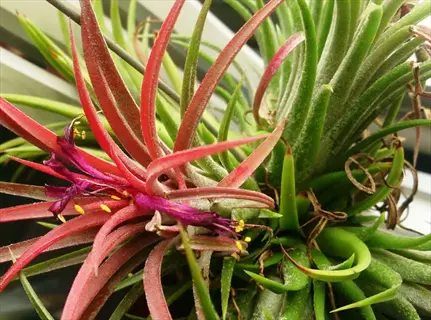
Tillandsia Ionantha (Sky Plant)
- Type: Xeric variety with compact rosette shape reaching 2 to 3 inches (5 to 7.6 centimeters) tall, making it one of the most popular air plants for beginners worldwide.
- Appearance: Silver-green leaves with visible trichomes that blush vibrant red and purple before producing a small violet flower during its single blooming cycle.
- Light Needs: Thrives in bright indirect light near an east or south facing window, tolerating brief periods of direct morning sun without leaf damage.
- Watering: Soak for 20 to 30 minutes weekly and mist between soakings in dry climates, allowing full drying within 4 hours to prevent base rot.
- Best For: First-time air plant owners who want a forgiving species that signals its needs clearly through leaf color changes and curling.
- Display Ideas: Looks stunning mounted on driftwood, placed inside sea urchin shells, or grouped in clusters on a decorative tray for a living centerpiece.
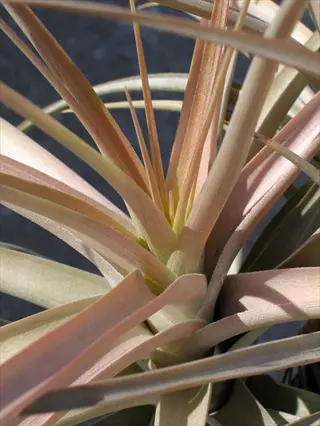
Tillandsia Xerographica (Queen)
- Type: Xeric variety and the largest commonly kept air plant, growing up to 12 inches (30 centimeters) wide with dramatic silvery curling leaves.
- Appearance: Wide strap-like leaves covered in dense silvery trichomes that curl elegantly inward, forming a striking rosette that resembles a natural sculpture.
- Light Needs: Prefers bright indirect light with tolerance for some direct sun, and its thick trichome layer provides natural sun protection in brighter spots.
- Watering: Needs less frequent watering than most air plants due to heavy trichome coverage, with a 15 to 20 minute soak every 10 to 14 days being sufficient.
- Best For: Experienced growers looking for a dramatic statement piece that serves as a natural focal point in any room or display arrangement.
- Display Ideas: Beautiful as a standalone piece on a wooden pedestal, inside a large glass globe, or resting on a bed of decorative stones.
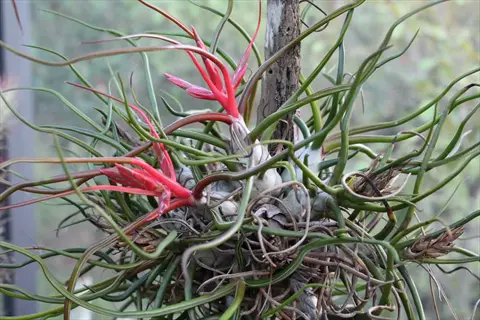
Tillandsia Bulbosa
- Type: Mesic variety with a distinctive bulbous base and wild tentacle-like leaves that give it an otherworldly alien appearance among air plant collections.
- Appearance: Dark green to purple leaves emerge from a rounded base, twisting and curling outward in unpredictable directions that make each specimen look unique.
- Light Needs: Prefers filtered light or partial shade, as direct sunlight can scorch its thinner mesic leaves that lack heavy trichome protection.
- Watering: Soak for 30 to 60 minutes weekly and shake out excess water from the bulbous base thoroughly to prevent trapped moisture from causing rot.
- Best For: Collectors wanting an unusual conversation piece that stands out from the typical rosette shapes found in most beginner air plant collections.
- Display Ideas: Thrives in open terrariums where humidity stays higher, or mounted sideways on cork bark to showcase its unique tentacle growth pattern.
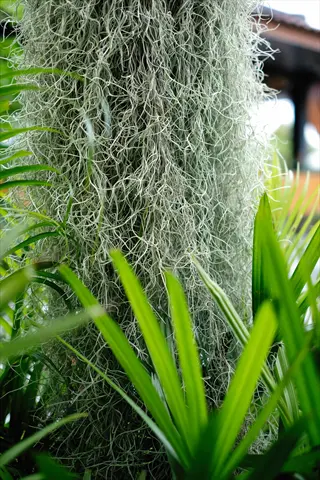
Tillandsia Usneoides (Spanish Moss)
- Type: Mesic variety with the broadest geographical range of any bromeliad, growing from Virginia to Argentina and Chile across many different climates.
- Appearance: Long trailing strands of silvery-gray filaments that drape gracefully, reaching several feet in length when grown in favorable outdoor or indoor conditions.
- Light Needs: Adapts to a wide range of light conditions from bright indirect to partial shade, though brighter light encourages denser and faster strand growth.
- Watering: Mist thoroughly every other day or soak bundled strands for 10 to 15 minutes weekly, ensuring good airflow afterward to dry within a few hours.
- Best For: Gardeners wanting a dramatic cascading display effect that adds texture and movement to hanging installations or outdoor covered porches.
- Display Ideas: Hang from ceiling hooks, drape over curtain rods, or wrap around a wire frame to create a living curtain or wall feature.
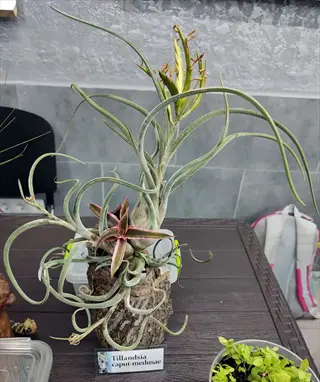
Tillandsia Caput-Medusae
- Type: Xeric variety named after Medusa from Greek mythology due to its wild snake-like leaves that twist and curl from a central bulbous base.
- Appearance: Thick grayish-green leaves covered in fine trichomes extend outward in unpredictable curling patterns, with red and blue flowers appearing at maturity.
- Light Needs: Handles bright indirect to moderate direct light well thanks to its xeric trichome layer, making it suitable for south facing windows with light filtering.
- Watering: Soak for 20 to 30 minutes weekly and tip upside down to drain water from the base, as trapped moisture in the bulb leads to rot quickly.
- Best For: Creative displayers who enjoy sculptural plants that look different from every angle and pair well with natural materials like stone and wood.
- Display Ideas: Mount on a piece of driftwood with fishing line, nestle into a barnacle shell cluster, or place in a small ceramic dish as a tabletop accent.
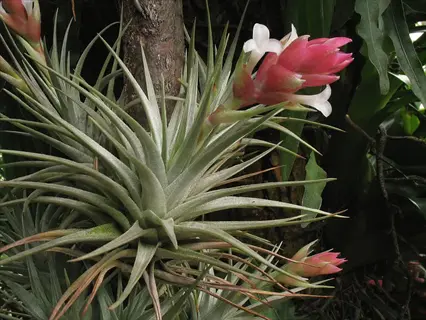
Tillandsia Stricta
- Type: Mesic variety prized for producing one of the most beautiful blooms among common air plants, with a bright pink flower spike lasting several weeks.
- Appearance: Soft green leaves form a dense rosette with a slightly fuzzy texture, and the dramatic pink to purple bloom spike emerges from the center at maturity.
- Light Needs: Prefers bright indirect light and benefits from some morning sun exposure, though afternoon direct sunlight can cause leaf tip browning on this species.
- Watering: Soak for 30 to 45 minutes weekly as a mesic variety that appreciates consistent moisture, and mist every 2 to 3 days in dry indoor environments.
- Best For: Growers who want a reliable blooming variety that rewards consistent care with a stunning extended flower display lasting up to several weeks.
- Display Ideas: Display in a clear glass vessel to showcase the full rosette, or mount on a vertical garden frame alongside other Tillandsia species.
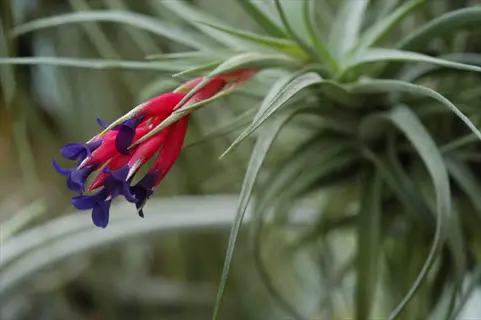
Tillandsia Aeranthos
- Type: Mesic variety originating from South America known for being exceptionally hardy and forgiving of occasional care lapses compared to more sensitive species.
- Appearance: Narrow pointed leaves in deep green to silvery tones form a tight upright rosette, producing striking pink bracts with deep blue-purple tubular flowers.
- Light Needs: Tolerates a wide range of lighting from bright indirect to moderate conditions, making it one of the most adaptable varieties for different room placements.
- Watering: Soak for 20 to 40 minutes weekly and allow to dry fully, with this variety being more resistant to minor overwatering than many other Tillandsia species.
- Best For: Beginners who may occasionally forget watering schedules, as this hardy species tolerates inconsistency better than most other mesic air plant varieties.
- Display Ideas: Works beautifully in clump formations on cork bark, grouped with other species on a magnetic wall mount, or inside an open terrarium.
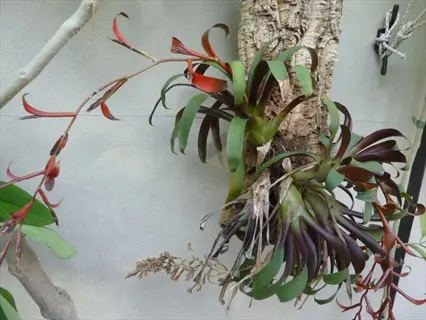
Tillandsia Capitata
- Type: Xeric variety that undergoes a dramatic color transformation before blooming, shifting from silvery green to deep rose and burgundy across its entire leaf surface.
- Appearance: Medium-sized rosette with broad arching leaves covered in a moderate layer of trichomes, reaching 6 to 8 inches (15 to 20 centimeters) across at maturity.
- Light Needs: Enjoys bright light including some direct morning sun, and the xeric trichome layer helps protect against light stress while encouraging the pre-bloom color shift.
- Watering: Soak for 20 to 30 minutes weekly and shake excess water from between the leaves, adjusting to every 10 days during cooler winter months when growth slows.
- Best For: Plant enthusiasts who appreciate dramatic seasonal color changes and want a variety that transforms its appearance as it matures toward flowering.
- Display Ideas: Place on a raised wooden stand or inside a geometric metal frame to showcase the color transition, or group with green varieties for contrast.
T. ionantha and T. xerographica are the 2 I recommend to every new grower. The ionantha teaches you the basics fast while the xerographica shows you how stunning these plants can get with good care.
Watering Air Plants
Watering air plants confuses more new growers than any other part of care. You'll find advice online ranging from 5 minute soaks to full hour baths. The reason for all this conflict? Your soak time depends on your plant type and your home's humidity level. Xeric plants with their fuzzy trichomes act like tiny cups that fill up fast, so they need shorter soaks of about 20 minutes. Mesic plants with smoother leaves need longer soaks of 30 to 60 minutes to absorb enough water.
Penn State Extension recommends soaking for 20 minutes to 1 hour each week as a baseline. I've found this range works well when you match it to your species type. After any soak, your plants need a minimum drying time of 4 hours before you put them back in their display spot. Skip this step and you'll deal with rot faster than you'd expect.
Water quality matters more than most guides tell you. Rain water is the gold standard because it mirrors what your plants get in nature. Fish tank water works great too since it adds mild natural nutrients your plants love. If you use tap water, let it sit out for 24 hours first so the chlorine can escape. Clemson University says to use fertilizer at one fourth the normal strength once a month when your plants are in their growing season.
I soak my xeric plants every 7 days and my mesic ones every 5 days during summer. In winter I stretch both schedules by a few extra days since the plants slow down their growth. Watch your leaf tips for early signs that your watering schedule needs a tweak.
Light and Environment Needs
Light is the foundation that makes every other part of air plant care work. Get it wrong and no amount of perfect watering will save your plants. Air plants grew up as epiphytes in tree canopies where they got bright indirect light filtered through leaves above them. Your goal is to copy those conditions at home.
An east or south facing window gives you the best results for most varieties. I keep my collection about 3 feet from a south facing window and they've never looked better. If you live in an apartment with limited natural light, grow lights make a great backup option. Run them for 10 to 12 hours a day and your plants won't know the difference between artificial light and real sunshine.
Air plant temperature and humidity for air plants tie right into your lighting setup. Penn State Extension says to keep nighttime temps above 55°F and daytime between 65 to 90°F. Aim for 40% to 60% humidity in the room. Air circulation matters just as much because stale moist air breeds mold and rot on your plants. I run a small fan near my collection for a few hours each day to keep things fresh.
These 4 factors work together like a team. When you boost light, your plants drink more water and dry out faster. High humidity means you can water less often. Good air circulation helps with drying time after soaks. Adjust one and check how the others respond over the next week or two.
Displaying and Mounting
Your air plant display choice affects more than just looks. It changes how you water, how fast your plants dry, and which species will thrive in that spot. I learned this the hard way when I lost 2 xeric plants to rot inside a closed terrarium. Glass traps humidity that mesic varieties love, but it can kill xeric types that need open air and fast drying. Matching your display to your plant type keeps everything alive and looking great.
One critical safety note before you start mounting air plants. Copper wire is toxic to all Tillandsia species and will kill your plants over time. Use fishing line, non copper wire, or plant safe adhesive like E6000 instead. A Tilly Tacker stapler also works well for cork mounts and driftwood projects. All 16 native Florida species grow on other plants in the wild. Mounting them on natural materials feels right at home for these epiphytes.
Driftwood and Cork Mounts
- Materials: Use untreated driftwood, cork bark, or natural wood slabs as mounting surfaces that complement the plant's epiphytic nature and provide a rustic look.
- Attachment: Secure with fishing line, non copper wire, or plant safe adhesive like E6000, avoiding hot glue which can burn the plant base during application.
- Care Impact: Open air mounts provide great airflow and fast drying times, reducing rot risk and making them ideal for xeric varieties that prefer drier conditions.
- Watering Tip: Remove mounted plants by detaching them for weekly soaks, or mist 3 times each week if the plant cannot be removed from its mount.
Glass Terrariums and Globes
- Materials: Choose open top glass vessels, tilted globes, or wide mouth containers that allow air circulation while creating a striking display for your collection.
- Placement: Position where they receive bright indirect light but avoid direct sun, as glass boosts heat and can overheat and damage the plant inside fast.
- Care Impact: Glass containers create micro climates with higher humidity, making them better suited for mesic varieties that appreciate extra moisture in their space.
- Warning: Allow a minimum of 4 hours drying time before returning plants to enclosed glass containers to prevent trapped moisture from causing rot and mold growth.
Hanging and Suspended Displays
- Materials: Use macrame holders, wire baskets, ceramic hangers, or fishing line to create floating displays that showcase your air plants from all angles in a room.
- Placement: Hang near bright windows at varying heights to create visual depth, keeping plants at least 12 inches from window glass to prevent sun scorch on leaves.
- Care Impact: Hanging planters provide natural airflow from all directions, which promotes faster drying after watering and reduces the risk of moisture problems on your plants.
- Best Species: Spanish moss creates dramatic cascading curtains when hung, while compact rosette varieties look striking in hanging planters or kokedama moss balls.
Tabletop and Freestanding Displays
- Materials: Place your air plants on decorative trays, inside sea urchin shells, on stone dishes, or atop geometric stands without any soil or growing medium under them.
- Arrangement: Group odd numbers of varying sizes together for visual balance, mixing xeric and mesic types to create texture contrast between fuzzy and smooth leaves.
- Care Impact: Freestanding displays allow the easiest watering routine since you can pick plants up for soaking without detaching them from any mounting surface.
- Safety Note: Avoid copper dishes, brass containers, or any metal surface that contains copper, as contact with copper is toxic to Tillandsia and causes plant decline.
Propagation and Life Cycle
Here's something that shocks most new growers. Every air plant blooms just once in its entire life. After that single bloom cycle, the mother plant starts to fade and die. This sounds sad at first, but it's one of the best features of air plant propagation. Before she goes, the mother plant pushes out 2 to 8 baby plants called pups. Your collection grows on its own without you spending a dime on new plants.
The full life cycle runs like a family story that keeps going. A pup sprouts from the base of its mother plant and grows over months into a full sized adult. That adult then blooms, produces its own pups, and the cycle starts fresh. Some species like T. utriculata can live up to 20 years before they bloom and complete their cycle. Most common indoor varieties finish this process in 2 to 5 years.
You can separate offsets from the mother plant once they reach one third her size, according to Penn State Extension. I like to wait a bit longer until they're about half the size of the mother plant. This gives the pups a better shot at surviving on their own. Use a gentle twist and pull motion at the base to separate them without tearing.
Some varieties form clumping air plants instead of producing separate offsets. These species keep their pups attached and grow into big clusters over time. T. ionantha does this well and creates stunning clumps after a few generations. You can leave clumps intact for a dramatic display piece or split them apart to spread your collection around the house.
Seed propagation is possible but takes patience that most growers don't have. Air plant seeds need months to sprout and years to reach blooming size. I tried it once with seeds from my T. stricta and gave up after 6 months of watching tiny green specks. Pup propagation gives you faster results with far less effort, so stick with that method unless you want a real challenge.
Troubleshooting Air Plants
Most air plant problems come down to 2 root causes: too much moisture or not enough light. I've lost plants to both mistakes and each time the warning signs were there if I'd been paying attention. The good news is that air plants show you what's wrong through their leaves. Learn to read those signals and you can fix most issues before they turn fatal.
Air plant rot is the number one killer and it almost always starts from overwatering or poor drying time. Your plants need a full 4 hours of drying after every soak. Brown tips point to the opposite problem and mean your plant is underwatering or sitting in air that's too dry. Yellowing leaves often signal too much direct sun beating down on the foliage.
Air plant pests catch most growers off guard because people assume indoor plants are safe from bugs. Mealybugs show up as white cottony spots on your leaves and scale insects look like small brown bumps. Catch them early and you can wipe them off with rubbing alcohol on a cotton swab. Check your plants each week during watering to spot these problems before they spread to your whole collection.
5 Common Myths
Air plants survive on air alone and never need any water to stay healthy and grow properly indoors.
Air plants must be soaked in water for 20 to 60 minutes weekly because they absorb moisture through leaf trichomes, not from air.
Air plant roots are used to absorb water and nutrients from surfaces they attach to like parasites on trees.
Air plant roots serve only as anchors for attachment. Trichomes on the leaves handle all water and nutrient absorption, and the plants are not parasitic.
All air plants need the same amount of water and light regardless of their species or leaf texture.
Xeric varieties with fuzzy gray leaves need less water and tolerate more sun, while mesic types with smooth green leaves need more moisture and shade.
Once an air plant finishes blooming, the entire plant dies completely and cannot produce any new growth.
After blooming, the mother plant produces multiple offsets called pups that grow into full independent plants before the mother gradually fades.
Copper wire and metal containers are perfectly safe materials for displaying and mounting air plants at home.
Copper is toxic to air plants and will cause damage over time. Use materials like driftwood, cork, fishing line, or non-copper wire for displays.
Conclusion
The single biggest lesson from this guide comes back to one idea. Touch your plant's leaves and let the texture guide your Tillandsia care. Fuzzy silver leaves mean xeric and need more light with less water. Smooth green leaves mean mesic and want extra shade with more moisture. That one distinction takes the guesswork out of epiphyte care for good.
Everything in this guide draws from Penn State Extension and UF IFAS research rather than random internet tips. Those trichomes on your plant's leaves are the key to the whole system. They're the tiny cups that grab water and nutrients from the air. Knowing how trichomes work helps you see why watering, drying times, and display choices all connect.
Growing air plants at home also supports something bigger. 10 of 16 native Florida species face threats in the wild right now. Your indoor plants help spread awareness of these special epiphytes. A 2022 review of 42 studies also found that indoor plants can lower blood pressure and boost brain function. Your air plant collection does double duty by looking great in your space and giving your health a lift too.
Air plants reward you for simple consistent care with stunning blooms and new pups that grow your collection on their own. Start with a T. ionantha or 2, get your watering and light dialed in, and watch your collection multiply over time. These are some of the most forgiving indoor plants you can grow once you know their basic needs.
External Sources
Frequently Asked Questions
How do you take care of an air plant?
Provide bright indirect light, soak in water for 20 to 60 minutes weekly, allow thorough drying within 4 hours, and fertilize monthly at one-fourth strength during spring and summer.
Are air plants hard to keep alive?
Air plants are relatively easy to keep alive once you understand their basic needs for light, water, and airflow, though they do require consistent weekly soaking.
What is the purpose of an air plant?
Air plants serve as decorative houseplants, support ecological biodiversity by providing habitat for insects and small animals, and offer indoor health benefits like reduced blood pressure.
Do plants help with COPD?
Research shows indoor plants can improve air quality and reduce stress, but specific clinical evidence for respiratory conditions remains limited and should not replace medical advice.
How long does an air plant last?
Most air plants live 2 to 5 years, though some larger species like T. utriculata can survive up to 20 years before blooming and producing pups.
What are common air plant problems?
Common problems include rot from excess moisture, brown crispy leaf tips from underwatering, yellowing from too much direct sun, and pest infestations from mealybugs or scale insects.
Can air plants go 2 weeks without water?
Xeric air plants with thick fuzzy leaves can often survive 2 weeks without water, but mesic varieties with smooth green leaves will show stress after 7 to 10 days.
Do air plants only bloom once?
Yes, each air plant blooms only once in its lifetime, but after flowering it produces multiple pups that mature into new blooming plants over 1 to 3 years.
Should you sleep with plants in your bedroom?
Keeping plants in your bedroom is generally safe and may offer benefits like lower blood pressure and better mood, according to a 2022 systematic review of 42 studies.
What do Chinese do for COPD?
Traditional Chinese approaches to respiratory wellness include herbal remedies, breathing exercises, and environmental modifications, but medical treatment should always come from qualified professionals.