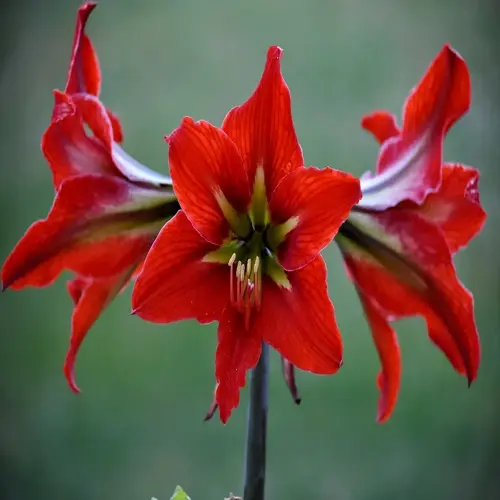

The reason amaryllis so expensive is that each bulb takes years to grow and costs a lot to breed. Every bulb on the store shelf spent three to five years in a greenhouse before it was big enough to bloom. That long growing period drives up the price tag more than anything else. You're paying for time and skill, not just a bulb.
I've bought amaryllis at every price point over the years. The amaryllis bulb cost for a standard Red Lion runs about $8 to $12 per bulb. Double-petaled types like Nymph jump to $15 to $20. Novelty cybister types with spidery petals can run $25 or more each. Bulb size matters even more than the variety name. A jumbo bulb with a 34 to 38 centimeter circumference gives you more stalks and bigger flowers than a cheap small bulb of the same type.
The amaryllis bulb cost makes more sense when you see the timeline behind it. Your bulb took three to five years from seed or offset to reach blooming size. During that whole time, the grower paid for greenhouse space, water, fertilizer, pest control, and labor. That's years of expense before a single bulb earns any money back. Tulips and daffodils reach selling size in just one to two years. That's why they cost so much less at the store when you compare them side by side with amaryllis so expensive by nature.
Breeding pushes the price even higher. UW-Madison Extension notes that commercial types come from just 6 of about 90 wild species. Making a new variety takes many years of crossing plants and growing out the seeds. Then growers must evaluate the flowers and pick only the best ones. A single new variety can take a decade or more to reach your local garden center from the first cross.
Shipping adds yet another layer to your final price. Most bulbs sold in North America grow in the Netherlands, South Africa, or Brazil. They travel long distances across oceans in special cooled containers. Import fees, plant inspections, and customs processing all add up fast. The bulbs are heavy and fragile, which makes shipping cost more per unit than lighter products. Every step of this supply chain adds dollars to what you pay at the register.
So why amaryllis price high compared to a bunch of cut flowers? You're paying for years of growing time, rare genetics, and global shipping. But the good news is that you can stretch that cost over many seasons instead of treating it as a one-time buy. Here's how to get the best value for your money.
Buy jumbo bulbs in the 34 to 38 centimeter range. They produce two to three stalks with four flowers each, giving you up to twelve blooms from one bulb. Shop early in September or October when your choices are widest. Prices haven't jumped for holiday demand yet at that early point in the season.
The smartest move is to save your bulb after it blooms and grow it again next year. I've rebloomed the same bulbs for seven years running now. A $15 bulb that flowers for ten seasons costs you less than two dollars per year of winter color. That's a far better deal than any cut flowers from the florist. Your bulb gets bigger each year too, giving you more stalks and a better show as time goes on. You can even split off baby bulbs and grow your collection for free. That high upfront cost pays for itself many times over. Just treat your amaryllis as a long-term plant instead of a throwaway gift.
Read the full article: Amaryllis Flower: Care, Varieties and More